
Markets
Markets & shopping in Chiang Mai
Three kinds of market matter in Chiang Mai. The weekly walking streets — Saturday on Wua Lai, Sunday through the Old City — are the social heart of the local craft economy. The Warorot complex beside the Ping River, with the adjoining Flower Market, is the everyday wholesale engine. And the craft villages south and east of the city (Ban Tawai for woodcarving, Bo Sang for umbrellas) are where things are still being made by hand.
Updated
Every market we cover
From the night-and-dawn flower wholesalers to the Sunday craft sprawl.
handicraft
Ban Tawai Woodcarving Village
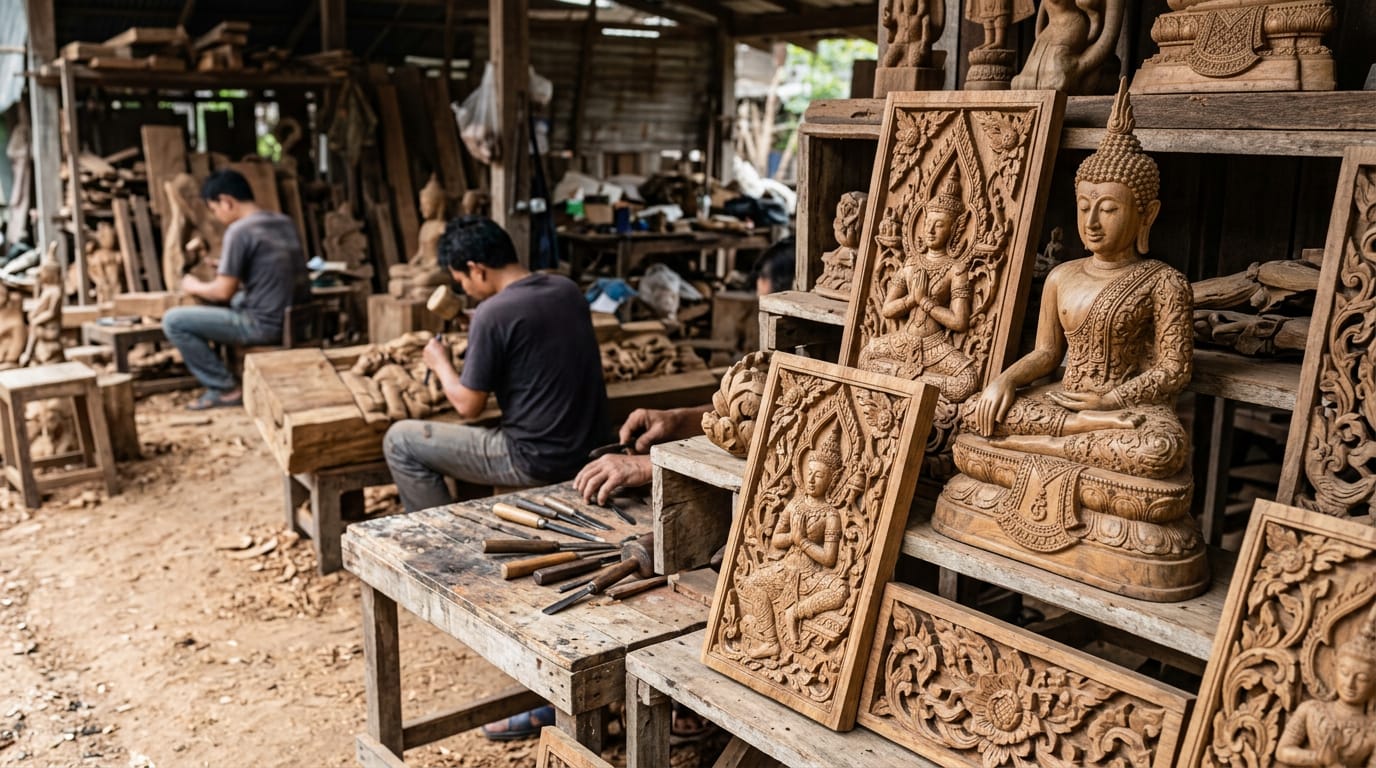
Ban Tawai is the woodcarving village 15 kilometres south of Chiang Mai's Old City in Hang Dong district. Five hundred-plus workshops and showrooms sell teak furniture, hand-carved Buddha statues, antiques, lacquerware and architectural pieces along a kilometre-long covered street. The trade dates to a 1957 royal craft initiative and remains the principal wholesale source for the city's furniture exporters.
Read the guide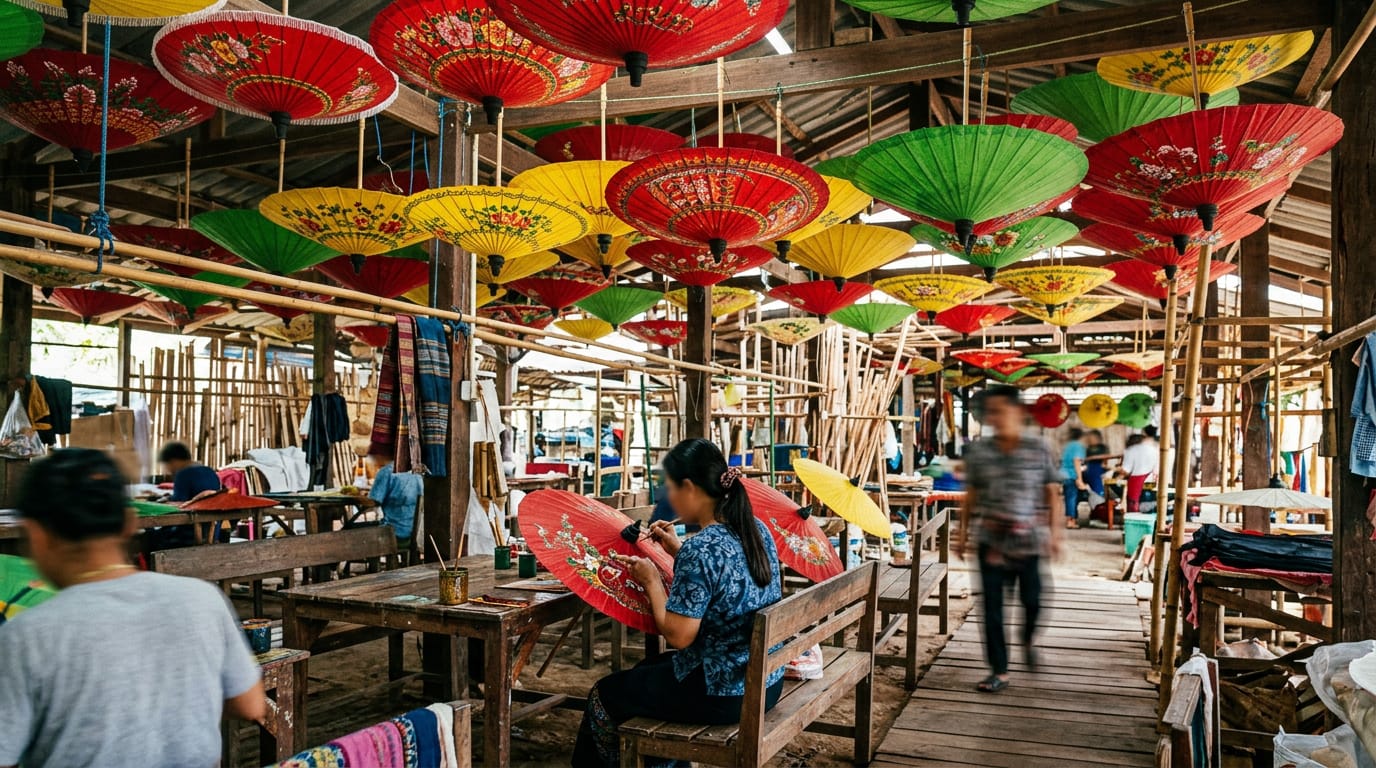
handicraft
Bo Sang Umbrella Village and the San Kamphaeng Craft Road
Bo Sang Umbrella Village in San Kamphaeng district, 9 kilometres east of Chiang Mai's Old City, is the home of hand-painted rice-paper umbrellas. The Bo Sang Umbrella Festival fills the village every third weekend of January. The wider San Kamphaeng craft road along Route 1006 links workshops for saa paper, silk weaving, lacquerware, celadon ceramics and silver.
Read the guide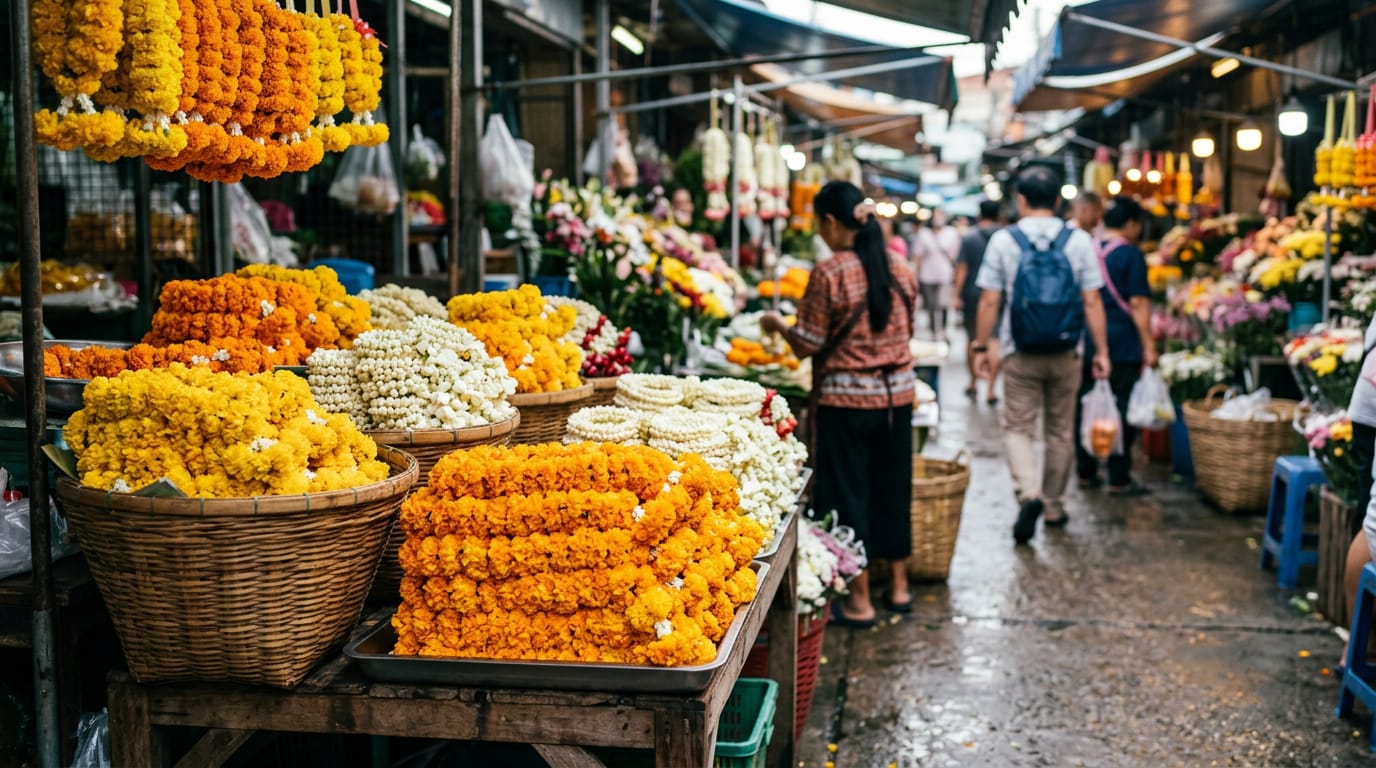
flower
Chiang Mai Flower Market
The Chiang Mai Flower Market (Talat Dok Mai) is the city's main wholesale and retail bazaar for cut flowers and ceremonial garlands, on a 400-metre stretch of Praisani Road beside the Ping River, behind Warorot Market in Chang Moi. Trading is continuous, with wholesale lorries arriving 03:00–06:00; in February 2026 it supplies the 49th Chiang Mai Flower Festival floats.
Read the guide
mall
Chiang Mai Shopping Centres and Supermarkets
Chiang Mai's modern retail spreads across four main shopping centres and a working network of supermarkets and convenience stores. Maya Lifestyle in Nimman, Central Festival on the Superhighway, Promenada in San Kamphaeng and Kad Suan Kaew on Huay Kaew Road cover brand shopping, cinema and food courts; Tops, Rimping, Tesco Lotus and the ubiquitous 7-Eleven and Family Mart cover the daily grocery.
Read the guide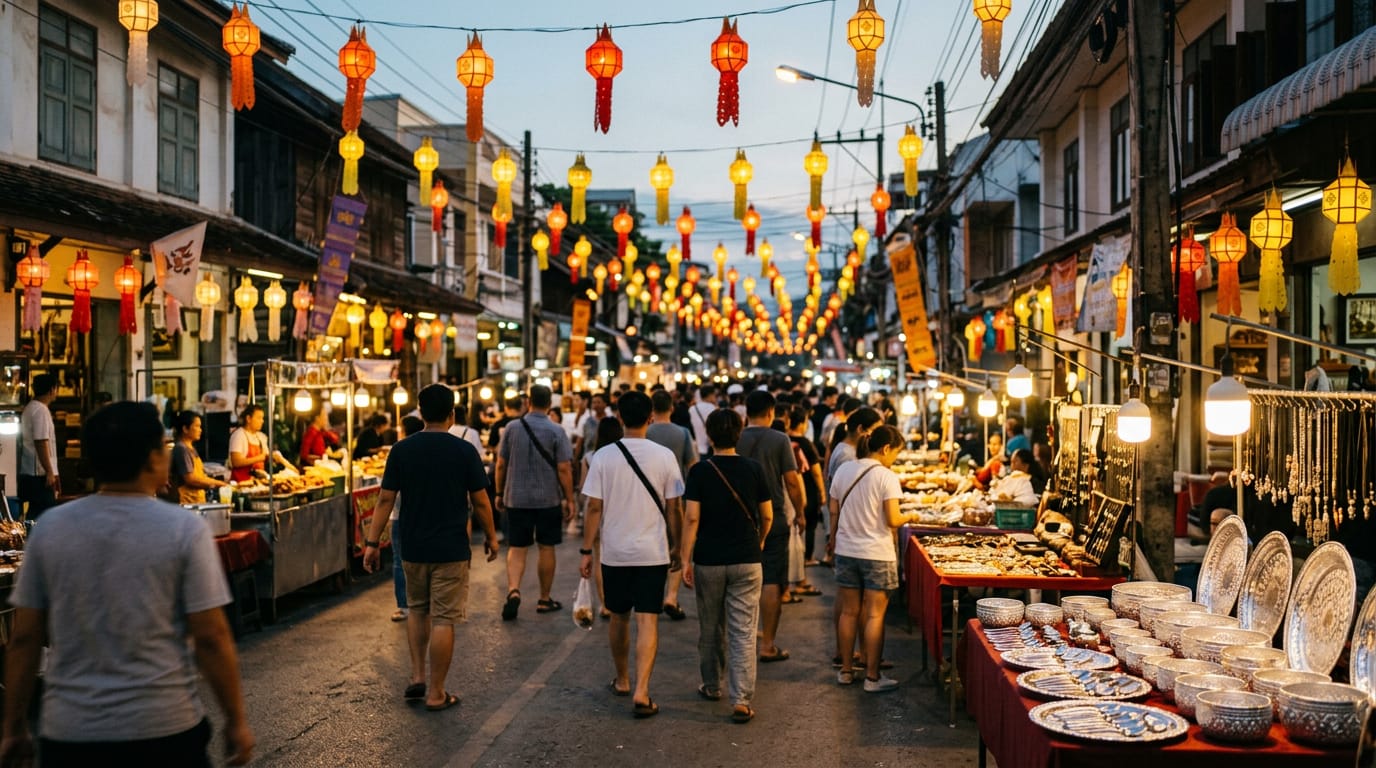
walking street
Saturday Walking Street (Wua Lai Road)
Chiang Mai's Saturday Walking Street runs the length of Wua Lai Road, the silversmith quarter immediately south of the Chiang Mai Gate. Open every Saturday from 16:00 to 22:00, it is smaller, more local and more craft-led than its Sunday counterpart, with silverware, lacquerware and Lanna handicrafts beside food stalls and the Songkran procession route on day one of the New Year festival.
Read the guide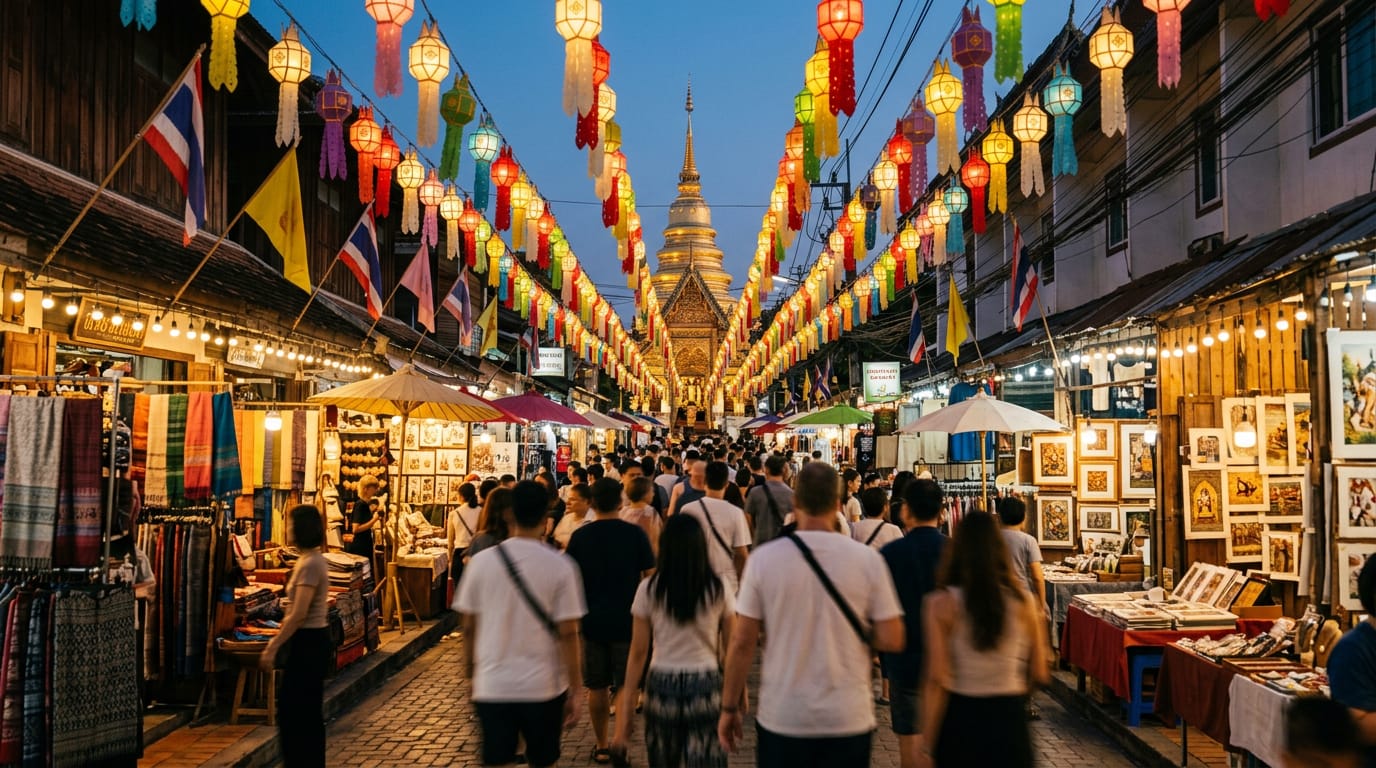
walking street
Sunday Walking Street (Ratchadamnoen Road)
The Sunday Walking Street fills Ratchadamnoen Road through the heart of the Old City from Tha Phae Gate west to Wat Phra Singh. Around 700 vendors set up every Sunday from 16:00 to 22:00, with handicraft, paper umbrellas, silk, lanterns and three temple courtyards turned into food clusters along the route. It is the biggest weekly walking street in Chiang Mai.
Read the guide
books
Used Bookshops of Chiang Mai
Chiang Mai's second-hand bookshops cluster inside the Old City along Ratchamanka Road and around Tha Phae Gate. Backstreet Books, Gecko Books, On the Road Books, Lost Book Found and the Suriwong Book Centre between them hold the city's deepest English-language second-hand collections, from travel-writer dharma libraries to out-of-print Penguin Classics, language guides and Thai history.
Read the guide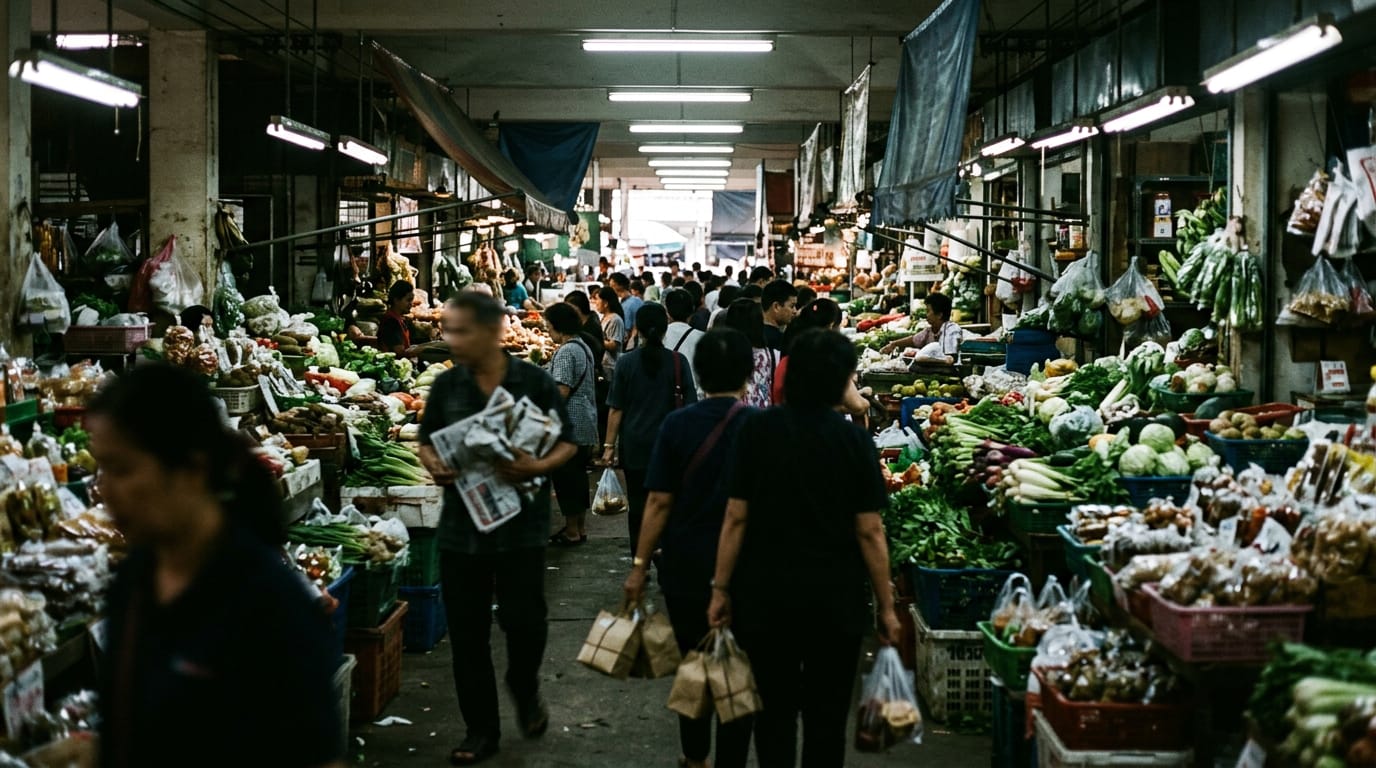
wholesale
Warorot Market (Kad Luang)
Warorot Market, known locally as Kad Luang, is Chiang Mai's largest and oldest fresh market, set just east of Tha Phae Gate against the Ping River. Three trading floors plus a dense weave of surrounding lanes carry produce, fabric, kitchenware, Chinese pastry, sai oua sausage and the city's most reliable kao soi, with the Flower Market and Talat Ton Lamyai pressed against its northern wall.
Read the guideFrequently asked questions
What is the best market in Chiang Mai?
Two answers, depending on what you mean. For atmosphere and crafts, the Sunday Walking Street through the Old City (Ratchadamnoen Road) is the largest and most famous. For wholesale flowers, fruit and the city's working life, the Warorot Market ("Kad Luang") and the Flower Market beside it are unmatched. For silver, head to the Saturday Walking Street on Wua Lai Road.
When is the Sunday Walking Street?
Every Sunday from around 17:00 until 22:00 along Ratchadamnoen Road, from Tha Phae Gate west to Wat Phra Singh. Around 700 vendors, mostly handicrafts and street food. Avoid the first hour if you dislike crowds; the trade in goods slows down by 21:00 but the food stays open later.
What is the Saturday Walking Street?
The Saturday equivalent, held on Wua Lai Road just south of the moat. Smaller than Sunday's, more focused on silver and lacquerware because Wua Lai is historically the silversmiths' quarter — visit Wat Sri Suphan (the Silver Temple) on the same street. Opens around 17:00.
Where is the Chiang Mai flower market?
Beside the Ping River on Praisani Road, immediately east of Warorot Market. Wholesale activity peaks 03:00–06:00; retail flower stalls run all day. The whole stretch transforms during the February Flower Festival when the parade departs from Nawarat Bridge a few hundred metres south.
Where can I buy Chiang Mai handicrafts?
Three places in priority order. Ban Tawai village, 15 km south of the city, is the wholesale woodcarving hub — entire warehouses of teak furniture. Bo Sang village, 9 km east, is the umbrella-painting village; you can watch hand-painting on rice paper. The Sunday Walking Street covers everything else: silk, paper, ceramics, silver, lanterns.
How do I get to the Saturday and Sunday Walking Streets?
Both are in or beside the Old City, fully walkable. From most Old City hotels they are 5–15 minutes on foot. Songthaews (red trucks) charge 30 baht from outside the moat. Grab cars cannot enter during the closed-street hours — they will drop you at the nearest moat corner.
Are the night bazaar and the walking streets the same thing?
No. The Chiang Mai Night Bazaar runs every night along Chang Khlan Road, east of the Old City — permanent stalls, tourist-focused, more imported goods. The walking streets are weekly, street-closed, more local. Both are worth a visit on different evenings.