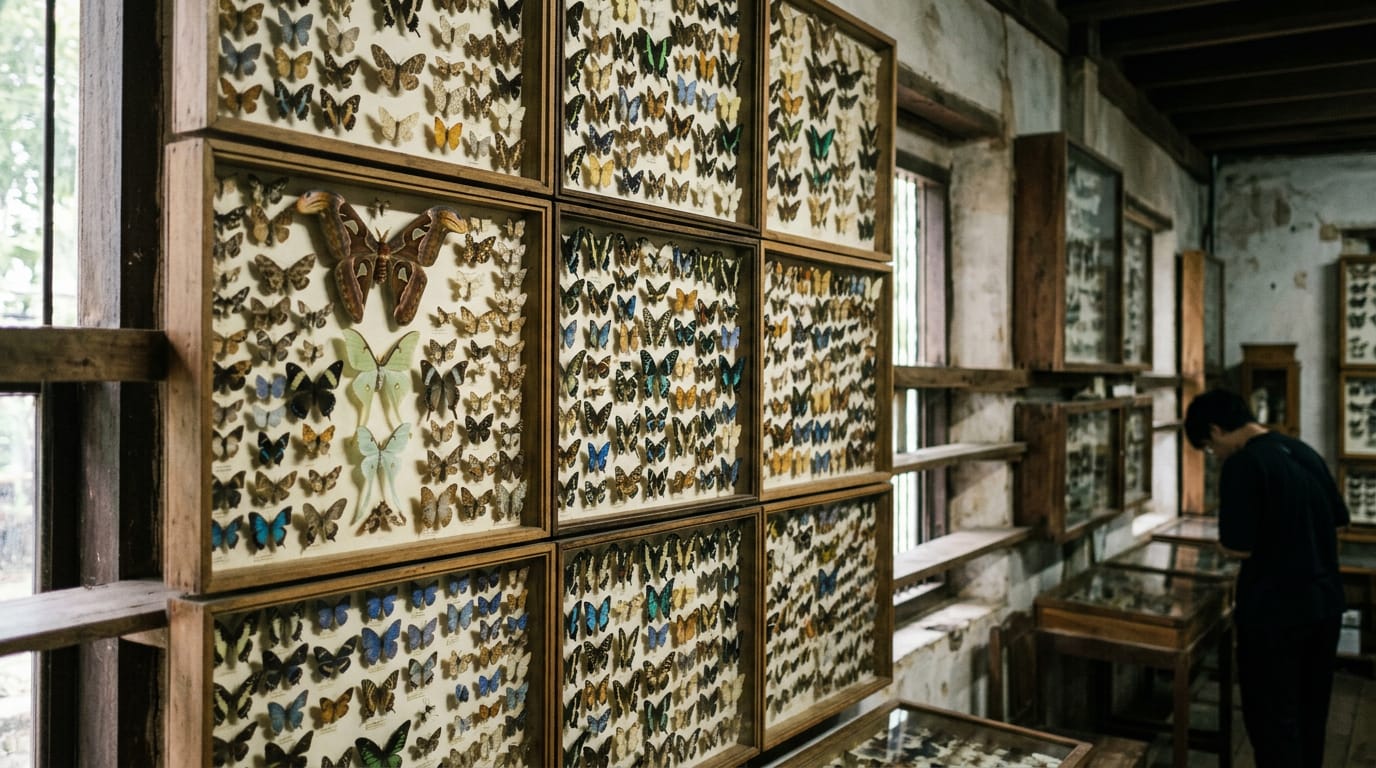
The Museum of World Insects and Natural Wonders on Nimmanhaemin Soi 13 is the private lifetime collection of Dr Manop Rattanarithikul, an entomologist whose mosquito research formed part of the original malaria-eradication programme in northern Thailand, and his wife. Opened in 2000, the museum holds the world's most complete reference collection of Southeast Asian mosquito species alongside vast butterfly walls, beetles, fossils, sea life and a peculiar room of natural-wonder stones — dense, quirky, unforgettable.
Updated
What it is
The Museum of World Insects and Natural Wonders is a private collection on Nimmanhaemin Soi 13, in the café district west of the Old City, opened to the public in 2000 by Dr Manop Rattanarithikul, an entomologist whose career was spent on the international malaria-eradication programme in northern Thailand, and his wife. The museum holds three overlapping collections: Dr Manop’s professional reference collection of Southeast Asian mosquitoes, the couple’s personal collection of butterflies and beetles assembled over four decades of fieldwork across Thailand, Malaysia, Borneo and Laos, and an eccentric assortment of natural-wonder objects including fossils, sea shells, quartz crystals, geodes and the oddly shaped weathered stones that gave the museum the second half of its name.
It is not a state museum and not run by any university or institute. The displays follow the logic of a Victorian-era private cabinet of curiosities rather than the spare modernism of a state collection: dense, tightly packed, sometimes idiosyncratic in arrangement, with handwritten labels in places and printed scientific captions in others. The result is one of the most distinctive small museums in Thailand and the strongest single natural-history collection in the north. The building, a converted three-storey townhouse with whitewashed walls and concrete floors, is functional rather than architectural. The point is what is inside.
Families with children do well here, and so does anyone with even a passing interest in butterflies, or a soft spot for private collections grown out of a lifetime’s serious work. It is the most rewarding small-scale visit on Nimman.
Collection highlights
Mosquito reference collection
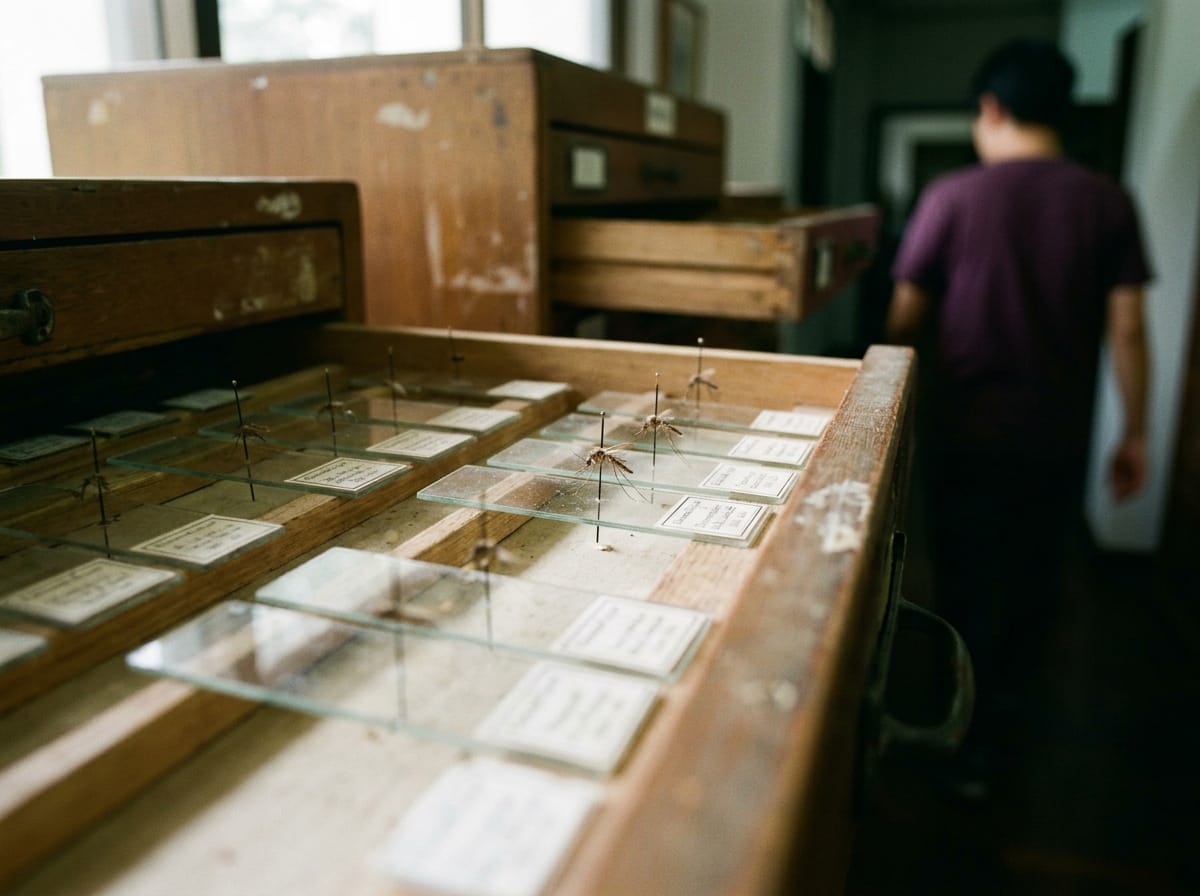
The first-floor mosquito reference collection is the most scientifically significant holding in the museum and the foundation of the whole project. Dr Manop spent his professional career as a research entomologist on the joint Thai Ministry of Public Health and United States Centers for Disease Control malaria-eradication programme based at Chiang Mai University from the early 1960s onwards. The work required systematic field collection of mosquito species across the upper Mekong region to identify malaria vectors and to track their distribution. The collection that resulted, now mounted on glass slides and arranged taxonomically across multiple cabinets, contains more than 300 species of Southeast Asian mosquitoes, the most complete single regional reference set in existence. A visitor microscope station on the same floor holds prepared slides of mosquito mouthparts, wings and antennae that allow direct examination at the level of the published species descriptions.
Butterfly and moth walls
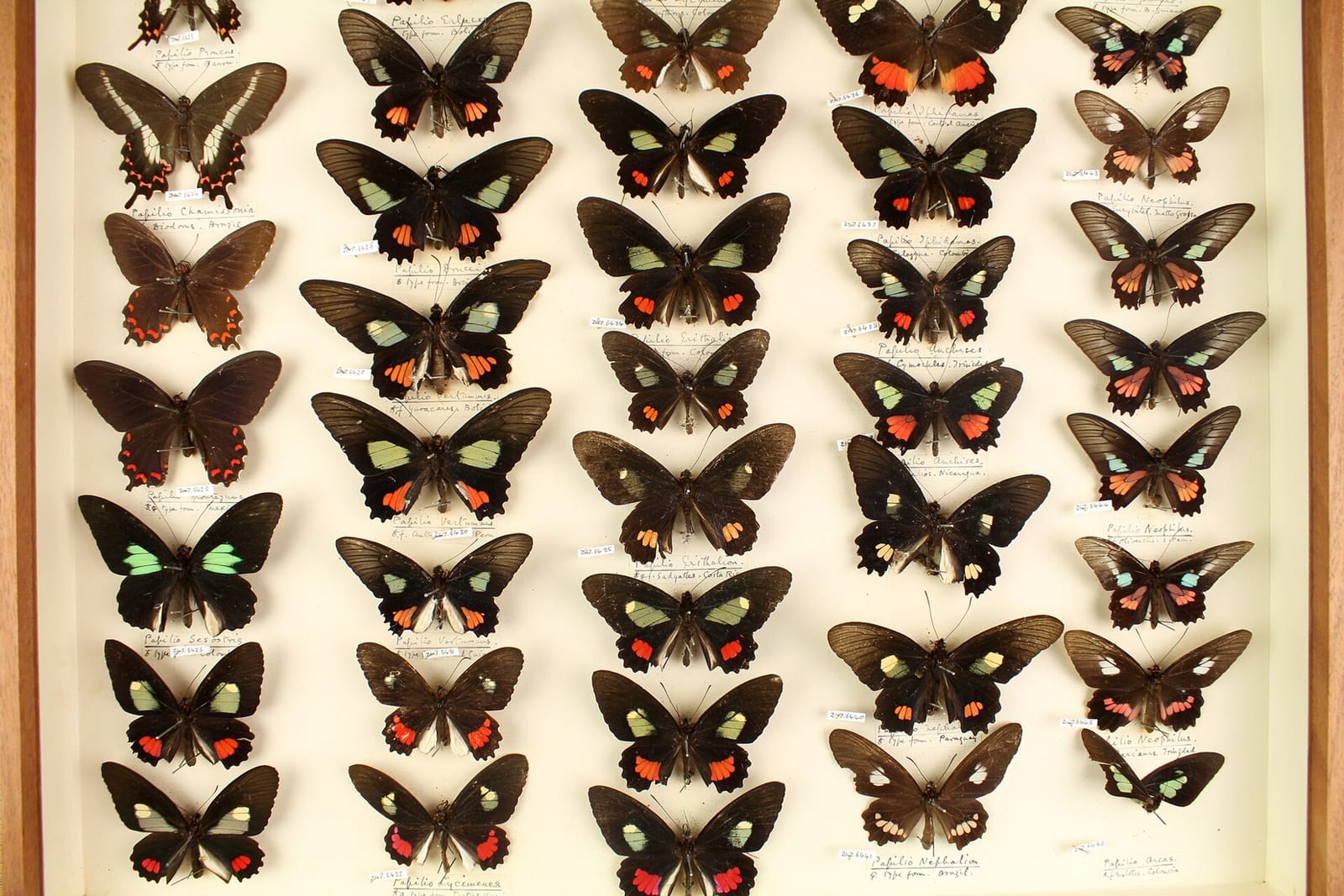
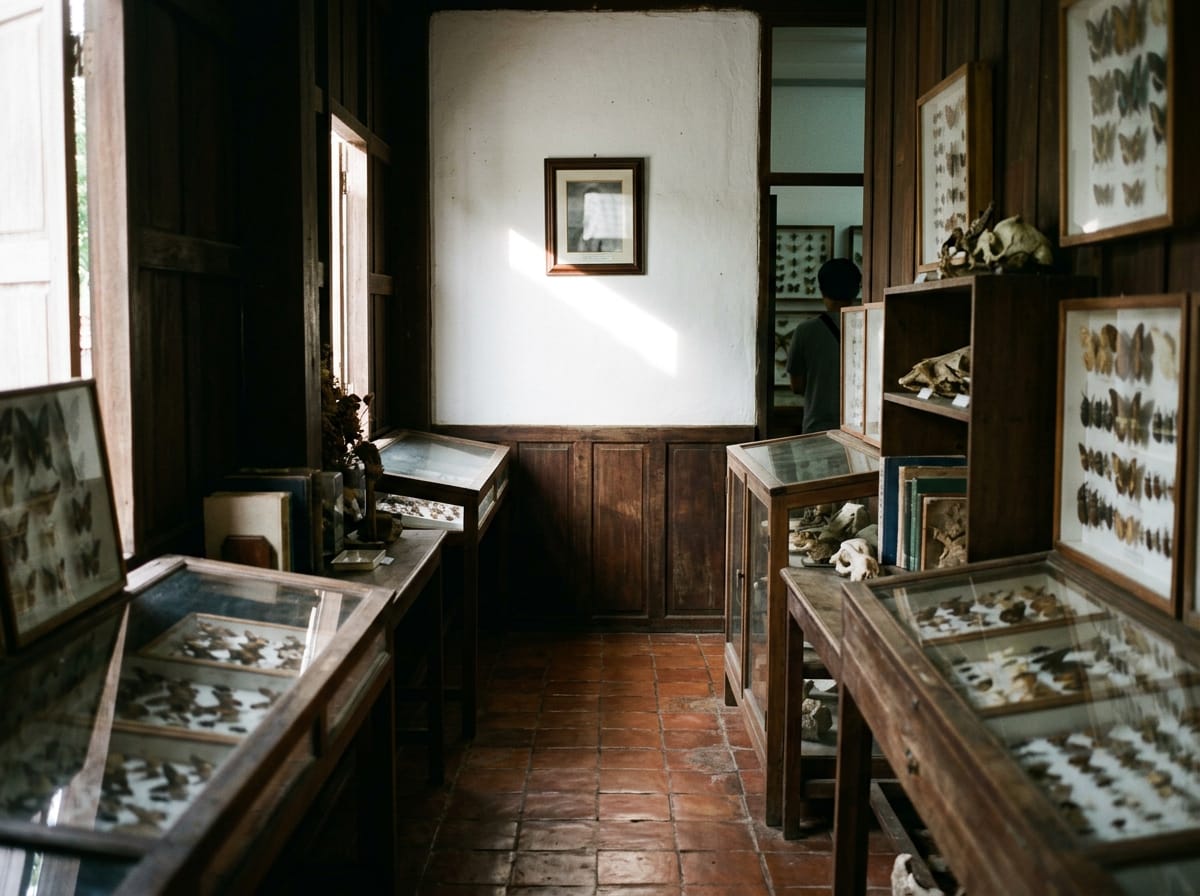
The visual heart of the museum is the ground-floor butterfly and moth display, which fills two full walls of the main gallery with tightly packed pinned specimens arranged by species. The collection runs to several thousand individual specimens spanning Thailand and the wider Indomalaya region: the giant blue and black Rajah Brooke’s birdwing from Borneo, the iridescent green common birdwing from southern Thailand, the bright yellow common emigrant familiar from any northern garden, the enormous brown Atlas moth with its scimitar-tipped wings that ranks among the largest moth species in the world. The display is dense to the point of overwhelming, but the density is the point: what you see is the diversity of the regional fauna laid out at once. A separate side case shows life-cycle preparations with eggs, caterpillars, chrysalises and adult forms of half a dozen common species.
Beetles, dragonflies and other insects
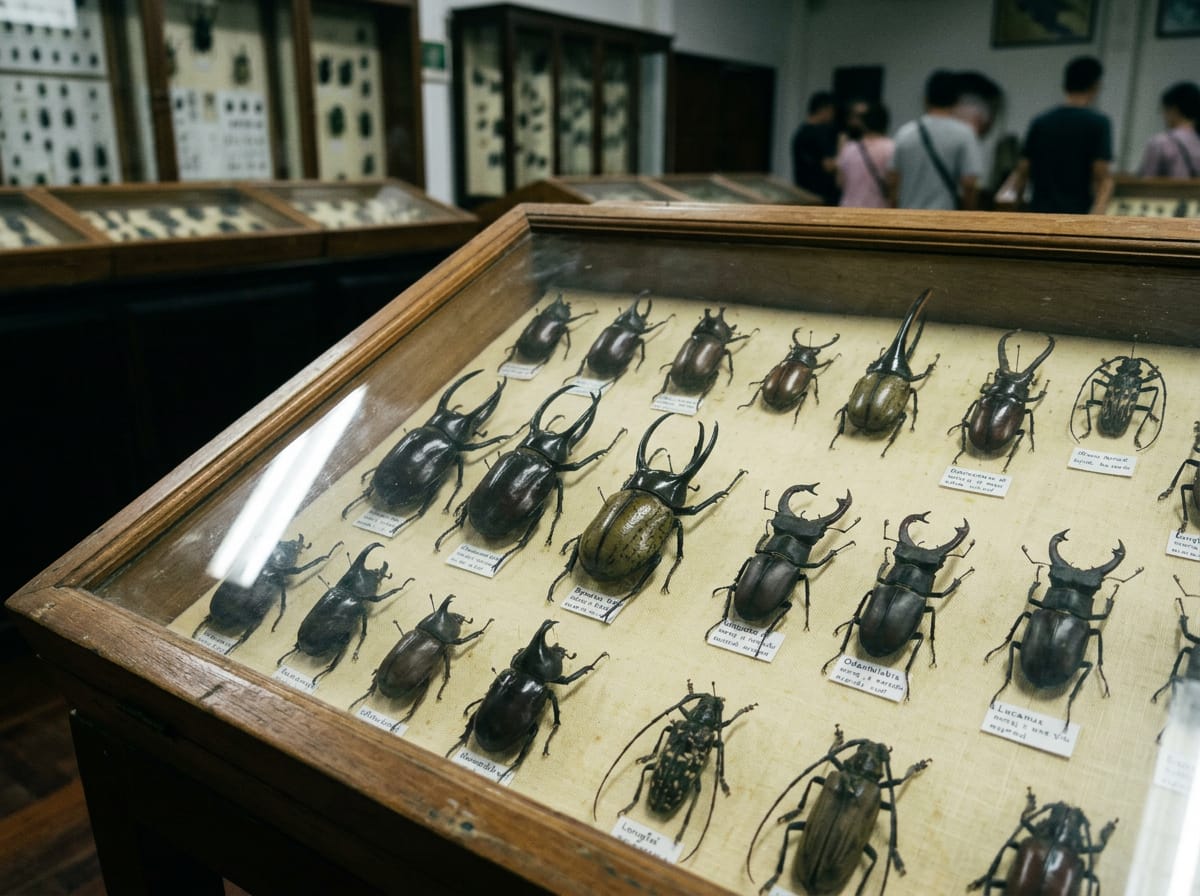
The beetle cases on the ground floor cover the giant rhinoceros, stag and longhorn species that fascinate first-time visitors, alongside more delicate displays of jewel beetles, weevils and ground beetles. A separate dragonfly and damselfly case shows the regional diversity of these otherwise hard-to-collect groups, with specimens preserved on cards alongside watercolour life-painting drawings done by Dr Manop’s wife in the 1980s. Smaller cases handle cicadas, grasshoppers, mantises and stick insects. The labelling in this section is more variable than in the mosquito collection: some specimens carry full scientific captions and field-collection data, others only a handwritten common name.
Fossils, shells and natural wonders
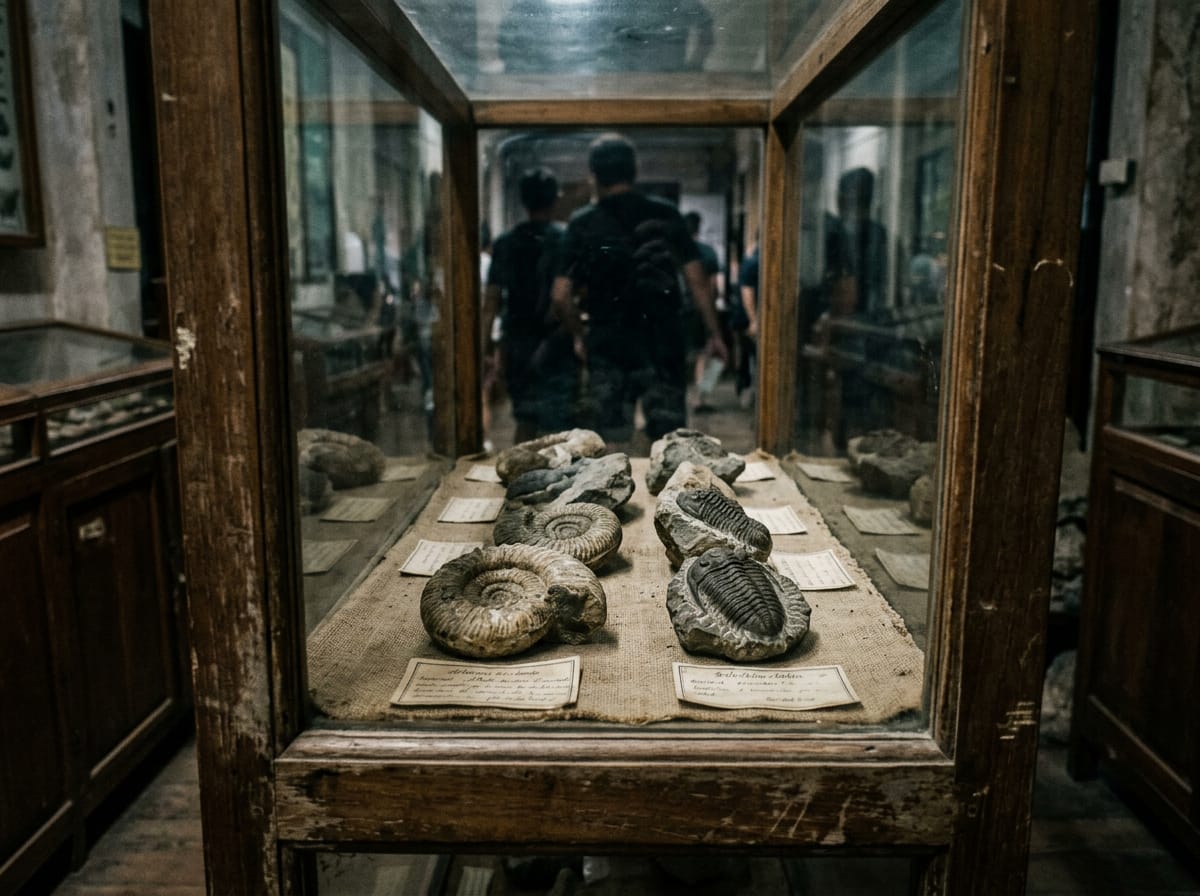
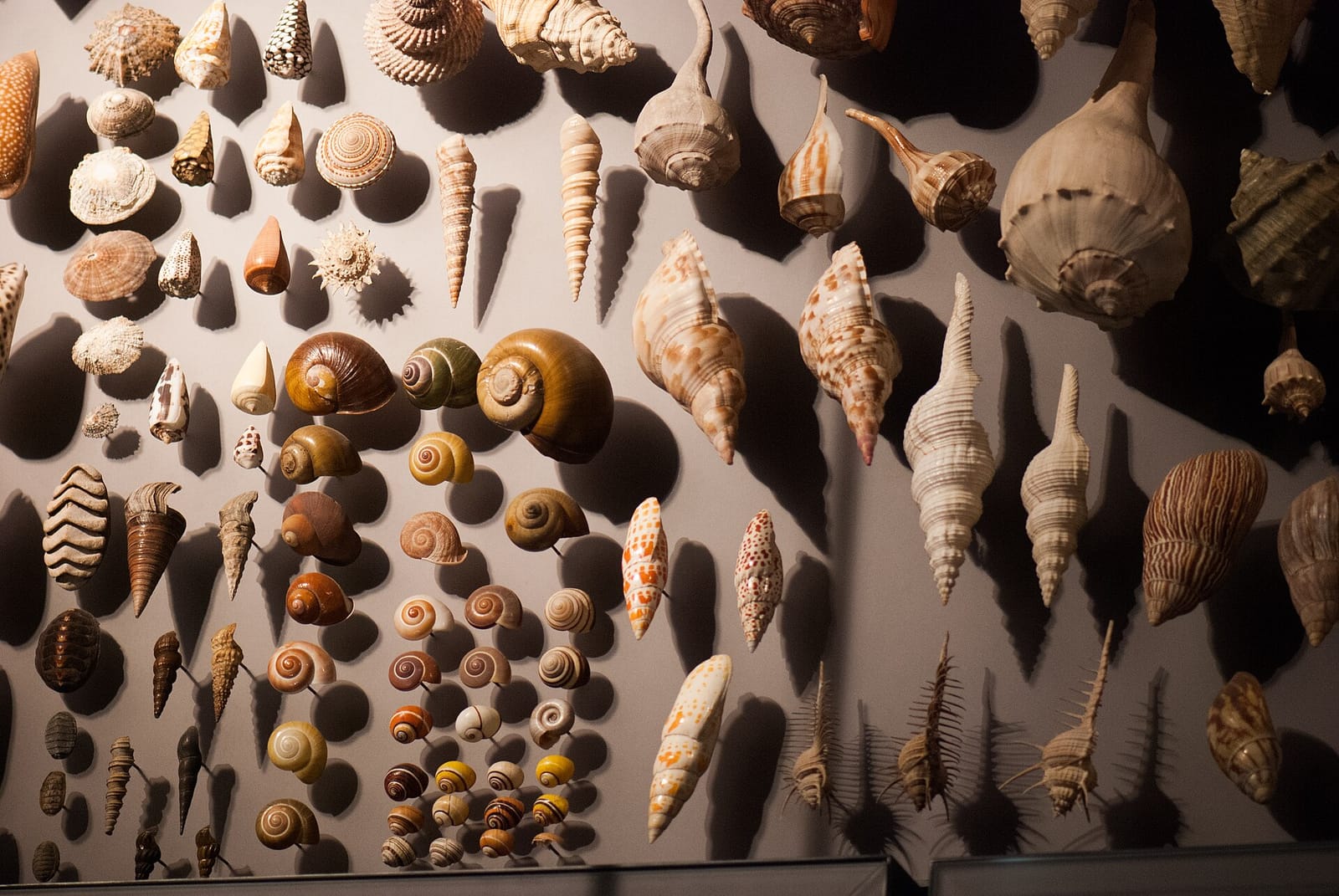
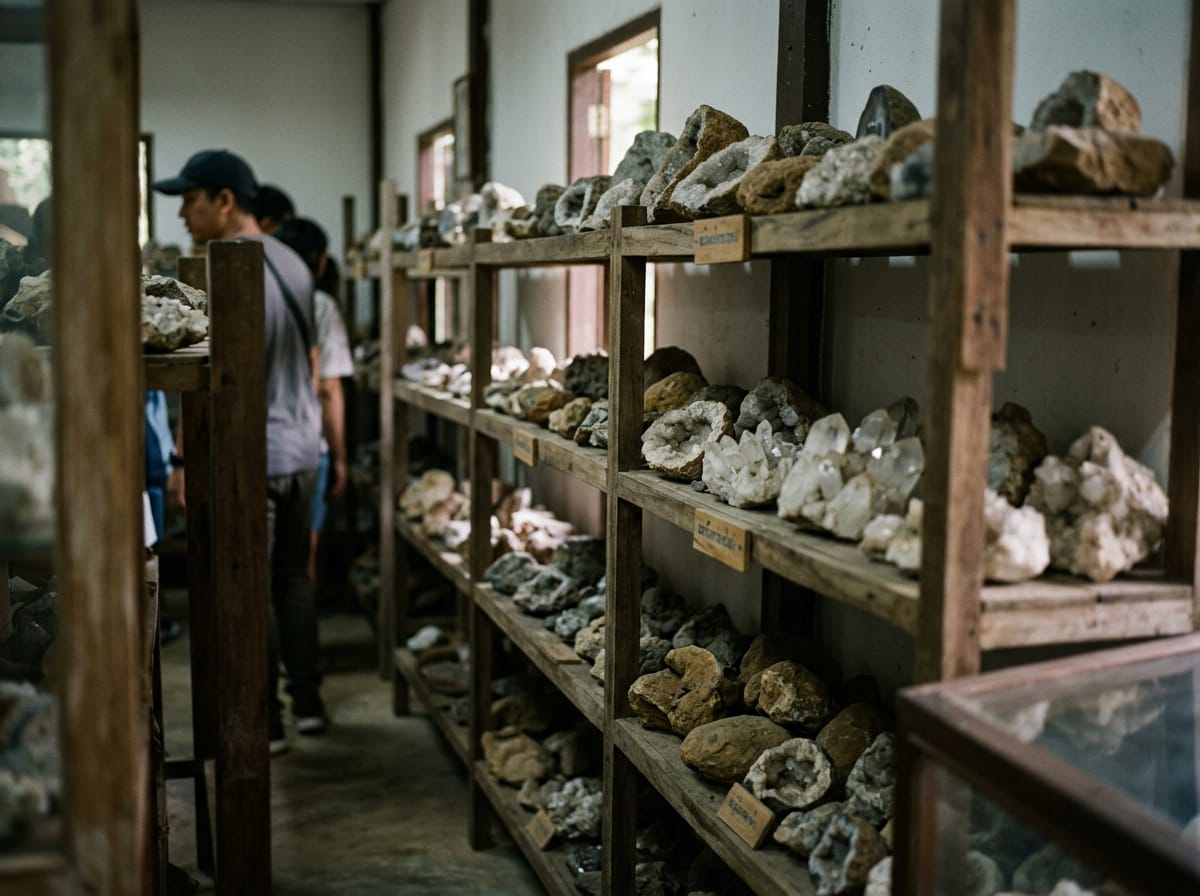
The natural-wonders room is the most idiosyncratic part of the museum and the section that visitors most often remember. Glass cases hold fossil ammonites and trilobites from Morocco and the United States, alongside locally collected fossil shells and impressions from Thai geological formations. Open trays show tropical sea shells from across the Indo-Pacific: cone shells, cowries, the great geographic cone, smaller olive shells and helmet shells, all collected on family holidays over decades. The far end of the room is given over to natural-wonder stones in the strict sense: quartz crystals, agate geodes, polished river stones with unusual mineral inclusions, and a small case of weathered rocks that the founders judged to resemble human or animal forms. The labelling here is the lightest in the museum and several objects carry only Latin or handwritten Thai captions.
The founders’ biographical room
A small entrance room holds framed photographs and biographical text covering Dr Manop and his wife’s life and work. Field photographs from the 1960s show the original mosquito-survey teams in Mae Hong Son villages; later images record the international research collaborations through which Dr Manop became a senior figure in regional vector biology. The display is restrained and informative rather than self-aggrandising, and is a useful first stop on arrival because it sets the context that makes the rest of the collection coherent.
History of the institution
The museum opened in 2000 in its current premises on Nimmanhaemin Soi 13, which the founders bought specifically to house the growing collection after retirement. The mosquito reference collection had been built over the previous four decades as the by-product of Dr Manop’s professional research, the bulk of it acquired between 1962 and 1985 when he was a senior entomologist on the international malaria-eradication and dengue-surveillance programmes based in Chiang Mai. The butterfly, beetle and natural-wonder material had been collected in parallel, by both founders, on field trips and family holidays across Thailand, Malaysia, Borneo, Laos and Cambodia.
The museum has remained family-run since opening, with no institutional affiliation and no government subsidy. The entry fee, the small donation box at the exit and occasional research-access fees from visiting entomologists cover the maintenance and conservation costs of the collection. A second small site on Soi 13 was opened in 2007 to hold the natural-wonders and sea-shell material that had outgrown the original building, and the two sites operated separately for several years; both collections were consolidated in the current premises in 2015 after the second site closed. The founders’ son occasionally helps at the front desk and is the most likely person to inherit the day-to-day operation. The future of the collection in the longer term is one of the open questions of Chiang Mai’s small-museum landscape.
Visiting tips
Photography is welcomed throughout, including with flash — the pinned specimens are stable and the staff do not enforce a no-flash rule, which is the opposite of most museums in the city. Tripods are not permitted in the galleries but are fine in the entrance forecourt. There is no café and no shop on site; the dense café district of Nimmanhaemin starts 200 metres west and includes Ristr8to, Graph and Akha Ama within a 5-minute walk. The building is air-conditioned but the temperature is set high to conserve specimens. The aisles between cases are narrower than at a modern museum and tight for prams or wheelchairs; the first-floor mosquito collection is reached only by stairs. Slow down at whatever case catches you; the displays reward close looking rather than rapid passage.
Best time to visit
Late mornings between 10:30 and 12:00 and mid-afternoons between 14:00 and 16:00 are the best lit, with the butterfly and beetle colours strongest in the south-facing light. The museum is rarely crowded — even on a Saturday the building takes ten or fifteen visitors at a time without feeling busy. Mondays are open here, unlike at most Chiang Mai museums, which makes the museum useful on a day when the National Museum and the Cultural Centre are closed. The hot season from March to May is comfortable in the air-conditioned interior. The only closures are the four days of Songkran, the water-throwing festival in mid-April, and three days at Thai New Year in early January.
Nearby and combine with…
The Chiang Mai University Art Centre sits 700 metres south at the corner of Nimmanhaemin and Suthep Road and is the natural cultural pairing: free entry, contemporary art exhibitions, and a short walk through the Nimman café district between the two. For visitors making a day of city museums, the Chiang Mai National Museum 4 km north on the Superhighway is the historical and archaeological counterpoint to the natural-history focus of this collection. The Nimmanhaemin café district itself is the closest practical lunch option, with Ristr8to, Graph and Akha Ama within five minutes’ walk and the small lunch restaurants on Sirimangkalajarn parallel one block east offering northern Thai noodle dishes for under 80 baht, the Thai currency. Maya mall, 400 metres north at the Rincome junction, has the closest air-conditioned food court and the quickest songthaew (red shared-pickup taxi) connection back to the Old City.
Photos
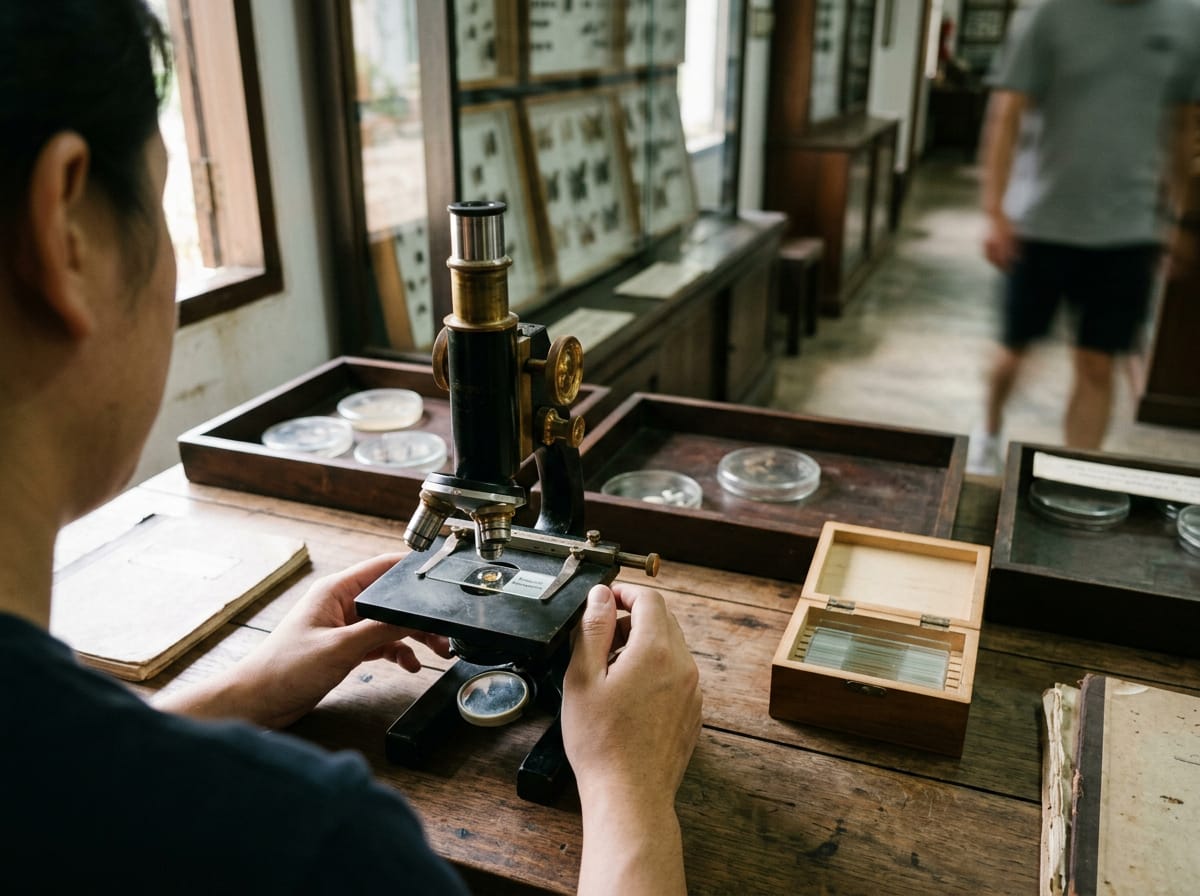
Frequently asked questions
What are the opening hours?
The museum is open daily, 09:00 to 17:00, with last entry at 16:30. Unlike most Chiang Mai museums it does not close on Mondays and is open through most public holidays — useful if your Monday plans have collapsed. The only annual closures are the four days of Songkran in mid-April and three days at Thai New Year in early January. The reception desk closes for lunch from 12:00 to 13:00, but the galleries remain open and accessible during that hour.
How much is entry?
Adult entry is 200 baht; children are 100 baht. The pricing is the same for foreigners and Thai nationals, which is unusual in Chiang Mai and reflects the museum's status as a private institution rather than a state collection. Family groups of four or more get a small discount on request at the desk. The price is high by Chiang Mai museum standards but consistent with private natural-history collections elsewhere in the region, and the proceeds go directly to maintenance of the collection.
Where is the museum and how do I get there?
The museum sits at 72 Nimmanhaemin Soi 13, the small lane off the main Nimmanhaemin Road about 400 metres south of the Rincome junction. From the Old City a red songthaew costs 50 baht per person and takes 15 minutes; a Grab car runs 90 to 110 baht. From Maya mall it is a 5-minute walk south. From the centre of Nimman it is 12 minutes on foot. Street parking on Soi 13 is limited and paid; motorbikes park free at the gate.
How long should I spend at the museum?
Allow 60 minutes for a casual visit covering the butterfly walls, beetles and the natural-wonders room. Visitors with a serious interest in entomology will want closer to 2 hours to work through the mosquito reference collection on the first floor, including the visitor microscope station with prepared slides of mosquito mouthparts. Families with younger children rarely stay more than 45 minutes — the density of the displays becomes overwhelming after about that.
What is the mosquito collection?
The mosquito reference collection on the first floor is the museum's most scientifically significant holding. It contains more than 300 species of Southeast Asian mosquitoes, mostly collected by Dr Manop Rattanarithikul during his career as an entomologist on the malaria-eradication programme run by the Thai Ministry of Public Health and the United States Centers for Disease Control in the 1960s and 1970s. The collection is believed to be the most complete single reference set for the region and is consulted by visiting researchers from across the world.
Is the museum suitable for children?
Yes — it is one of the best Chiang Mai museums for children. The butterfly and beetle displays are visually arresting, the natural-wonders room with its fossils, shells and oddly shaped stones holds attention through tactile curiosity, and the visitor microscopes on the first floor are genuinely engaging. The museum is small enough that even younger children get through it in 30 to 40 minutes without losing interest. Children under 5 enter free. There is no dedicated children's programming or hands-on activity beyond the microscopes.
Is there English signage?
Most major displays have bilingual Thai and English labels. The scientific names of every specimen are present in Latin throughout. The biographical wall panels about the founders carry full English text. The natural-wonders room has lighter English labelling and many objects have only Latin or Thai handwritten captions, which is part of the eccentric charm of the place. A short printed visitor brochure in English is available at the front desk.
Can I take photographs?
Photography for personal use is welcomed throughout, including with flash. The pinned specimens are stable under flash and the museum staff do not enforce a no-flash rule. Tripods are not permitted in the galleries but the entrance forecourt is fine. Commercial photography or filming requires written permission from the founders, applied for at least a week in advance. The natural-wonders room is the most photogenic — the dense, almost Victorian-cabinet quality of the displays photographs unusually well.
Who founded the museum?
The museum was founded in 2000 by Dr Manop Rattanarithikul, a Thai entomologist who spent his career on mosquito research as part of the international malaria-eradication programme based in Chiang Mai, and his wife. The collection drew on decades of fieldwork specimens accumulated through his professional career, supplemented by his and his wife's personal collecting of butterflies, beetles, sea shells and natural-wonder stones from across Southeast Asia. The museum remains family-run; their son occasionally helps at the front desk.
Is the museum wheelchair accessible?
The ground floor is accessible by a small ramp at the entrance, though the aisles between display cases are narrower than at a modern museum. The first floor with the mosquito collection is reached only by a staircase; there is no lift. Visitors who cannot use stairs will see the butterfly walls, the beetles and the natural-wonders room — roughly 60 percent of the collection — but will miss the scientifically most important material upstairs. The staff will fetch printed reference material from the first floor on request.
Is the museum worth the 200 baht?
For families with children, for anyone with a serious interest in natural history, and for visitors who enjoy quirky private collections that have grown out of a lifetime's obsession rather than out of a curatorial committee, yes. The mosquito reference collection alone is internationally significant, and the butterfly walls are visually as strong as any in the region. Visitors who want polished modern museum design with low-density displays may find the cluttered cabinet-of-curiosities style unfamiliar — that is the point of the place, and the source of its charm.
Related guides
Museum
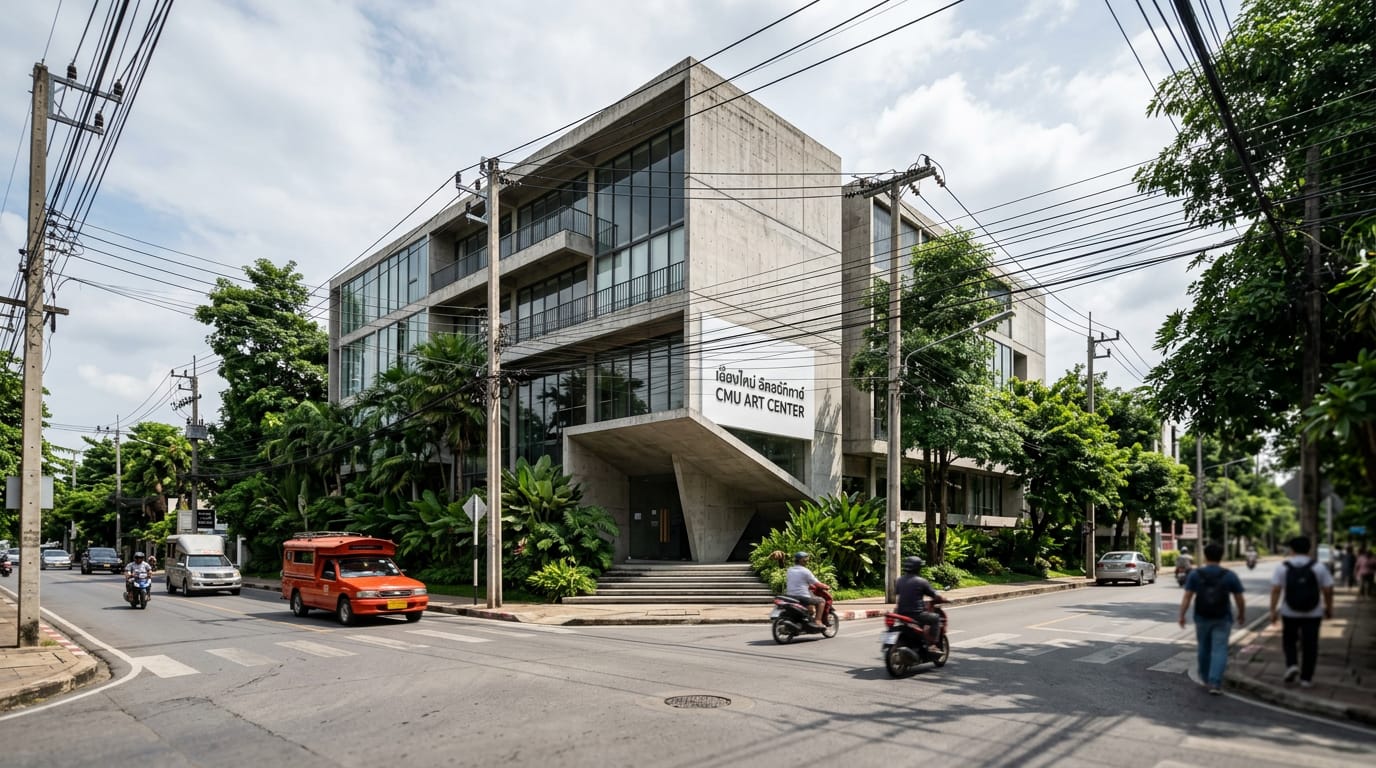
Chiang Mai University Art Centre
The Chiang Mai University Art Centre, on the corner of Nimmanhaemin and Suthep Road at the south edge of the CMU campus, is the principal contemporary art space in northern Thailand. Founded in 1994 by the Faculty of Fine Arts, it runs a rotating programme of three to five exhibitions a year drawn from regional Thai contemporary practice, broader Asian contemporary art and faculty curatorial projects. Free entry, modernist concrete and glass building, walking distance from every Nimman café.
Museum
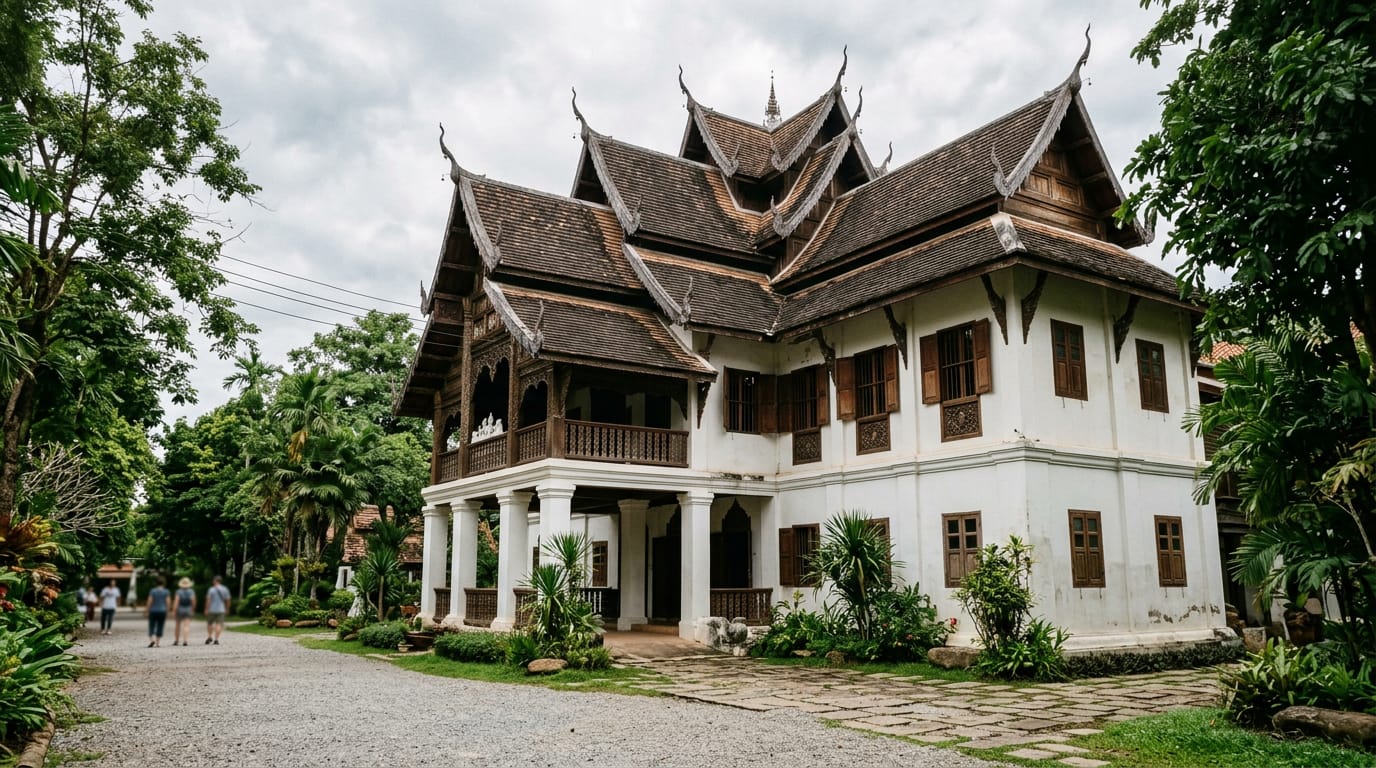
Chiang Mai National Museum
The Chiang Mai National Museum is the principal state collection for northern Thailand, housed in a purpose-built Lanna-influenced hall opened in 1973 under the Fine Arts Department. Its galleries run from Ban Chiang prehistoric pottery through Hariphunchai bronzes and the full sweep of the Mangrai dynasty to the modern royal regalia of the Chiang Mai ruling house. The building sits on the Superhighway north of the Old City, next door to Wat Jed Yod.