Temples
The temples of Chiang Mai
Chiang Mai sits inside a square moat built in 1296, and the moat encloses one of Asia's densest concentrations of working Buddhist temples — around three hundred in the city alone. This guide covers the dozen that visitors most often look for, in the order most people see them. Each page has current opening hours and fees, dress-code notes, what to look for inside the viharn and chedi, and how the temple sits in the broader Lanna tradition.
Updated
The twelve essential wats
Sorted alphabetically. The four in the Old City core (Phra Singh, Chedi Luang, Chiang Man, Suan Dok) are walkable as a single half-day.
Temple
Wat Bup Pha Ram
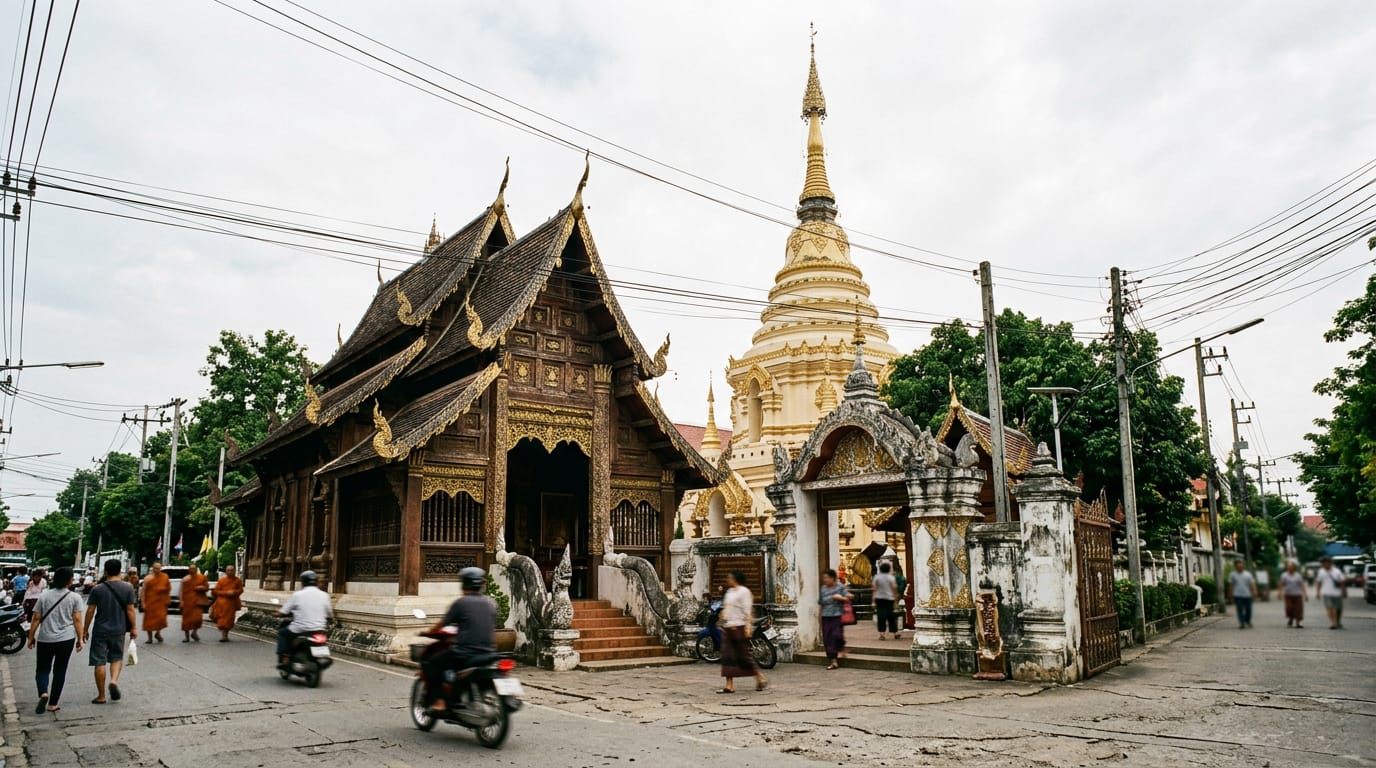
Wat Bup Pha Ram, the 'Flower Park Temple', sits on Tha Pae Road between the eastern moat and the Ping River. Founded in 1497 by King Muang Kaew, it carries three principal halls: a 19th-century Burmese-style chedi, an older teak viharn with rare painted murals, and a modern marble hall. A Donald Duck statue holding an alms bowl outside the dhamma hall has become a small local landmark.
Founded 1497
Read the guide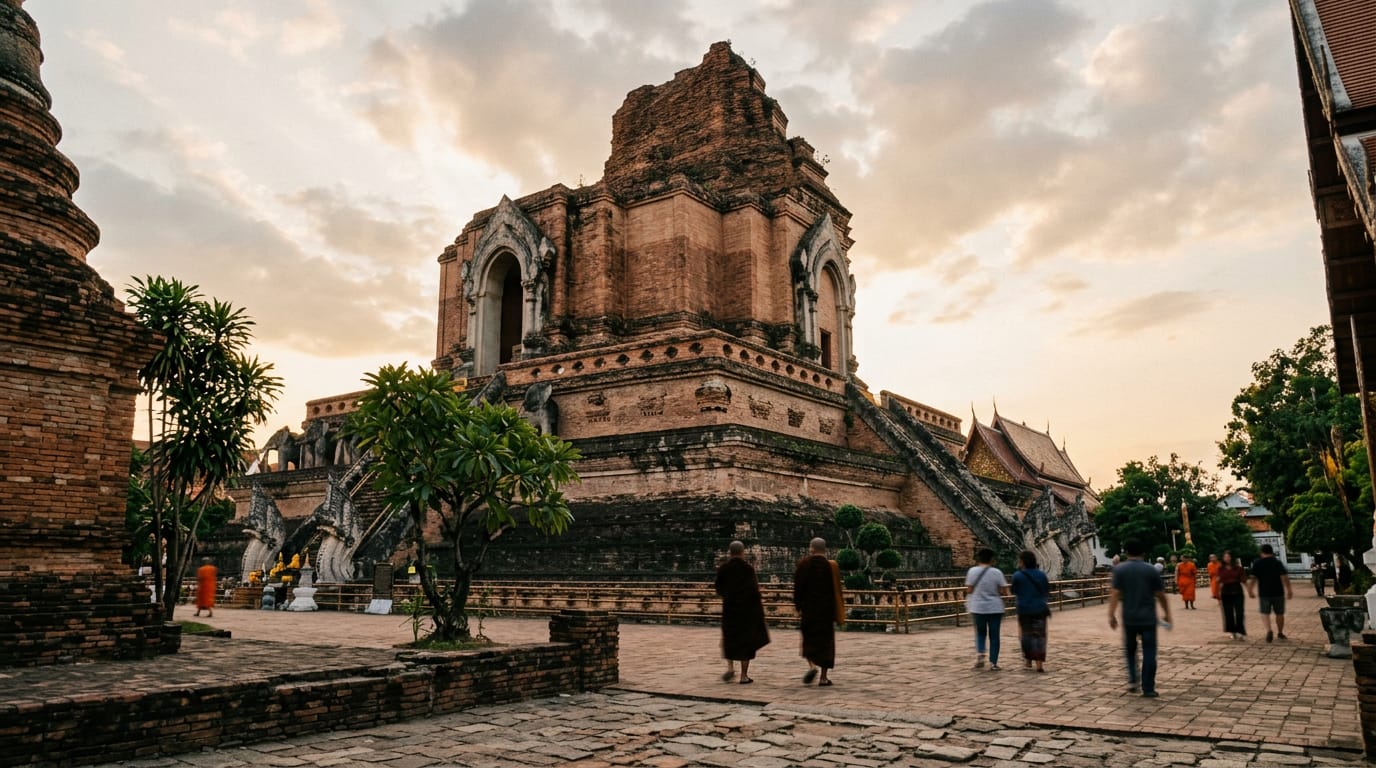
Temple
Wat Chedi Luang
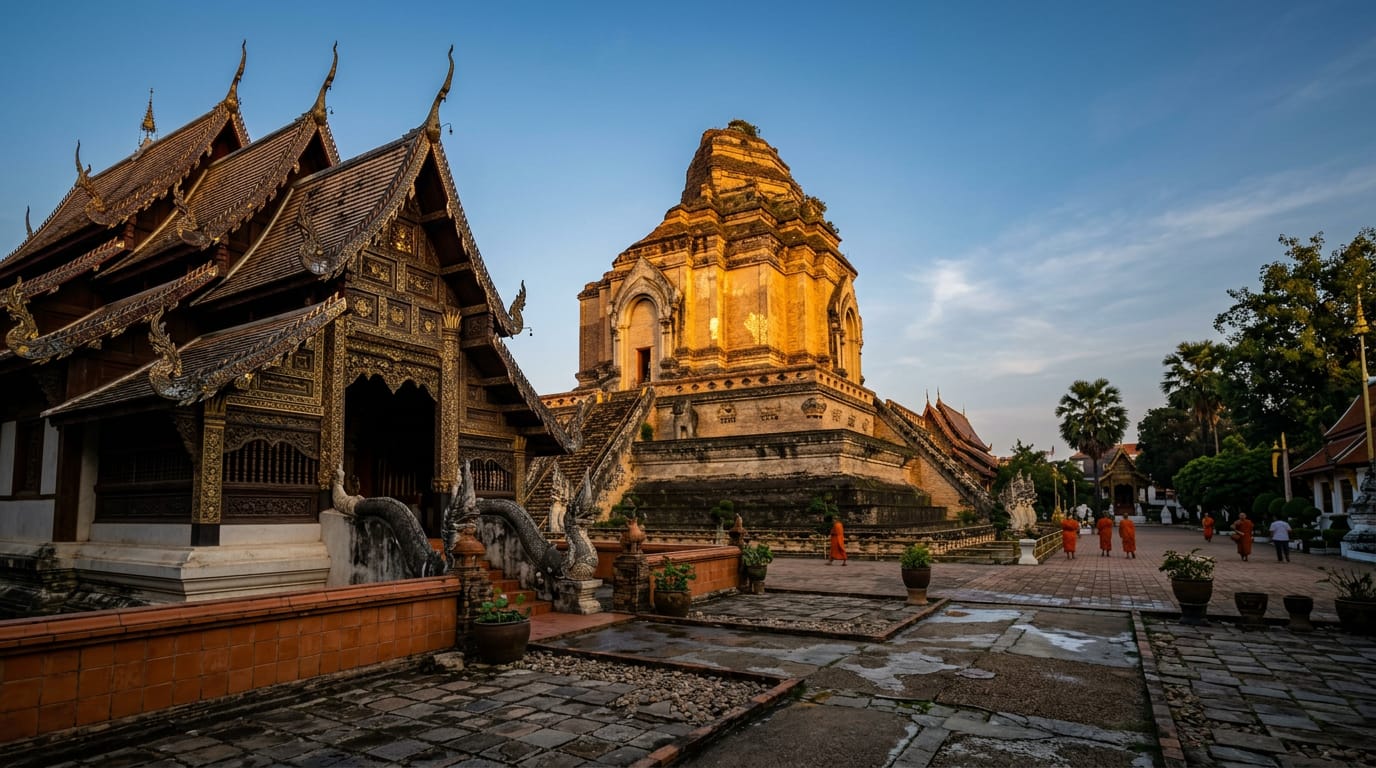
Wat Chedi Luang holds the ruined 60-metre chedi that was once the tallest building in Lanna and still dominates the centre of Chiang Mai's Old City. Founded in 1391 by King Saen Muang Ma and completed in 1481 under Tilokaraj, it was partly toppled by the 1545 earthquake. The compound also houses the city pillar and Chiang Mai's active monk-chat programme.
Founded 1391
Read the guide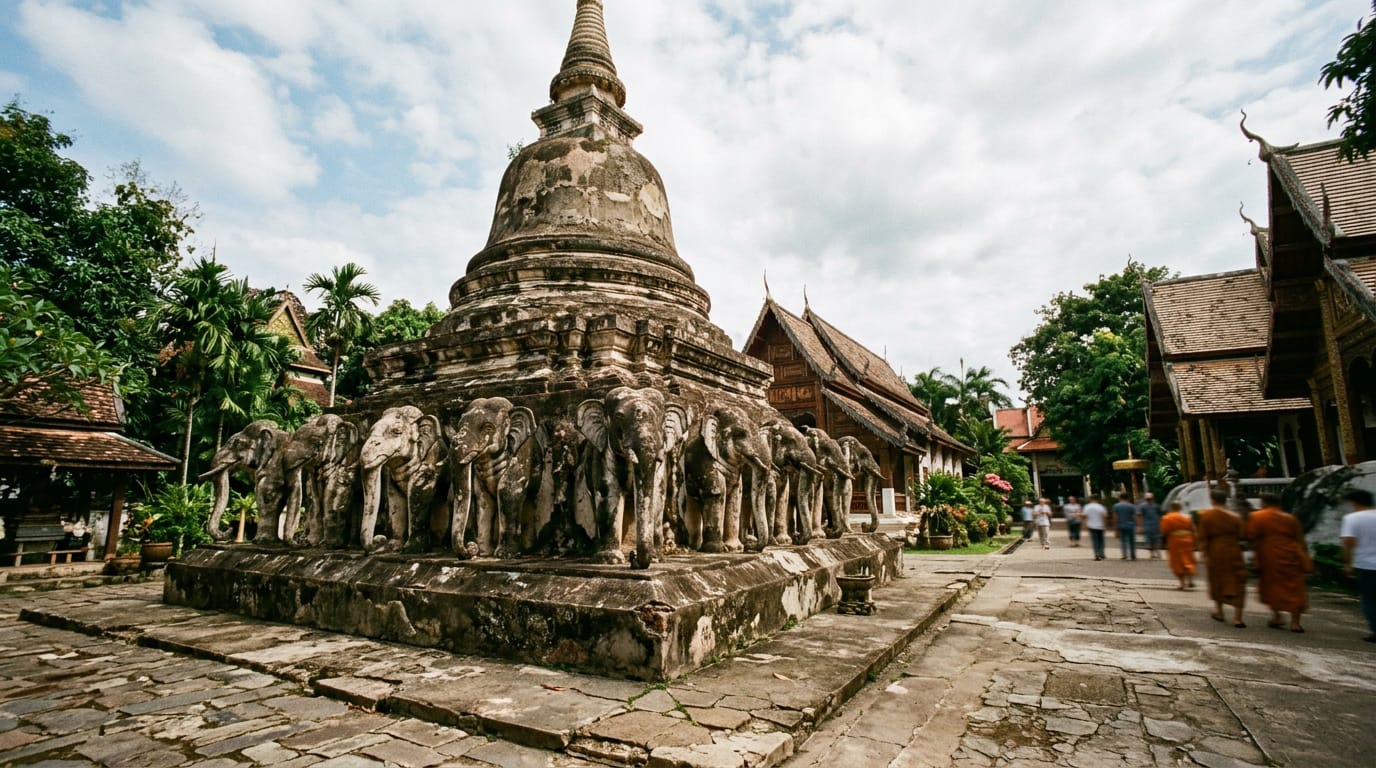
Temple
Wat Chiang Man
Wat Chiang Man is the oldest temple in Chiang Mai, founded in 1297 by King Mangrai as the first building inside his new walled city. Its Chedi Chang Lom, ringed at the base by fifteen elephant statues in stucco, set the template for Lanna stupa design. The Phra Sila marble Buddha and the crystal Phra Setangkhamani are kept inside a locked viharn.
Founded 1297
Read the guide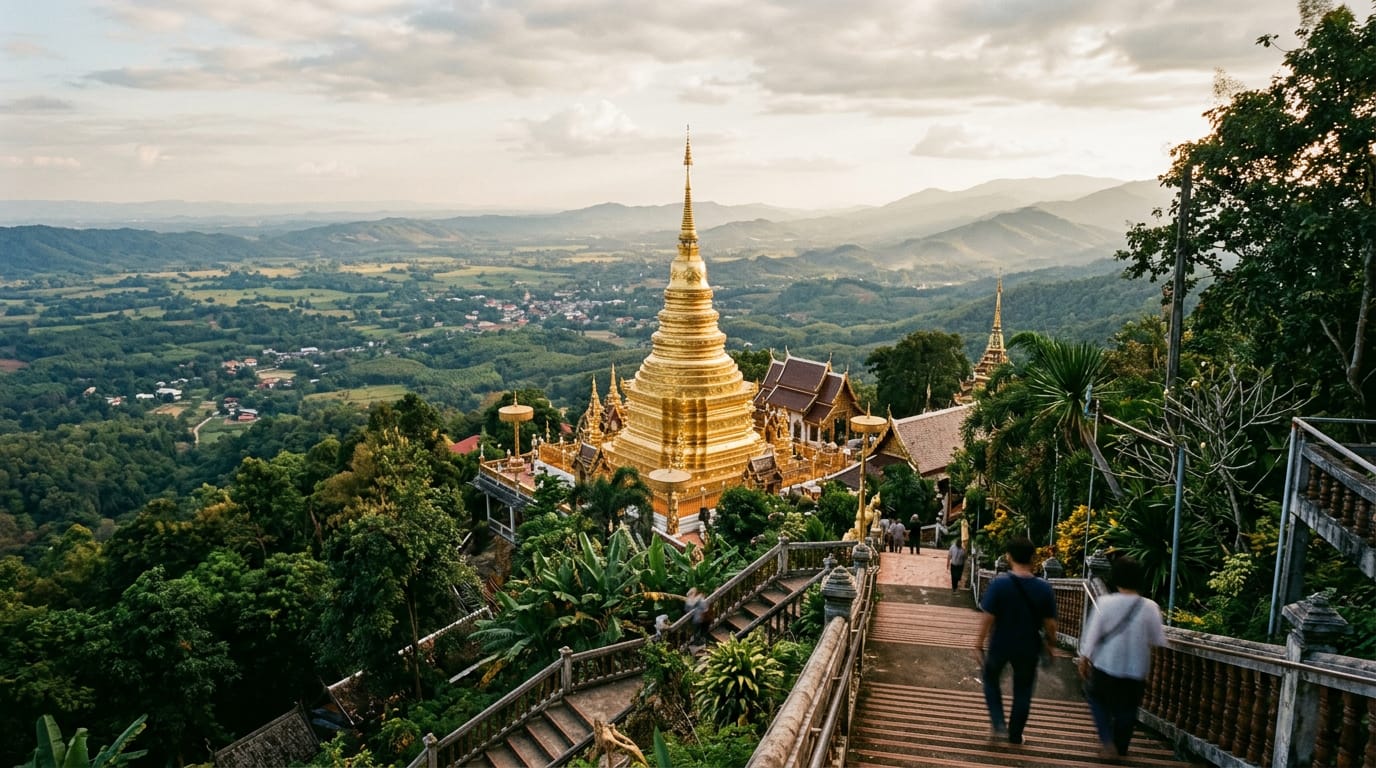
Temple
Wat Doi Saket
Wat Doi Saket is a hilltop wat in the town of the same name, 17 km north-east of Chiang Mai. Founded in the 14th century, it sits at the top of a long naga staircase and looks out over the Doi Saket valley and its lake. Off the tourist coach trail and frequently empty, it is also the staging site for the largest commercial mass lantern release of Yi Peng each November.
Founded 14th century
Read the guide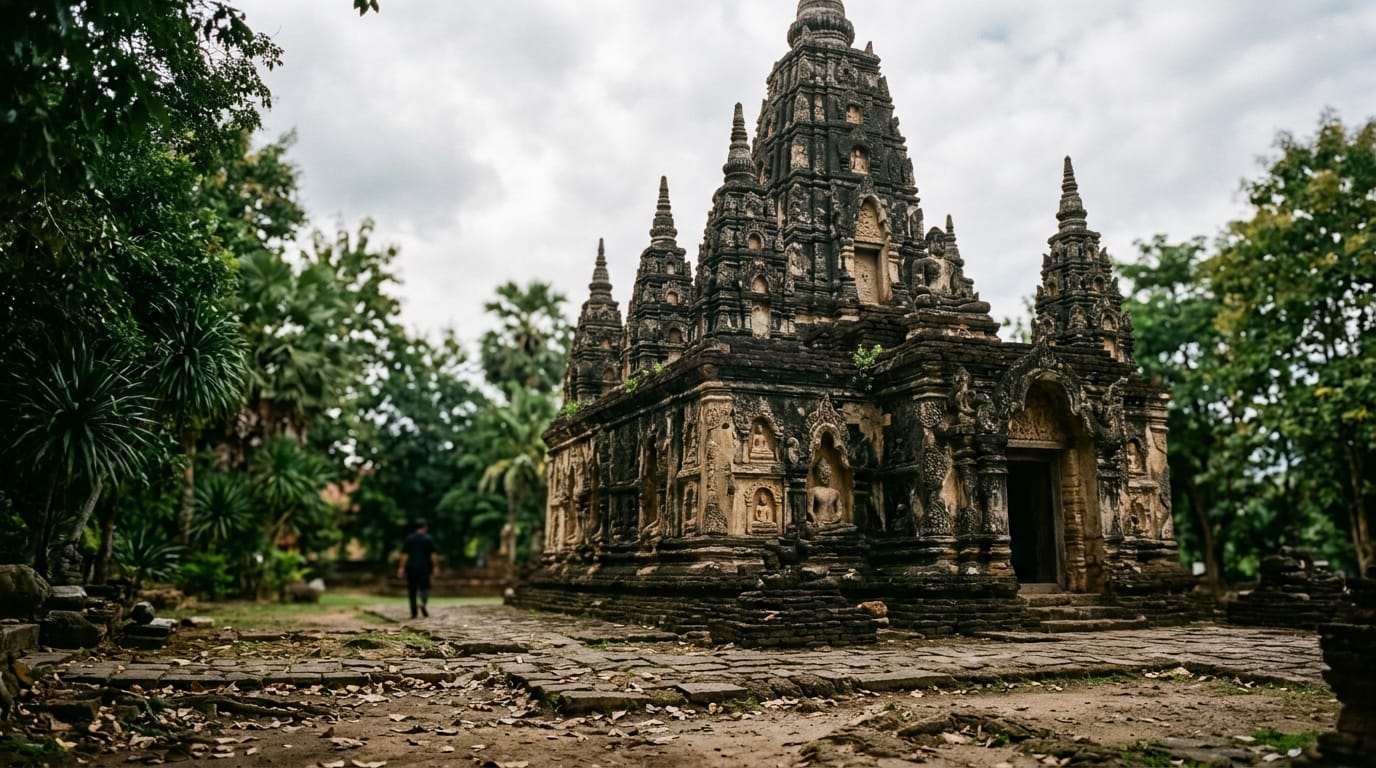
Temple
Wat Jed Yod
Wat Jed Yod, the Seven-Spired Temple, was founded in 1455 by King Tilokaraj and is the only temple in northern Thailand modelled on the Mahabodhi at Bodh Gaya. Its seven spires commemorate the seven weeks the Buddha spent in meditation after his enlightenment. In 1477 the temple hosted the Eighth World Buddhist Council, which revised the Pali canon.
Founded 1455
Read the guide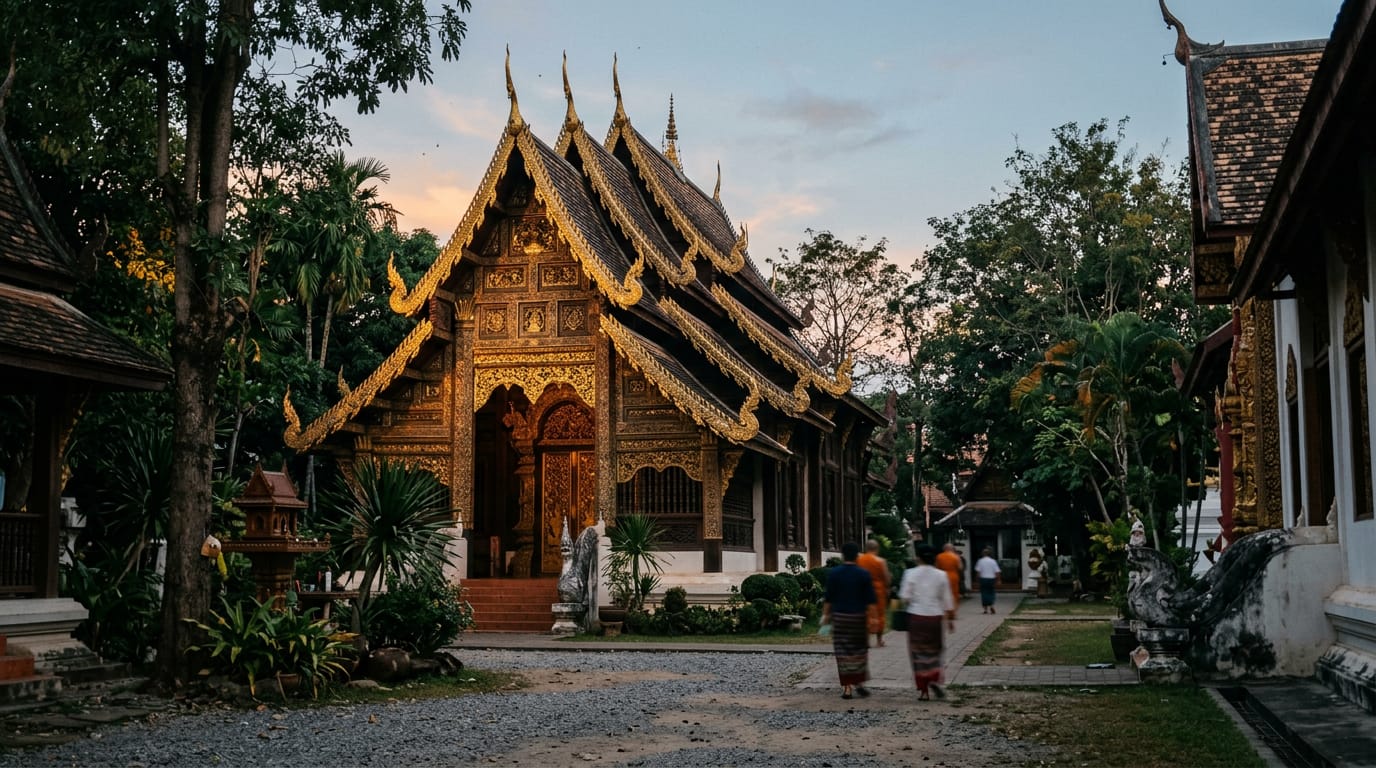
Temple
Wat Phra Singh
Wat Phra Singh is the most revered temple inside Chiang Mai's Old City, founded in 1345 by King Phayu of the Mangrai dynasty. Its Lai Kham viharn shelters the Phra Buddha Sihing — the Lion Buddha — which is paraded through the streets each Songkran. Together with its gilded chedi, carved teak gables and gold-leafed scripture library, the compound is the finest single example of Late Lanna architecture in northern Thailand.
Founded 1345
Read the guide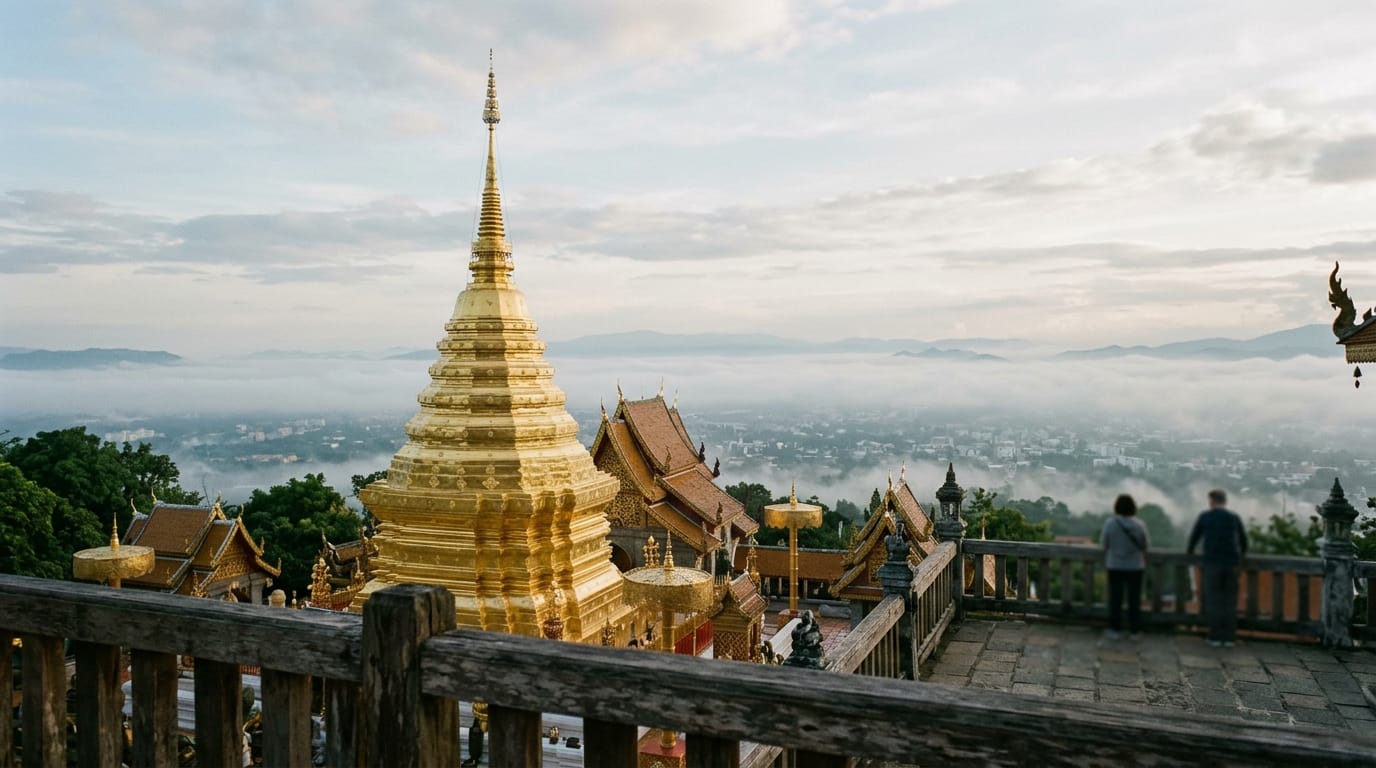
Temple
Wat Phra That Doi Suthep
Wat Phra That Doi Suthep is the mountain temple that watches over Chiang Mai from a forested ridge 1,073 metres above the city. Founded in 1383 by King Kuena to enshrine a Buddha relic carried up the mountain on the back of a white elephant, its gilded chedi has been the spiritual centre of northern Thailand for six centuries. A 306-step naga-flanked staircase or a small cable car carries visitors to a courtyard with one of the great views of the Ping Valley.
Founded 1383
Read the guide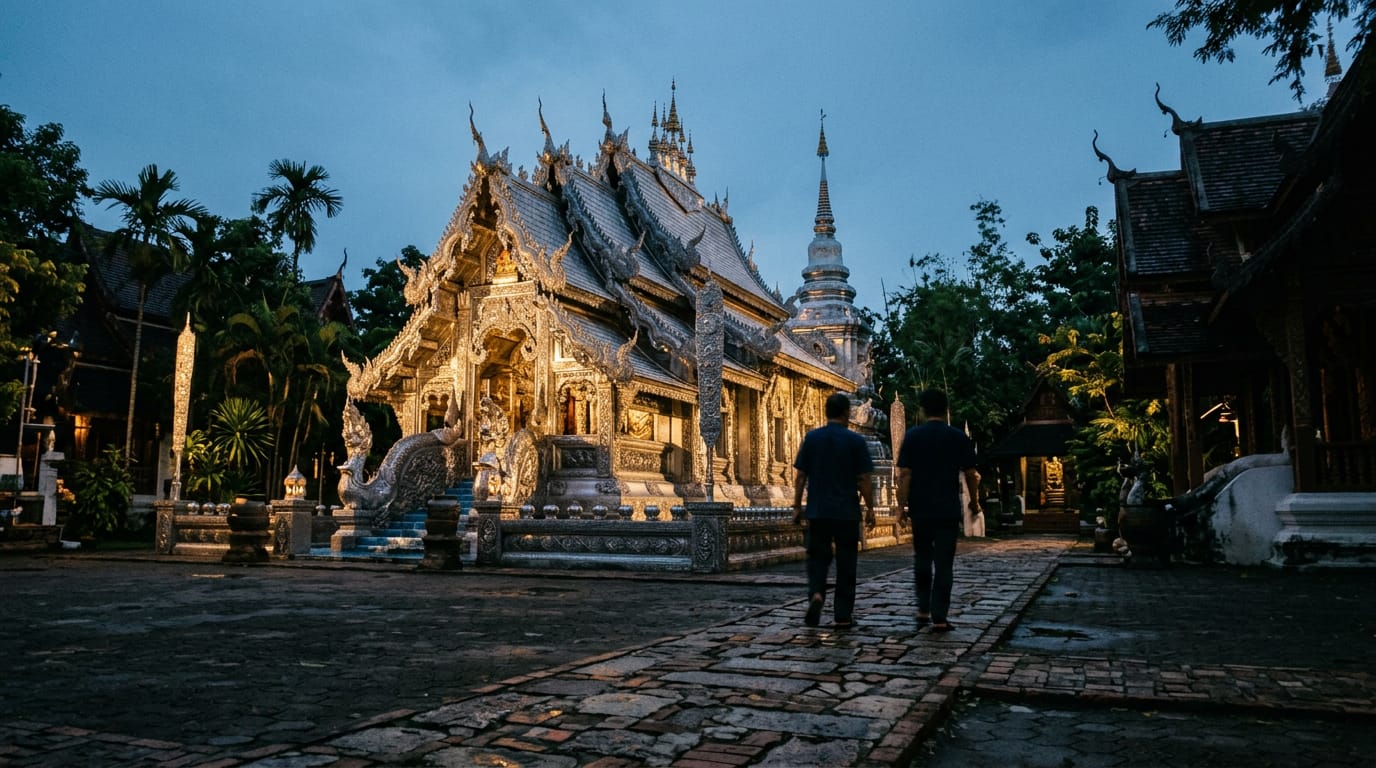
Temple
Wat Sri Suphan
Wat Sri Suphan is the Silver Temple of Chiang Mai. The wat was founded in 1502, but its defining feature is the silver ubosot completed in 2016, an ordination hall clad entirely in embossed silver and aluminium panels worked by the Wua Lai silversmiths next door. Women may not enter the ubosot but view it from the doorway. The Saturday Walking Street begins at the gates.
Founded 1502
Read the guide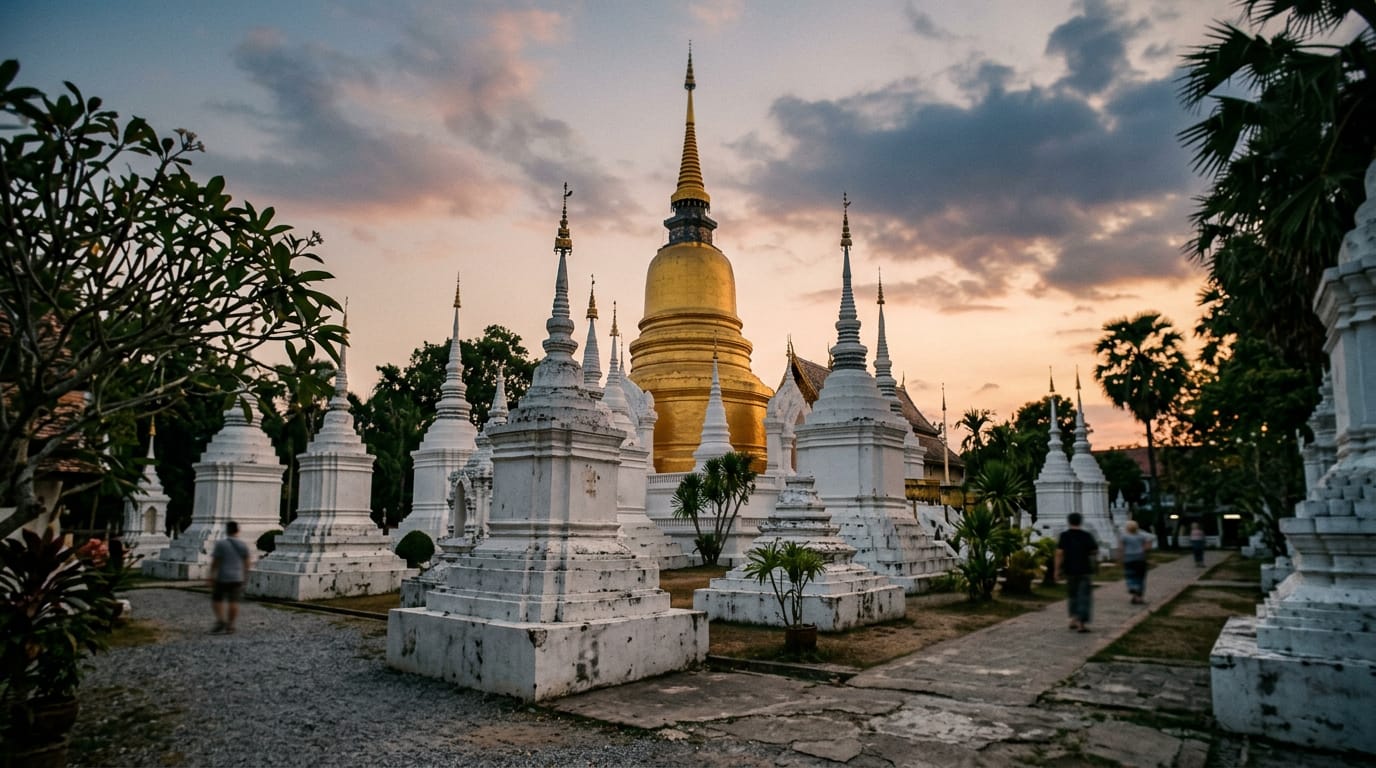
Temple
Wat Suan Dok
Wat Suan Dok, the 'Flower Garden Temple', sits outside the western moat on Suthep Road. Founded in 1370 by King Kuena to house a relic later carried up Doi Suthep by a white elephant, it is best known for its cluster of whitewashed royal chedis (the cremation memorials of the Mangrai dynasty) and for weekday Monk Chat sessions with novice monks.
Founded 1370
Read the guide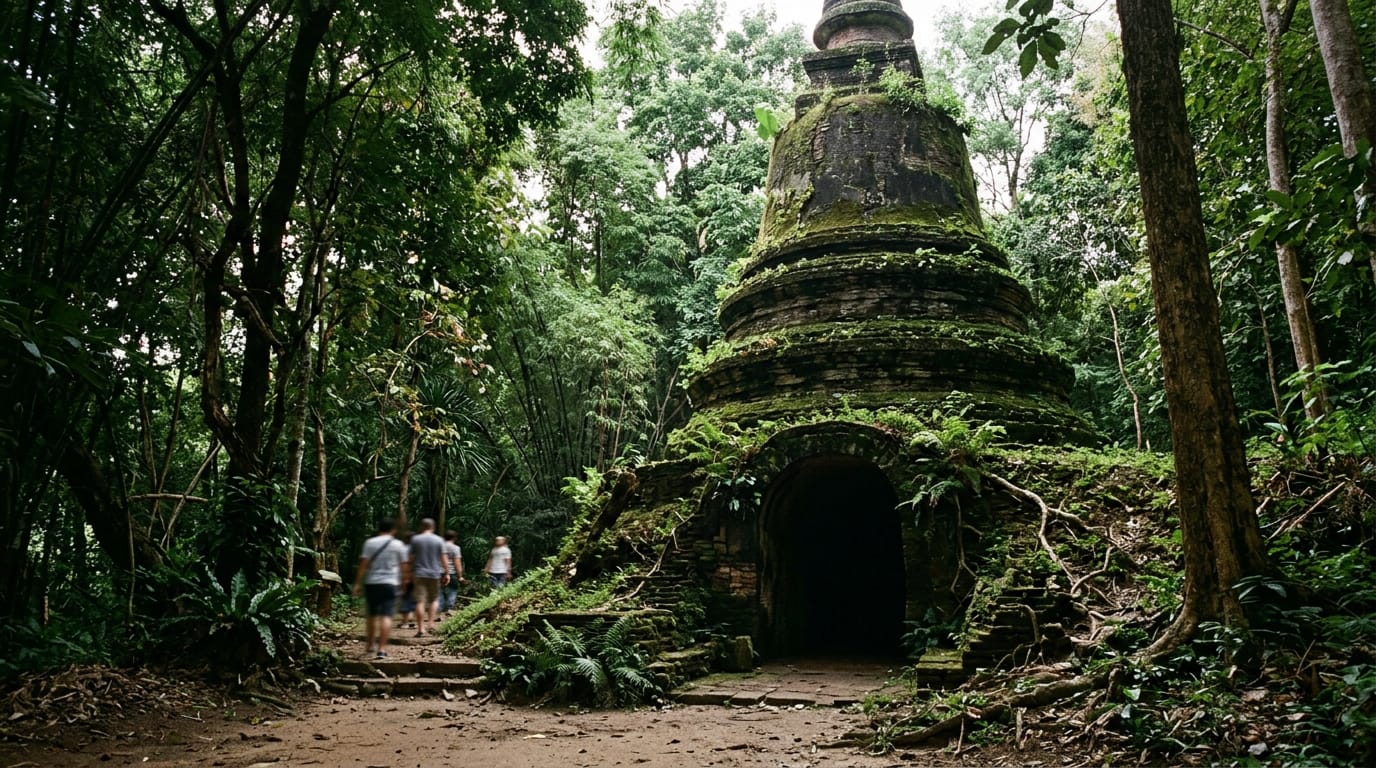
Temple
Wat Umong
Wat Umong is a forest monastery at the foot of Doi Suthep, founded by King Mangrai around 1297 for monks who preferred the quiet of the woods. Its defining feature is a set of ancient tunnels dug into the base of a Lanna chedi and painted with faded murals. A mossy stupa, a fish-and-turtle lake, and 'tree wisdom' signs in English on the trunks make it feel half an arboretum.
Founded c. 1297
Read the guideFrequently asked questions
How many temples are there in Chiang Mai?
Around three hundred working Buddhist temples inside the city and immediate suburbs — more per square kilometre than anywhere else in Thailand. Most are Theravada Lanna-style wats, a handful are Burmese, and a small number are dedicated to Chinese Mahayana communities. The famous twelve cover most of what visitors come for.
What is the most important temple in Chiang Mai?
Wat Phra That Doi Suthep, on the mountain above the city. The golden chedi is said to enshrine a relic of the Buddha brought to the site in 1383 on the back of a white elephant. For Chiang Mai residents, climbing the 306 naga-flanked steps to it remains the foundational pilgrimage.
Which Chiang Mai temple should I visit first?
Wat Phra Singh in the Old City — central, free, beautifully restored, and a working monastery you can wander in twenty minutes. It is the best place to see the Lanna style at a glance: gilded carved gables, mirror-glass detailing, scripture libraries on stilts. From there, Wat Chedi Luang is a two-minute walk.
Do I need to pay to enter Chiang Mai temples?
Most are free for Thai citizens and ask 20–50 baht for foreign visitors. Doi Suthep is 30 baht; Wat Phra Singh and Wat Chedi Luang are 40 baht each. Smaller neighbourhood wats are typically free but a 20-baht donation is appreciated.
What should I wear inside a temple?
Cover shoulders and knees. No tank tops, no shorts above the knee, no see-through tops. Larger wats lend sarongs at the gate. Shoes come off before entering any viharn (assembly hall) or chedi. Women should not touch a monk or his robes.
What time do Chiang Mai temples open?
Almost all open at 06:00 for morning alms and close their assembly halls at 17:00 or 18:00. The compound grounds are usually accessible later. Wat Doi Suthep opens 06:00–18:00. Mornings are quieter and cooler — go early.
What is the difference between a wat, a viharn and a chedi?
A wat is the temple compound as a whole. A viharn is the main assembly hall where lay people gather. A chedi (or stupa) is the bell-shaped reliquary tower that houses a sacred object — usually a relic. An ubosot is the more sacred ordination hall, where monks are ordained.
Can women enter Chiang Mai temples?
Yes. Some ubosots (ordination halls, the most sacred buildings) are off-limits to women, but every viharn, chedi compound and gallery is open. Women should avoid sitting with feet pointing toward a Buddha image, and never hand anything directly to a monk — place it on a cloth.