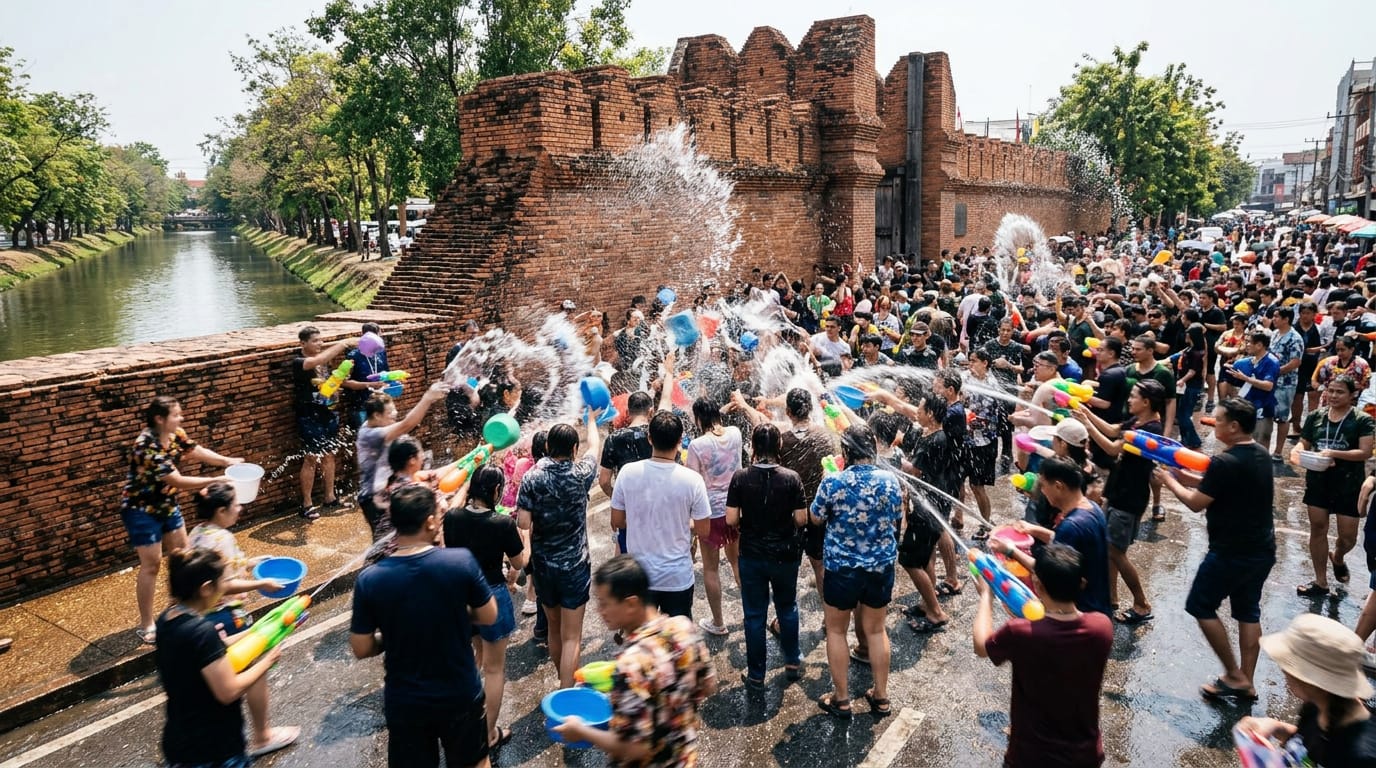
Songkran is Thailand's traditional New Year and Chiang Mai's biggest annual festival, held 13–15 April every year. It combines a centuries-old Buddha procession of the Phra Buddha Sihing image with a citywide water fight along the moat. Free public events run at Tha Phae Gate, Wat Phra Singh, Wat Chedi Luang, and the four moat sides, with the headline Buddha procession on day one and peak water fights on day three. Expect 35–40°C heat, dense crowds, and most of the Old City under cheerful soaking.
Updated
What it is
Songkran is the Thai New Year, observed nationally from 13 to 15 April. The word Songkran comes from the Sanskrit Saṃkrānti, meaning “astrological passage”, the moment the sun moves from Pisces into Aries, which marked the new year in the original solar Hindu calendar that Theravada Buddhism inherited.
It is at once Thailand’s most important religious holiday and its most famous street party. Both halves are real. Songkran is the only week of the year when Thai families return home from work in Bangkok and Phuket to their parents and grandparents in the provinces; it is also the week the Old City moat becomes a 6 km perimeter of water cannons.
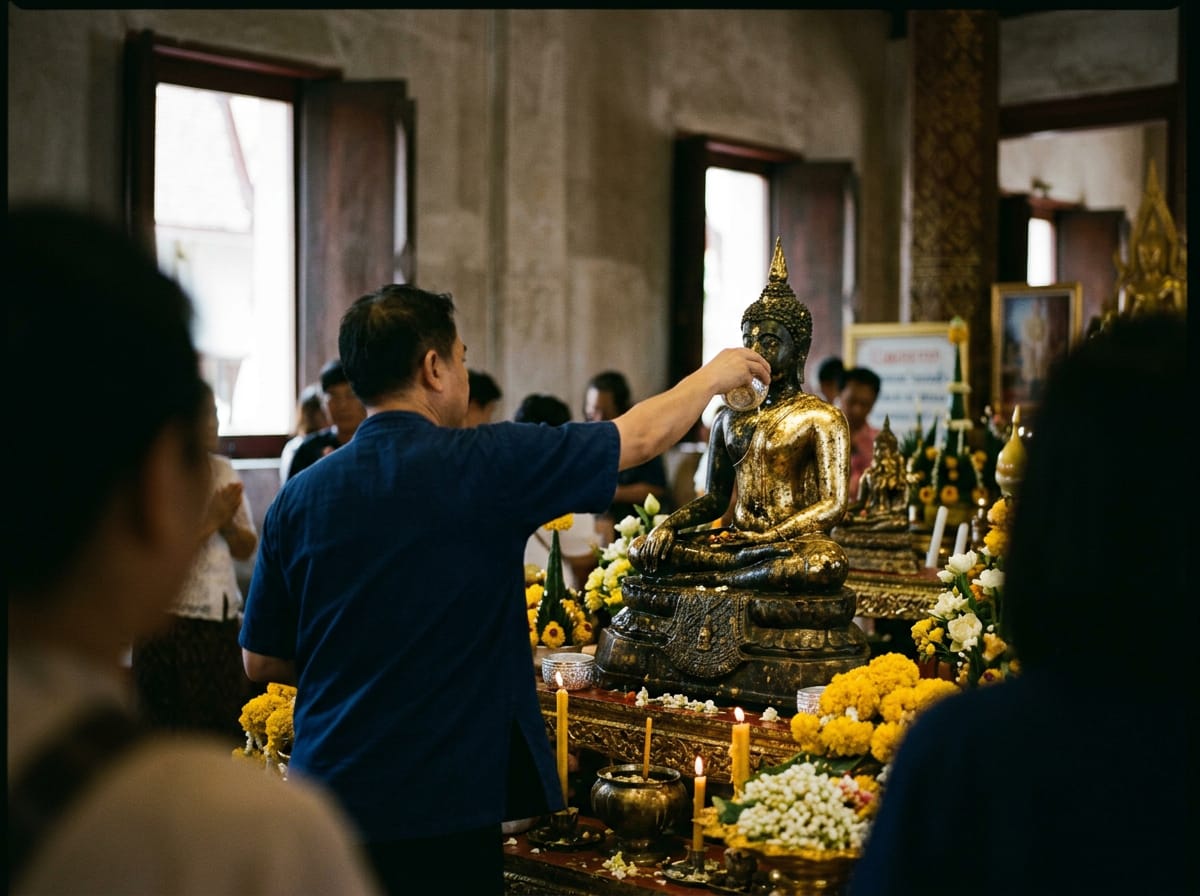
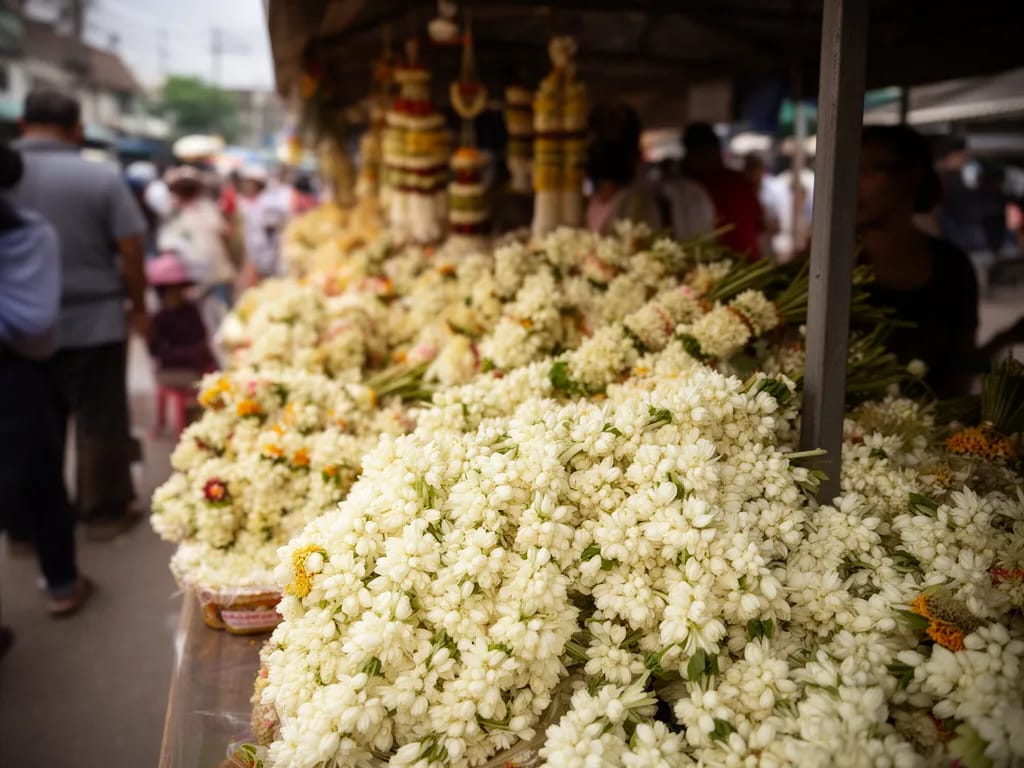
The religious foundation is the gentle bathing, or rod nam dam hua, of Buddha images, monks, and elders with cool scented water mixed with jasmine and mali flower petals. The act is a request for blessing, the cool water symbolises the washing away of the past year’s misfortunes, and the gesture is the older relative pouring water back over the younger person’s hands. The street water fight grew out of this temple ritual. Playful temple-courtyard splashing in the 1950s turned, over decades, into the modern citywide Maha Songkran.
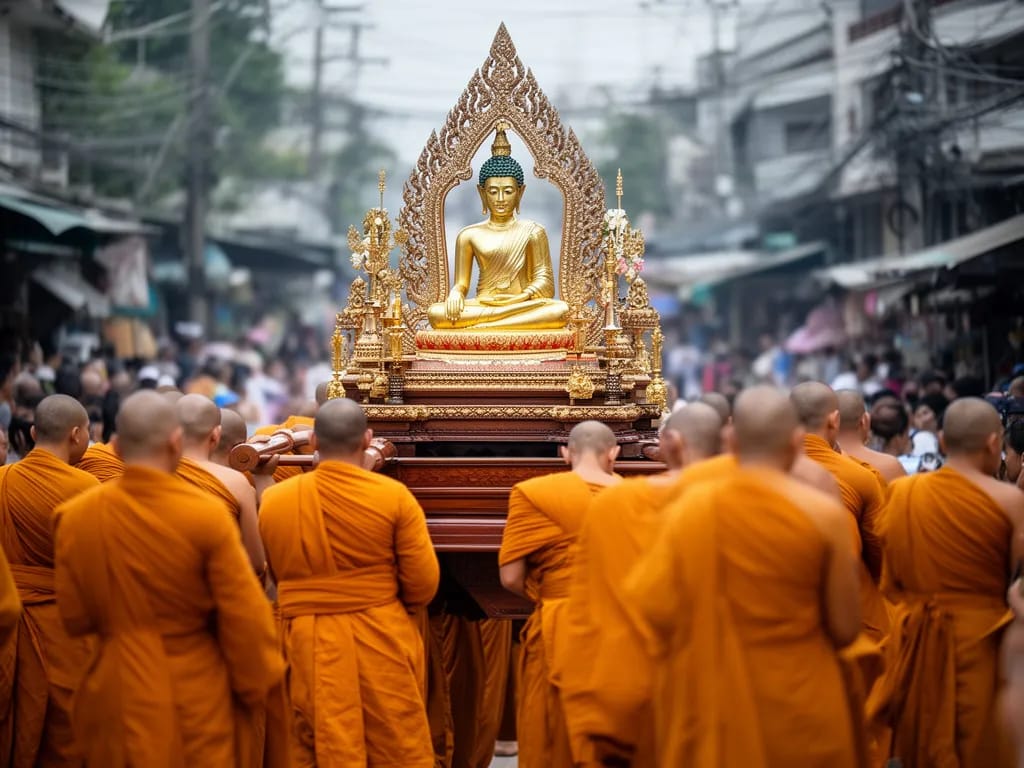
In Chiang Mai, the Lanna character of the festival is clearer than anywhere else. The Phra Buddha Sihing image at Wat Phra Singh, one of the three most revered Buddha statues in Thailand, is taken out of the temple on day one and carried in slow procession around the Old City. Locals line the route with bowls of scented water to pour over the image. This is the spiritual core of Chiang Mai Songkran. The water fight is what the city becomes once the procession returns home.
Dates this year
Songkran 2026 runs 13–15 April, the dates fixed by Royal Decree since 1940 regardless of the lunar calendar.
| Year | Dates | Note |
|---|---|---|
| 2023 | 13–15 April | Standard |
| 2024 | 13–15 April | Standard, 5-day public holiday |
| 2025 | 13–15 April | Standard |
| 2026 | 13–15 April | Mon–Wed; 4-day weekend with Sunday |
| 2027 | 13–15 April | Standard |
The three official festival days sometimes extend to four or five days of public holiday when the Thai cabinet adds a Friday or a substitute Monday. Confirm the current year’s public-holiday calendar before booking flights, as banks and government offices close throughout.
What to expect, day by day
Day one: Monday 13 April — Maha Songkran
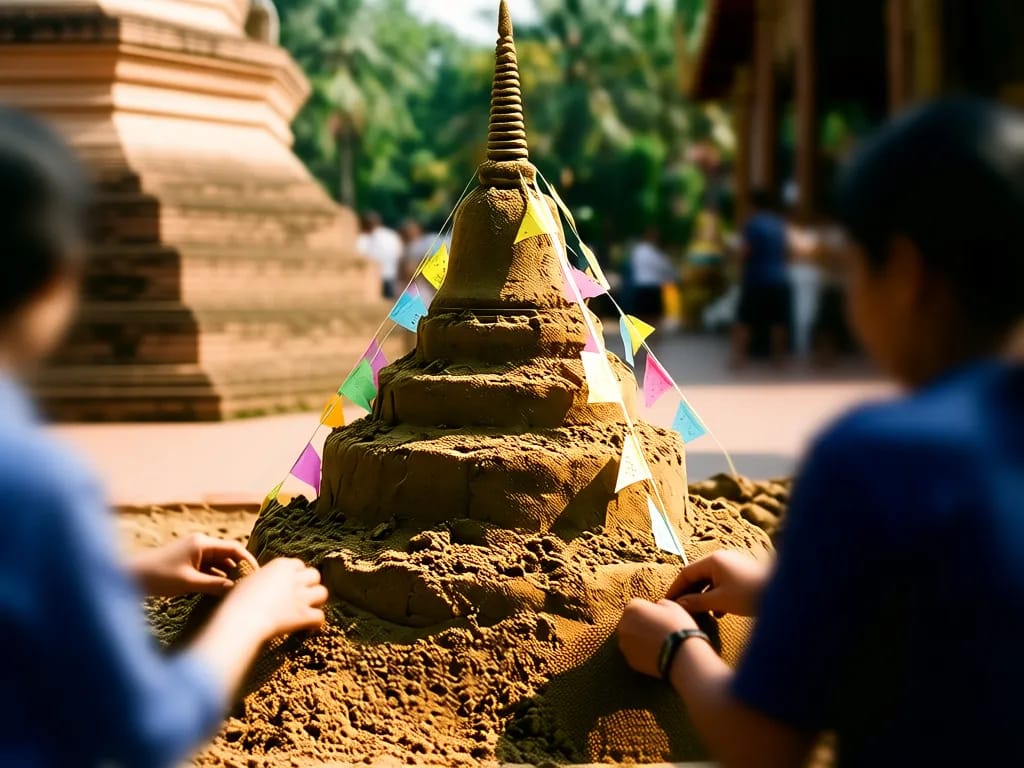
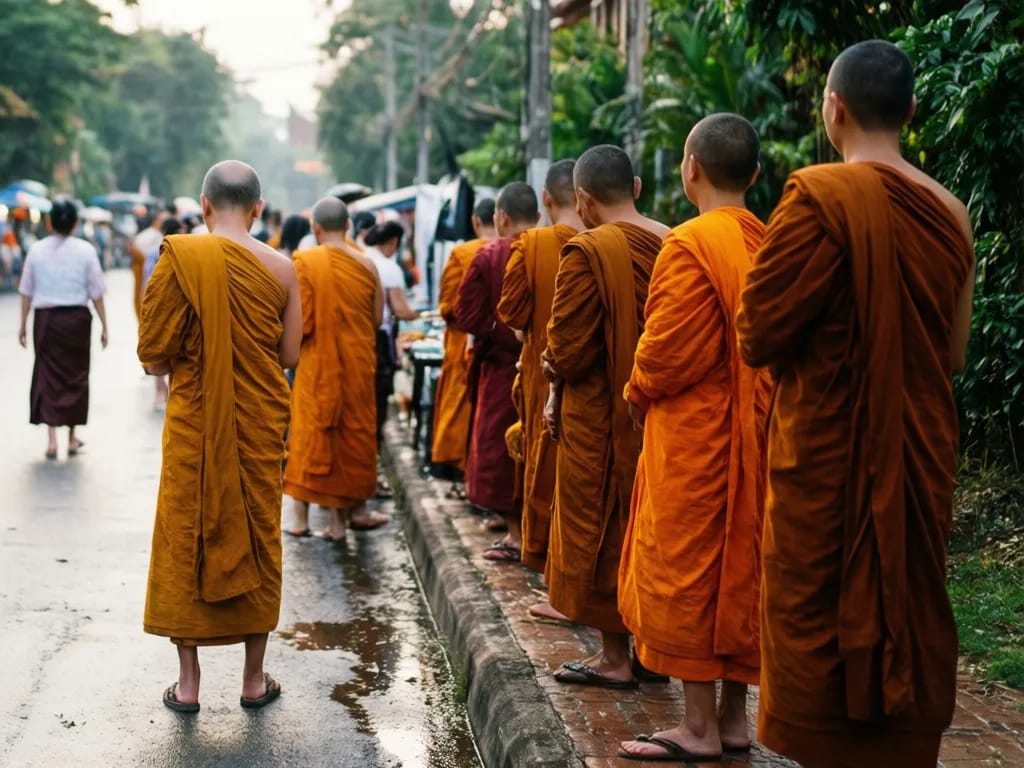
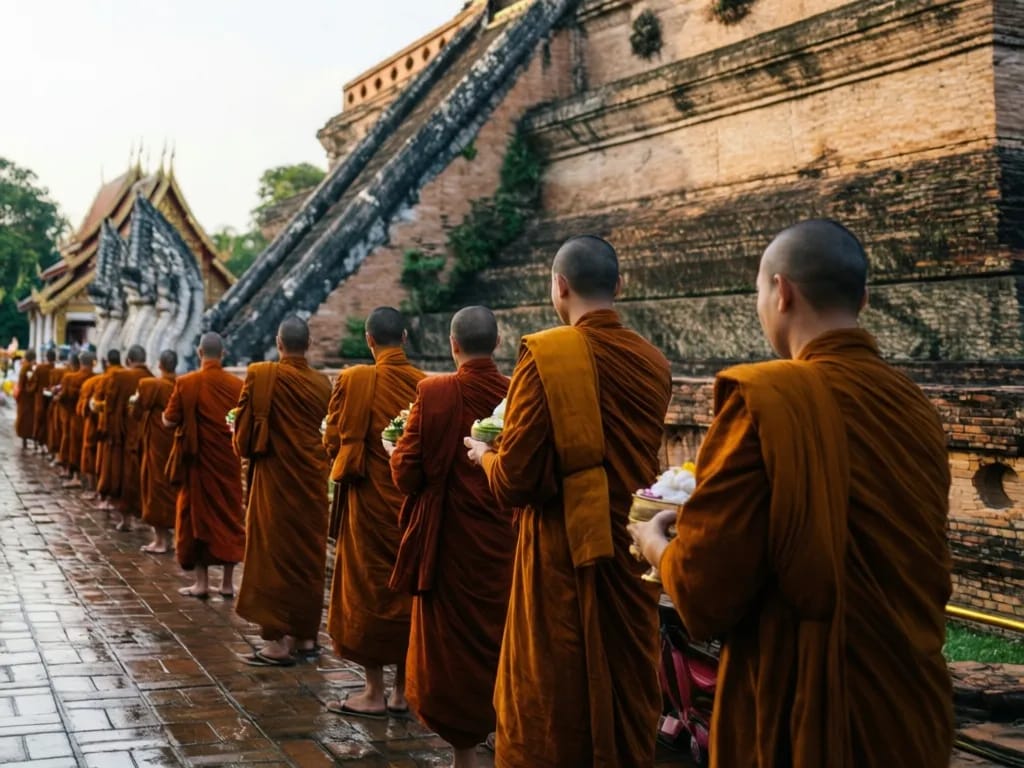
The first day is Maha Songkran, the day the old year formally ends. Mornings at Wat Phra Singh and Wat Chedi Luang are calm, with alms-giving from 06:30 and monks chanting a long blessing for the city by 09:00. Families build small sand chedi inside temple courtyards.
At 13:00 the Phra Buddha Sihing image is brought out of Wat Phra Singh’s wihan, placed on a teak palanquin, and carried in procession east along Ratchadamnoen Road. The route runs through Tha Phae Gate and turns south along Chang Klan Road, returning via Tha Pae Road by 17:00. Thousands of locals line the kerb with silver bowls of jasmine water; you can join freely and pour water over the image as it passes.
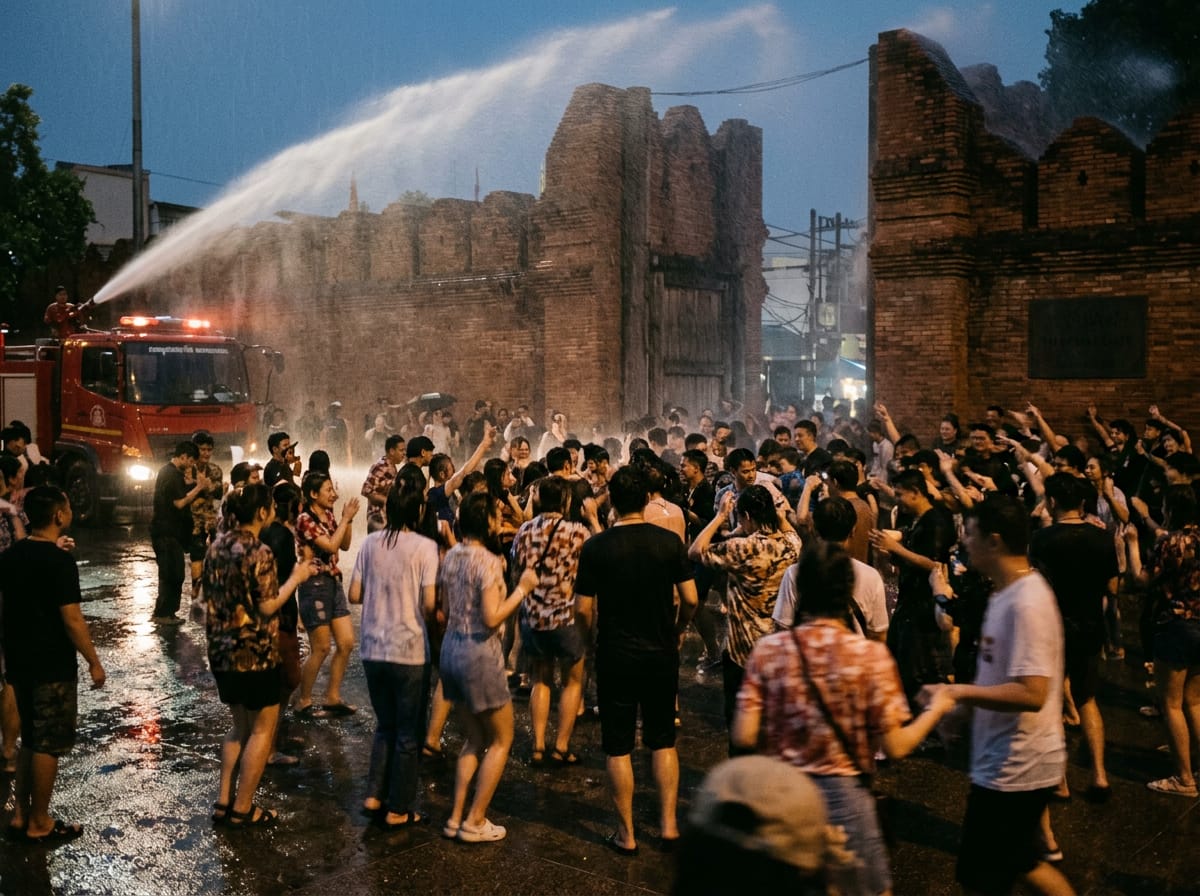
The mass street water-throwing begins on day one around the moat from about 14:00. Tha Phae Gate is the headline plaza. Old City fire trucks spray the crowd from stage rigs; restaurants on Moonmuang Road run water cannons from their balconies. By 18:00 most pedestrians are soaked.
Day two: Tuesday 14 April — Wan Nao
Day two is Wan Nao, traditionally a quiet day for cleaning the family house, preparing food, and visiting elders to pour scented water gently over their hands as the wai khao porn blessing. Temple grounds host sand-chedi competitions through the morning. Tha Phae Gate hosts a Lanna cultural stage with northern dance, music, and food stalls from 10:00.
The water fight returns in the afternoon, lighter than day one but still constant along the moat. Wua Lai Road, the silver-smith district 700 m south of the Old City, runs its own quieter Lanna-style Songkran from 16:00 with monks blessing residents along the kerb before the Saturday Walking Street stalls open for the evening if the date falls on a Saturday.
Day three: Wednesday 15 April — Wan Payawan, peak day
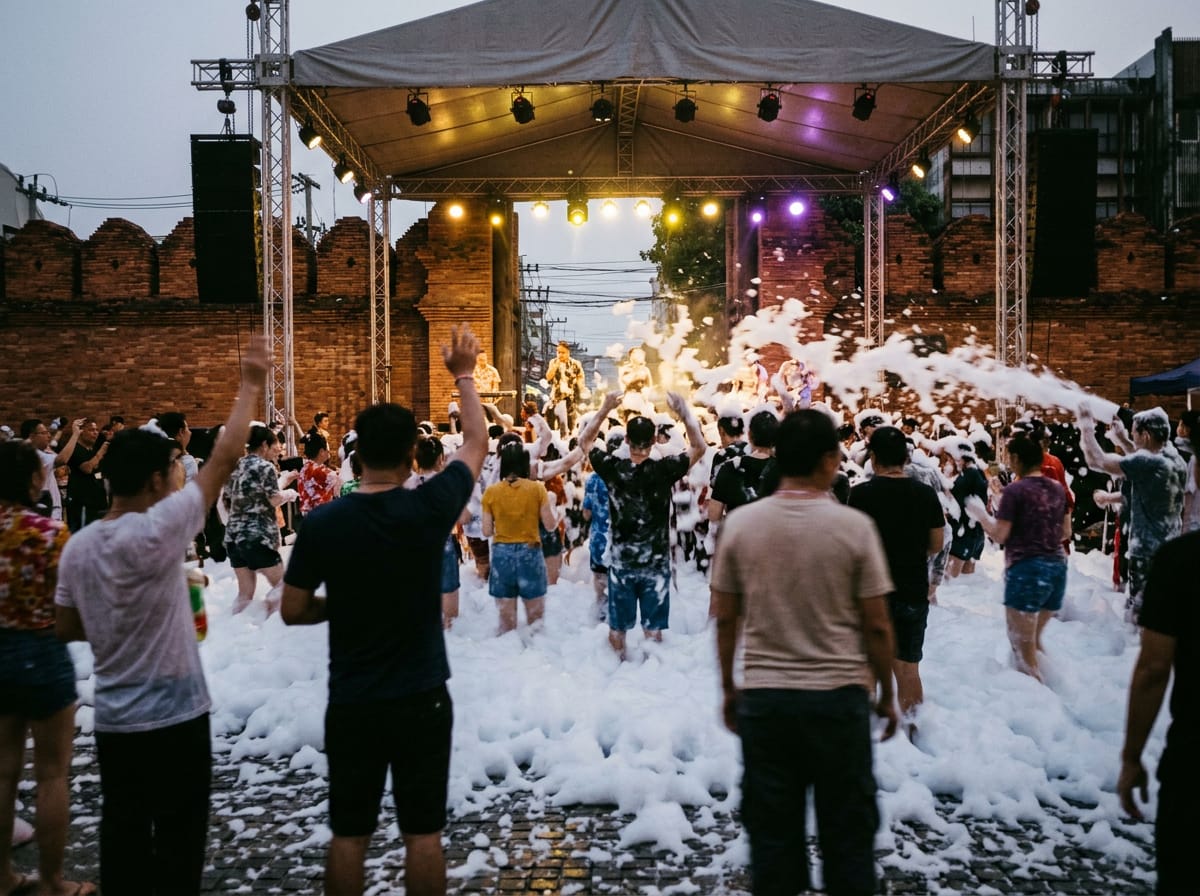
Day three is Wan Payawan, the official start of the new Thai year. It is also the peak water-fight day. The Tha Phae Gate plaza is at maximum density from 11:00 to 19:00, with fire trucks, sound stages, foam cannons, and DJ rigs. Many Old City restaurants close their dining rooms and open instead as makeshift water-pistol refill stations, charging 20 THB a bucket. Convenience stores along Moonmuang Road sell out of bottled water by midday; a 1.5-litre bottle climbs from 14 to 25 THB.
The east side of the moat, Moonmuang Road, runs as a continuous water battle for almost 2 km. The north side, Sripoom Road, is calmer and is where families with younger children settle in. The south side along Bumrungburi Road is the local Lanna scene, less tourist-heavy. Nimman district closes its main streets and runs its own DJ-driven daytime party from 13:00.
By 19:00 the water fight winds down. Tha Phae Gate switches to live music and evening street food until midnight. Wat Phra Singh holds a quiet candle-lit blessing for the new year at 20:00 inside the wihan.
Many families take the evening to begin rod nam dam hua, the gentle pouring of scented water over the hands of grandparents and elders to mark the new year. This is the most intimate part of Songkran and almost always private. If you are travelling with a Thai host family and are invited to take part, accept the gesture with both hands, kneel slightly, and present a small folded sabai shoulder cloth as the customary gift.
How to participate
Free public locations
- Tha Phae Gate plaza. The headline scene. Fire trucks, stages, foam parties, water cannons. Heaviest from 13 to 15 April, 11:00 to 19:00.
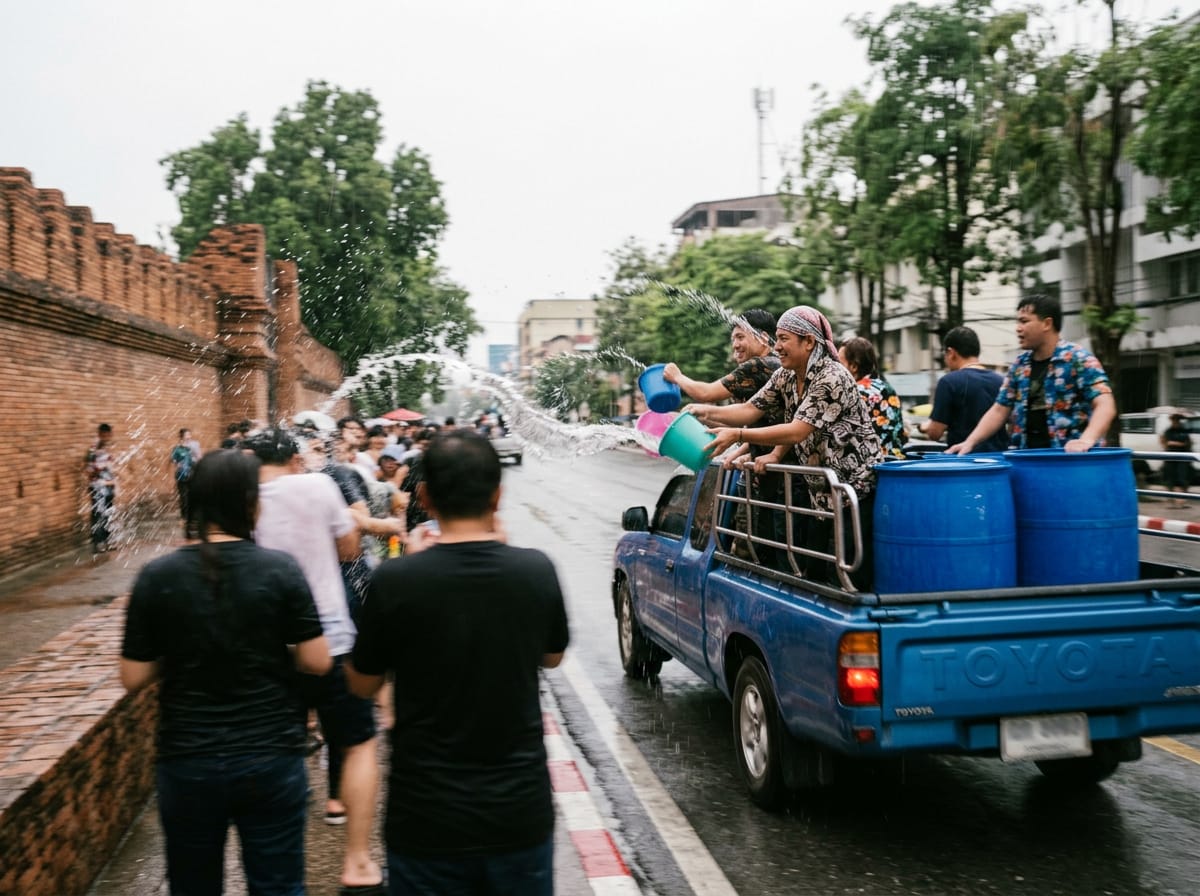
- The Old City moat. All four sides, with Moonmuang (east) the most intense, Sripoom (north) calmer, Bumrungburi (south) most local. Pickup trucks loaded with water barrels circulate the moat road continuously.
- Wat Phra Singh. The spiritual home of Chiang Mai Songkran. Free entry, Buddha procession departure point on day one, sand-chedi station all three days.
- Wat Chedi Luang. Sand-chedi building, alms-giving, gentler Buddha-bathing ceremony in the courtyard. Free entry.
- Three Kings Monument plaza. Cultural stage, Lanna dance, food stalls, calmer crowd than Tha Phae Gate.
- Wua Lai Road. Local Lanna Songkran south of the Old City, with monk blessings and street stalls. The Saturday Walking Street merges into Songkran when the dates overlap.
Ticketed and reserved options
- Hotel rooftop pool parties. Riverside hotels and several Nimman boutiques run ticketed Songkran pool parties at 800–2,500 THB per head, with DJs, food, and water-fight access to a private deck. Useful for travellers who want the energy without the moat density.
- TAT cultural village. A 200 THB pass at the TAT pavilion near Three Kings Monument includes a guided sand-chedi build, a Lanna food set, and a private Buddha-bathing ceremony.
- Wat Phra Singh blessing reservation. Some private tour operators arrange a small-group blessing by a senior monk inside Wat Phra Singh for around 1,500 THB per head, with a sai sin string tied to the wrist.
Legal and safety notes
- Driving. Songkran is consistently the deadliest week on Thai roads. Avoid renting a scooter; songthaew transport is safer. Drunk-driving checkpoints are heavy on day three.
- Camera-equipment ban areas. None. Photography is free everywhere, but ungloved electronics fail fast in the moat zone.
- Alcohol. Drinking outside on public roads is legal during Songkran but spot fines apply for visibly intoxicated behaviour.
- No high-pressure pumps. Industrial pressure washers are banned inside the moat by municipal order. Standard hose pressure and water pistols are fine.
- Closed-circuit moat road. The moat road closes to most through-traffic from 11:00 to 19:00 daily during the festival. Pickup trucks with water barrels are exempt.
Origins and cultural significance
The Tourism Authority of Thailand documents Songkran as an inheritance from the Hindu solar New Year, Mesha Saṃkrānti, marking the sun’s passage into Aries. Thailand adopted the festival through the Khmer Empire from roughly the 13th century, when it took on Theravada Buddhist meaning: the new year became a moment of cleansing, of paying respect to elders, and of resetting karmic accounts.
The Lanna tradition layered three specific elements on top. First, the central role of the Phra Buddha Sihing image, believed in Lanna legend to have been brought from Sri Lanka via Nakhon Si Thammarat in the 13th century, anchors Chiang Mai’s procession. Second, the rod nam dam hua blessing of elders is a distinctly Lanna ceremony, with younger relatives pouring water over the grandparents’ hands while presenting a folded sabai shoulder cloth. Third, the building of sand chedi inside temple courtyards is a northern act of merit-making and apology to the wat for soil carried away on the feet.
The street water fight is the most recent layer. Old photographs from the 1950s show monks splashing water at children during the Buddha-bathing ceremony; the playful splashing escalated through the 1970s and 1980s into the citywide event of today. The polythene water pistol arrived in the 1990s and has since become a 200 million THB seasonal industry.
The water means the same thing in each layer: it cools the hottest week of the Thai year, and it carries the old one away.
In 2023 UNESCO inscribed Songkran on the Representative List of the Intangible Cultural Heritage of Humanity. The inscription cites the rod nam dam hua blessing of elders, the building of sand chedi at temples, and the alms-giving to monks as the festival’s three core practices. The street water fight is acknowledged separately as the modern public expression of the older religious tradition.
Beyond the Old City, Songkran is celebrated across all 77 Thai provinces but Chiang Mai is the second-largest national observance after Bangkok and the most culturally intact. The combination of the Lanna procession, the multi-temple morning ceremonies, and the moat-zone street activities is unique to Chiang Mai; nowhere else in Thailand brings the three together within a one-square-kilometre walkable zone.
Parade route and procession map
The day-one Phra Buddha Sihing procession follows a fixed route:
- Wat Phra Singh. 13:00 departure. The image is carried on a teak palanquin by senior monks and city officials.
- Ratchadamnoen Road. East through the Old City. Worshippers line the kerb with bowls of jasmine water.
- Tha Phae Gate. 14:30 arrival. The image stops at the gate plaza for a 15-minute public bathing window.
- Chang Klan Road. South past the night-bazaar district.
- Loi Kroh Road / Tha Pae Road return. Back west into the Old City.
- Wat Phra Singh. 17:00 return. The image is replaced inside the wihan with a final monk-led chant.
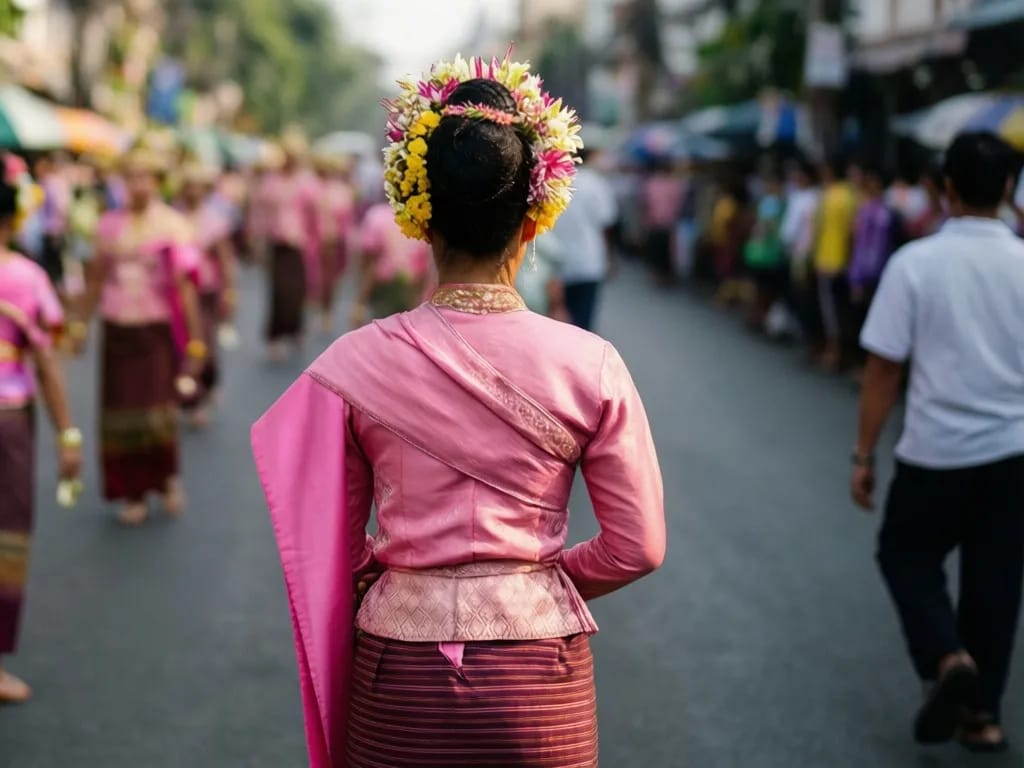
The route total is roughly 4.5 km. Many cultural floats and Lanna dance troupes walk between the Buddha palanquin and the closing procession of dignitaries, so the visible parade stretches to almost an hour at any given point on the route.
What to wear and etiquette
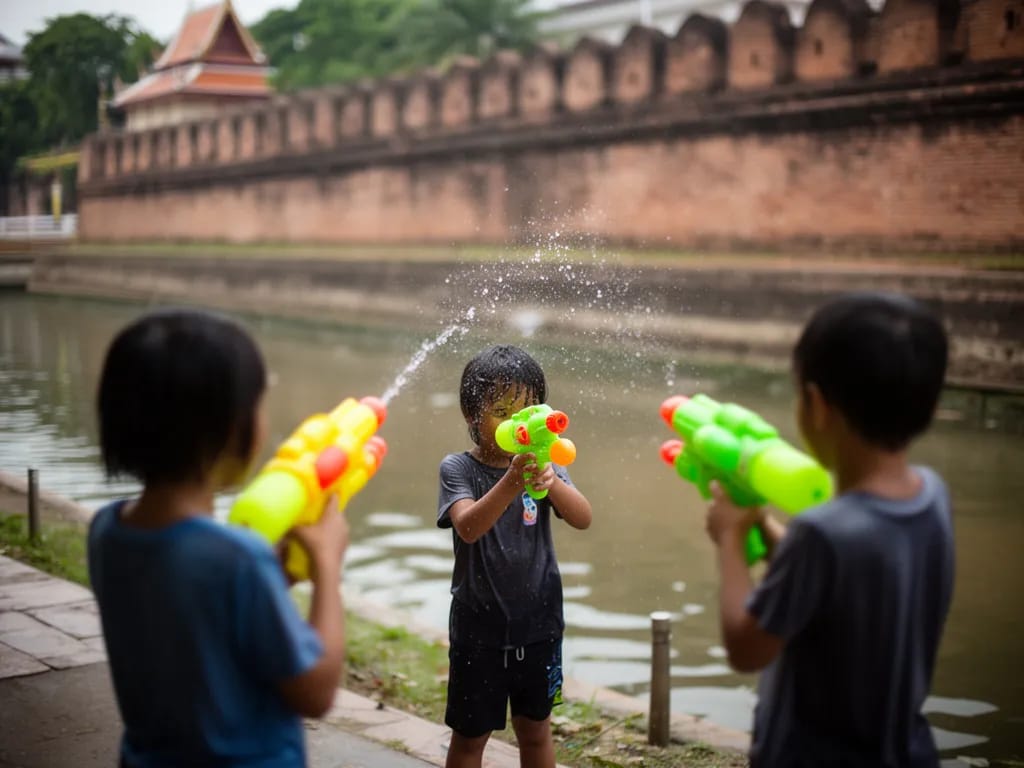
Quick-dry shorts, quick-dry T-shirt, waterproof sandals, a small dry-bag for phone and wallet. The loose floral Songkran shirts sold across Tha Pae Road for 150–250 THB are practical and culturally welcomed. Skip white cotton, leather sandals, and any non-dry-bag wallet.
Etiquette matters. Throwing water on monks, on elderly people, on uniformed police, or onto a vehicle’s windscreen is not done. Use a polite wai (palms together at the chest with a small bow) when receiving a temple blessing. Bow slightly when handing scented water to an elder for rod nam dam hua. Do not pour water from above shoulder height; the gesture is gentle, not aggressive. Phones on silent inside ordination halls; remove shoes at temple entrances.
Where to stay and book early
Inside the Old City is the best base since you walk to everything, but rates run 3–4× off-peak and book out by January. Tamarind Village, U Chiang Mai, Rachamankha, and De Lanna are the typical Old City picks. For a balcony overlooking the moat water fight, Moonmuang Road guesthouses sell out earliest.
Nimman is the calmer base: 15 minutes by songthaew, full of cafés that stay open quietly while the Old City roars, and cheaper. Akyra Manor, Hotel Yayee, and X2 Vibe are typical mid-range picks. The Riverside hotels along the Ping (such as Anantara and 137 Pillars House) are 10 minutes by tuk-tuk and good for sleep but slow to reach the moat by Wednesday.
Book 3 to 6 months ahead for any Old City room. By February only the upper-tier suites remain inside the moat.
Photography tips
Bring a waterproof camera housing or use a phone with an IP68 rating; everything else fails in the moat zone within an hour. The standard rig is an Aquapac or Dicapac housing with a 24–70mm lens, plus a phone in a hard waterproof case for crowd shots. For the Buddha procession on day one, you can shoot dry along Ratchadamnoen with a 70–200mm telephoto, but waterproof anything pointed at the moat.
Shoot from above where possible. The fire-truck stages at Tha Phae Gate and the upper-floor cafés along Moonmuang Road give the cleanest perspectives. For the procession, a low angle from the kerb with the Phra Buddha Sihing image against Tha Phae Gate brick is the headline frame. Carry silica packets in your bag; April humidity around the moat is brutal on lenses.
Nearby and related
After the water dries, walk into Wat Phra Singh for the calm evening blessing and the chance to see the Phra Buddha Sihing image returned to its wihan. Wat Chedi Luang is the other anchor of Songkran morning ceremonies and sits five minutes south. If the festival overlaps a Saturday, the Saturday Walking Street on Wua Lai Road merges Songkran water-throwing with the city’s silver-smith district market. Visitors planning a return trip should look at Yi Peng and Loy Krathong for the November lantern festival, or the Chiang Mai Flower Festival for the calmer February weekend.
For a half-day escape from the water, ride a songthaew to Doi Suthep mountain. The temple complex of Wat Phra That Doi Suthep sits 15 km west of the Old City and is largely dry across Songkran, with its own quieter Buddha-bathing ceremony from 10:00 each day. Closer to town, the Three Kings Monument cultural village runs continuous Lanna craft demonstrations from 10:00 to 22:00. Both are useful breaks if the moat density becomes too much by mid-afternoon. A short evening at Tha Phae Gate after the main water fight ends is also a different experience entirely: the soaked crowd disperses, fairy lights come on along Ratchadamnoen, and food carts run sai oua, sticky rice, and grilled river prawns from sunset.
Photos
Frequently asked questions
When is Songkran in Chiang Mai 2026?
Songkran 2026 runs Monday 13 April to Wednesday 15 April. The Phra Buddha Sihing procession from Wat Phra Singh leaves at 13:00 on Monday 13 April. Water fights along the moat run all three days, peaking on Wednesday 15 April.
Why is Songkran on the same dates every year?
Songkran's dates were fixed by Royal Decree in 1940 at 13–15 April regardless of the lunar calendar. The festival originally tracked the solar new year of the Theravada Buddhist calendar; the modern fixed dates align with the hottest week of the Thai year.
Is the Songkran water fight actually religious?
The water-throwing developed out of the religious practice of gently bathing Buddha images and elders' hands with scented water as a new-year blessing. The street version is the secular evolution. Most Thai families still do both — visit the temple in the morning, soak the moat crowd in the afternoon.
What is the Phra Buddha Sihing image?
Phra Buddha Sihing is a revered bronze Buddha image, normally housed inside the wihan at Wat Phra Singh in the Old City. On 13 April it is carried in procession around the Old City so the public can pour scented water over it for blessing. It is one of the three most important Buddha images in Thailand.
Where are the best water-fight spots?
The Tha Phae Gate plaza is the headline location, with fire trucks and stages. The east side of the moat (along Moonmuang Road) has the heaviest sustained water-throwing. The north side (Sripoom Road) is calmer and good for families. Wua Lai Road south of the Old City is the local Lanna scene.
Is the water clean?
The moat water is recycled and reasonably clean by April. Most revellers use tap-water buckets and water pistols filled with bottled or tap water. Keep your mouth shut around moat water and rinse with bottled water afterwards.
Do I have to participate in the water fights?
No. Wearing a Wat Phra Singh or temple-visit lanyard, or walking with hands in a wai gesture, signals you do not want to be soaked. Most Chiang Mai locals will respect it. Outside the moat zone in residential sois you are largely safe.
Is photography allowed?
Yes, but waterproof your camera. Many photographers use a Dicapac or Aquapac housing. Inside temples, keep flash off during the bathing ceremony and respect any posted signs.
What is sand chedi building?
Building a small sand chedi (sand stupa) inside the temple grounds during Songkran is a merit-making tradition. Worshippers symbolically return the soil they have carried out of the temple on their feet over the year, decorating each sand chedi with paper flags and incense. Wat Chedi Luang and Wat Phra Singh both run sand chedi stations.
What should I wear?
Quick-dry shorts, a quick-dry T-shirt, and waterproof sandals or flip-flops. Many travellers wear the loose floral Songkran shirt sold across Tha Pae Road for 150–250 THB. Skip white cotton (it goes transparent), skip leather sandals (they ruin), and keep shoulders covered for temple visits.
Is Songkran in Chiang Mai safer than in Bangkok or Pattaya?
Generally yes — Chiang Mai's festival is more concentrated, the Old City moat zone is walkable, and Lanna cultural traditions sit alongside the party. Road accidents do spike across Thailand during Songkran. Avoid motorcycle taxis, particularly after dark.
How hot is April in Chiang Mai?
Daytime temperatures sit at 35–40°C with high humidity. The morning Buddha procession starts in 30°C heat by 09:00. Burning season is technically over by mid-April, but residual haze can affect distance views. Drink at least 3 litres of water per day.
Where should I stay for Songkran?
Inside the Old City is best for walking distance to the moat, but most properties book out by January and quadruple their off-peak rates. Nimman is the practical alternative — a 15-minute songthaew ride, quieter at night, and cheaper. Riverside Ping hotels are calm enough to sleep but slow to reach the action.
Is the airport open during Songkran?
Yes. Chiang Mai International Airport runs full schedules across all three days. Songthaew transport from the airport into the Old City is slow on day three; budget 90 minutes for a 6 km journey.
When does Wua Lai Road's Saturday Walking Street run during Songkran?
If a Saturday falls inside the festival, the Wua Lai Saturday Walking Street typically merges with Songkran water activities from 16:00. The silver-smith district's monks bless residents in the late afternoon, then the food and craft stalls open as usual into the evening.
Related guides
Temple
Wat Phra Singh
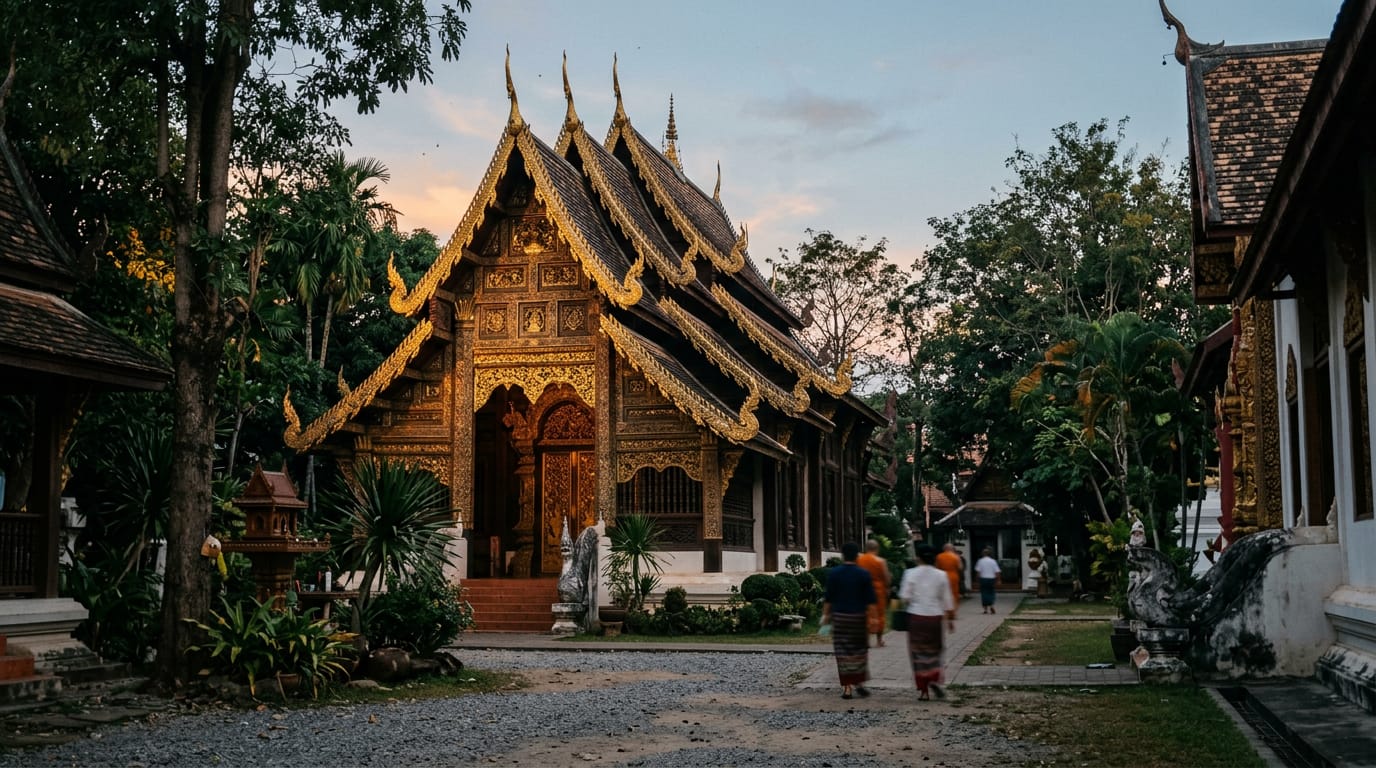
Wat Phra Singh is the most revered temple inside Chiang Mai's Old City, founded in 1345 by King Phayu of the Mangrai dynasty. Its Lai Kham viharn shelters the Phra Buddha Sihing — the Lion Buddha — which is paraded through the streets each Songkran. Together with its gilded chedi, carved teak gables and gold-leafed scripture library, the compound is the finest single example of Late Lanna architecture in northern Thailand.
Temple
Wat Chedi Luang
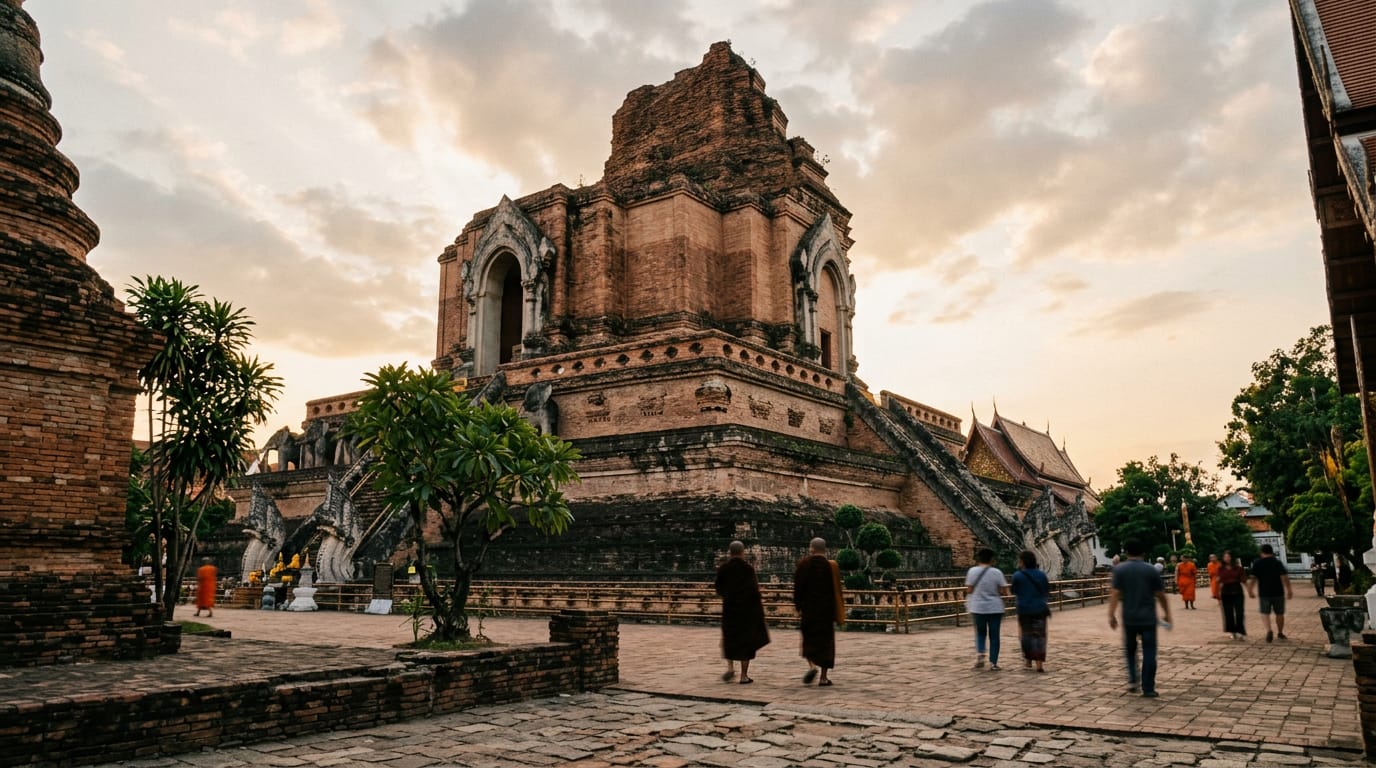
Wat Chedi Luang holds the ruined 60-metre chedi that was once the tallest building in Lanna and still dominates the centre of Chiang Mai's Old City. Founded in 1391 by King Saen Muang Ma and completed in 1481 under Tilokaraj, it was partly toppled by the 1545 earthquake. The compound also houses the city pillar and Chiang Mai's active monk-chat programme.
Market
Saturday Walking Street (Wua Lai Road)
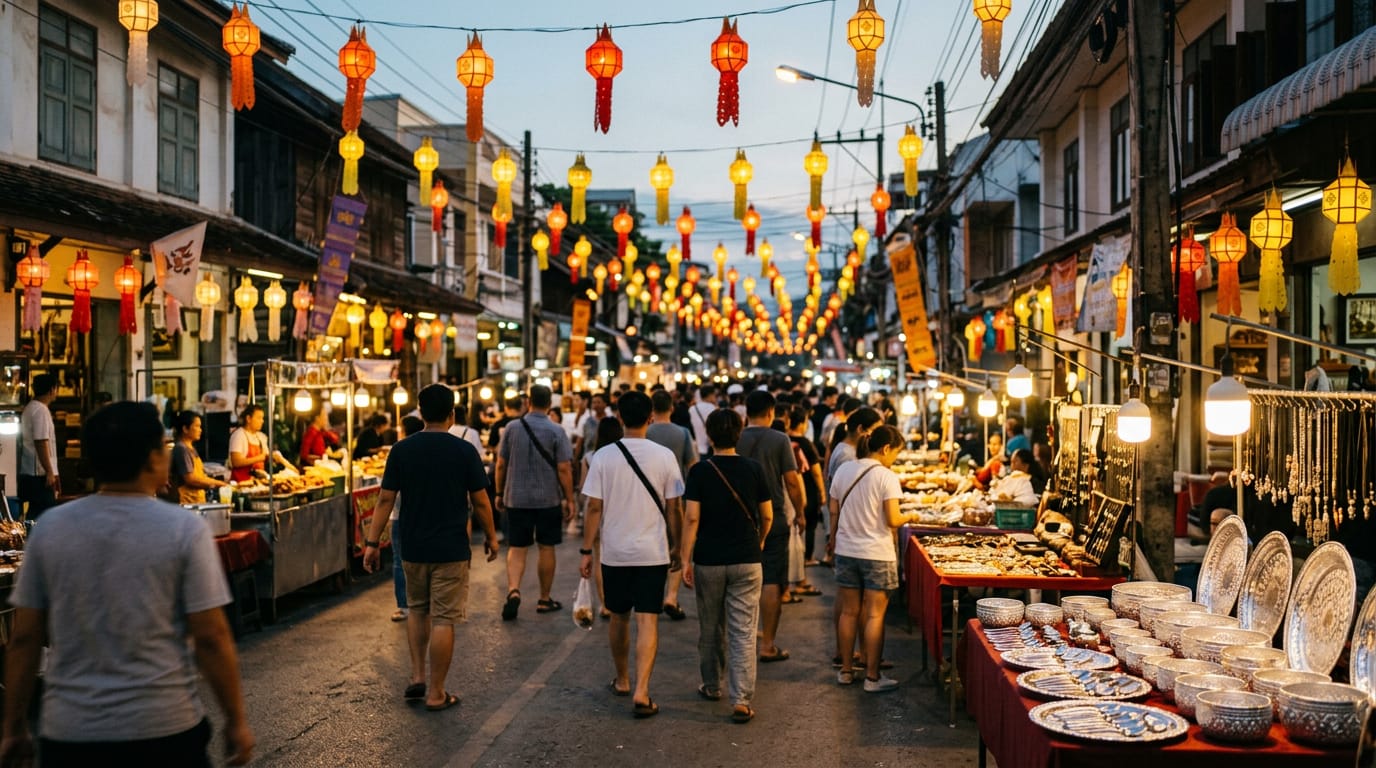
Chiang Mai's Saturday Walking Street runs the length of Wua Lai Road, the silversmith quarter immediately south of the Chiang Mai Gate. Open every Saturday from 16:00 to 22:00, it is smaller, more local and more craft-led than its Sunday counterpart, with silverware, lacquerware and Lanna handicrafts beside food stalls and the Songkran procession route on day one of the New Year festival.
Festival
Yi Peng and Loy Krathong
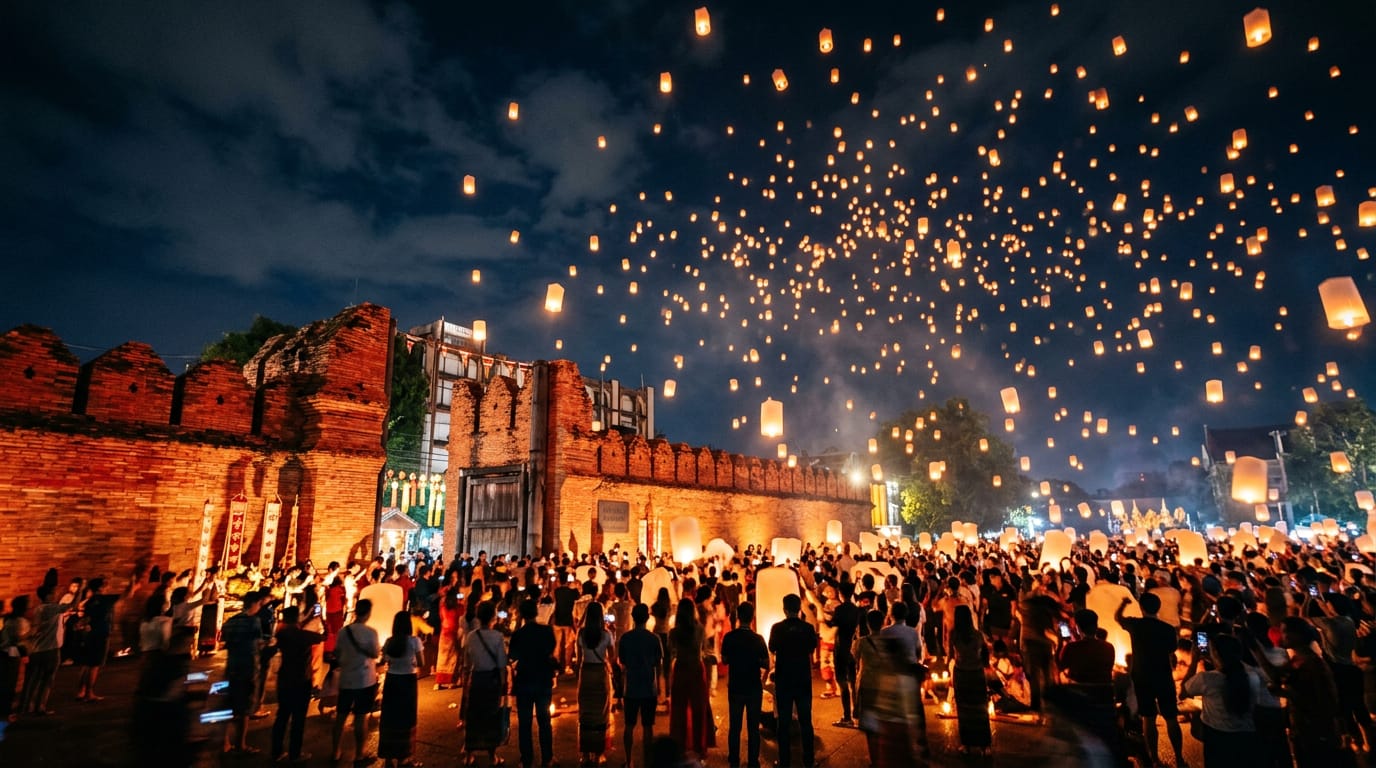
Yi Peng and Loy Krathong are Chiang Mai's twin festivals of light, held together over three nights on the full moon of the twelfth lunar month. Yi Peng is the Lanna sky-lantern release; Loy Krathong is the all-Thai floating of candle-rafts on rivers and ponds. In 2026 the festival runs 23–25 November, with free public lantern releases at Tha Phae Gate, krathong floating along the Ping River and Wat Phra Singh, and large ticketed mass releases at Doi Saket and Mae Jo.
Festival
Chiang Mai Flower Festival
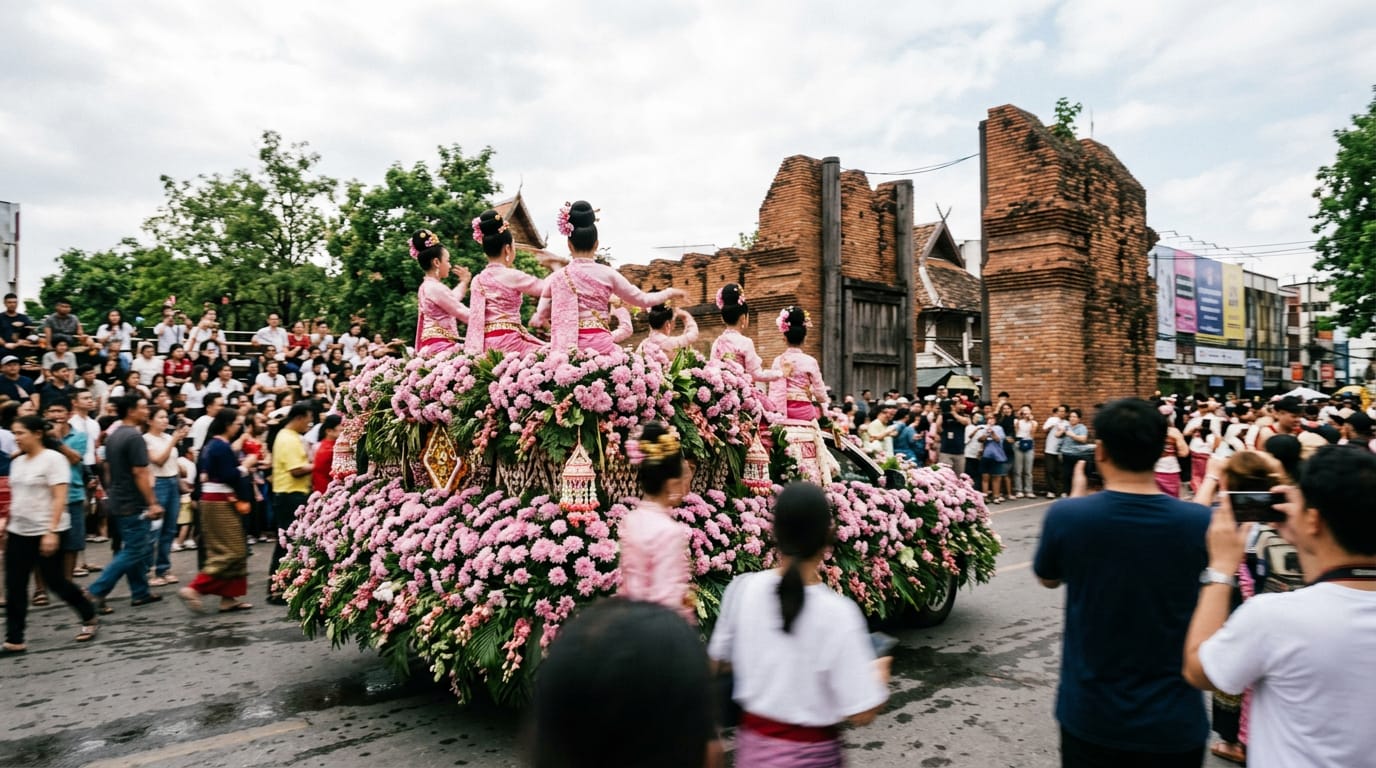
The Chiang Mai Flower Festival is the city's annual three-day celebration of cool-season blooms, held the first full weekend of February at Suan Buak Hat Park. The 49th edition runs 13–15 February 2026, with the headline parade of flower-covered floats setting off at 08:00 on Saturday 14 February from Nawarat Bridge along Tha Pae Road to Suan Buak Hat. Free entry, beauty pageant on Friday night, and northern Thailand's largest cool-flower trade fair across the weekend.
Market
Saturday Walking Street (Wua Lai Road)
Chiang Mai's Saturday Walking Street runs the length of Wua Lai Road, the silversmith quarter immediately south of the Chiang Mai Gate. Open every Saturday from 16:00 to 22:00, it is smaller, more local and more craft-led than its Sunday counterpart, with silverware, lacquerware and Lanna handicrafts beside food stalls and the Songkran procession route on day one of the New Year festival.