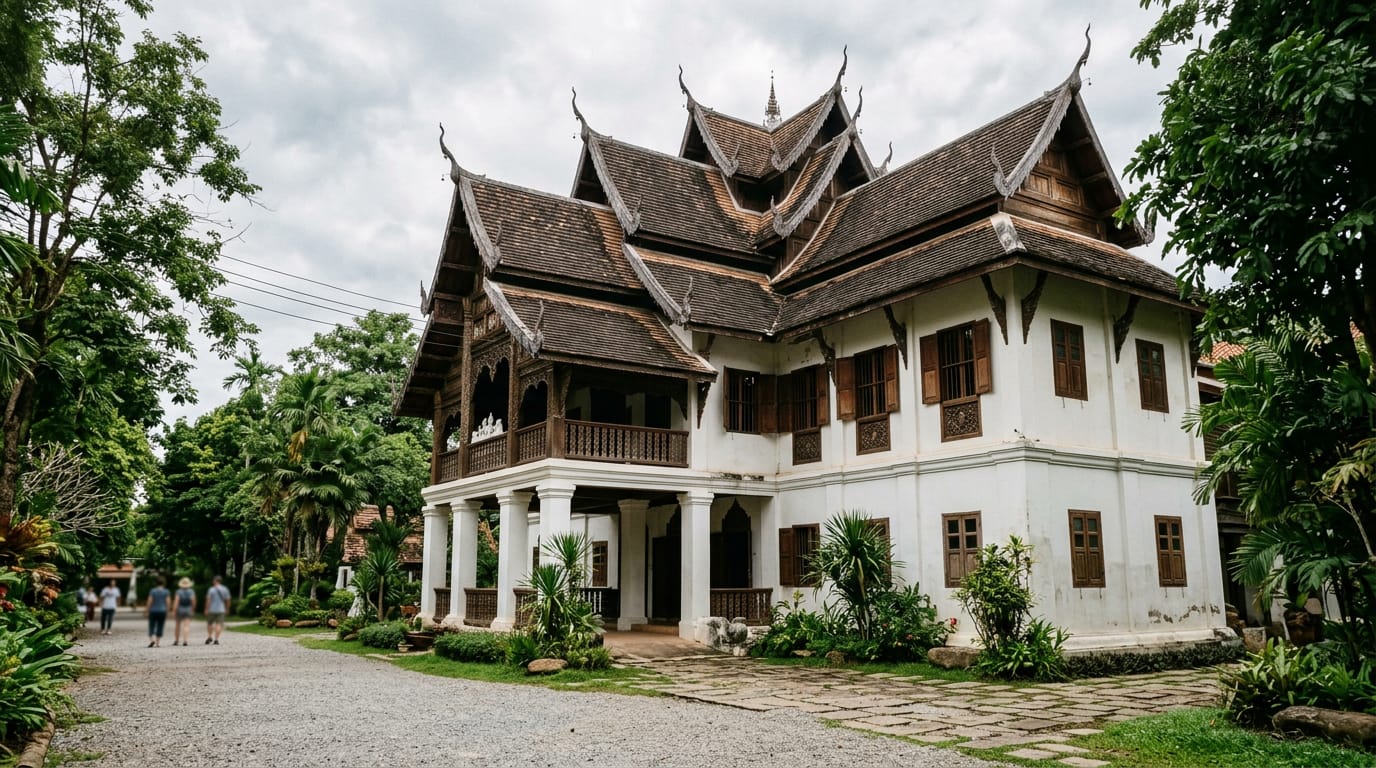
The Chiang Mai National Museum is the principal state collection for northern Thailand, housed in a purpose-built Lanna-influenced hall opened in 1973 under the Fine Arts Department. Its galleries run from Ban Chiang prehistoric pottery through Hariphunchai bronzes and the full sweep of the Mangrai dynasty to the modern royal regalia of the Chiang Mai ruling house. The building sits on the Superhighway north of the Old City, next door to Wat Jed Yod.
Updated
What it is
The Chiang Mai National Museum is the principal regional collection of the Fine Arts Department of Thailand for the upper north. It is the official repository for archaeological finds, religious art and royal material from the eight provinces that once formed the Lanna kingdom, the historic state of the Thai north: Chiang Mai, Lamphun, Lampang, Phrae, Nan, Phayao, Chiang Rai and Mae Hong Son. The collection runs in chronological order across two floors of a purpose-built hall on the Superhighway, 4 km north of the Old City.
The building itself, opened in 1973, is one of the early examples of state museum architecture that drew on Lanna wat (temple-monastery) design rather than the international modernism then dominant in Bangkok. The tiered roofline, the broad eaves and the white masonry pillars all reference monastic viharn (assembly hall) construction. The ground floor concentrates on archaeology and Buddhist art; the upper floor covers the political history of the Mangrai dynasty, the Burmese occupation, the Siamese reunification and the regalia of the last ruling princes. A small temporary exhibition gallery near the ticket desk rotates twice a year, usually drawn from depot material that has not previously been on public view.
The museum is overshadowed in tourist itineraries by the temples of the Old City, which is a pity. For anyone trying to understand what they are looking at inside a Chiang Mai wat (the styles of Buddha image, the carved gables, the regalia), this is the place where the pieces are explained one at a time, in chronological order, with labels.
Collection highlights
Prehistory and Ban Chiang
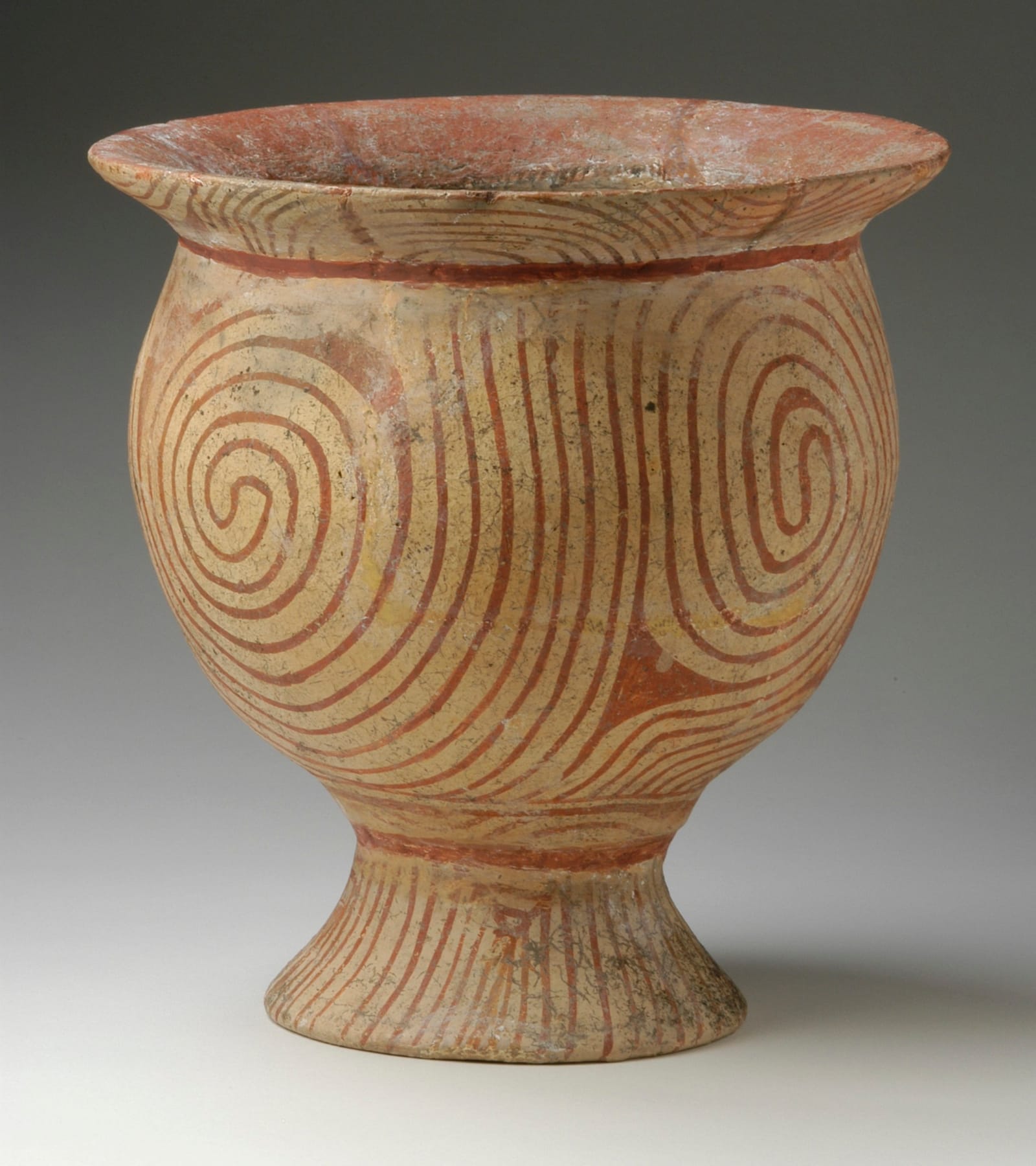
The first room on the ground floor covers the prehistoric north. The display centres on a fine sequence of Ban Chiang pottery, from the Bronze Age site of that name in Udon Thani province, alongside locally excavated material from caves in Mae Hong Son and the Ping valley. The Ban Chiang pieces include the famous red-on-buff painted jars with their tight spiral designs, dated roughly 1500 to 300 BCE, and a set of bronze axe-heads and bangles that show the early metallurgical tradition of the Khorat plateau. Smaller cases hold polished stone tools from the Hoabinhian period found near Mae Sariang. A wall map traces the trade routes that brought tin and copper down from the southern Chinese highlands long before the historical kingdoms emerged.
Hariphunchai period
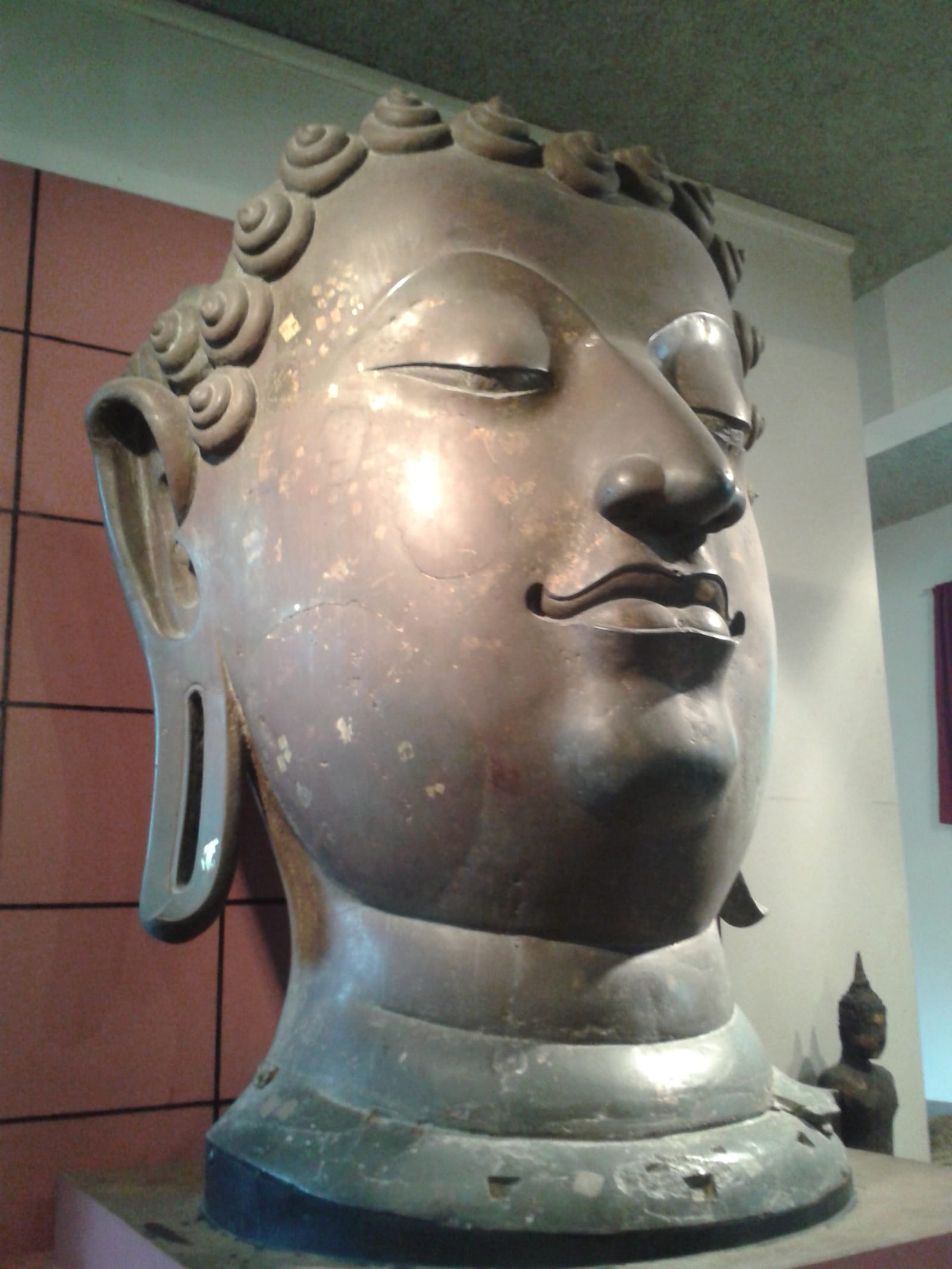
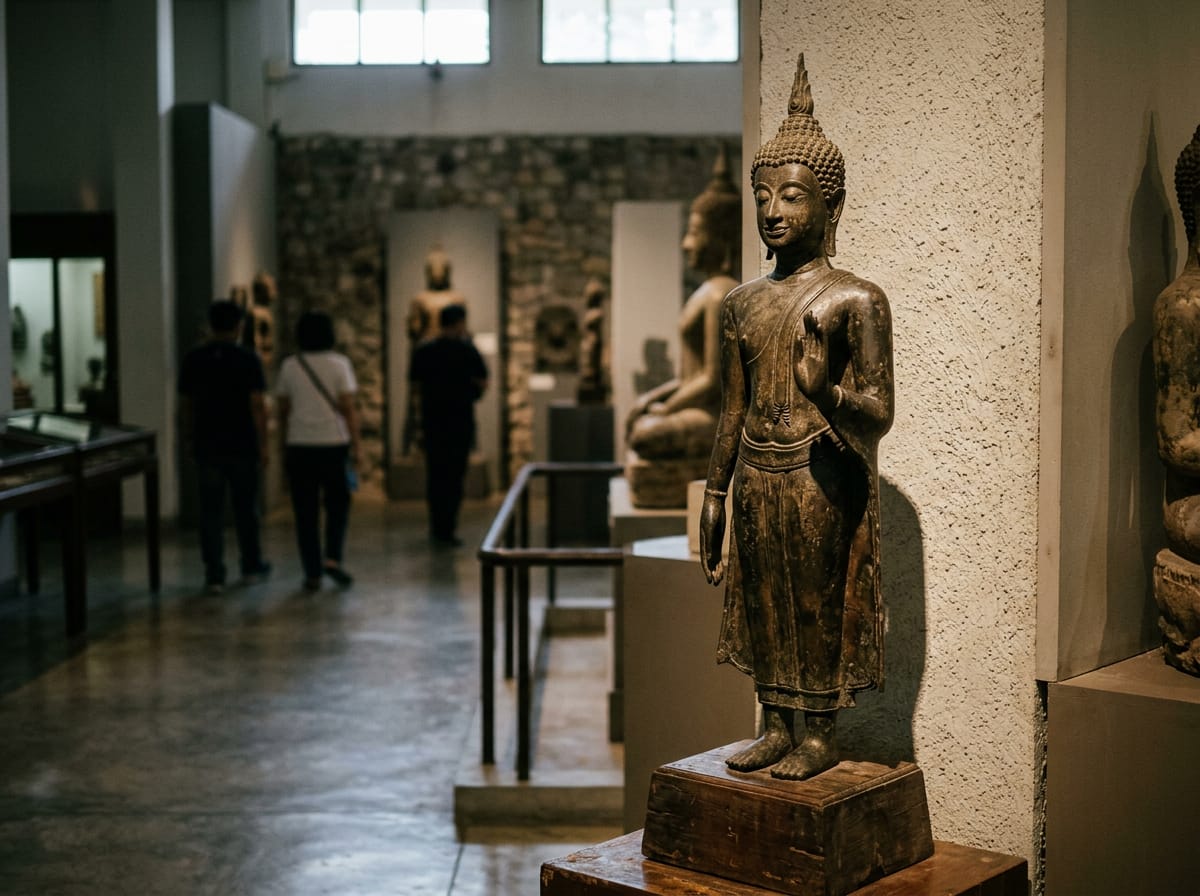
The Mon kingdom of Hariphunchai, centred on present-day Lamphun, dominated the upper Ping valley from the seventh century until the Lanna conquest in 1281. Its art is the foundation of all later northern Buddhist sculpture, and the museum holds the finest provincial collection of it outside Lamphun itself. The standout pieces are a standing bronze Buddha in the abhaya posture from the eleventh century, with the elongated face and high cheekbones typical of the Hariphunchai style, and a series of terracotta votive tablets pressed from the same moulds used at Wat Phra That Hariphunchai. A separate case shows the distinctive cylindrical stucco chedi finials that mark Hariphunchai sites across the north.
Lanna period
The Lanna gallery is the heart of the museum. It opens with the founding of Chiang Mai by King Mangrai in 1296 and follows the kingdom through its golden age under King Tilokarat in the fifteenth century, when Chiang Mai was the principal centre of Theravada scholarship in Southeast Asia. The cases hold gilded bronze Buddha images in the maravijaya (earth-touching) and walking postures, lacquered manuscript cabinets, palm-leaf texts in the tham script (the old Lanna religious alphabet), and a complete set of monastic regalia. The Phra Sila, a small Indian Pala-period stone image dating from the eighth or ninth century and considered the most important single artefact in the collection, sits in a free-standing case at the centre of the room. A side alcove covers the production of sukhothai-style bronze images, named for the image canon of the central Siamese kingdom, cast in Chiang Mai workshops in the fifteenth century.
Burmese conquest and Thonburi-Bangkok reunification
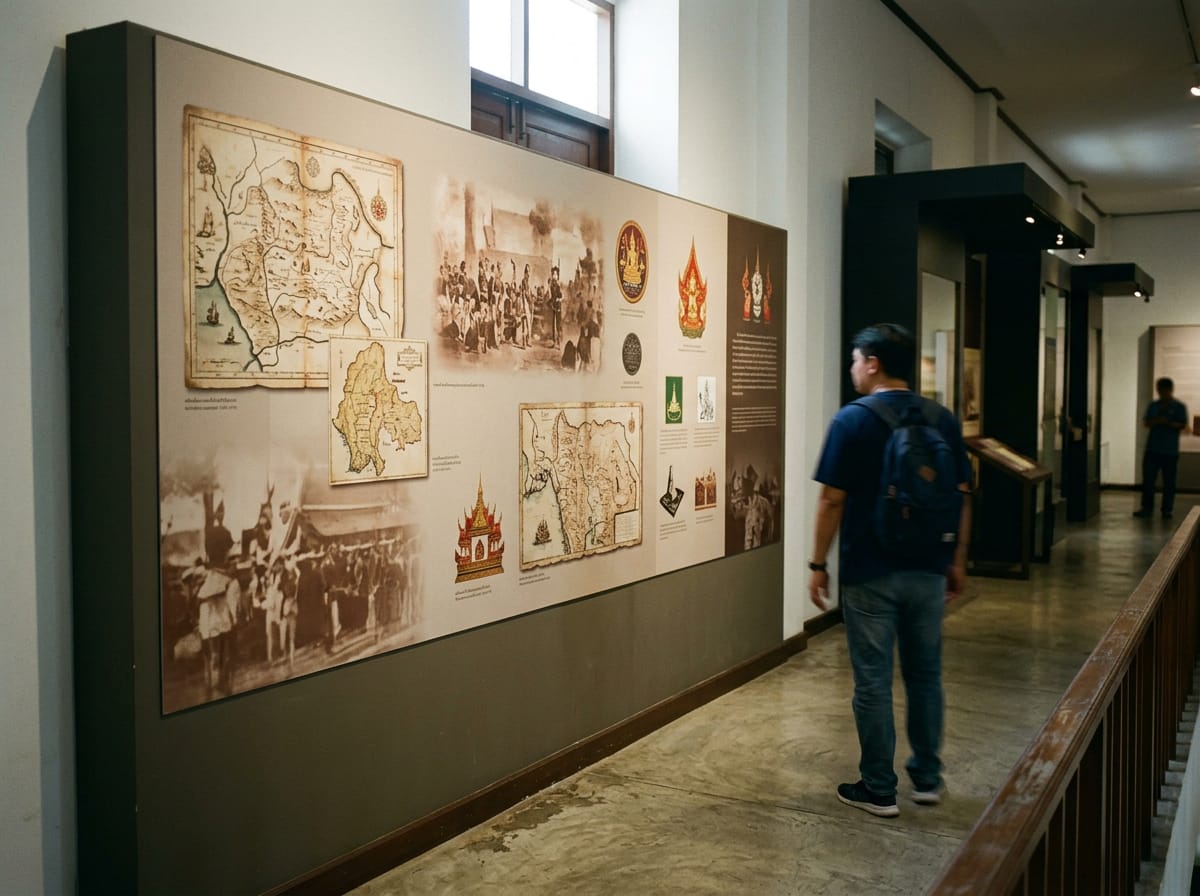
The second-floor galleries open with the fall of Chiang Mai to the Burmese in 1558 and the long period of occupation that followed. The display is restrained: a few Burmese-style Buddha images, several wooden votive plaques, and a wall of original Burmese-era documents and chronicles in translation. The narrative then turns to the recapture of the city by King Kawila in 1774 with Siamese assistance, the rebuilding of the depopulated walled city in the 1790s, and the resettlement of forced-migrant populations from Kengtung and Sipsongpanna that gave Chiang Mai its multi-ethnic character. The political history rooms are weaker on English signage than the ground floor and reward a slow read with the printed brochure in hand.
Modern Chiang Mai and royal regalia
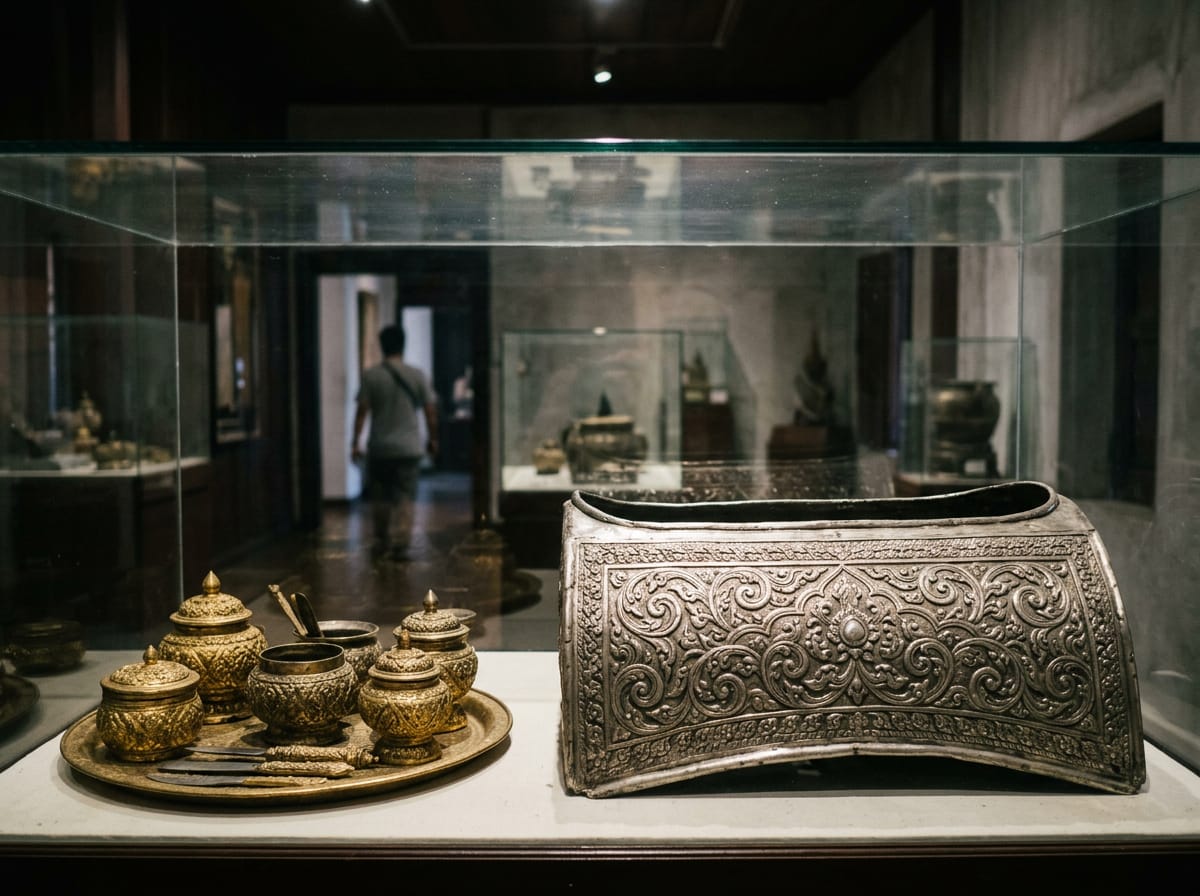
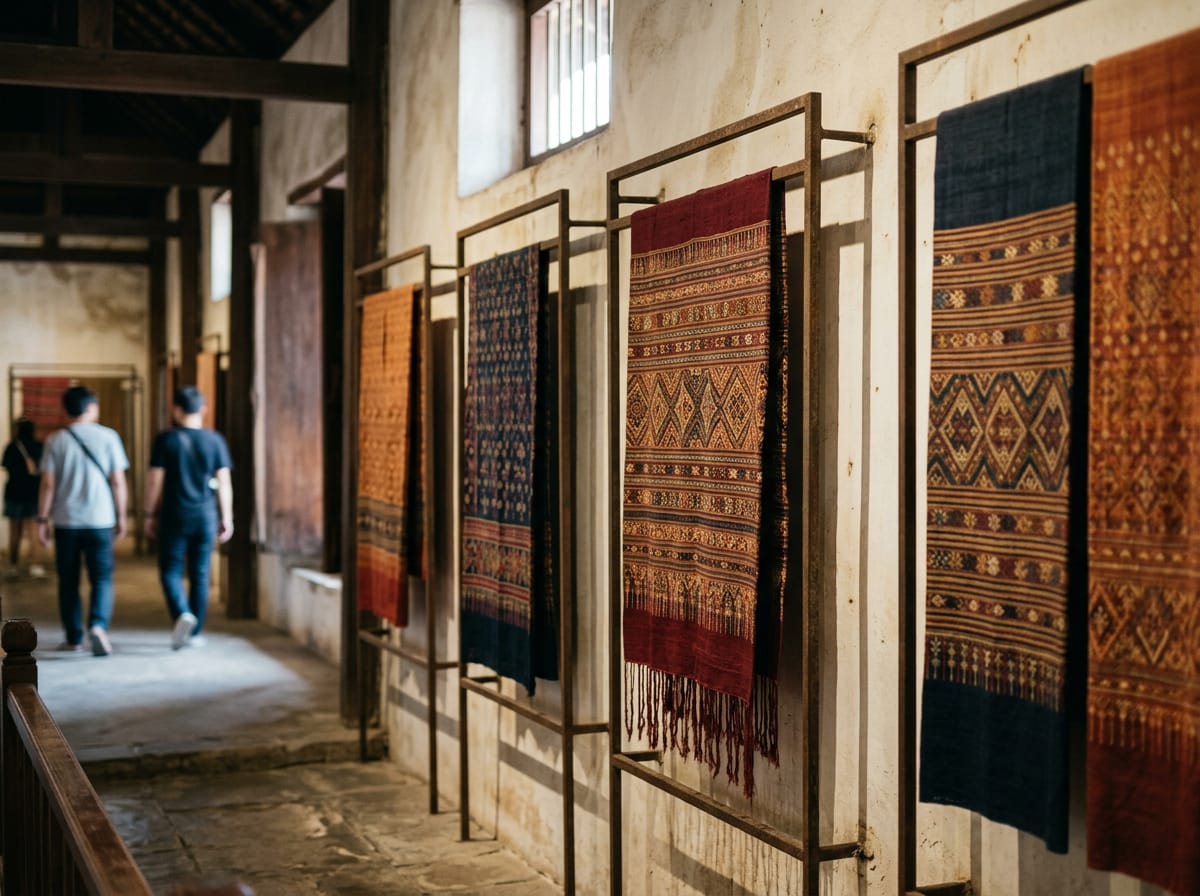
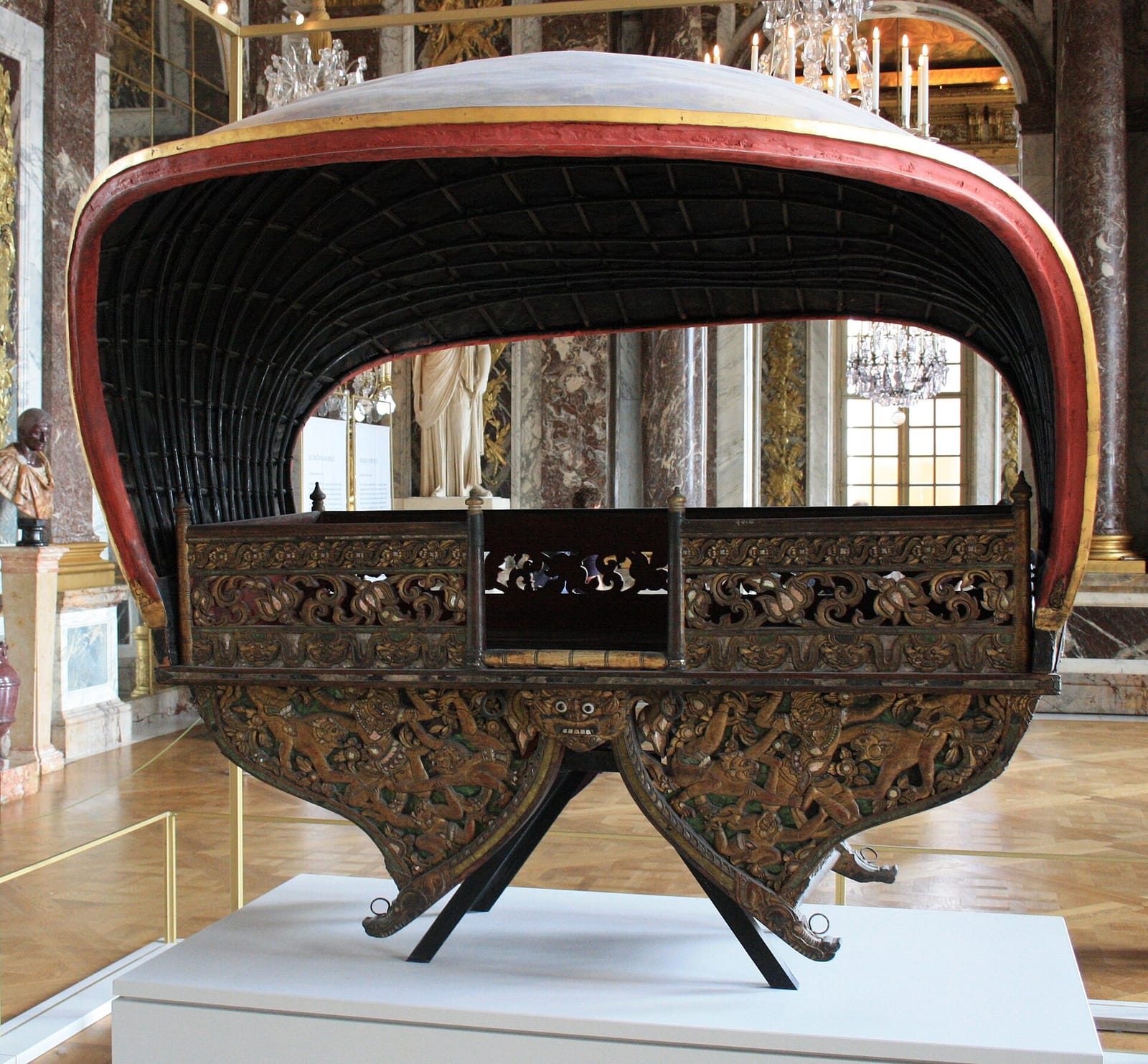
The final sequence on the second floor covers the period from the mid-nineteenth century to the absorption of Lanna into the Siamese state under Bangkok’s centralising reforms of the 1890s. The strongest material is the regalia of the Chao Chet Ton ruling house, the dynasty descended from King Kawila: a gold betel set, a silver howdah fitting, ceremonial swords, ornate court costumes in hand-woven silk, and personal seals of the last three reigning princes. A carved teak howdah from the late nineteenth century, used for royal elephant processions, fills one corner. A separate textiles gallery shows the regional weaving traditions of the north, including Tai Lue, Tai Yuan and Tai Yong silks.
History of the institution
The Chiang Mai National Museum was founded in 1973 as one of the regional flagships of the Fine Arts Department’s national museum network, a programme begun in the early 1960s to bring state archaeological collections out of Bangkok and into the provinces. The site was chosen on the Superhighway, then a new road, partly because the open land allowed a purpose-built structure and partly because of the proximity to Wat Jed Yod, itself a major Lanna site under restoration at the time. The architect, Pravich Sittidej, drew on temple precedents in the design, with the tiered roofline and elevated pillared entrance directly modelled on the viharn of Wat Phra Singh.
The opening collection drew on three sources: material accumulated during pre-war archaeological surveys of the upper Ping valley, the royal regalia donated by the family of Chao Kaeo Nawarat after his death in 1939, and pieces transferred from temple custodianship for safer display. A major refurbishment in 2003 added the prehistory gallery and reorganised the chronological flow. A second refresh in 2017 introduced bilingual labels throughout the ground floor and replaced the lighting with low-UV LEDs to protect the textiles and lacquer surfaces. The second floor has not yet received the same treatment, which is why the political-history rooms still feel dated. A third phase is planned but not yet funded.
Visiting tips
Bring a phone or a small notebook: there is no audio guide and the captions are detailed. Photography without flash is welcomed throughout; flash damages the lacquer and the painted pottery, and the attendants will stop you if you forget. Tripods are not allowed inside the galleries. The building is air-conditioned but the temperature is set high to conserve textiles, so light layers are sensible in the cool season. There is a free brochure in English at the ticket desk that is worth taking, and the printed gallery guide includes a recommended one-way route that genuinely works; the chronological flow makes more sense than the spatial layout suggests. A small drinks kiosk under the trees in the forecourt sells water and instant coffee; there is no proper café, so eat before you arrive or carry a snack. The ground floor is wheelchair accessible by the side ramp, but the second floor is reached only by stairs. Visitors driving themselves should note that the entrance is on the southbound side of the Superhighway and a U-turn is needed if approached from the north; the closest legal turn is at the Rincome junction 1 km south.
Best time to visit
Wednesday to Friday mornings between 09:00 and 11:00 are the quietest hours, with the galleries effectively empty and the natural light from the high windows at its best. Weekends bring Thai school groups, particularly between 10:00 and 12:00, and the noise level in the ground-floor halls rises noticeably during those windows. The hot season from March to May is uncomfortable in the un-airconditioned forecourt; the cool season from November to February is ideal throughout. Avoid the four days around Songkran, the Thai New Year water festival in mid-April, when the museum closes entirely, and check the Fine Arts Department calendar for unscheduled royal holidays that occasionally close all national museums at short notice.
Nearby and combine with…
The museum sits within 500 metres of Wat Jed Yod, the late-fifteenth-century temple built to host the Eighth World Buddhist Council in 1477, and the two are the natural pairing for a half-day on the city’s northern edge. The architectural sequence at Wat Jed Yod is best read after the Lanna gallery rather than before it. From there a short songthaew (red shared-pickup taxi) ride takes you to the Chiang Mai Tribal Museum at the lake park, which covers the hill-tribe cultures the National Museum largely omits. If you want to close the loop with a city-history museum, the Chiang Mai City Arts and Cultural Centre on Three Kings Plaza picks up where the National Museum leaves off, with thematic rooms on daily life and modern Chiang Mai.
Photos
Frequently asked questions
What are the opening hours of the Chiang Mai National Museum?
The museum is open Wednesday to Sunday, 09:00 to 16:00, with the last entry at 15:30. It is closed every Monday and Tuesday, on all national public holidays, and during the four days of Songkran in mid-April. There is no late opening and no evening session. Plan to arrive by 14:00 at the latest if you want to see both floors without rushing the second-floor royal regalia rooms, which are easy to skip when the staff begin to close galleries at 15:45.
How much is the entry fee?
Foreign adults pay 100 baht. Thai nationals enter free of charge, as do all children under 15 regardless of nationality. Students with a valid international card pay 50 baht. The ticket covers both floors and the small temporary-exhibition room near the entrance. There is no combined ticket with Wat Jed Yod next door — the temple is free to enter separately.
How do I get to the Chiang Mai National Museum?
The museum sits on the eastbound side of Highway 11, the Superhighway, about 4 km north of the Old City moat. From Tha Phae Gate a shared red songthaew costs around 60 baht per person and takes 15 minutes. A chartered songthaew or Grab car runs 100 to 120 baht. There is no public bus stop directly outside, but the airport bus B2 passes within 500 metres at the Rincome junction. Parking is free in the forecourt.
How long should I spend at the museum?
Allow 90 minutes for a focused visit covering the prehistory, Hariphunchai, Lanna and royal regalia galleries. Visitors with a strong interest in archaeology or textiles should budget 2 hours. The ground floor is the strongest, with the Hariphunchai bronzes and the Mangrai dynasty hall; the second floor is dominated by the royal regalia and a small temporary exhibition that changes twice a year.
Is there English signage in the museum?
Most major artefacts carry bilingual Thai and English labels. The prehistory and Hariphunchai galleries are well captioned. The Lanna political-history rooms on the second floor are weaker, with Thai-only timelines on several walls. There is no audio guide. A printed English visitor brochure is available free at the ticket desk and is worth picking up before you start.
What is the most important artefact?
The Phra Sila, a small carved stone Buddha image of Indian Pala-period origin dating from the eighth or ninth century, is the museum's most significant single object. It sits in a glass case at the centre of the Lanna gallery on the ground floor. Other highlights include a complete set of Ban Chiang ritual pottery from the Bronze Age, a Hariphunchai-style standing Buddha in gilded bronze from the eleventh century, and the gold betel set used by the last ruling prince of Chiang Mai, Chao Kaeo Nawarat, who died in 1939.
Can I take photographs inside?
Photography without flash is permitted throughout the public galleries. Flash and tripods are forbidden because of the textiles and the lacquer surfaces of several Buddha images. Phone photography for personal use is welcomed. Commercial photography or filming requires written permission from the Fine Arts Department in Bangkok, applied for at least 30 days in advance. There is no charge for personal photography on top of the entry fee.
Is the museum suitable for children?
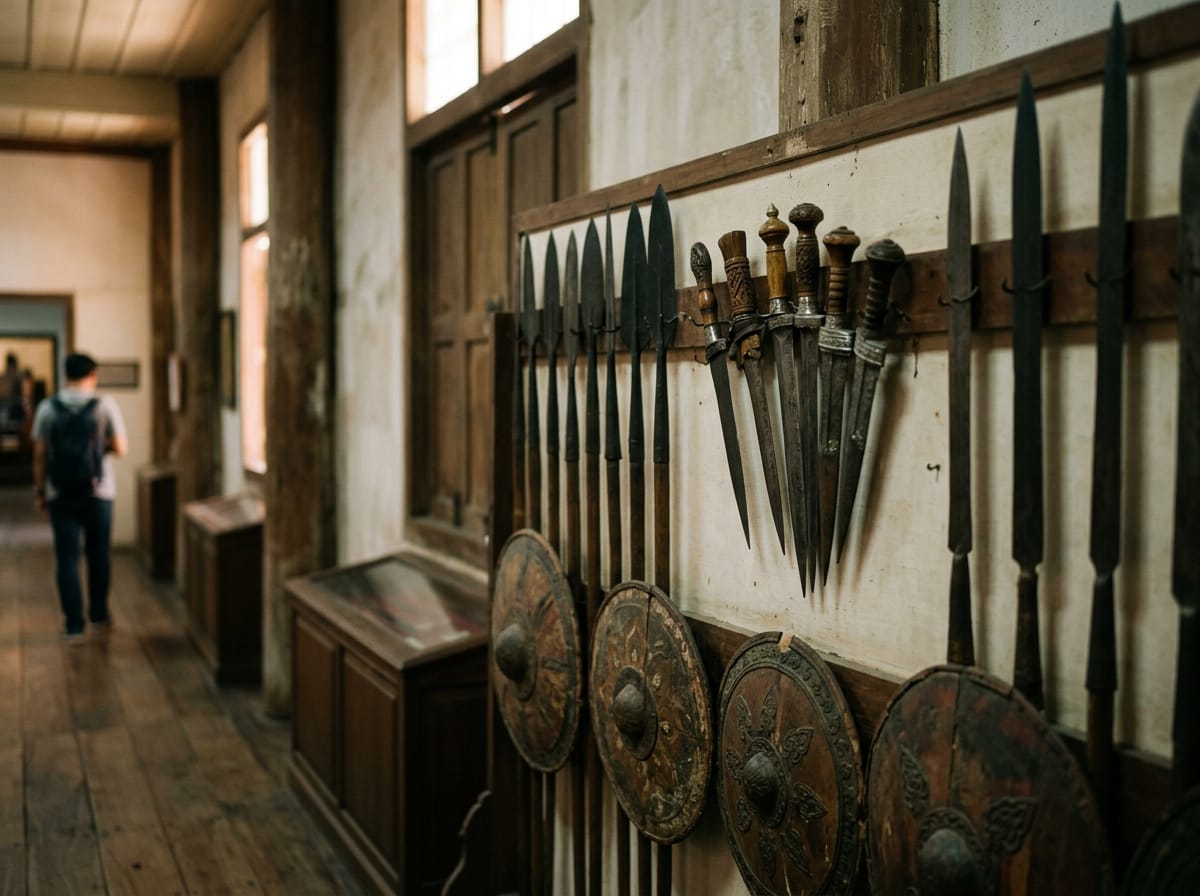
Older children with an interest in history will get something out of the prehistory gallery and the weapons rooms, but the museum is laid out as a serious scholarly collection with long glass cases and dense labels rather than interactive displays. There is no dedicated children's section. Most visitors with children under 10 prefer the Museum of World Insects on Nimmanhaemin or the Tribal Museum at the lake park.
Is there a café or restaurant?
There is a small drinks kiosk in the forecourt selling water, soft drinks and instant coffee, with shaded tables under the trees. There is no proper restaurant on site. The nearest sit-down options are the cluster of Thai cafés on Huay Kaew Road about 1 km west, or the food stalls inside the Rincome market on the Superhighway frontage. Carry water if you are visiting in the hot season; the building is air-conditioned but the forecourt is not.
Is the museum wheelchair accessible?
The ground floor is fully accessible by a ramp at the side entrance and the main galleries have wide aisles between the cases. The second floor is reached only by a staircase — there is no lift at present, and renovation plans have not yet been confirmed. Visitors who cannot use stairs will miss the royal regalia and the textiles gallery but can see roughly 60 percent of the collection on the ground floor alone.
Related guides
Temple
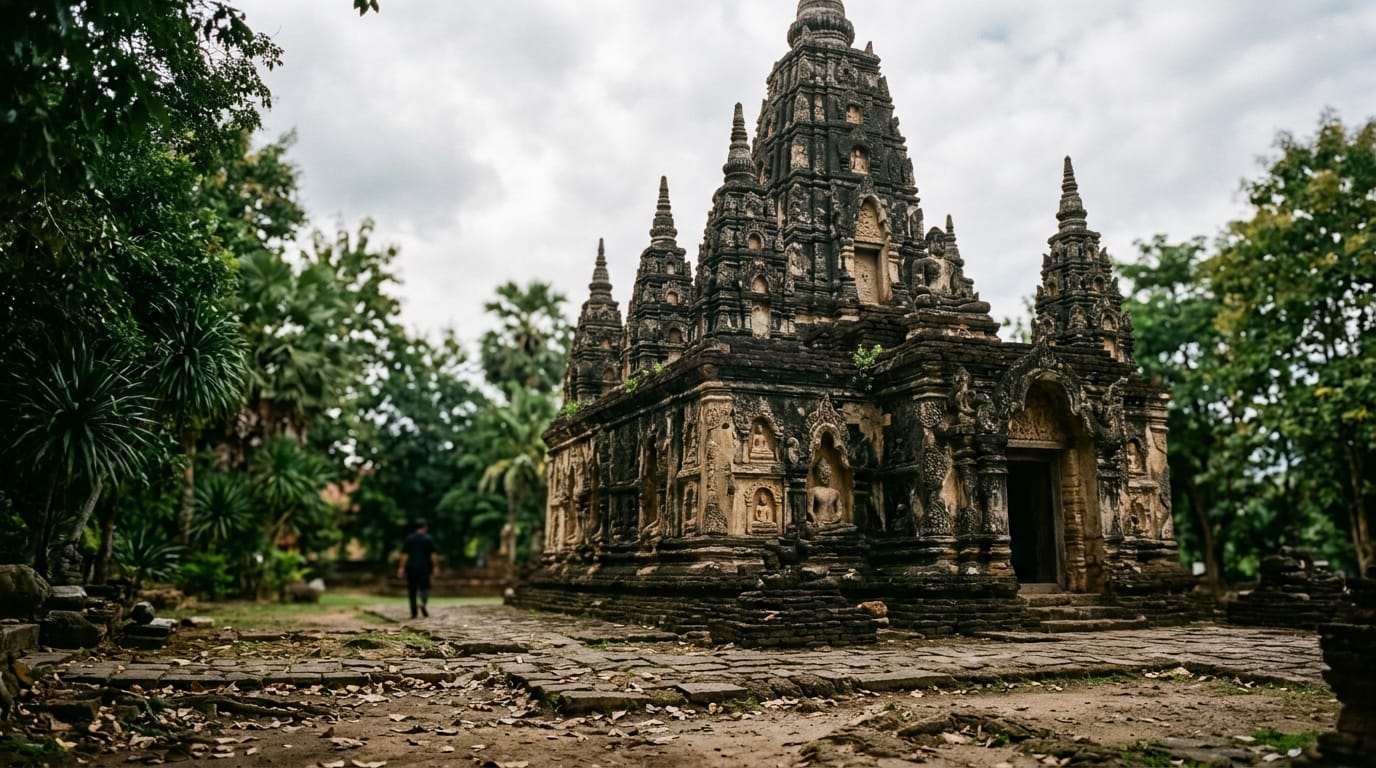
Wat Jed Yod
Wat Jed Yod, the Seven-Spired Temple, was founded in 1455 by King Tilokaraj and is the only temple in northern Thailand modelled on the Mahabodhi at Bodh Gaya. Its seven spires commemorate the seven weeks the Buddha spent in meditation after his enlightenment. In 1477 the temple hosted the Eighth World Buddhist Council, which revised the Pali canon.
Museum
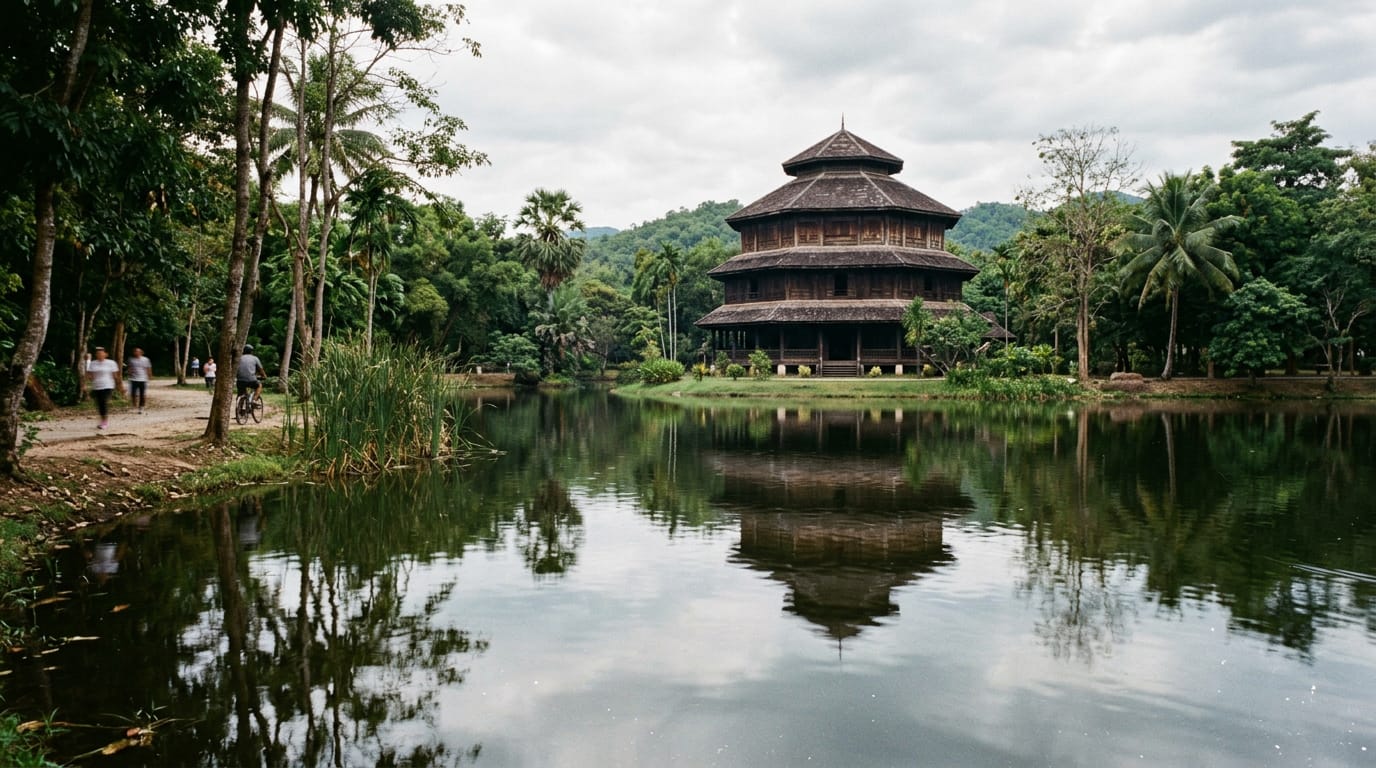
Chiang Mai Tribal Museum
The Tribal Museum is the only public collection in northern Thailand devoted entirely to the six recognised hill-tribe groups — Karen, Lisu, Lahu, Akha, Hmong and Mien. Founded in 1965 as the research arm of the Tribal Research Institute and rehoused in 1997 in a three-storey building overlooking the lake at Rajamangala Lanna Park, it shows traditional costume, ceremonial silver, agricultural tools and ritual dioramas drawn from decades of fieldwork in the hills around Chiang Mai and Mae Hong Son.
Museum
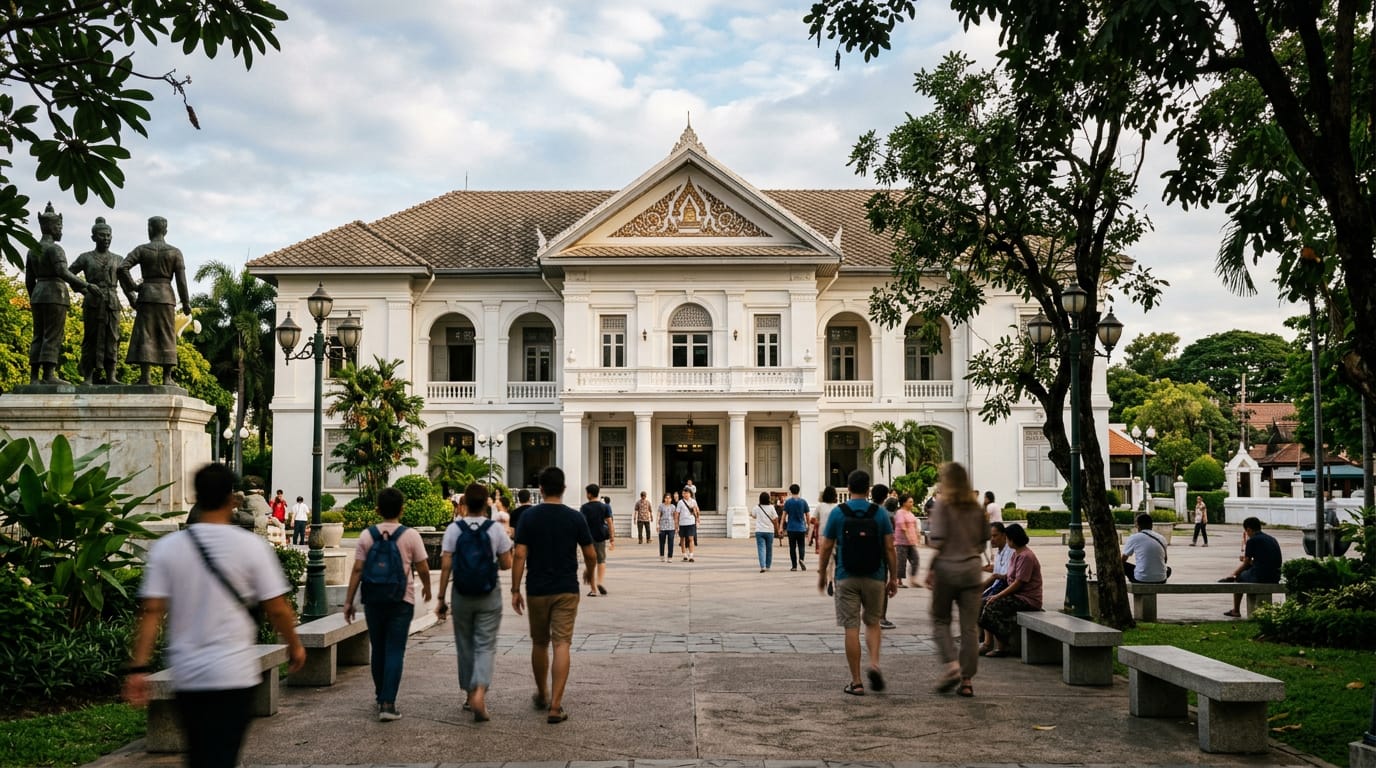
Chiang Mai City Arts and Cultural Centre
The City Arts and Cultural Centre occupies the restored 1924 colonial provincial hall on Three Kings Plaza, directly facing the monument to King Mangrai and his two royal allies. Fourteen thematic rooms run from the founding of Chiang Mai in 1296 through the Burmese occupation and the Siamese reunification to modern daily life, costume and religion. With the adjacent Lanna Folklife Museum and the Historical Centre behind it, the plaza forms the city's principal museum district.