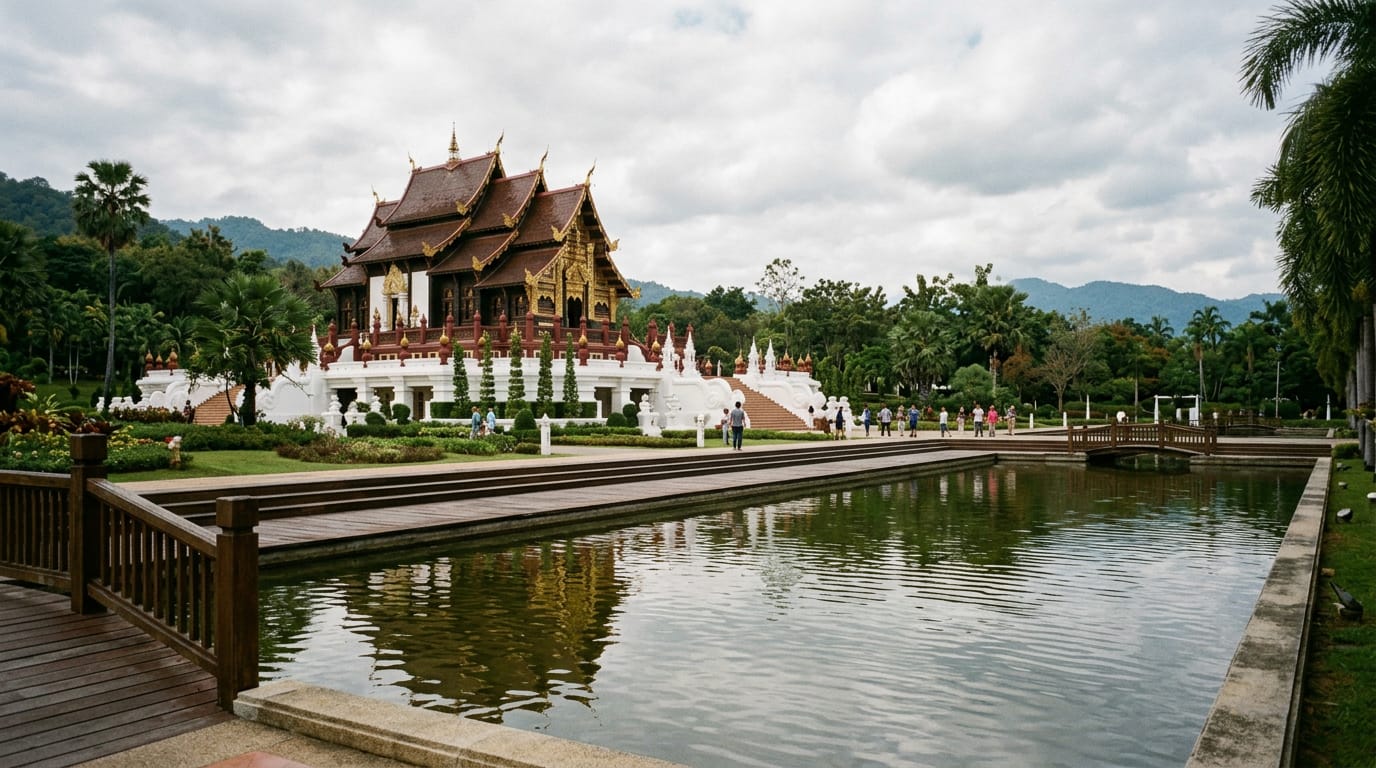
Royal Flora Ratchaphruek is an 80-hectare botanical exposition six kilometres south-west of Chiang Mai, built in 2006 for the International Horticultural Exposition honouring King Bhumibol's 60-year reign. The site collects themed gardens from every Thai province and 32 foreign countries around the gilded Royal Pavilion (Ho Kham Luang) and a tropical glasshouse.
Updated
What it is
Royal Flora Ratchaphruek is an 80-hectare botanical exposition garden six kilometres south-west of Chiang Mai in the Mae Hia district. The site was built in 2006 to host the International Horticultural Exposition staged to honour King Bhumibol Adulyadej’s sixtieth year on the throne, which at the time made him the longest-reigning monarch in the world. The exposition ran for three months from November 2006 to January 2007, drew nearly four million visitors, and was the first AIPH-sanctioned A1 horticultural expo ever held in tropical Asia. When the expo closed, the grounds were preserved and reopened as a permanent attraction.
The site is named after the ratchaphruek, the golden shower tree (Cassia fistula), Thailand’s national flower. The name translates roughly as “Royal Flora — the Golden Shower”. The yellow pendulous blooms of the tree are the visual motif throughout, from the entrance gates to the Royal Pavilion’s gilded roof.
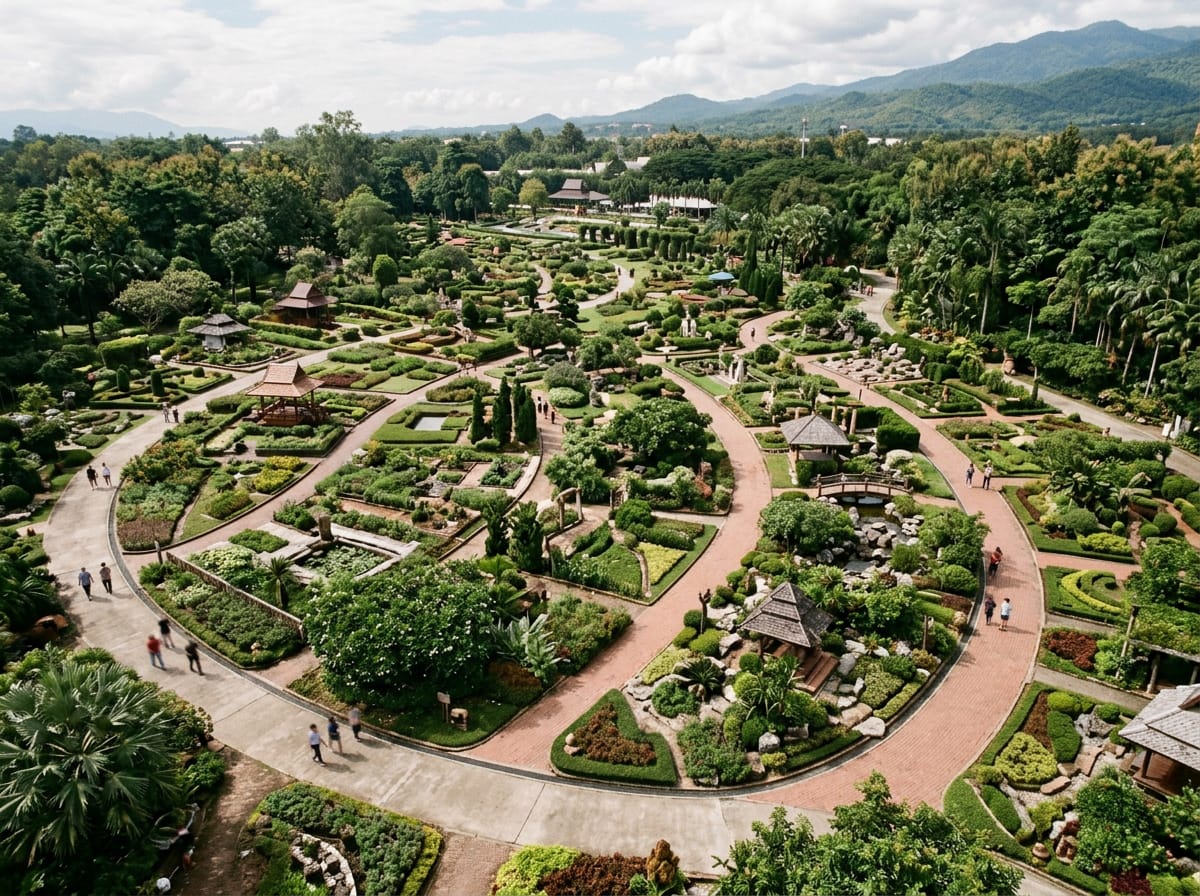
In layout, Royal Flora is built around a long central axial pond with the Royal Pavilion at one end and the Tropical Garden glasshouse at the other. Off this central axis, two zones spread out: the Thai provincial gardens, where each of Thailand’s seventy-seven provinces has a small display plot showing its characteristic flora and architecture, and the international gardens, where thirty-two participating countries each built a national display. The remaining space is given over to the Royal Project zone, herbal and medicinal gardens, an orchid pavilion and several research glasshouses. A nine-hole orchid display, the Royal Project exhibit on cool-climate highland horticulture, and a small museum on Thai botanical history fill the perimeter.
It is a display garden of the formal, festival kind rather than a wild garden or a scientific collection in the Queen Sirikit Botanic Garden sense. The closest analogue is the residual permanent grounds of major European garden expos like Floriade or the Chelsea Flower Show site. For visitors with a half-day to fill in Chiang Mai, particularly with children or older travellers, it is the most under-visited of the city’s major attractions and one of the best-value tickets in town.
Highlights
Ho Kham Luang Royal Pavilion
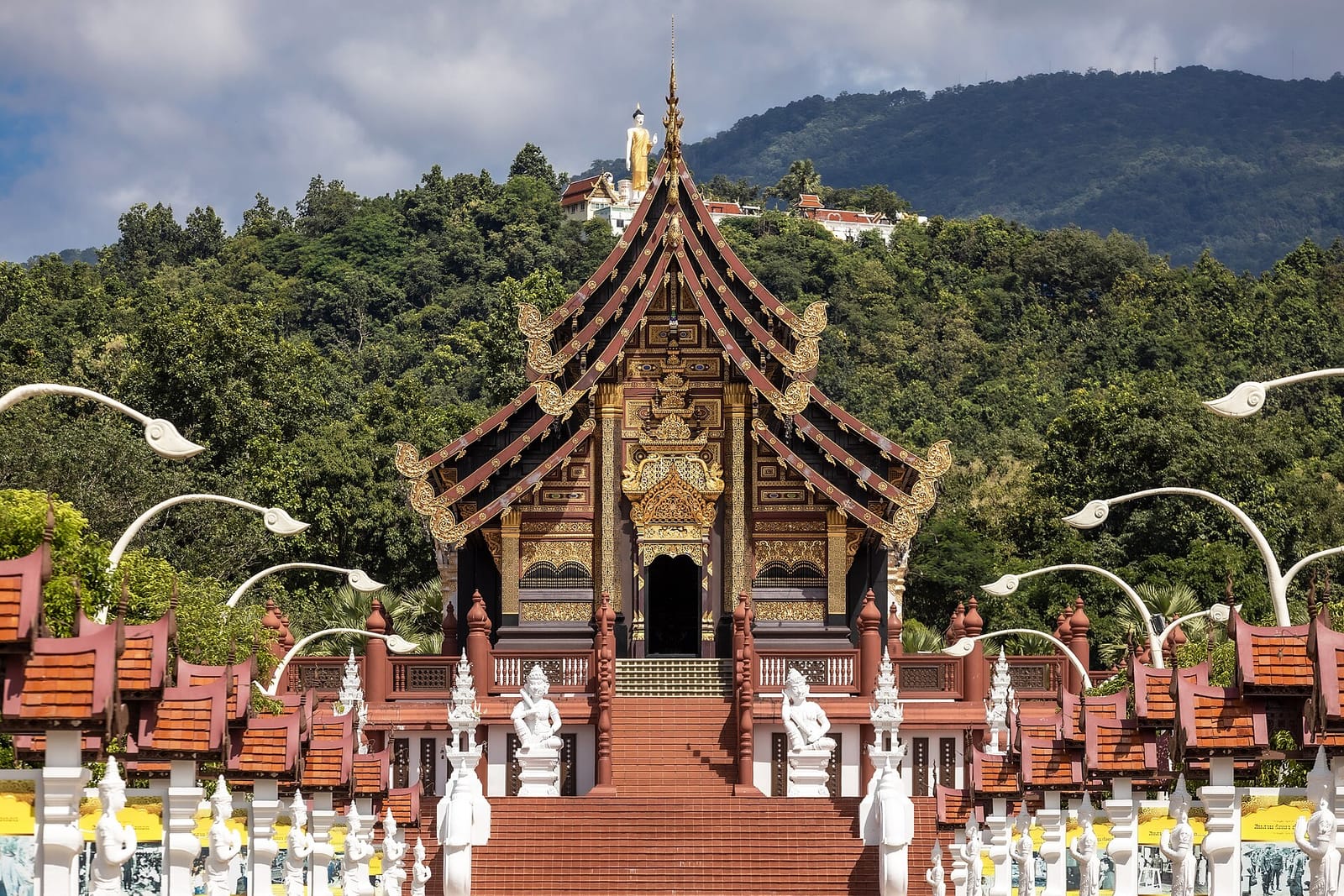
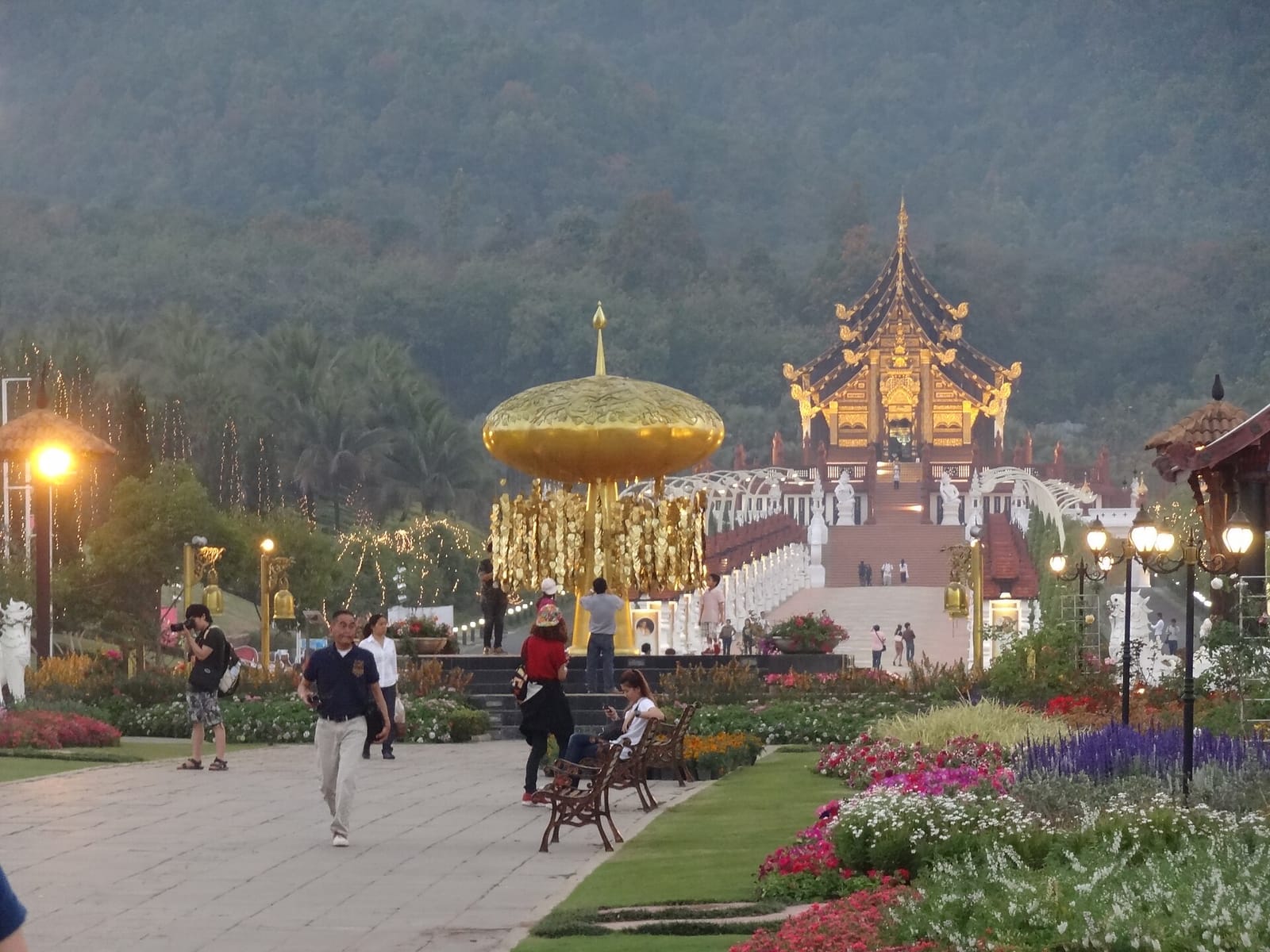
The centrepiece is Ho Kham Luang, the Royal Pavilion. It sits at the head of a 200 m axial pond, on raised ground, and is built in northern Thai Lanna style: stepped tiered roofs with gilded ridge ornaments, carved teak walls, naga finials, and a triple-eave structure modelled on the great Lanna temples. The pavilion was built for the 2006 expo to enshrine a relic-style Buddha image honouring the king and is the site’s most photographed building.
Inside, a single hall holds the Buddha image on a high pedestal flanked by murals depicting the king’s kasattriyaracha royal duties: the ceremonies, projects and public works of the reign. Shoes are removed at the bottom of the stairs. Behaviour rules are the same as at a working wat: shoulders and knees covered, no pointing of feet at the image, no climbing on the platform.
The pavilion is at its best in the late afternoon when the gilded roof catches the low sun, and again after dark during the December–January lights festival.
Tropical Garden glasshouse
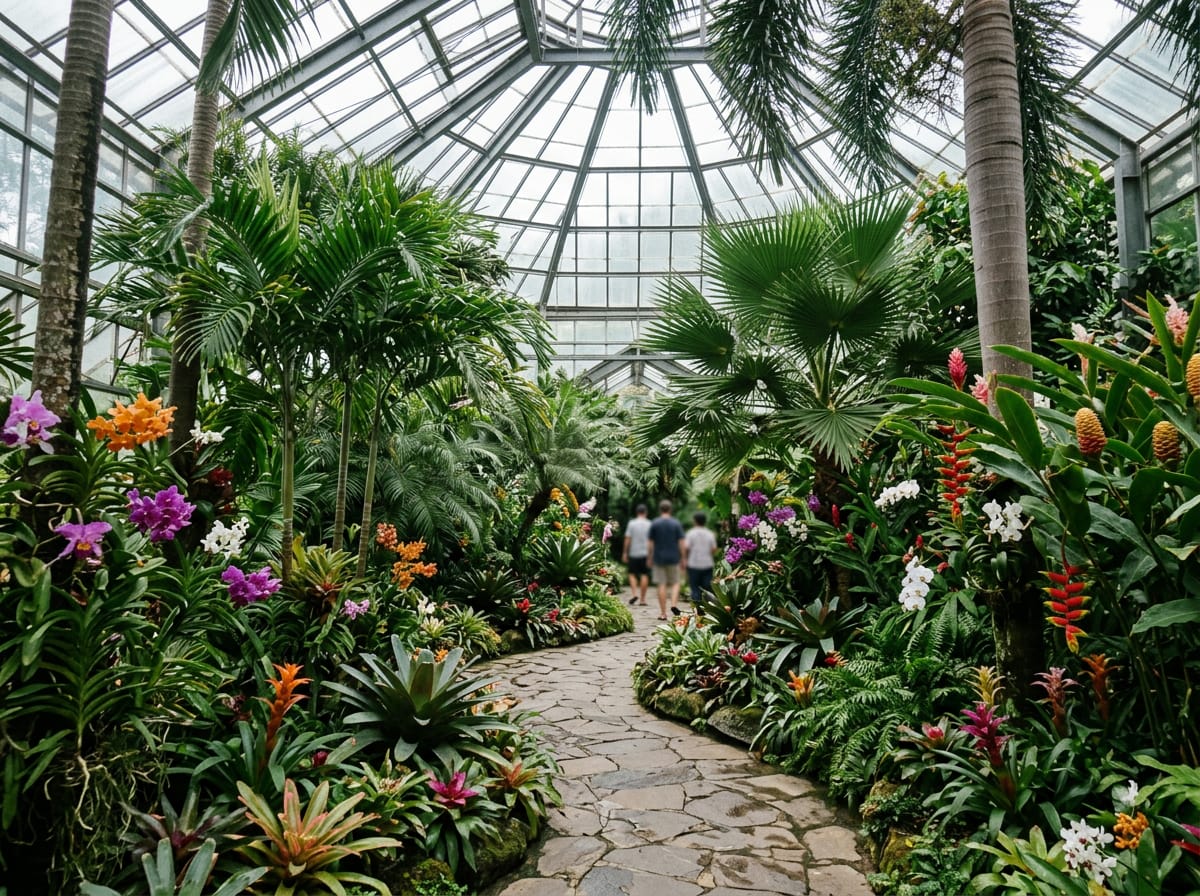
The Tropical Garden is the largest of the on-site glasshouses, at the far end of the central axis from the Royal Pavilion. It is a steel-and-glass structure 50 m long with a 12 m vaulted roof, planted as a walk-through tropical rainforest with palms, banana, ginger lily, heliconia and orchids growing on simulated forest trees. An attached wing holds an orchid collection of about 400 species; a second smaller wing is given over to succulents and cacti from the Americas. A small butterfly enclosure inside attracts the children. The interior is humid and a few degrees warmer than outside.
Smaller specialist glasshouses around it cover ferns, carnivorous plants and a Thai endemic orchid collection.
Provincial gardens
The Thai provincial garden zone is the most distinctive feature of the site. Each of the seventy-seven provinces was assigned a small plot of about 200–400 m² and built a display garden showing its characteristic flora and a piece of regional architecture in miniature. Northern provinces lean Lanna; southern provinces lean Sino-Portuguese or stilted Malay; the central plains show traditional Thai houses on stilts over lotus ponds. The plots range from carefully maintained to mildly faded; the most interesting are usually the northern and southern groups.
A signposted walking route connects all the plots in a 1.2 km loop. The tram passes the main provincial gates.
International gardens
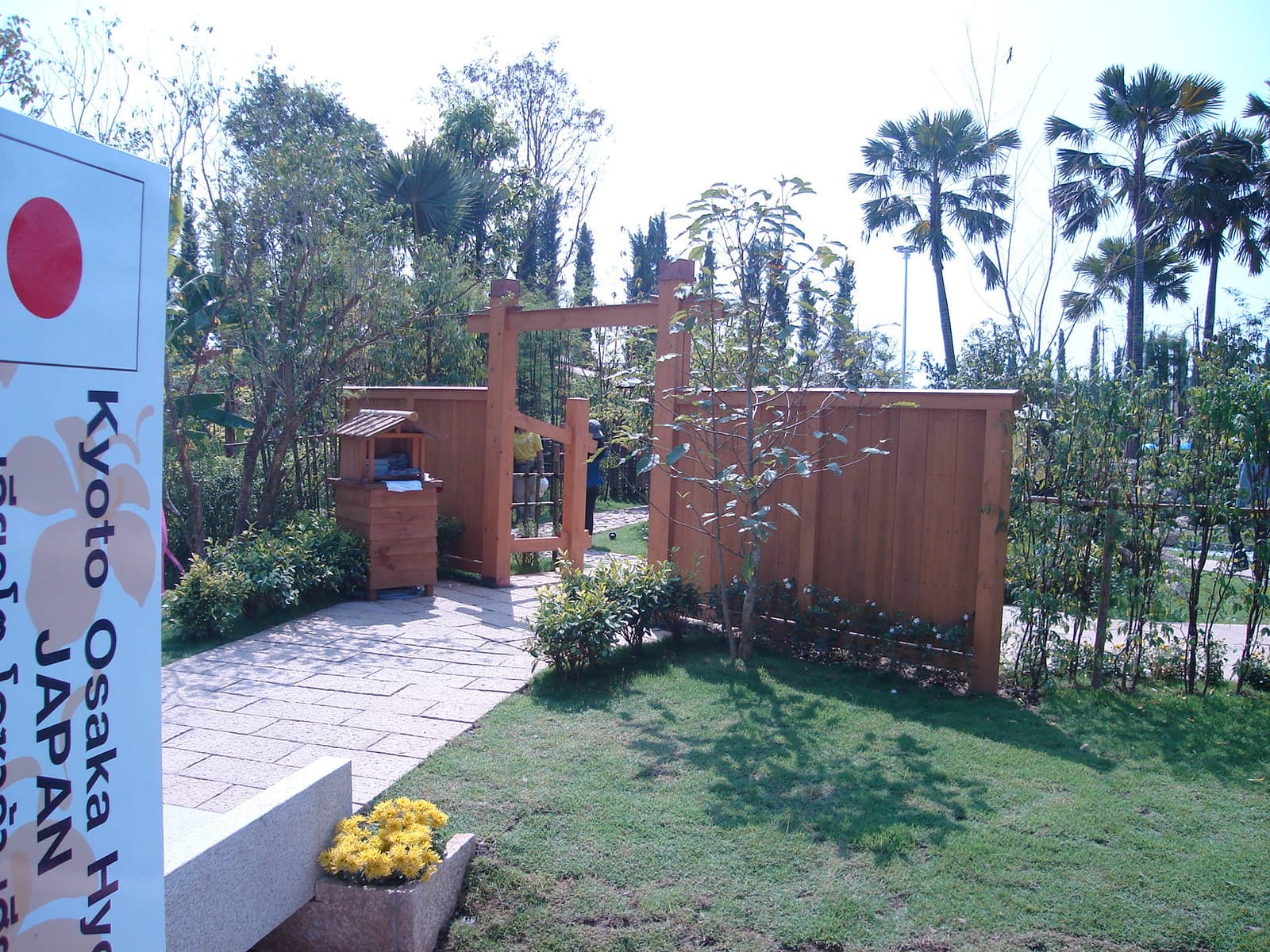
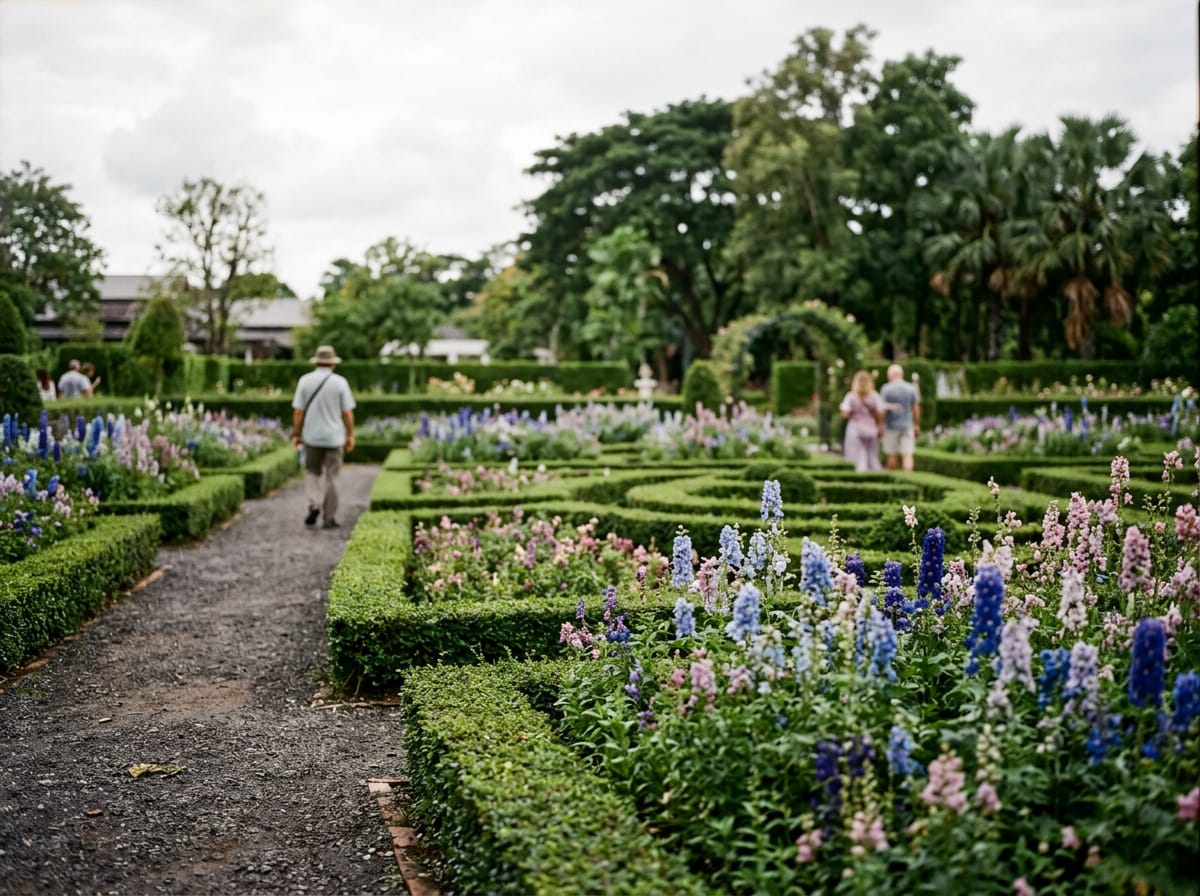
Thirty-two countries built national display gardens for the 2006 expo and most remain. The standouts are the Japanese garden (a faithful tea-garden layout with stone lanterns and a koi pond), the Dutch garden (with windmill and tulip beds in season), the English garden (a small herbaceous border and topiary), the Bhutanese garden (replica monastic architecture and high-altitude plants under shade cloth), the Indian garden (a Mughal-style chahar bagh with quartered water channels) and the Chinese garden (a moon gate and rockery). The lesser-maintained gardens (Iran, Pakistan, several African nations) are still pleasant if you have time to wander.
The international gardens form a roughly circular walking loop around the main pond and take 45–60 minutes at a steady pace.
Other features
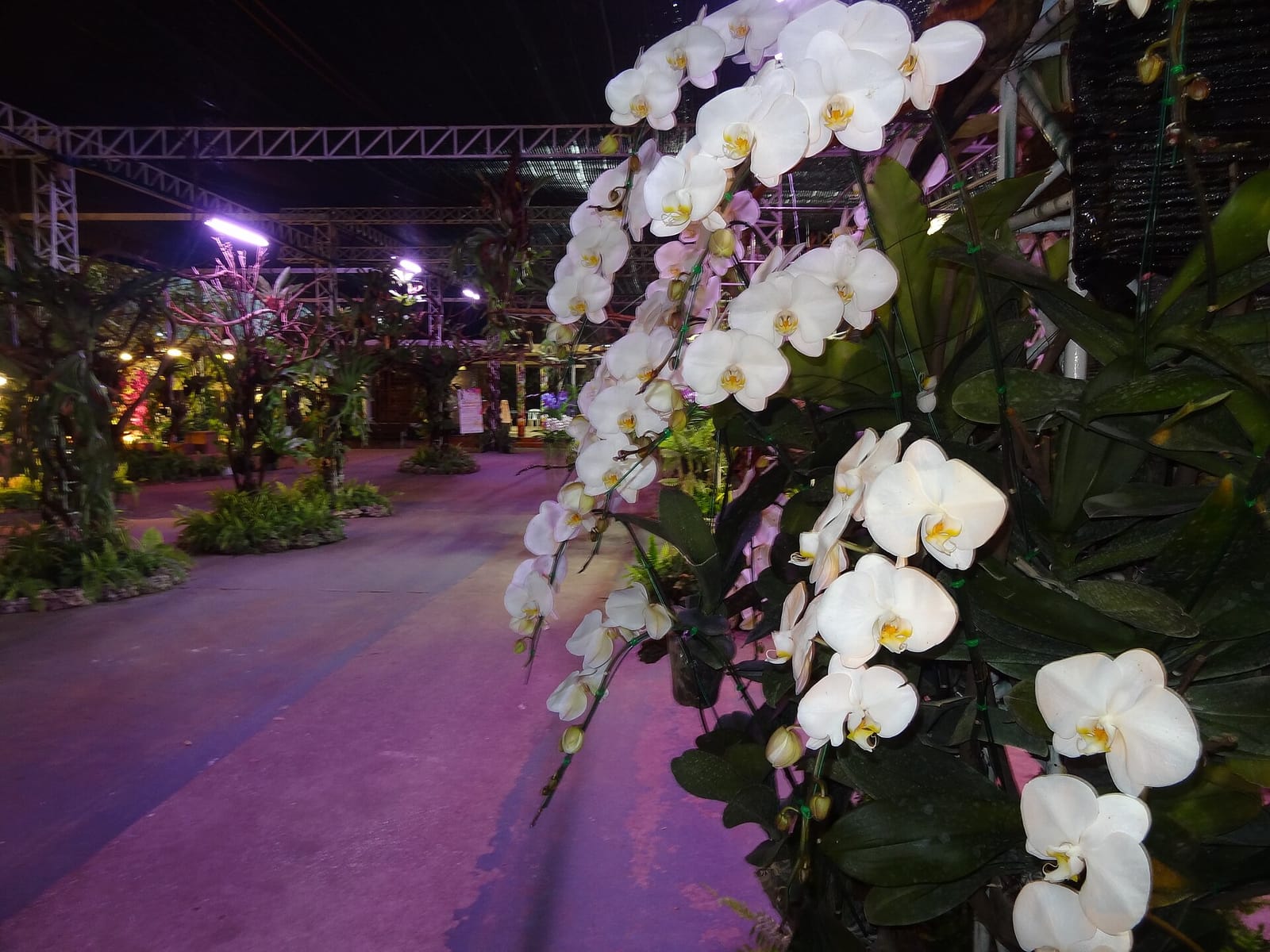
The orchid pavilion holds a permanent display of about 200 species under shade cloth. The herbal medicine garden grows plants used in traditional Thai medicine, with bilingual signage. The Royal Project zone displays cool-climate fruit and vegetable varieties developed for hill-tribe agriculture. A small lake at the south of the site has pedal boats. A children’s playground sits near the main food court. The site is laid out with wide tarmacked paths suitable for wheelchairs and prams.
How to visit
Royal Flora is six kilometres south-west of the Old City moat, or twelve kilometres by road via the Hang Dong superhighway.
Private car or driver is the easiest option. From the Old City, drive south on Mahidol Road, west on the Hang Dong superhighway, and follow signs for Royal Flora at the Mae Hia interchange. The site has a large free car park.
Grab or Bolt private hire is reliable at 200–300 baht one way from the Old City. Many drivers will not wait; book a separate return or use the same app to call a return ride. Taxi stands at the main gate run 250–350 baht back to town.
Yellow songthaew from Chiang Mai Gate (the southern gate of the Old City) runs to Mae Hia for 100 baht per person; tell the driver “Royal Flora” or “Suan Ratchaphruek” and they will drop you at the entrance. Return songthaews are easy to flag at the main gate during the day but thin out after 17:00.
Hotel or hostel tours combine Royal Flora with the Chiang Mai Zoo or with the Hang Dong handicraft villages for 600–900 baht per person.
Driving from the Old City takes 20–25 minutes; from the airport 15 minutes; from Nimmanhaemin Road 25 minutes; from the Night Bazaar 25 minutes.
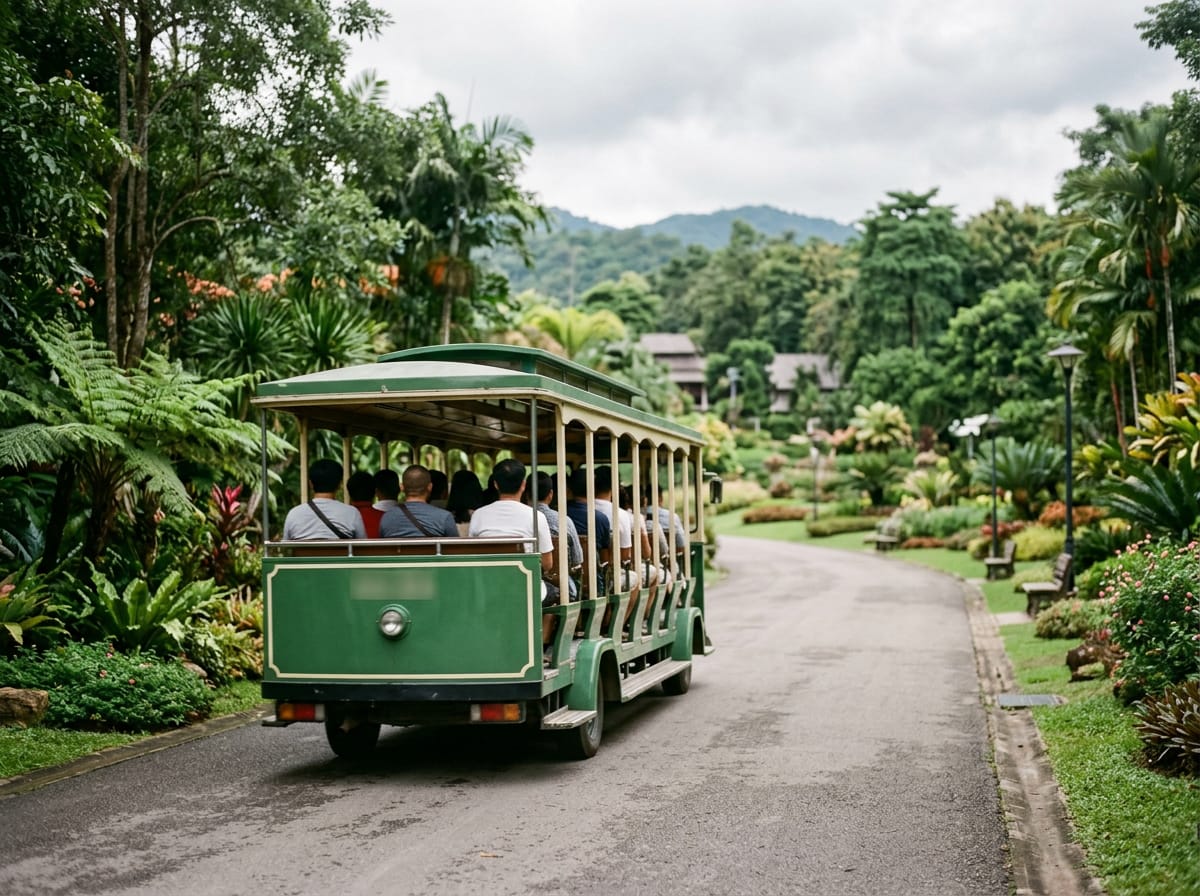
Inside the site, the standard ways to get around are walking, the electric tram (30 baht all-day pass, runs a one-way loop with seven stops every 15 minutes) or bicycle (50 baht per day, hired at the main gate). The tram is the practical default; bicycles work well in the cooler season but the site is large enough that walking the whole circuit is a real workout in the heat.
The main entrance is on the east side of the site. Tickets are sold at the gate; the combined zoo + Royal Flora ticket (sold at certain peak periods) saves 100 baht over buying separately.
Fees and opening hours
Open 08:00 to 18:00 every day, year-round. Last entry 17:00. During the December–January lights festival the site stays open until 22:00 on most evenings; check the official calendar.
Foreigner adult entry 200 baht; foreigner child 100 baht. Thai national 100 / 50 baht. Over-60s with a Thai ID free.
Electric tram all-day pass 30 baht. Bicycle hire 50 baht per day. Pedal boats 60 baht for 30 minutes. Outside-prepared food allowed in the picnic areas. Small drone use is not permitted without prior written permission from the management office.
During the lights festival, an additional evening entry fee of 50–100 baht may apply on peak weekends.
Photography is free throughout. Wedding photography requires a separate permit from the office; many Thai pre-wedding shoots use the Royal Pavilion as a backdrop.
What to bring and wear
Comfortable walking shoes. Even with the tram, you will cover a kilometre and a half on foot through the gardens.
A hat and sunscreen. Much of the site is in the open under sun.
A light layer for the air-conditioned indoor exhibits (the museum, parts of the tropical glasshouse).
Conservative dress for the Royal Pavilion: shoulders and knees covered, no see-through fabric. A sarong or light long-sleeved shirt over a t-shirt works.
Cash in baht for the gate, the tram and the food court. Card readers are available at the main gate but not everywhere.
A refillable water bottle; refill stations are scattered around the site. Insect repellent is useful in the rainy season.
Best season
November to February is the prime window. Cool, clear weather, the formal beds at their peak, and the annual lights festival from mid-December to late January. December is the busiest month; book a driver or tour in advance for weekends around Christmas / New Year and Chinese New Year.
March to May is hot and often hazy with burning-season smoke. The glasshouses are unaffected; the international gardens look drier. Visit early in the day and use the tram.
June to October is the rainy season. The gardens are at their lushest; afternoon showers are brief but heavy. The site drains well and the wide paved paths remain walkable. Morning visits are usually clear.
Outside the lights festival, the December–February high season is also the peak time for orchid blooms in the orchid pavilion.
Where to eat nearby
The main food court near the Royal Pavilion is the standard option inside the gates: half a dozen Thai food stalls, a coffee shop and a soft-serve ice cream kiosk; 60–120 baht for a meal. Smaller kiosks at the international gardens and the tropical glasshouse sell drinks, ice cream and snacks.
Just outside the gate, the Mae Hia roadside has several small Thai restaurants. Khao Soi Mae Sai Mae Hia (an outpost of the famous Khao Soi Mae Sai) serves the city’s best northern Thai noodle soup at 50 baht a bowl. Hatyai Fried Chicken on the same parade serves southern-style fried chicken and sticky rice for 80–120 baht.
For a sit-down lunch on the way back into town, the canal-side restaurants of Wualai Road (the silver-craft street, on the way back to the southern gate of the Old City) are a five-minute drive away. Salad Concept on the Nimmanhaemin side has good salads and Mediterranean dishes for 200–350 baht. For Lanna fine dining, Khum Khantoke is across the same Hang Dong superhighway from Royal Flora.
Combine with…
The natural pairing is the Chiang Mai Zoo, the other big half-day family attraction on the western side of the city; the two are ten kilometres apart, both well signposted, both with electric trams, and combined-ticket promotions appear at peak season. Royal Flora in the morning, lunch on Nimmanhaemin, the zoo in the afternoon works well, or reverse it for cooler timing.
For a contrasting botanic experience, the Mae Sa Valley on the other side of the city contains the Queen Sirikit Botanic Garden, a much wilder and more scientific garden focused on Thai native flora. Royal Flora’s formal exposition and Queen Sirikit’s research collection together give the complete picture of Thai horticulture in two half-days.
For visitors with cars or scooters, the silver-craft village of Wualai Road, home of Wat Sri Suphan (the Silver Temple), and the handicraft villages of Hang Dong and San Kamphaeng sit within twenty minutes of Royal Flora and combine well into a one-day artisans-and-gardens itinerary. The southern gate of the Old City is fifteen minutes back to the north for a khao soi lunch and an afternoon at the markets.
For the evening of a December or January visit, time the day to finish at Royal Flora for the lights festival opening at 18:00. The gardens lit in colour around the pavilion are one of the most underrated seasonal sights in Chiang Mai.
Photos
Frequently asked questions
What is Royal Flora Ratchaphruek?
Royal Flora Ratchaphruek is an 80-hectare botanical exposition six kilometres south-west of Chiang Mai. It was built for the 2006 International Horticultural Exposition staged to honour King Bhumibol Adulyadej's 60-year reign, then made a permanent attraction. The site collects themed gardens from every Thai province and 32 international gardens around the gilded Royal Pavilion (Ho Kham Luang).
Is Royal Flora worth visiting outside the exposition season?
Yes. The site is permanently maintained and the gardens are kept planted year-round; it is not a once-a-year event venue. The high season runs December to February when the formal beds peak and the annual lights festival runs; in low season the international gardens, the glasshouses and the Royal Pavilion are still worth a half day.
How much does Royal Flora Ratchaphruek cost?
200 baht for foreigner adults, 100 baht for children. Thai nationals pay 100 / 50 baht. The electric tram is an extra 30 baht for an all-day pass; bicycle hire is 50 baht. The Royal Pavilion, glasshouses and individual provincial gardens are included in the main ticket.
How long does Royal Flora take?
Three to four hours is the standard visit. A quick tour of the Royal Pavilion, the tropical glasshouse and a sample of the international gardens takes two hours; a full visit including the provincial garden zone and the orchid display takes a comfortable half day.
Is Royal Flora the same as Queen Sirikit Botanic Garden?
No. Queen Sirikit Botanic Garden is a 560-hectare scientific botanic garden in Mae Sa Valley north-west of Chiang Mai, focused on Thai native flora and conservation research. Royal Flora Ratchaphruek is an 80-hectare exposition garden in Mae Hia south-west of the city, focused on horticultural display and provincial showcase gardens. The two are about 25 km apart.
What is the Royal Pavilion?
The Royal Pavilion, Ho Kham Luang, is the gilded centrepiece of the site — a multi-tiered Lanna-style timber and gilded-roof pavilion built around a Buddhist shrine honouring the king. It sits at the head of a long axial pond and is the most photographed building on the grounds. Entry is included in the main ticket; shoes are removed at the steps.
Are there international gardens at Royal Flora?
Yes. Thirty-two countries built display gardens for the 2006 exposition and most have been preserved. The Japanese, English, Dutch, German, Bhutanese and Indian gardens are the most carefully maintained. Each is signposted and laid out within a 20–25 minute walking circuit of the main pond.
Is there a glasshouse?
Yes — several. The Tropical Garden glasshouse is the largest, with a planted tropical rainforest interior, an orchid wing and a desert wing. Smaller glasshouses cover ferns, carnivorous plants and a specialist orchid collection. All are included in the main ticket.
Is the lights festival worth visiting?
Yes if you are in Chiang Mai between mid-December and late January. The annual Lanna Lights / Royal Flora Lights festival illuminates the pavilion, the international gardens and the main avenues with themed installations. The site stays open until 22:00 during the festival and an extra entry fee may apply on peak evenings. Check the official site before going.
Can I get to Royal Flora by public transport?
Yes. Yellow songthaews run from Chiang Mai Gate (the south gate of the Old City) to Mae Hia for 100 baht and pass the entrance. A Grab or Bolt from the Old City costs 200–300 baht. The simplest option for a half-day trip is to book a return taxi for around 800 baht with a few hours' wait.
Is Royal Flora suitable for children?
Yes. The electric tram, the bicycle paths, the open lawns, the international gardens and the glasshouse with butterflies all work for children. The site is mostly flat, the paths are wide and shaded, and there are several playgrounds. A combined ticket with the zoo is available at peak season.
Are there cafés at Royal Flora?
Yes. A main food court near the Royal Pavilion serves Thai food and coffee, and several smaller kiosks are spread around the international gardens. Outside food is allowed in the picnic areas.
Related guides
Sight
Chiang Mai Zoo
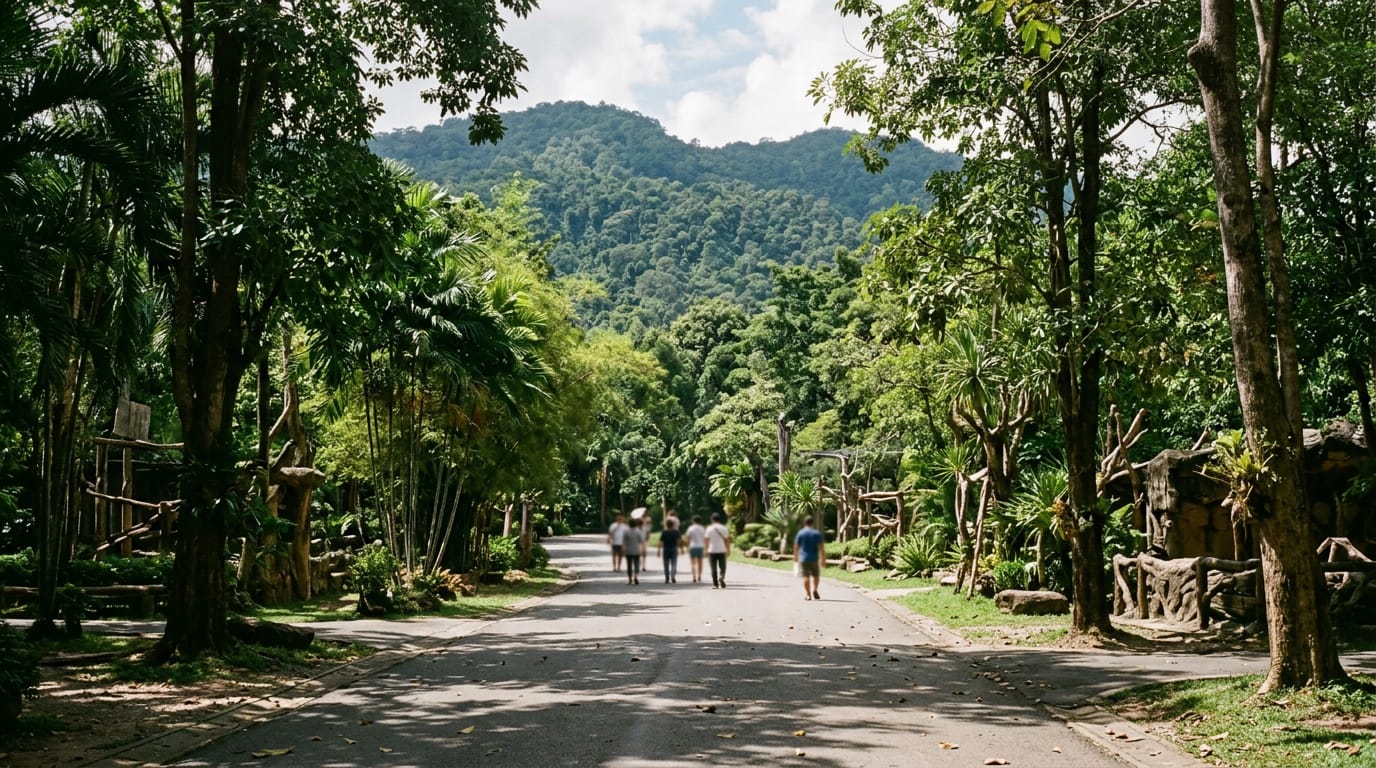
Chiang Mai Zoo sits at the foot of Doi Suthep, just outside the Old City, and is one of only a handful of zoos outside China to host giant pandas. The 81-hectare site sprawls up a forested hillside with around 400 species, an aquarium, a panda house and a tram service that handles the climb between the lower and upper enclosures.
Sight
Mae Sa Valley
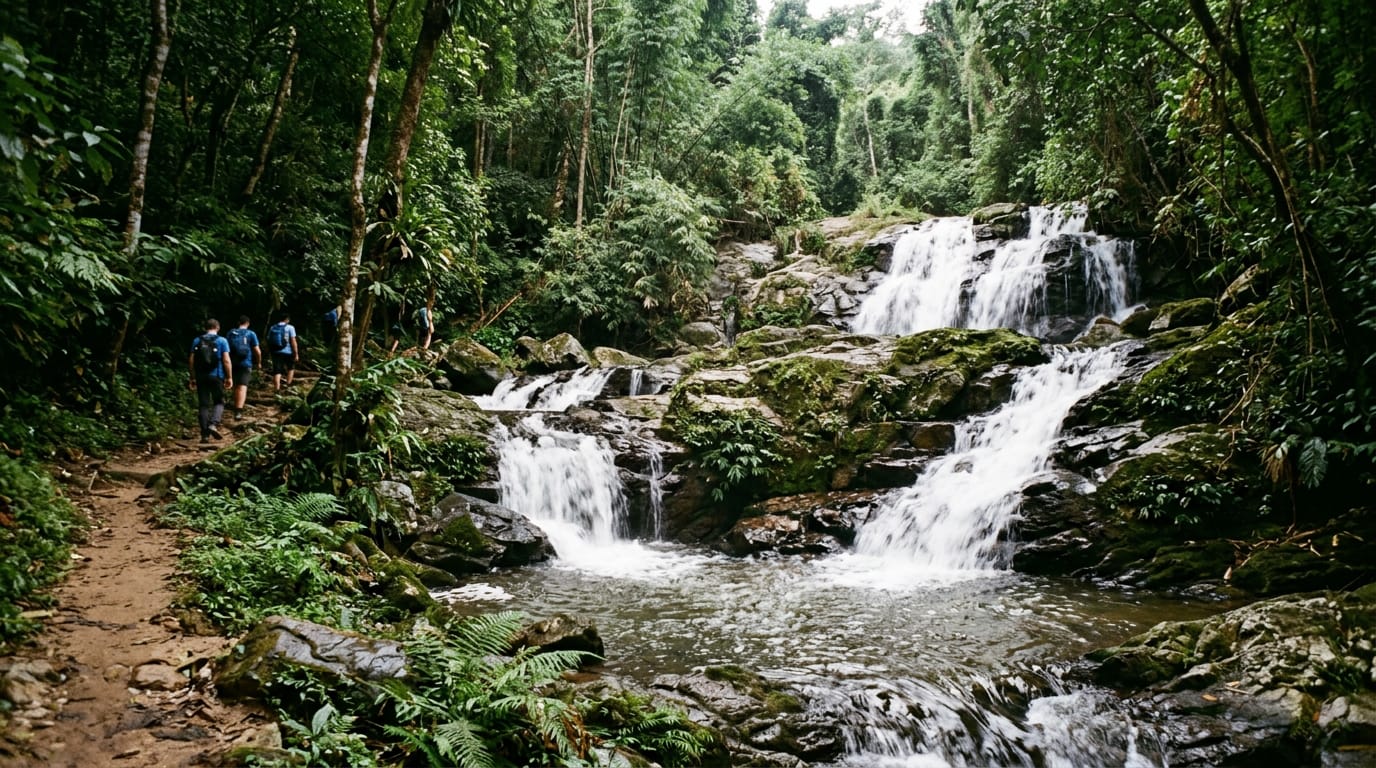
Mae Sa Valley is the green corridor that runs north-west of Chiang Mai along Route 1096, the first leg of the Samoeng loop. The 30 km stretch packs in a ten-tier waterfall, orchid farms, a botanic garden, ziplines and ethical elephant sanctuaries — most notably Elephant Nature Park, the country's best-known refuge for retired working elephants.