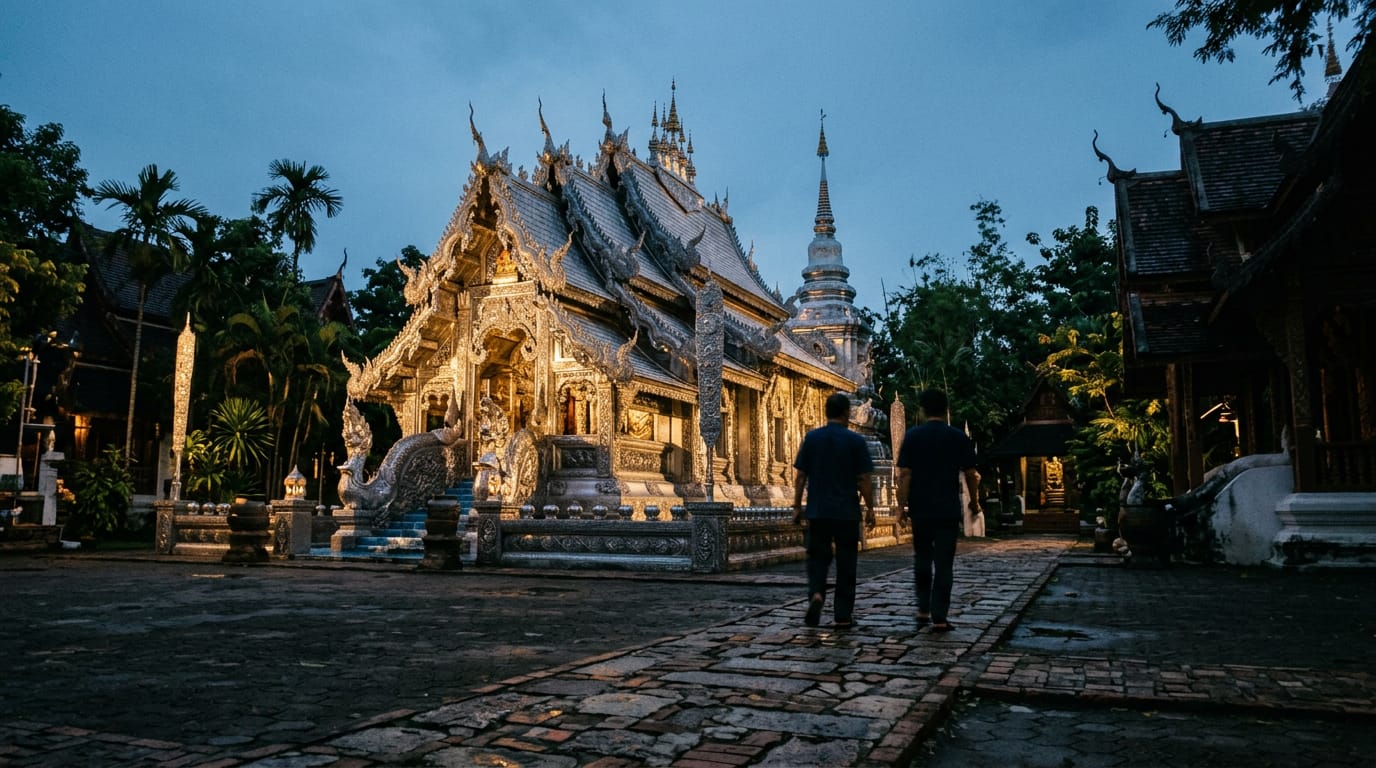
Wat Sri Suphan is the Silver Temple of Chiang Mai. The wat was founded in 1502, but its defining feature is the silver ubosot completed in 2016, an ordination hall clad entirely in embossed silver and aluminium panels worked by the Wua Lai silversmiths next door. Women may not enter the ubosot but view it from the doorway. The Saturday Walking Street begins at the gates.
Updated
Wat Sri Suphan is the Silver Temple. The compound itself was founded in 1502, but what visitors come to see, and what gives the temple its English name, is a building completed in 2016: an ordination hall covered entirely in embossed silver and aluminium panels, worked by hand by the silversmiths of the surrounding Wua Lai quarter. It is one of the most photographed temples in Chiang Mai, the most distinctive of the city’s contemporary religious buildings, and (for women visitors) one of the few major temples in Thailand that imposes a genuine restriction at the doorway. All of this happens 300 metres outside the southern moat of the Old City, with the Saturday Walking Street running directly past the gates.
History and significance
The temple was founded in 1502 under King Muang Kaew, the eleventh ruler of the Mangrai dynasty. The compound sat at the heart of the Wua Lai quarter, the silversmiths’ district that supplied the royal court with ceremonial bowls, jewellery and reliquaries. The relationship between the temple and the craft community has been continuous since the founding; Wua Lai silversmiths have worked, taught and made merit at the wat for over five hundred years.
The compound went through the same long decline as the rest of Chiang Mai’s Mangrai-era foundations during the Burmese occupations of the sixteenth to eighteenth centuries. The original ordination hall and most of the wooden structures were lost. King Kawila’s restoration programme after 1797 rebuilt the principal viharn (the older hall that still stands today, Viharn Phra Chao Chet Tu, holding seven Buddha images on its central altar) and a small brick ubosot in plain whitewash. That brick ubosot served the temple for the next two centuries.
The silversmiths themselves are not, strictly speaking, locals. The craft families of Wua Lai trace their line to artisan communities from the Salween river country to the north-west, resettled here in the early nineteenth century under Kawila’s repopulation of a city the Burmese wars had left nearly empty. Chiang Mai still carries the stamp of that policy: each resettled craft community was given its own quarter and its own temple, and Wua Lai got the silver. Two centuries on, the family workshops within a few streets of the temple are the last concentrated remnant of that system.
The silver ubosot is the work of the modern Wua Lai silversmith guild and was conceived around 2004 by the then-abbot, Phra Khru Phithakprachanart, in collaboration with master craftsman Sala Chai Phromchai. The abbot proposed that the existing brick ubosot be re-clad in worked silver as a living demonstration of the craft tradition: a public showcase of what the silversmiths could do, and a permanent commission that would keep apprentices employed through the long completion. Work began in 2008 in stages, panel by panel. The hall was consecrated in 2016 and remains the largest example of working Lanna silversmithing applied to architecture anywhere in Thailand. The cladding is a deliberate mixture of pure silver, nickel-silver alloy and embossed aluminium, with the proportion of true silver concentrated in the high-relief Buddhist iconography on the front facade. The total metal weight is around 5 tonnes.
The compound is therefore three eras on one plot of ground: the 1502 foundation under Muang Kaew, the early-19th-century Kawila viharn and the early-21st-century silver ubosot.
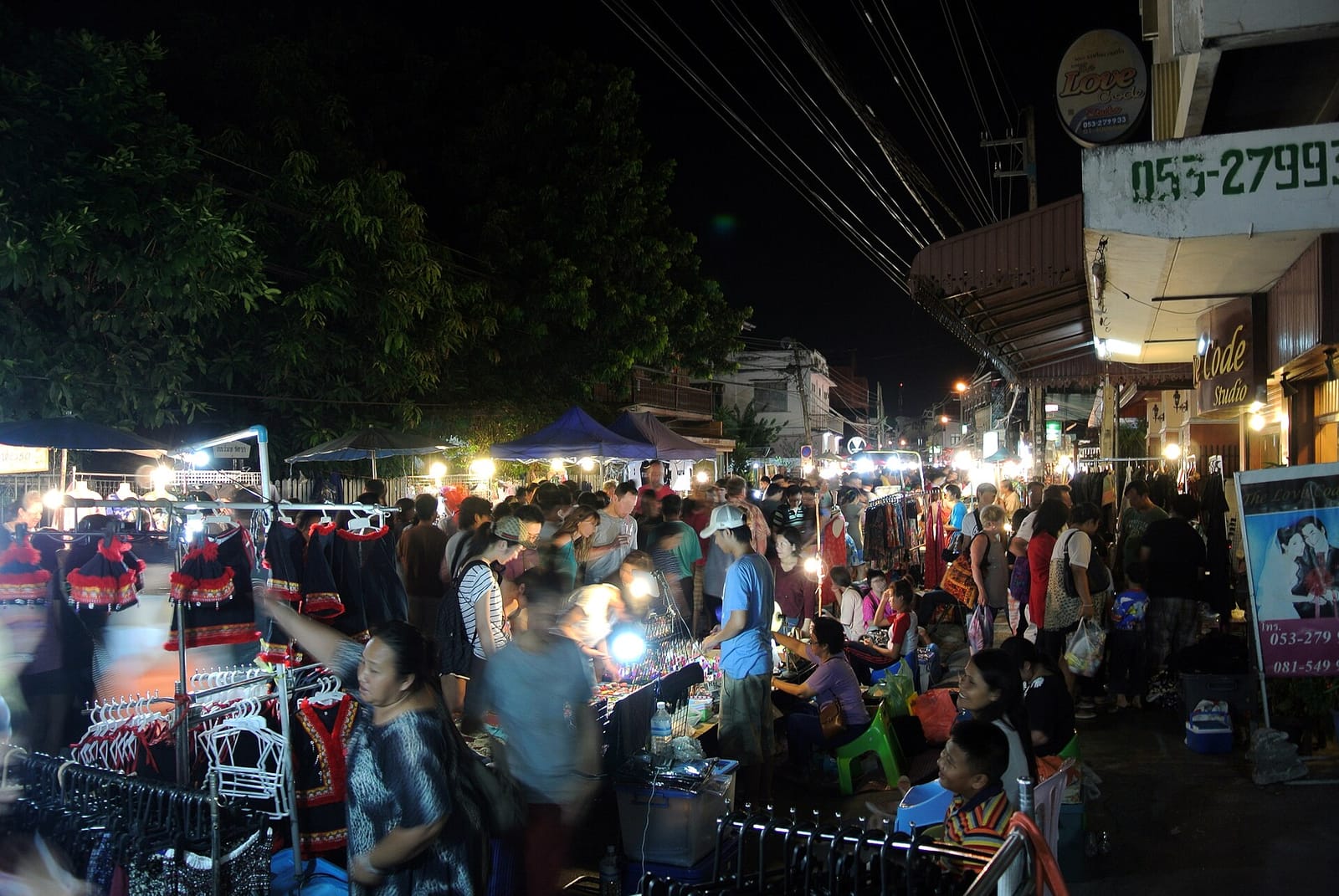
The other reason for the temple’s prominence is its location at the head of the Saturday Walking Street, the Wua Lai night market that has run on the road outside the gates every Saturday afternoon and evening since 2002. The temple compound is effectively the anchor and the back-entrance to the market, and the two together (temple at the south end, food and craft stalls running north up Wua Lai Road for 800 metres) make the standard Saturday-evening Chiang Mai itinerary.
What to see
A full visit covers four features, all on the same compact plot. The route runs naturally from older to newer.
The older viharn (Viharn Phra Chao Chet Tu)
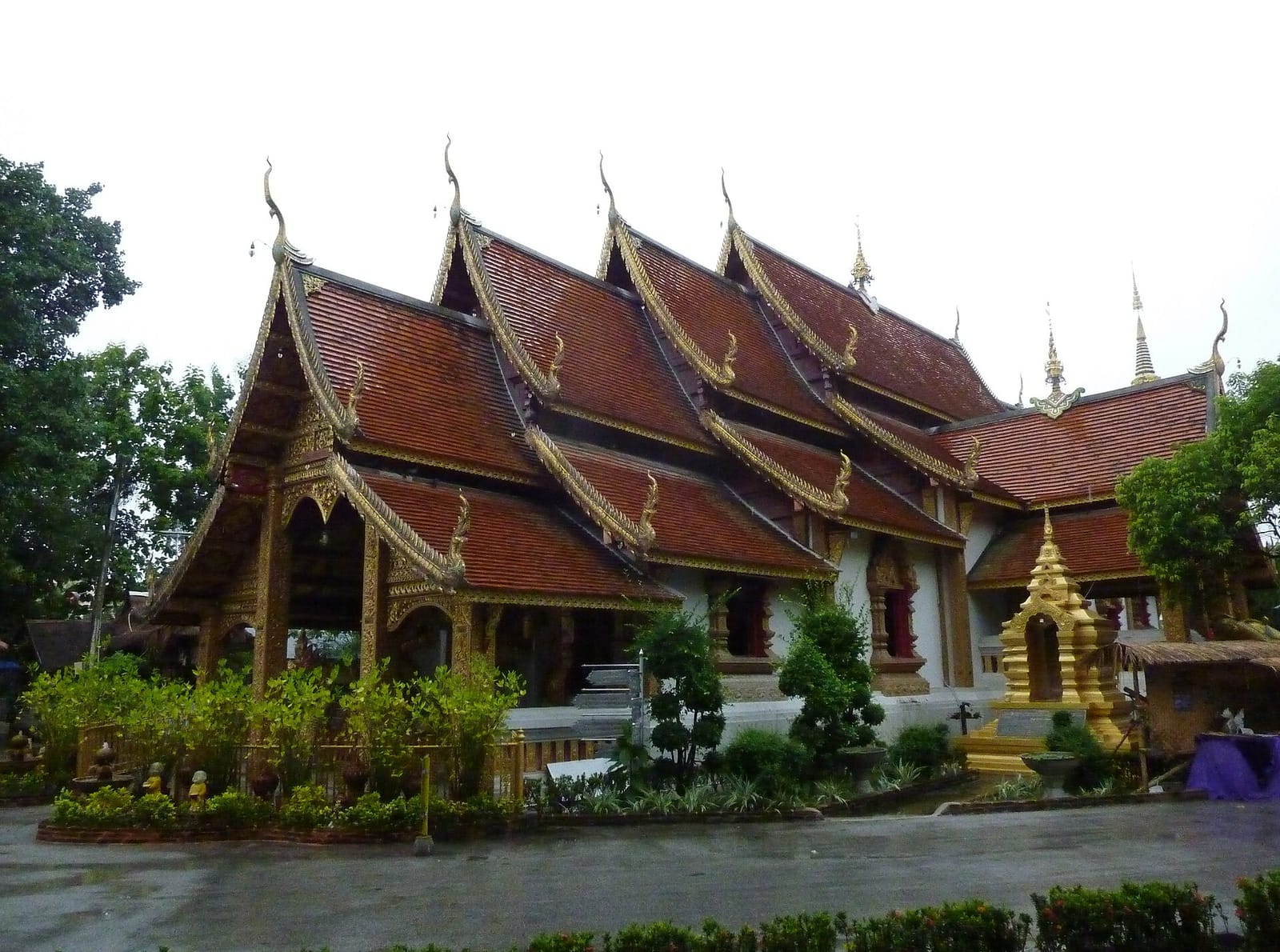
The principal viharn of the original 1502 foundation sits just inside the main gate, on the north side of the courtyard. The current building dates from the Kawila rebuild of around 1820 on the older 16th-century foundations. It is a fine example of restrained early-nineteenth-century Lanna: three-tiered roof, gilded gable carving in the kanok flame motif, carved teak window shutters and a wide raised floor inside. The altar carries seven Buddha images in the maravijaya posture, hence the name Phra Chao Chet Tu (‘Lord Buddha of the Seven Images’).
Wall paintings inside the viharn date from a 1920s restoration and depict scenes from the Jataka tales (the previous lives of the Buddha). They are not as celebrated as the murals at Wat Phra Singh but are well preserved and worth a careful look. The viharn is open during all compound hours and is free.
The silver ubosot
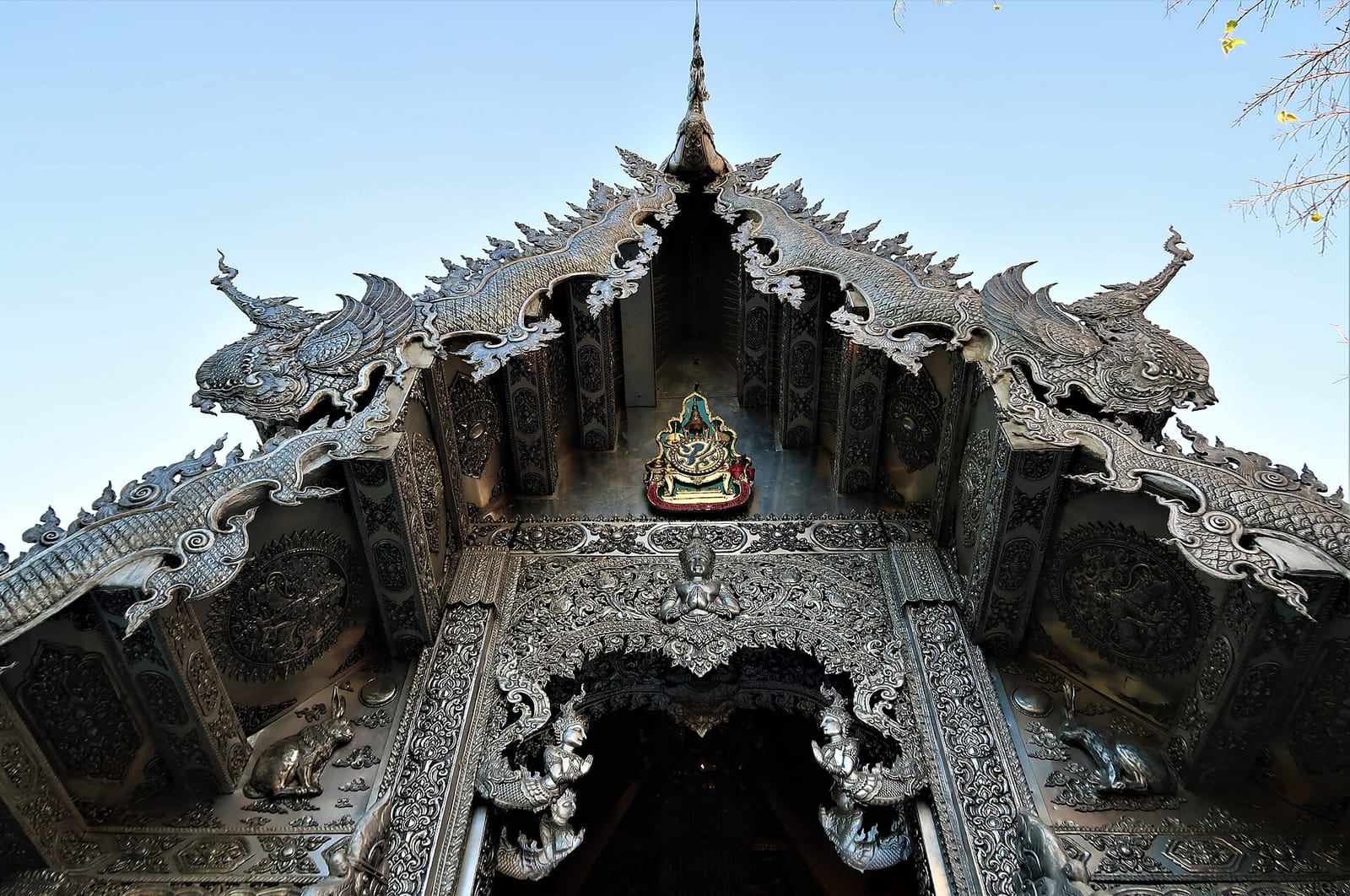
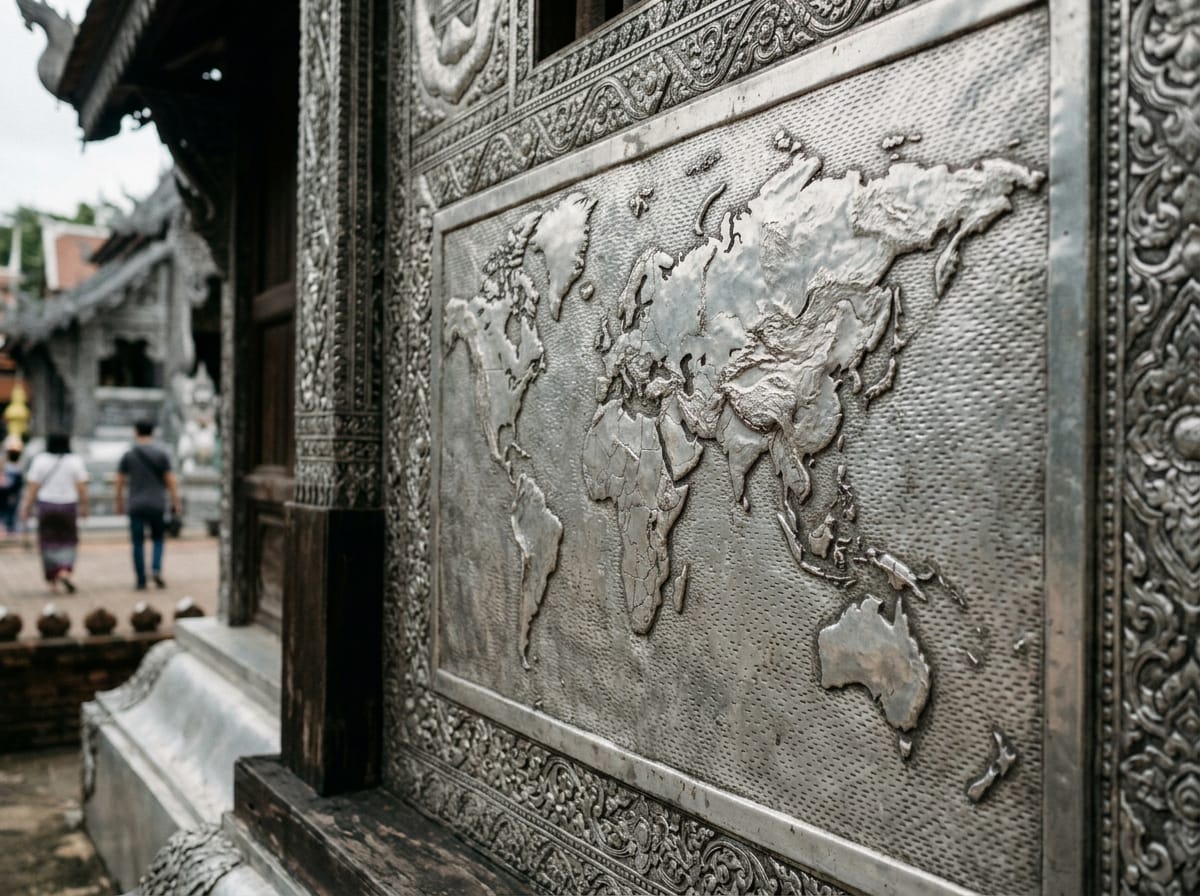
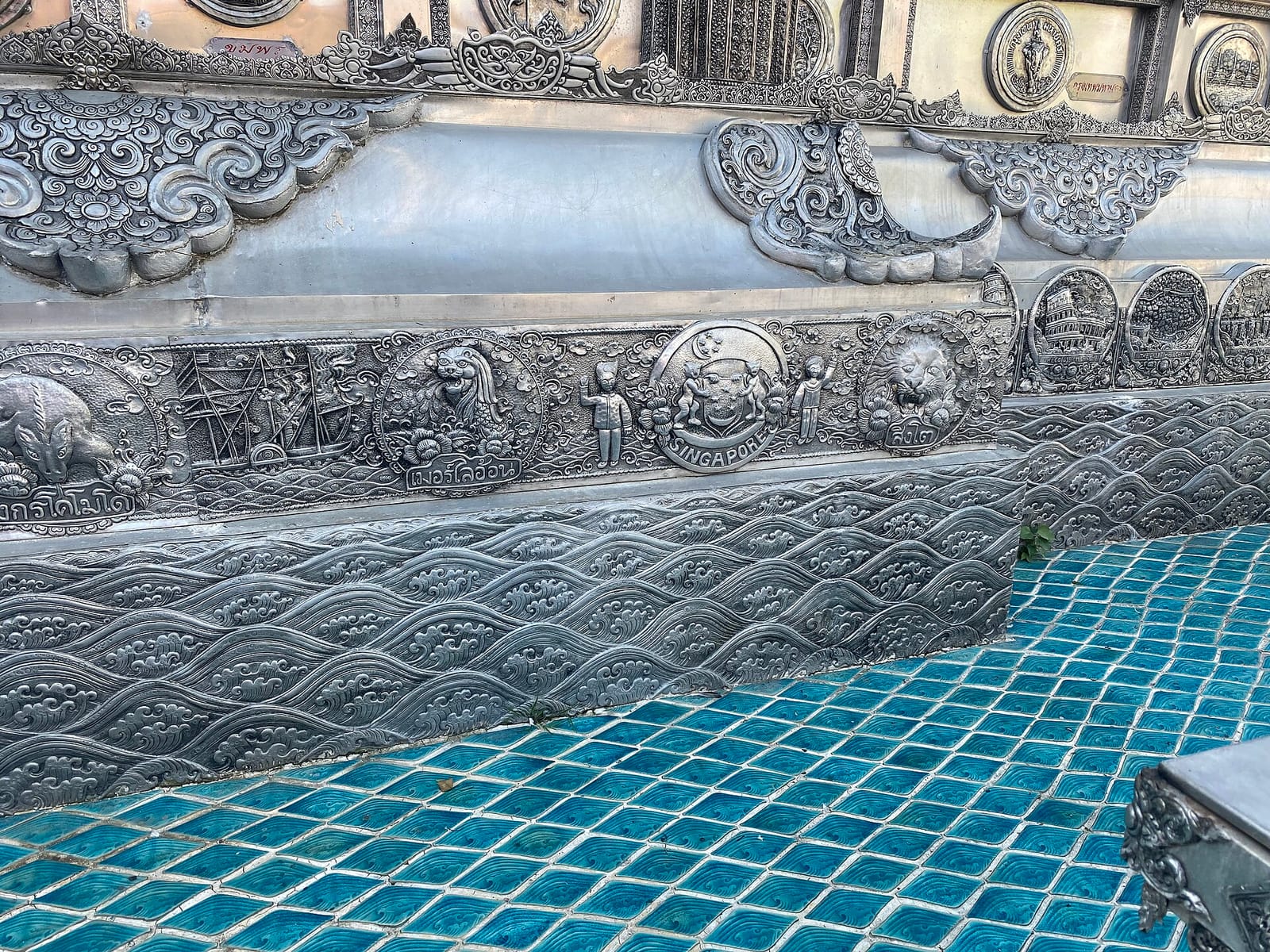
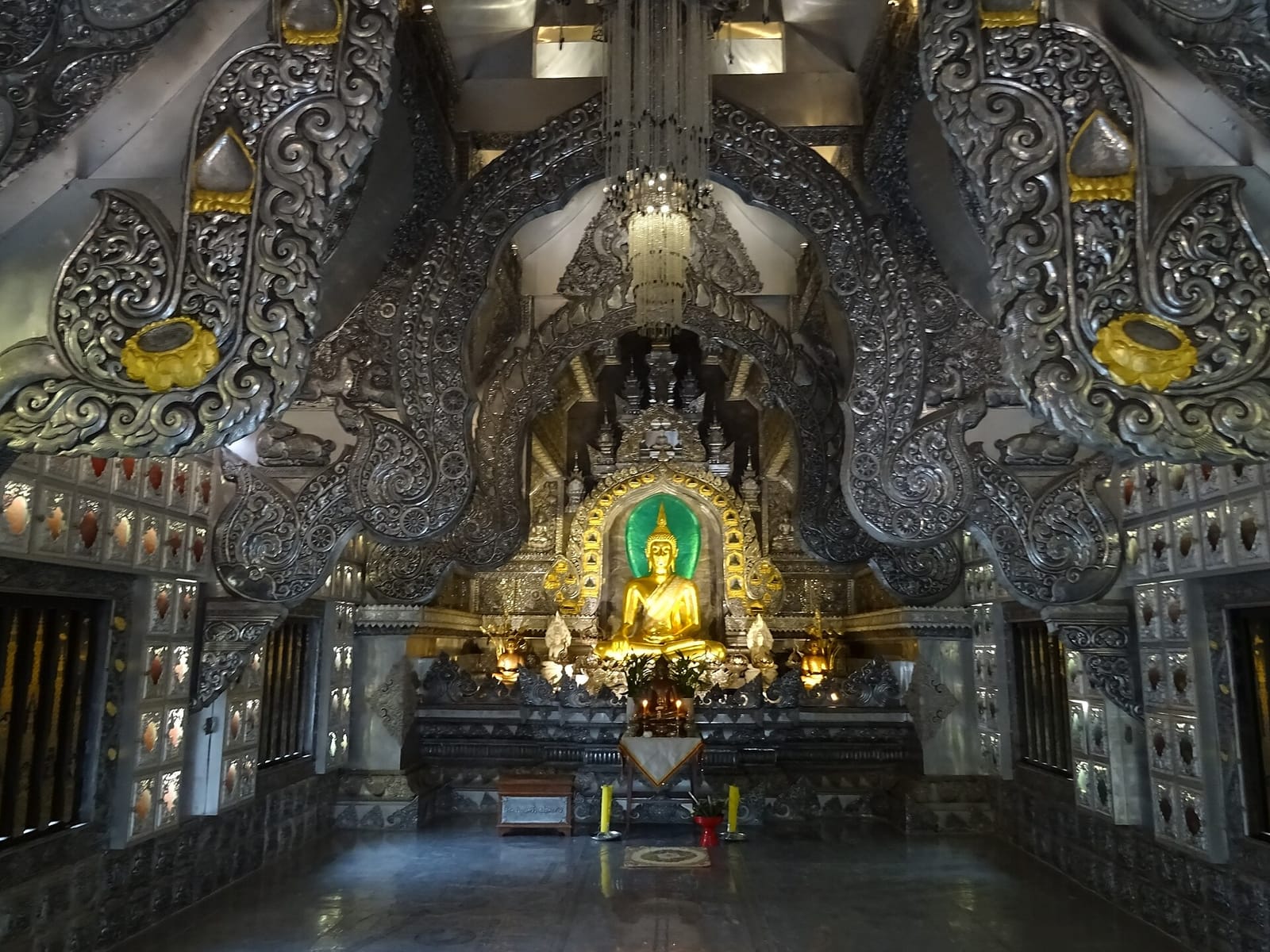
The silver ordination hall is the headline. It stands behind the older viharn, on the south side of the courtyard, raised on a stepped plinth and surrounded by sema boundary stones cast in silver-finished aluminium. The structure follows the proportions of a traditional Lanna ubosot but every external surface is embossed metal, panel by panel, in patterns that include the standard Buddhist iconography of the Wheel of Dharma and the eight auspicious symbols, but also a Buddhist zodiac running along the lower wall, a world map showing all continents on the rear panel, and a Buddhist cosmological diagram on the western side. The front facade is the densest work and uses the highest proportion of pure silver.
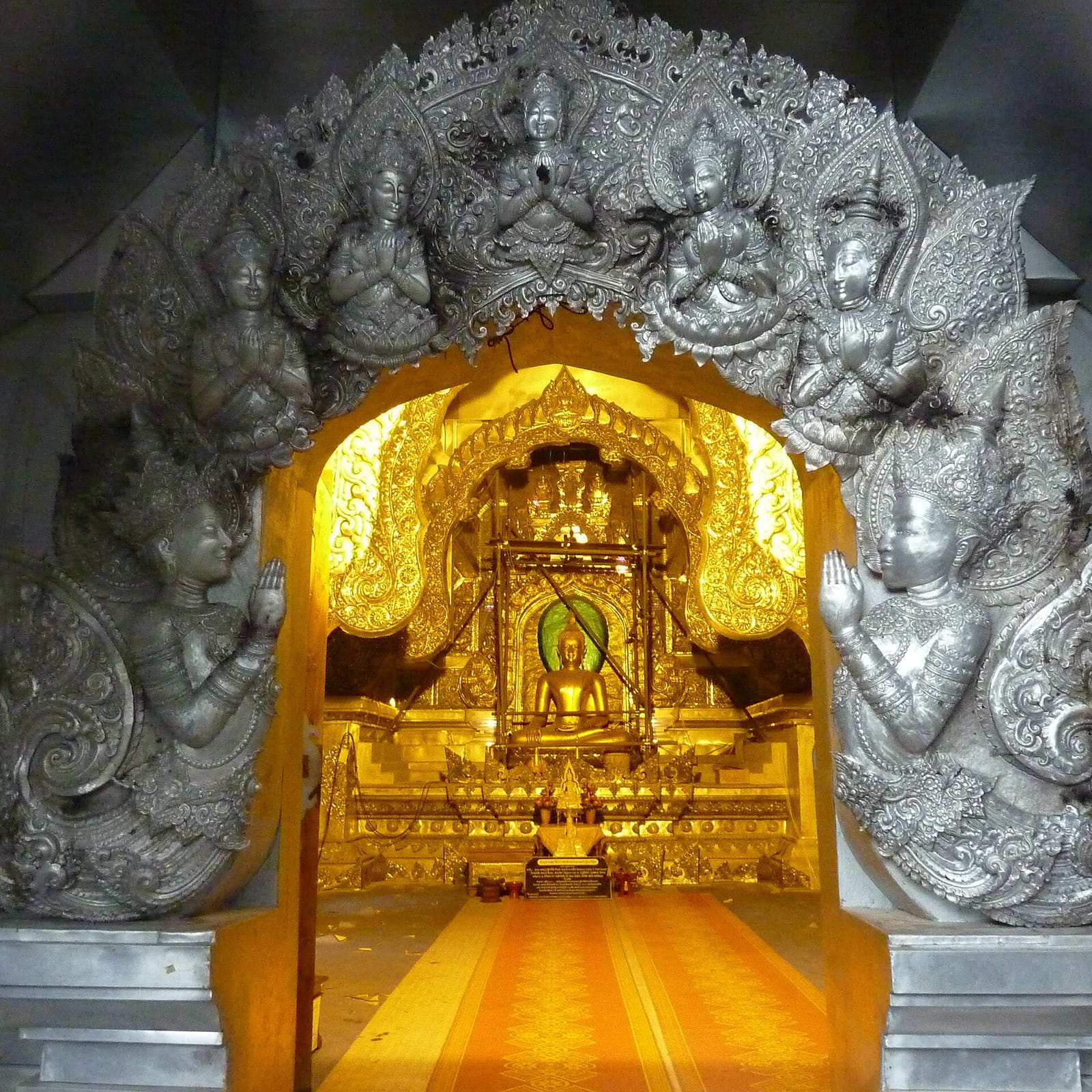
The interior is open to view from the front doorway. Step up to the threshold and you see the entire altar from there: a seated Buddha image surrounded by silver wall panels showing the life of the Buddha in continuous low relief. The hall feels much larger inside than out, partly because the silver throws light back from every wall.
The 50 baht entry fee applies to entering the inner enclosure. The doorway view is free.
One rule needs stating plainly: women may not enter the inner enclosure. The temple maintains the traditional Theravada restriction at this particular ubosot. Women view the hall from the open doorway, where the entire interior is visible. Men cross the threshold, walk in, and circle the altar. Both are valid ways to see the hall, and the doorway view is in some respects the better photograph.
Photographing the building takes more thought than most temples do. At midday the metal is a sheet of glare and the embossed detail flattens out; the relief reads far better in raking light, early or late, when every figure throws a small shadow. A polarising filter tames the worst reflections. For detail shots, work close on a single panel rather than trying to hold the whole facade, and look low: some of the most carefully worked passages, the zodiac animals among them, run along the base of the walls at shin height. After dark the uplighting turns the hall a faint blue-white, and hand-held shots are workable at the ISO any recent phone manages.
The silversmith workshop
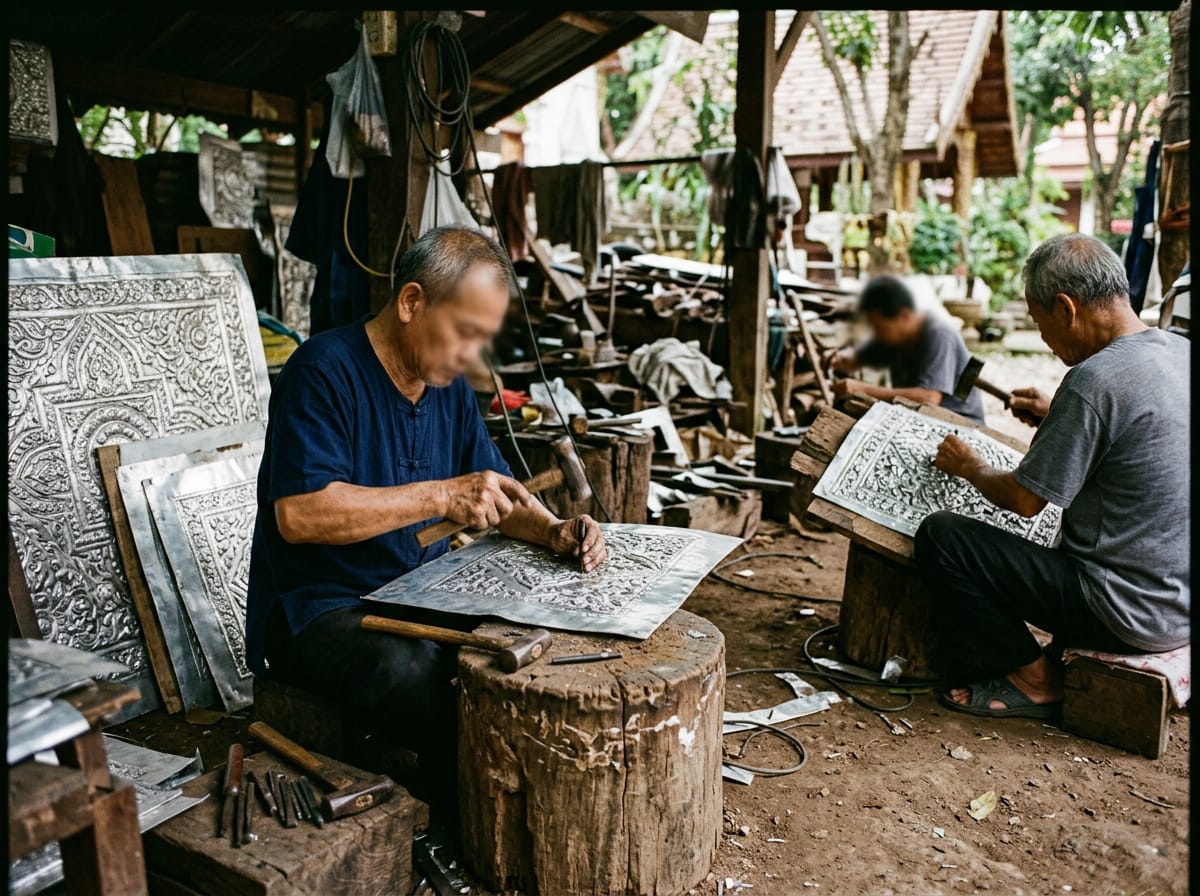
Behind the silver ubosot, in a covered courtyard, sits the working silversmith school operated by the temple. Apprentices and master craftsmen work here on most weekdays from 09:00 to 17:00, embossing aluminium and silver panels for repairs to the ubosot, making alms bowls and ceremonial offerings, and producing small jewellery and decorative pieces for sale. Visitors can stand at the workbenches, watch the work, ask questions in passable English and buy directly. The school also runs short hands-on classes, typically 600 baht for a 2-hour session in which you emboss your own small silver pendant, bookable on the day.
The main chedi
A small bell-shaped chedi stands at the rear of the compound, finished in gilded copper plates added in the 1920s and re-gilded in 2014. It is older than the silver ubosot and quieter; most visitors miss it, but the walk around it gives the best view of the back of the silver hall and of the line of small subsidiary chedis along the rear wall.
How the silver work is made
Watching the workshop makes the ubosot legible. The panels are worked in repoussé: a sheet of metal is laid over a bed of soft resin, and the design is driven up from the back with hammers and punches, then turned over and sharpened from the front. The resin gives just enough for the metal to stretch without tearing. A large pictorial panel passes back and forth between the two faces dozens of times before it is finished, and a complicated one occupies a craftsman for weeks.
Apprentices generally start on aluminium, which is cheap, forgiving and bright, and graduate to silver alloy as their hammer control improves. That hierarchy of materials is built into the building itself: aluminium for the broad background fields, silver concentrated where the iconography matters most. Run your eye along a wall and you can pick the senior hands from the junior ones by the confidence of the line. If two hours at a workbench appeals, the 600 baht embossing class is genuinely hands-on rather than a demonstration.
How to visit
Wat Sri Suphan sits on Wua Lai Road, the historic silversmith quarter, 300 metres south of Chiang Mai Gate in the southern Old City moat. From inside the Old City the walk is 10 to 15 minutes south down Phra Pokklao or Bumrung Buri Road and then Wua Lai. From Tha Phae Gate the walk is 20 minutes south-west.
A red songthaew from anywhere in the Old City costs 30 baht per person on a shared ride. A Grab from Tha Phae Gate is around 60 baht. The temple sits on the same road as Chiang Mai Gate market, so visitors who have eaten breakfast there often walk down to the temple afterwards.
Parking is awkward. The compound has no formal car park, although motorbikes can park free along Wua Lai Road. The nearest paid car park is at Chiang Mai Gate, 300 metres north, charging 20 baht per hour. On Saturday evenings during the Walking Street, the entire road is closed to vehicles from 16:00; drive in earlier or use Grab.
The neighbourhood around the temple is the most concentrated silver and handicraft district in northern Thailand. The small workshops that line Wua Lai Road north of the temple sell directly to the public, often at lower prices than the Walking Street stalls or the Night Bazaar. A short crawl of these shops, before or after the temple, is part of the experience.
Food is easy on this side of the moat. The Chiang Mai Gate night market, at the top of Wua Lai Road, serves khao soi (the northern curry-noodle dish) and grilled chicken from late afternoon every day of the week, and on Saturdays the Walking Street fills the road outside the temple with food stalls by 17:00. There is no need to plan a meal around a visit here; one will find you.
Etiquette and dress code
The standard rules apply, with one specific exception. Cover shoulders and knees; vests, short shorts and miniskirts are turned away. Sarongs are lent free of charge at the silver ubosot entrance. Shoes come off before entering the silver ubosot, the older viharn and the main chedi enclosure, and before standing on the doorway threshold of the silver hall to view it from outside. Remove hats and sunglasses inside.
The specific exception: women may not enter the inner enclosure of the silver ubosot. View it from the open doorway, where the altar and interior wall panels are fully visible. Photography is welcome from the doorway. The rule applies only to the silver ubosot. Women are free to enter every other building in the compound, including the older viharn and the workshop.
Photography is welcome throughout the compound. Drones are not permitted. The Saturday Walking Street outside is a public street market and standard street-photography etiquette applies.
Best time to visit
Saturday late afternoon, from about 16:00 to 18:00, is the best window for a first visit. The temple is open, the silver ubosot is at its most photogenic from 17:30 as the uplighting comes on and the metal begins to glow against the darker sky, and the Saturday Walking Street starts at 16:00 immediately outside the gates. A visit that takes in the older viharn at 16:30, the workshop at 17:00, the silver hall at sunset, and the market afterwards is one of the most complete Chiang Mai evenings.
For a quieter visit, come on a weekday morning between 09:00 and 11:00. The silversmith workshop is at its most active, foreign visitors are sparse, and the light inside the older viharn is at its best.
Avoid Sundays mid-morning, when the temple sometimes hosts ordinations and the silver ubosot is closed to visitors for a few hours. The major Buddhist holy days (Wisakha Bucha, Asanha Bucha, Makha Bucha) bring quiet candlelight processions at dusk that are worth a visit if your dates coincide.
Nearby and related
Wat Sri Suphan anchors the southern temple cluster and is best paired with the Old City temples a short walk north and the Walking Street outside its gates.
- Wat Chedi Luang — the ruined 60-metre chedi of the old royal temple, 15 minutes’ walk north inside the Old City, the most dramatic Lanna ruin in the city.
- Wat Phra Singh — the principal Lanna royal temple of the Old City, 20 minutes’ walk north-west, holding the Phra Buddha Sihing.
- Saturday Walking Street — Wua Lai Road — the weekly Saturday market that begins immediately outside the temple gates at 16:00 and runs north for 800 metres until 22:00. The natural continuation of any Saturday-afternoon visit.
- The silver shops and workshops lining Wua Lai Road north of the temple are open most days from 09:00 to 18:00 and are the most concentrated working silversmith district in Thailand.
Photos
Frequently asked questions
What time does Wat Sri Suphan open?
The temple compound opens daily at 06:00 and closes at 18:00. The silver ubosot itself opens at 09:00 and closes at 18:00, with last entry at 17:30. The ubosot is best seen at dusk after about 17:30, when uplighting on the silver panels comes on and the entire structure begins to glow against the darker sky. On Saturday evenings the temple stays open later because the Walking Street outside the gates runs until about 22:00.
How much does it cost to enter the Silver Temple?
Entry to the compound is free. Entry to the silver ubosot — the headline silver hall — is 50 baht for foreigners. Thai nationals enter free. The fee is paid at a small booth in front of the ubosot. There is no separate fee for the older Lanna viharn, the silversmith workshop or the main chedi. Donations inside the halls are voluntary.
Where is Wat Sri Suphan?
Wat Sri Suphan sits on Wua Lai Road, the historic silversmiths' quarter, about 300 metres south of Chiang Mai Gate in the southern moat. The street address is 100 Wua Lai Road. From the centre of the Old City the walk is 15 minutes; from Tha Phae Gate it is 20 minutes south, or 60 baht by Grab. The temple is impossible to miss — the silver ubosot is visible from the road.
Why can women not enter the silver ubosot?
The silver ubosot is a consecrated ordination hall — an ubosot proper, marked by sema boundary stones — and at Wat Sri Suphan the resident abbots maintain the traditional Theravada rule that women may not enter the inner enclosure of an ubosot. The reason given is that ordinations of male monks take place inside, and the ritual purity of the ordination space is preserved by excluding women. The rule is not universal across Thai temples but is observed here. Women are welcome to view the interior from the open doorway — the entire altar is visible from the threshold — and many take their best photographs of the hall from that position.
Is the silver ubosot really made of silver?
Partly. The exterior panels are a combination of pure silver, nickel-silver alloy and aluminium, embossed by hand using traditional Wua Lai silversmith techniques. The most decorative high-relief panels — the principal Buddhist iconography on the front facade — use a higher proportion of silver. The lower side and rear panels are predominantly aluminium worked in the same patterns and finished to look identical. The combination keeps the structure affordable and resistant to tarnishing in Chiang Mai's humid climate. The total weight of metal in the cladding is about 5 tonnes.
When was the silver ubosot built?
The temple itself dates from 1502, founded under King Muang Kaew of the Mangrai dynasty. The silver ubosot is recent — it was built between 2004 and 2016, in stages, by the silversmith community of the Wua Lai quarter who used the project as a working demonstration of their craft. The hall replaced an older brick ubosot on the same plot. The original 16th-century Lanna viharn next to it survives in its older form and gives a clear sense of what the compound looked like before the silver work.
What is the dress code at Wat Sri Suphan?
Shoulders and knees must be covered for both men and women. Sarongs are lent free of charge at the entrance to the silver ubosot. Shoes come off before entering the silver ubosot, the older viharn and the main chedi enclosure. The same applies even to the open doorway view from which women see the silver hall — feet must be bare. Hats and sunglasses should be removed inside all halls.
Is the silversmith workshop open to visitors?
Yes. The silversmith school sits in a covered courtyard behind the silver ubosot and is open most weekdays from 09:00 to 17:00. Craftsmen and apprentices work on embossing aluminium and silver panels, alms bowls, ceremonial offerings and small jewellery. Visitors can watch the work, ask questions and buy small finished pieces directly from the makers. Prices for small embossed plates start around 200 baht; full alms bowls run 3,000 to 8,000 baht depending on detail. The school also runs short hands-on courses for visitors — typically 600 baht for a 2-hour class — bookable on the day at the workshop.
Should I visit Wat Sri Suphan on a Saturday?
Saturday afternoon is the best time for a first visit. The temple is open and the silver ubosot is at its most photogenic from around 17:30 as the uplighting comes on. The Saturday Walking Street, also called the Wua Lai Walking Street, begins immediately outside the temple gates at 16:00 and runs north along Wua Lai Road until 22:00, with food stalls, handicraft sellers and silver vendors. Visiting the temple at 16:30, the workshop at 17:00, the silver ubosot at sunset, and then walking the market afterwards is one of the best evenings in the city.
How does the older viharn compare to the silver ubosot?
The older viharn — Viharn Phra Chao Chet Tu — sits just to the north of the silver ubosot and dates in its current form to the 19th century, on 16th-century foundations. It is a traditional three-tiered Lanna hall with painted murals, carved teak gables and an altar holding seven Buddha images in the maravijaya posture. The contrast with the silver hall is the whole point of visiting both — one shows what Chiang Mai temple architecture looked like for centuries, the other shows what living craft can still produce. The viharn is open during compound hours and is free.
Can I get to Wat Sri Suphan on foot from the Old City?
Yes. Walk south from Chiang Mai Gate along Wua Lai Road for 300 metres and the temple is on your left, recognisable by the silver gateway and the silver ubosot visible from the street. The walk from the centre of the Old City is about 15 minutes, all flat. A red songthaew is 30 baht per person on a shared ride or 60 baht as a private Grab from Tha Phae Gate. Most visitors walk.
Is the Silver Temple worth visiting?
Yes, and particularly for anyone interested in living craft. The silver ubosot is the largest and most ambitious working showcase of Lanna silversmithing in Thailand. The fact that it is the work of a 21st-century guild rather than a Mangrai-era foundation makes it a genuinely contemporary piece of religious architecture, which is rare. Combined with the older 16th-century viharn next door and the Saturday Walking Street outside, the temple is a complete evening's visit and one of the most distinctive temple stops in the city.
Related guides
Temple
Wat Chedi Luang
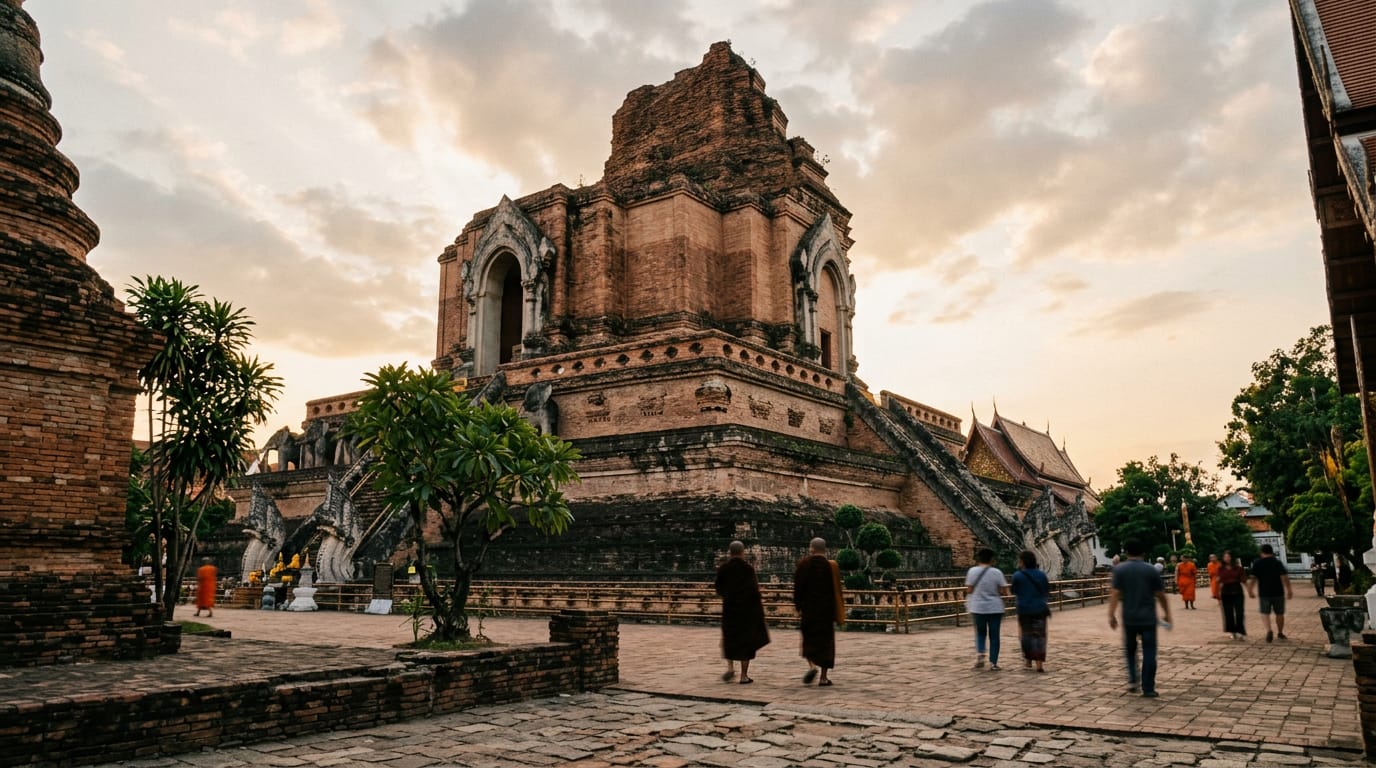
Wat Chedi Luang holds the ruined 60-metre chedi that was once the tallest building in Lanna and still dominates the centre of Chiang Mai's Old City. Founded in 1391 by King Saen Muang Ma and completed in 1481 under Tilokaraj, it was partly toppled by the 1545 earthquake. The compound also houses the city pillar and Chiang Mai's active monk-chat programme.
Temple
Wat Phra Singh
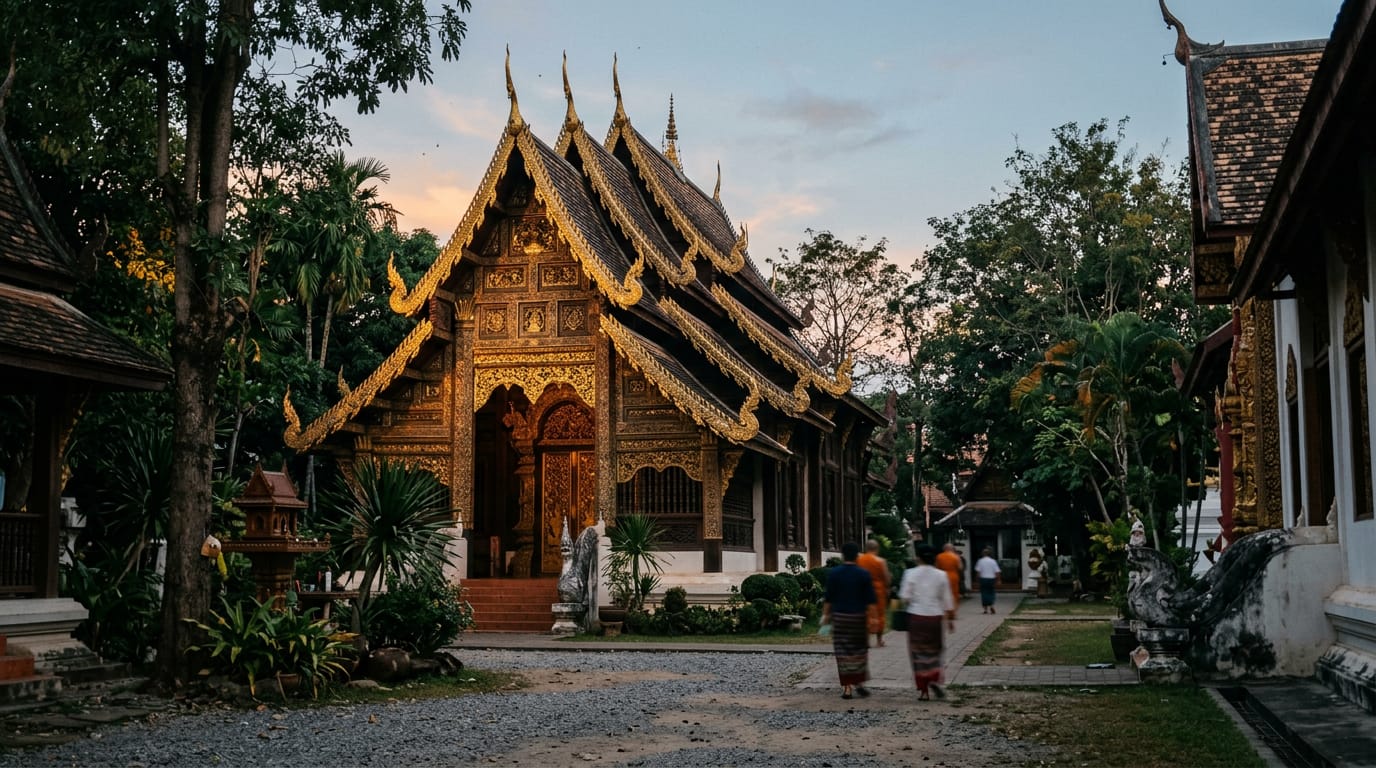
Wat Phra Singh is the most revered temple inside Chiang Mai's Old City, founded in 1345 by King Phayu of the Mangrai dynasty. Its Lai Kham viharn shelters the Phra Buddha Sihing — the Lion Buddha — which is paraded through the streets each Songkran. Together with its gilded chedi, carved teak gables and gold-leafed scripture library, the compound is the finest single example of Late Lanna architecture in northern Thailand.
Market
Saturday Walking Street (Wua Lai Road)
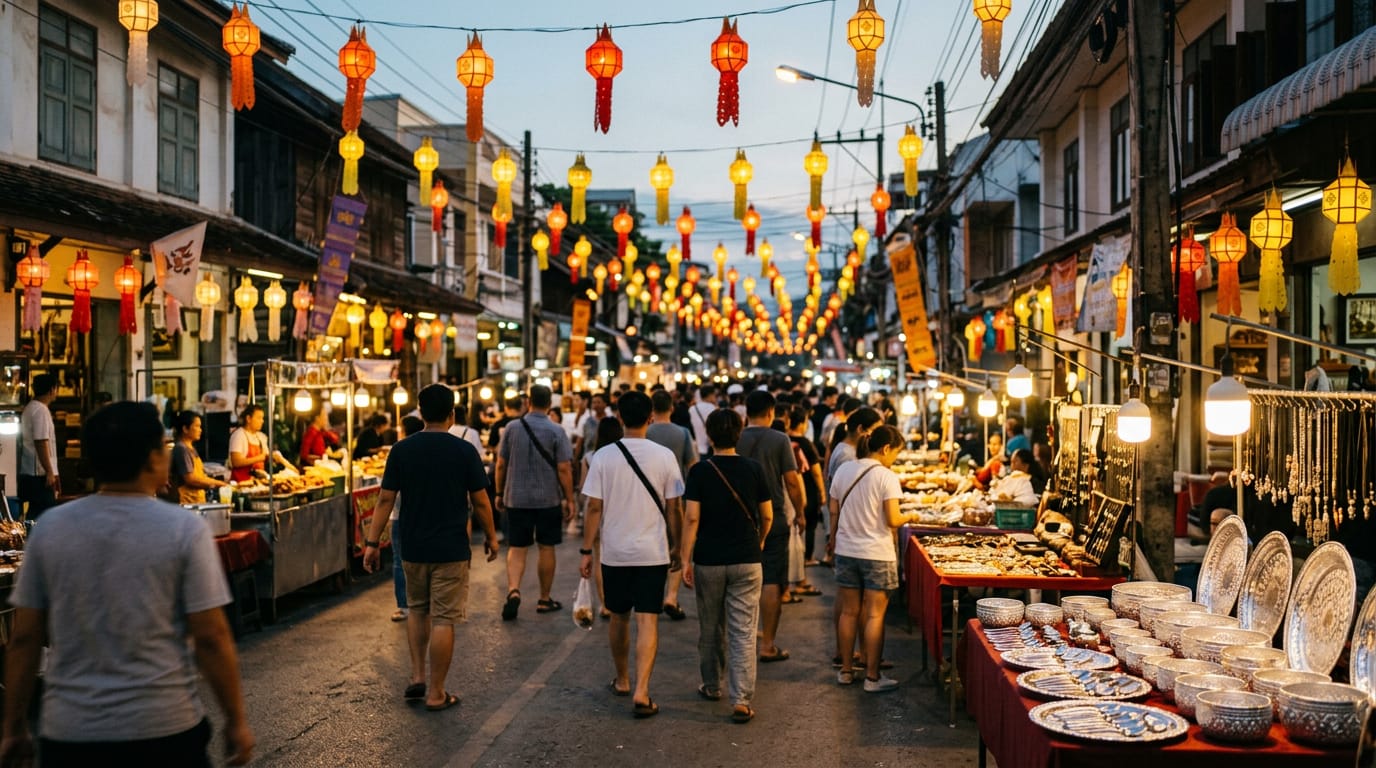
Chiang Mai's Saturday Walking Street runs the length of Wua Lai Road, the silversmith quarter immediately south of the Chiang Mai Gate. Open every Saturday from 16:00 to 22:00, it is smaller, more local and more craft-led than its Sunday counterpart, with silverware, lacquerware and Lanna handicrafts beside food stalls and the Songkran procession route on day one of the New Year festival.