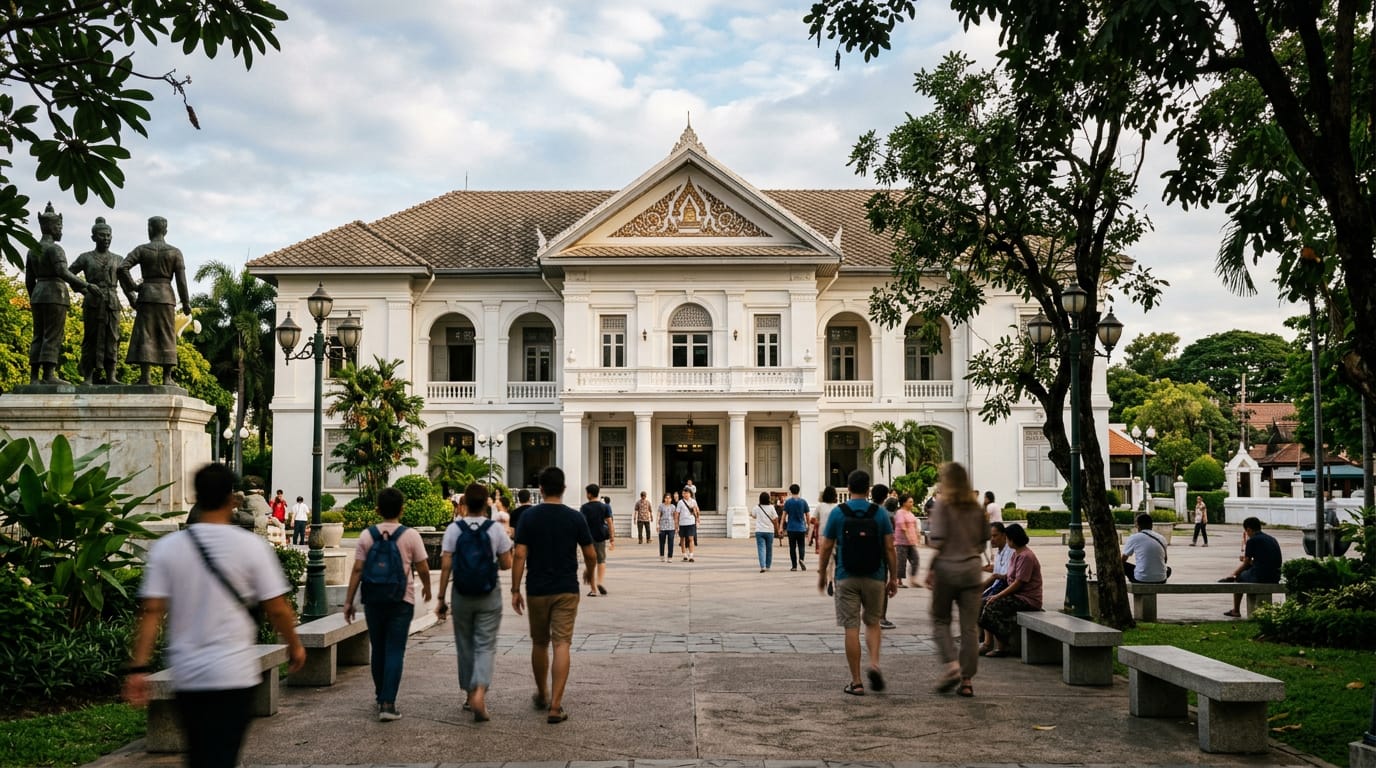
The City Arts and Cultural Centre occupies the restored 1924 colonial provincial hall on Three Kings Plaza, directly facing the monument to King Mangrai and his two royal allies. Fourteen thematic rooms run from the founding of Chiang Mai in 1296 through the Burmese occupation and the Siamese reunification to modern daily life, costume and religion. With the adjacent Lanna Folklife Museum and the Historical Centre behind it, the plaza forms the city's principal museum district.
Updated
What it is
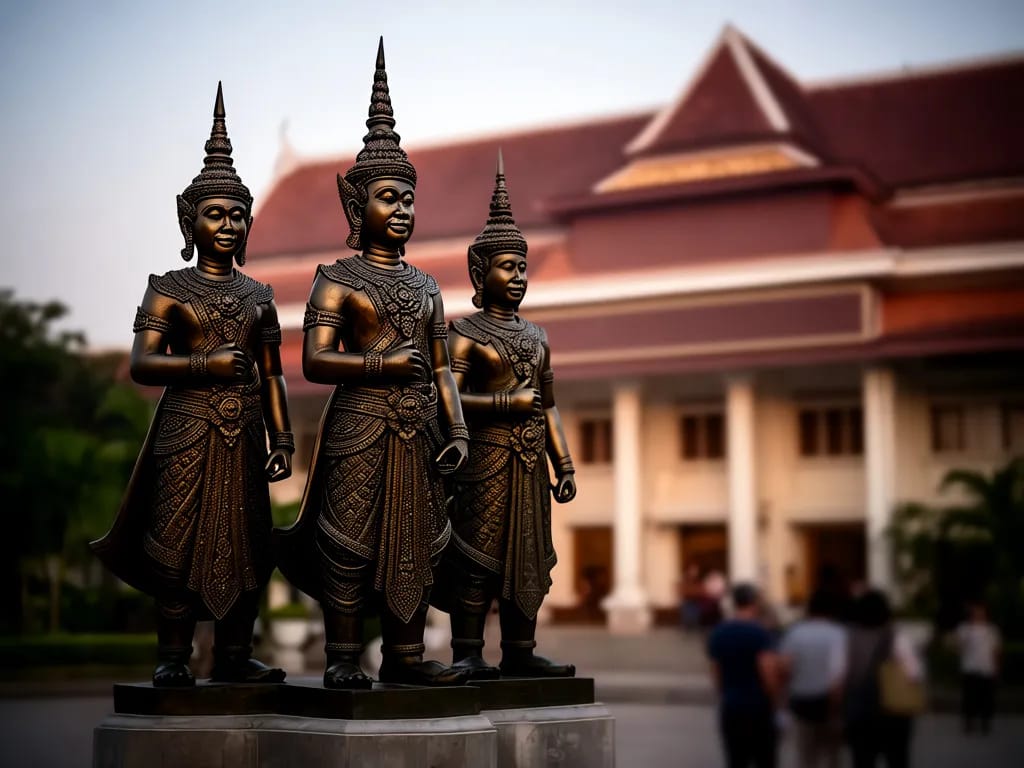
The Chiang Mai City Arts and Cultural Centre is the principal civic-history museum of the city, housed in the restored 1924 colonial-era provincial hall on Three Kings Plaza in the centre of the Old City. The building faces the monument to King Mangrai, the founding king of Chiang Mai, and his two royal allies, King Ngam Muang of Phayao and King Ramkhamhaeng of Sukhothai, who together planned the city in 1296. The Centre is run by the Municipality of Chiang Mai rather than by the central Fine Arts Department, which gives it a deliberately civic and pedagogical character rather than a scholarly archaeological one.
The displays run across fourteen thematic rooms on two floors, opening with the founding of the city and following the political and cultural history through to the present. The collection is light on rare archaeological objects, which mostly sit in the Chiang Mai National Museum 4 km north, and heavy on interpretation: large panels, scale models, reconstructed rooms, mannequins in costume and short documentary films in each room. The Centre is the place to come if you want the story of Chiang Mai explained in plain bilingual prose, with strong English captions throughout.
Two more municipal museums share the same plaza, both reached on a single combined ticket: the Lanna Folklife Museum opposite, in the 1898 former provincial court, and the Chiang Mai Historical Centre directly behind the main building. The three together form the city’s only true museum quarter, and a determined visitor can do all three in an afternoon.
Collection highlights
Founding of Chiang Mai
The opening room handles the foundation of the city in 1296 by King Mangrai, the consolidator of the Lanna polity, the old kingdom of the Thai north, who had already absorbed Hariphunchai, the Mon kingdom centred on modern Lamphun, and several smaller upper-Ping principalities. A central bronze relief model shows the original walled city plan, square in form with a moat and four corner bastions, as Mangrai laid it out on the advice of his two royal allies, a planning meeting commemorated by the monument outside. Wall panels carry the founding chronicles in English and Thai, the legendary white deer and white sambar that confirmed the city’s auspicious site, and the early treaties with the Yunnanese highlands that gave Chiang Mai its initial commercial reach. A short film loop covers the same ground for visitors who prefer narrative to text.
Mangrai dynasty and the Lanna golden age
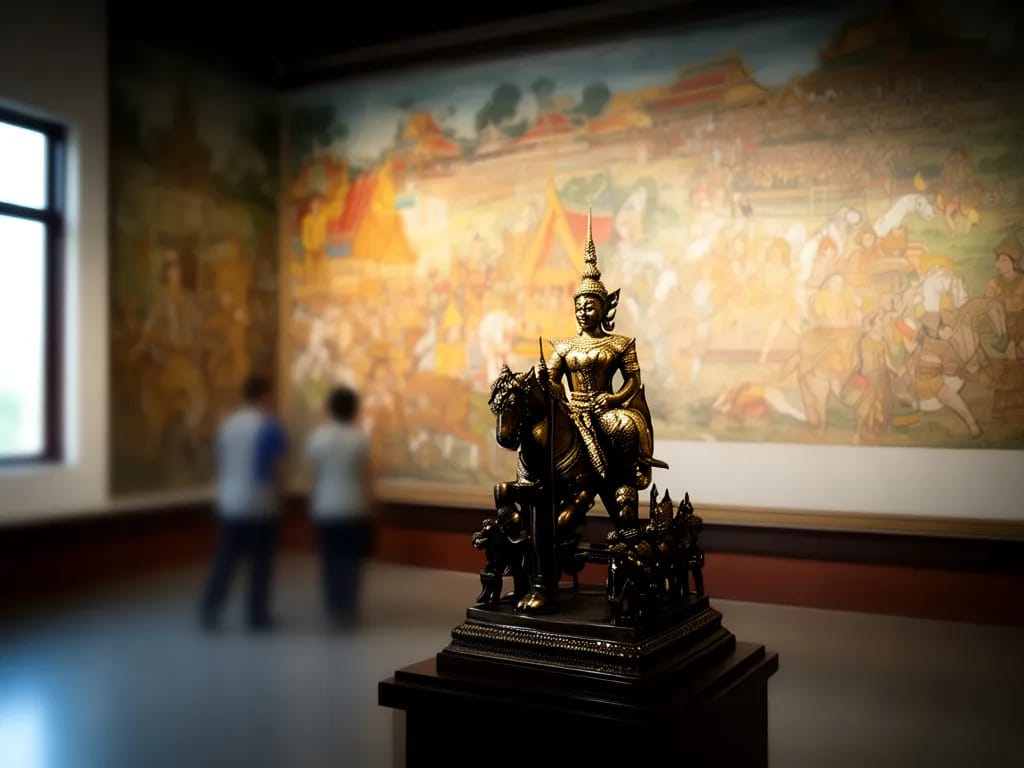
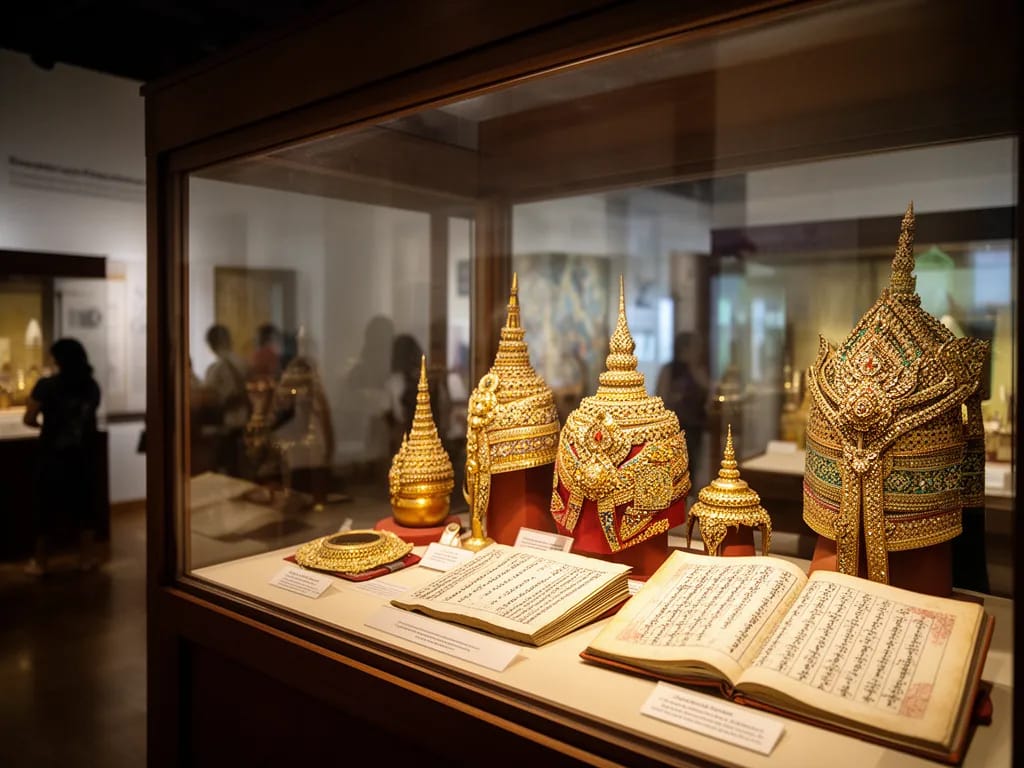
The second sequence covers the Mangrai dynasty’s seven peak generations from 1296 to the late fifteenth century. The most important reign for the city itself is that of King Tilokarat (1441–1487), under whom Chiang Mai became the principal centre of Theravada scholarship in mainland Southeast Asia and hosted the Eighth World Buddhist Council in 1477, the event commemorated by the seven spires of Wat Jed Yod. Cases hold replicas of royal regalia, palm-leaf chronicles in the tham script (the old Lanna religious alphabet), and a wall map showing the maximum extent of Lanna influence into the Shan states and Sipsongpanna. The room ends with the decline of the dynasty in the early sixteenth century, the succession disputes that weakened the state, and the lead-up to the Burmese conquest.
Burmese occupation and Siamese reunification
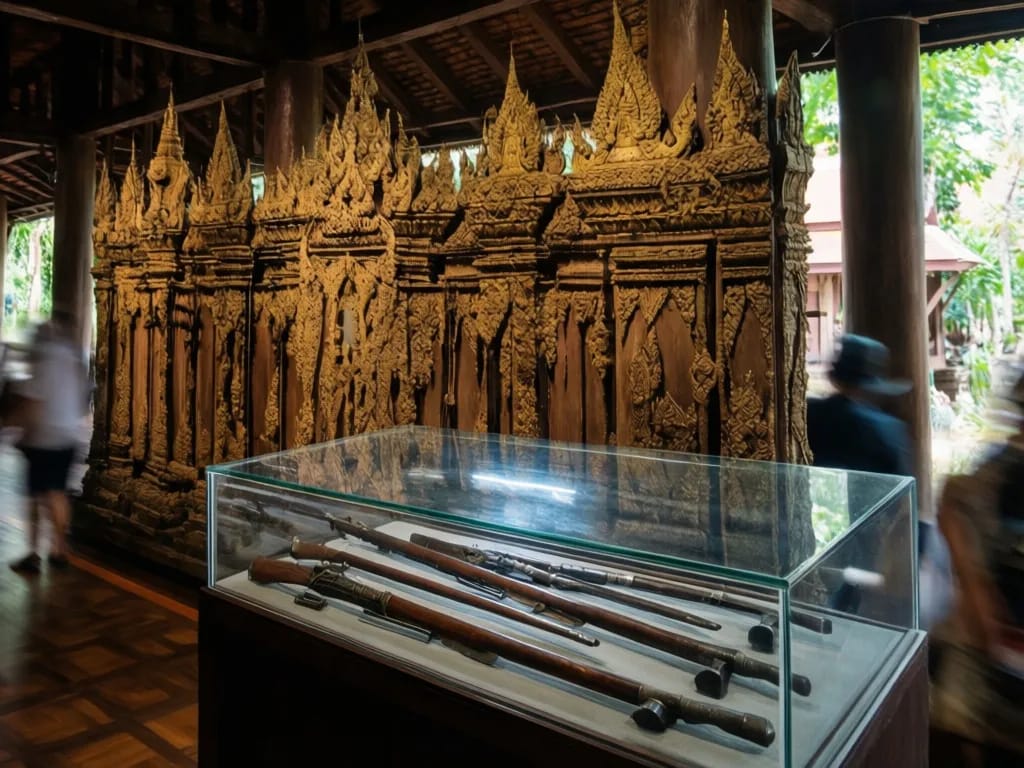
A third room handles the long Burmese occupation from 1558 to 1774, the period most often skipped in Thai school histories and the one most thoroughly covered here. Panels cover the original Burmese capture under King Bayinnaung, the administrative reorganisation of Chiang Mai as a Burmese tributary, the failed local uprisings of the late seventeenth century, and the eventual recapture of the depopulated city by King Kawila in 1774 with Siamese military assistance. A glass case holds period weapons (short-bladed Lanna swords, spears and a small bronze Burmese-style elephant goad) alongside a Burmese-era tax register translated into English. The reunification narrative continues into the resettlement of forced-migrant populations from Kengtung and Sipsongpanna that gave Chiang Mai its multi-ethnic character.
Daily life, costume and religion
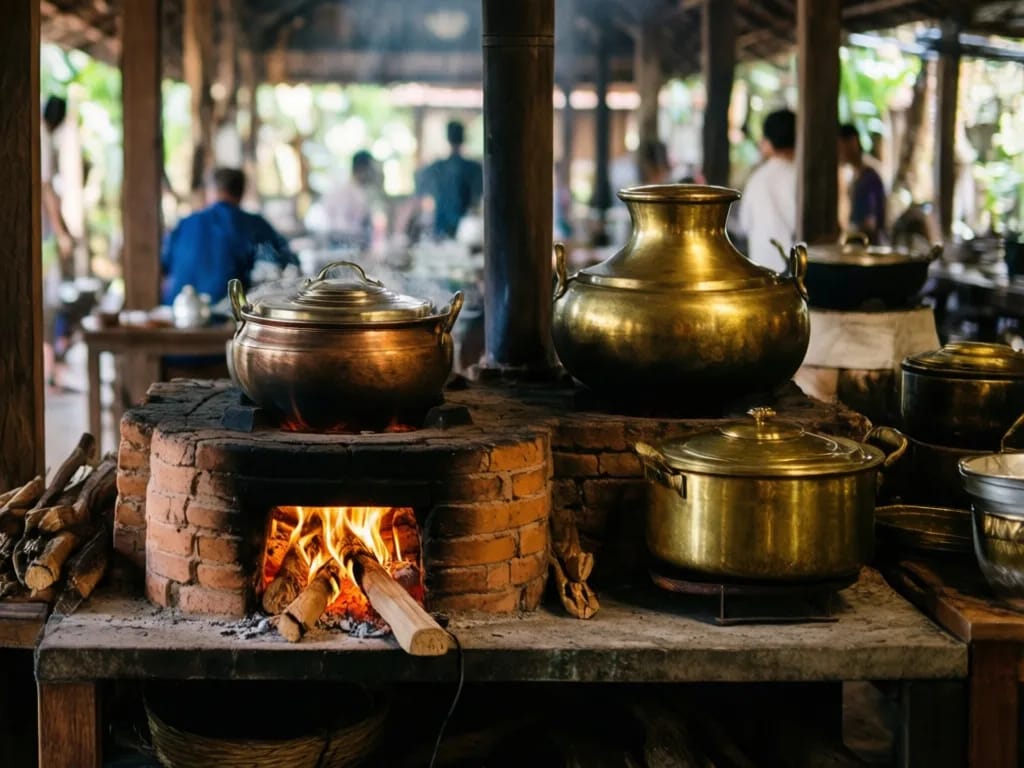
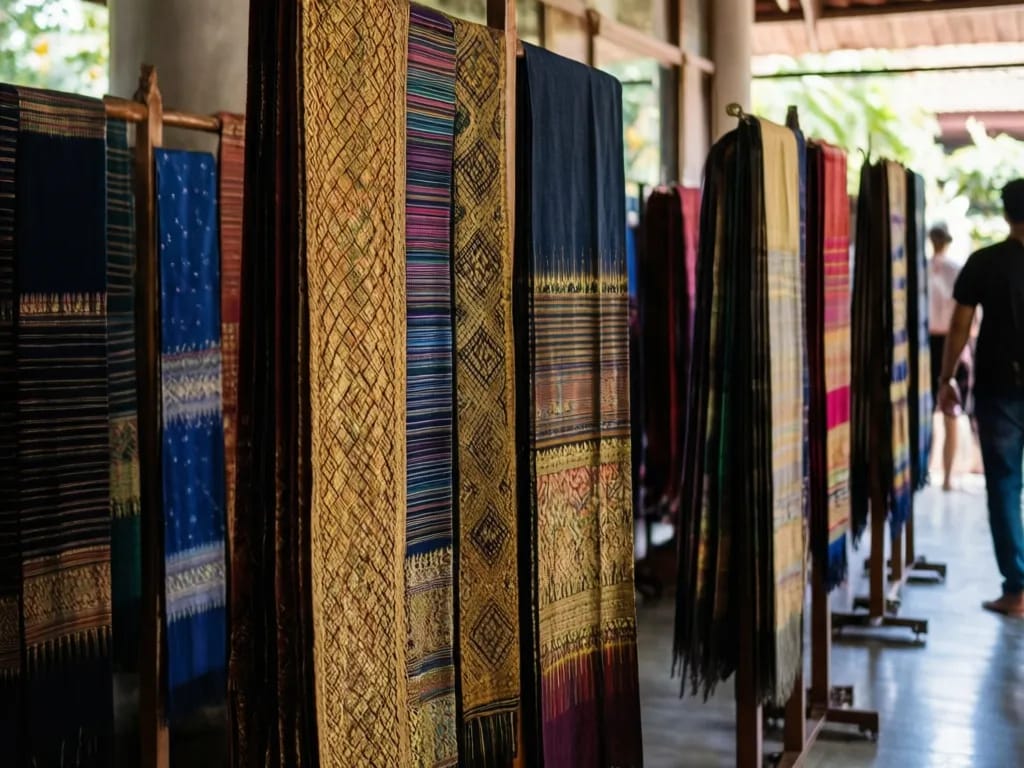
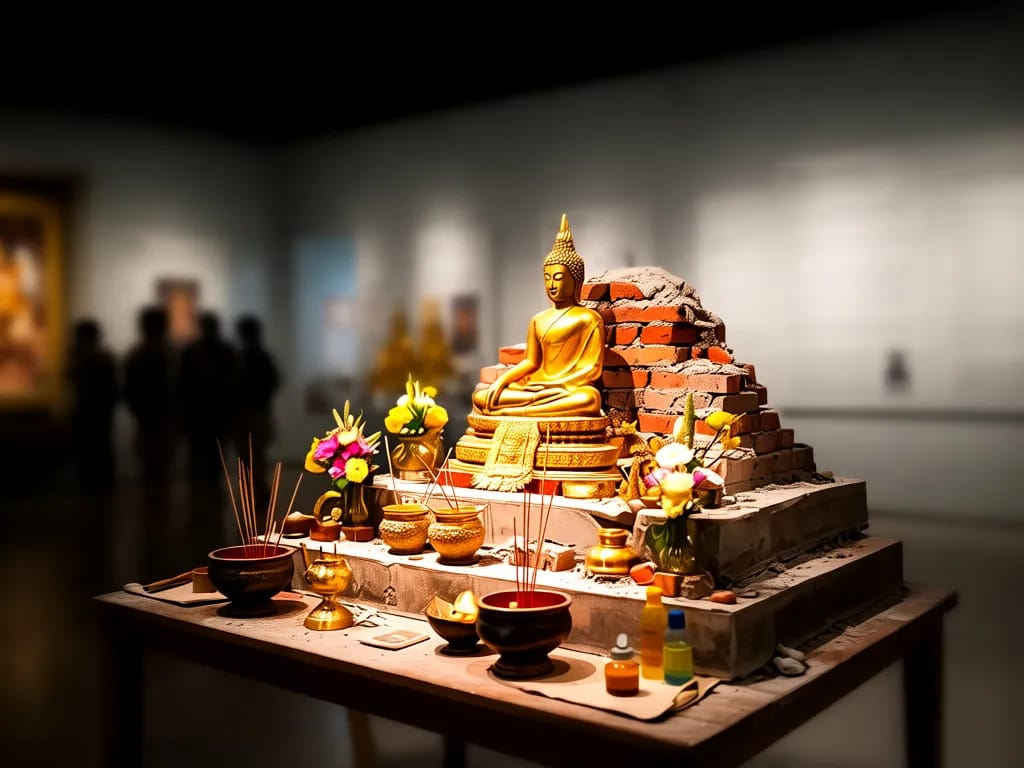
The second-floor rooms shift from political history to daily life. A reconstructed Lanna kitchen shows a wood-fired clay stove, brass cooking pots, sticky-rice steamers and a clay water filter, the standard domestic equipment of a nineteenth-century Chiang Mai household. Adjacent rooms cover textiles in detail, with a full set of hand-woven Lanna silks and cottons mounted on vertical boards, the regional variations between Tai Yuan, Tai Lue and Tai Yong weaving, and a working back-strap loom. A religion room covers Theravada Buddhist daily practice: alms rounds, household altars, merit-making and the role of the wat, the village temple-monastery, in everyday life. A small reconstructed household altar sits in one corner. A separate room covers food, with replica dishes of khao soi (the northern curried noodle soup), sai ua sausage (the herb-laced northern pork sausage) and the curries that have made Chiang Mai cooking famous.
Modern Chiang Mai and the transition to a Siamese province
The final rooms cover the absorption of Lanna into the Siamese state under the Bangkok centralising reforms of the 1890s, the founding of the railway line in 1922, the establishment of Chiang Mai University in 1964, and the transformation of the city into a tourist and university centre over the past half-century. A large wall of photographs from the 1900s, 1930s, 1960s and 1990s shows the same streets at four different periods: Tha Phae Gate before the moat was widened, Ratchadamnoen Road before it was paved, the old wooden Warorot market before the 1968 fire. The room ends with a panel on the contemporary heritage management issues facing the Old City.
History of the institution
The building itself opened in 1924 as the colonial-era provincial hall of Monthon Phayap, the administrative region that brought the former Lanna states under direct Bangkok rule after the 1890s reforms. The architect was a Department of Public Works designer trained on Italian and French neoclassical models, which is why the white facade, central pediment and pillared portico look so different from the surrounding viharn (temple assembly halls) and shophouses. The hall functioned as a courthouse and administrative centre until 1986, when the provincial government moved to a new building on the Superhighway and the original was left to deteriorate.
The Municipality of Chiang Mai acquired the empty hall in 1996 and commissioned a thorough restoration overseen by the Faculty of Architecture at Chiang Mai University, completed in 1997. The Centre opened in its current form in 1999. A major content refresh in 2014 added the second-floor daily-life rooms and the modern-Chiang Mai photographic wall, and replaced earlier static panels with bilingual interpretive copy and the short film loops that now run in each room. The 2014 refresh is what gives the Centre its present pedagogical clarity. Subsequent expansion into the adjacent former-court building, which became the Lanna Folklife Museum in 2008, and into the archaeology block at the rear, now the Chiang Mai Historical Centre, completed the three-museum plaza in its current configuration.
Visiting tips
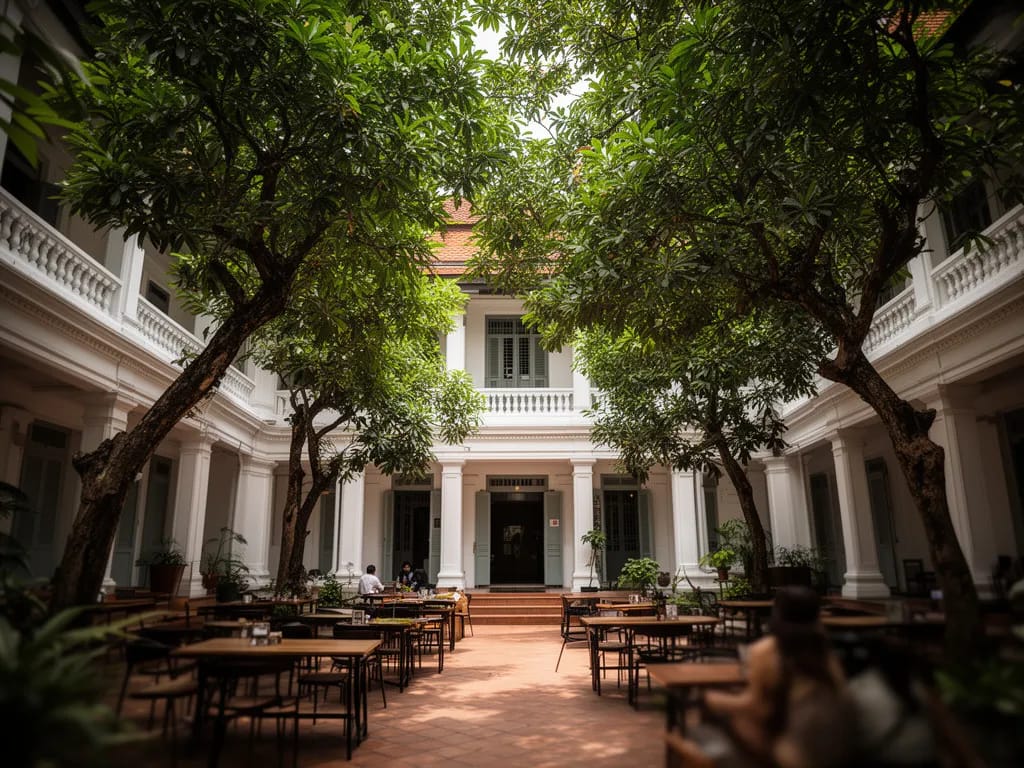
Photography without flash is welcomed throughout; flash is forbidden in the textile and manuscript cases. Tripods are not permitted in the galleries but the inner courtyard and the plaza outside both reward a steady camera. The English captions are thorough enough that an audio guide is unnecessary, and none is offered. A free printed visitor map at the ticket desk shows the recommended room order. The small courtyard café serves coffee, fresh juices and northern noodle snacks. Wheelchair access is good on the ground floor and via lift to the second floor when the lift is working. Carry a 100-baht note for the combined-ticket upgrade if you decide partway through that you want to see the other two museums.
Best time to visit
Tuesday to Thursday mornings between 08:30 and 11:00 are the quietest hours, with the rooms effectively empty and the natural light from the high colonial-era windows at its best. Weekends bring Thai school groups and tour parties from the Old City hotels, with Saturday lunchtimes the busiest single period of the week. The Sunday Walking Street that runs along Ratchadamnoen Road begins at the plaza around 16:00, so a Sunday late-afternoon visit lets you step straight from the museum into the market — close the visit by 16:30 to give yourself time to walk the first stretch of the street before the heaviest evening crowds arrive. The hot season from March to May is uncomfortable in the courtyard but the interior galleries are well air-conditioned; the cool season from November to February is ideal throughout. The four days around Songkran, the Thai New Year water festival in mid-April, close all three plaza museums entirely, and the plaza itself fills with the city’s water-throwing crowds.
Nearby and combine with…
The plaza itself contains the Lanna Folklife Museum and the Chiang Mai Historical Centre on the same combined ticket, the most efficient pairing if you intend to spend a full afternoon on city history. Five minutes’ walk south brings you to Wat Chedi Luang, the ruined fifteenth-century chedi (relic spire) that anchors the Old City’s religious geography and that pairs naturally with the Mangrai-dynasty rooms in the Centre. Ten minutes’ walk west reaches Wat Phra Singh, the finest single example of Late Lanna architecture and the temple whose murals are explained in the Centre’s costume rooms. For the broader regional archaeological context, the Chiang Mai National Museum 4 km north on the Superhighway picks up the Hariphunchai and prehistoric material that the Centre lightly covers.
Photos
Frequently asked questions
What are the opening hours?
The Centre is open Tuesday to Sunday, 08:30 to 17:00, with last entry at 16:30. It is closed every Monday and on national public holidays. The combined-ticket museums (Lanna Folklife Museum and the Chiang Mai Historical Centre) keep the same schedule. Sunday afternoon is the busiest period because the Walking Street that runs along Ratchadamnoen Road begins at the plaza around 16:00, drawing extra foot traffic into the museums.
How much is the entry fee?
Standard entry is 90 baht for foreign adults and 40 baht for foreign children. Thai nationals pay 40 baht for adults and 20 baht for children. A combined ticket covering this Centre plus the Lanna Folklife Museum and the Chiang Mai Historical Centre on the same plaza costs 180 baht for foreign adults and 80 baht for foreign children. The combined ticket is valid for seven days and can be bought at any of the three museum desks; it is the better value if you intend to see more than the Centre alone.
How do I get to the Centre?
Three Kings Plaza sits at the geographic centre of the Old City on Phra Pokklao Road, the main north-south axis. From Tha Phae Gate it is a flat 10-minute walk west along Ratchadamnoen Road; the plaza is on the right just before you reach Wat Phra Singh. Red songthaew drops cost 30 baht per person from anywhere in the Old City. There is no vehicle parking at the plaza itself; the closest paid car park is on Inthawarorot Road, 200 metres east, charging 20 baht per hour.
How long does the visit take?
Allow 75 to 90 minutes for the Centre alone, working through the 14 thematic rooms at an unhurried pace. If you have bought the combined ticket and intend to see all three museums on the plaza, budget 3 hours in total, ideally with a coffee break at the small café in the inner courtyard between visits. The Historical Centre behind, with its archaeology and old-photograph rooms, is the shortest of the three at 30 minutes.
What does the Centre actually cover?
Fourteen rooms on two floors run in chronological and thematic order. The first sequence covers the founding of Chiang Mai by King Mangrai in 1296 and the Mangrai dynasty's seven peak generations. The next handles the Burmese occupation from 1558 to 1774 and the Siamese reunification under King Kawila. The later rooms move from political history to daily life, costume, religion, weaving, food and the modern transformation of Chiang Mai into a tourist and university city. Each room has a short film loop in addition to objects and panels.
Is there English signage?
Yes. Every room has full bilingual Thai and English panels and case labels. The English copy is well written and not the mechanical translation that lets down many other Thai museums. Short film loops in each room also have English subtitles. There is no audio guide but the level of written interpretation makes one unnecessary. A free printed visitor map is available at the ticket desk.
What other museums are on Three Kings Plaza?
Two other museums sit on the same plaza. The Lanna Folklife Museum, in the restored 1898 provincial court building immediately opposite, focuses on costume, music, weaving, food and religious daily life with reconstructed rooms and dioramas. The Chiang Mai Historical Centre, behind the main Centre, handles archaeology, prehistoric ceramics and historical photographs. All three are managed by the Municipality of Chiang Mai under a single administration and share the combined ticket.
Can I take photographs?
Photography without flash is welcomed throughout the Centre and in the two other museums on the plaza. Flash is forbidden in the textile and manuscript cases. Tripods are technically not permitted in the galleries but small monopods are usually tolerated. The exterior of the building, the inner courtyard and the Three Kings monument outside are popular photography spots, particularly in the late-afternoon light from the west.
Is there a café?
A small café occupies a corner of the inner courtyard of the main building, with tables under shade trees. It serves espresso coffee, fresh juices, Lanna-style snacks and a short lunch menu of northern noodle dishes. It is open the same hours as the museum, Tuesday to Sunday 09:00 to 16:30. The cafés on Inthawarorot Road, 200 metres east, are also good if the courtyard tables are full.
Is the building wheelchair accessible?
The ground floor of the main Centre is fully accessible by a ramp at the side entrance and the rooms have wide doorways between them. A small lift serves the second floor, although it is sometimes out of order on weekends. The two adjacent museums on the plaza are partly accessible — the Lanna Folklife Museum has steep steps inside the reconstructed courtroom that no wheelchair can negotiate. The plaza itself is flat and easy.
Is the Centre worth visiting?
For first-time visitors trying to understand the city's history, yes — it is the most coherent single narrative of Chiang Mai available in any museum, with intelligent English captions and well-paced film loops. The 90 baht price is fair for the depth of interpretation. Repeat visitors who already know the basics may find the daily-life rooms more rewarding than the political history; the Lanna Folklife Museum opposite is the stronger destination for crafts and material culture.
Related guides
Museum
Chiang Mai National Museum
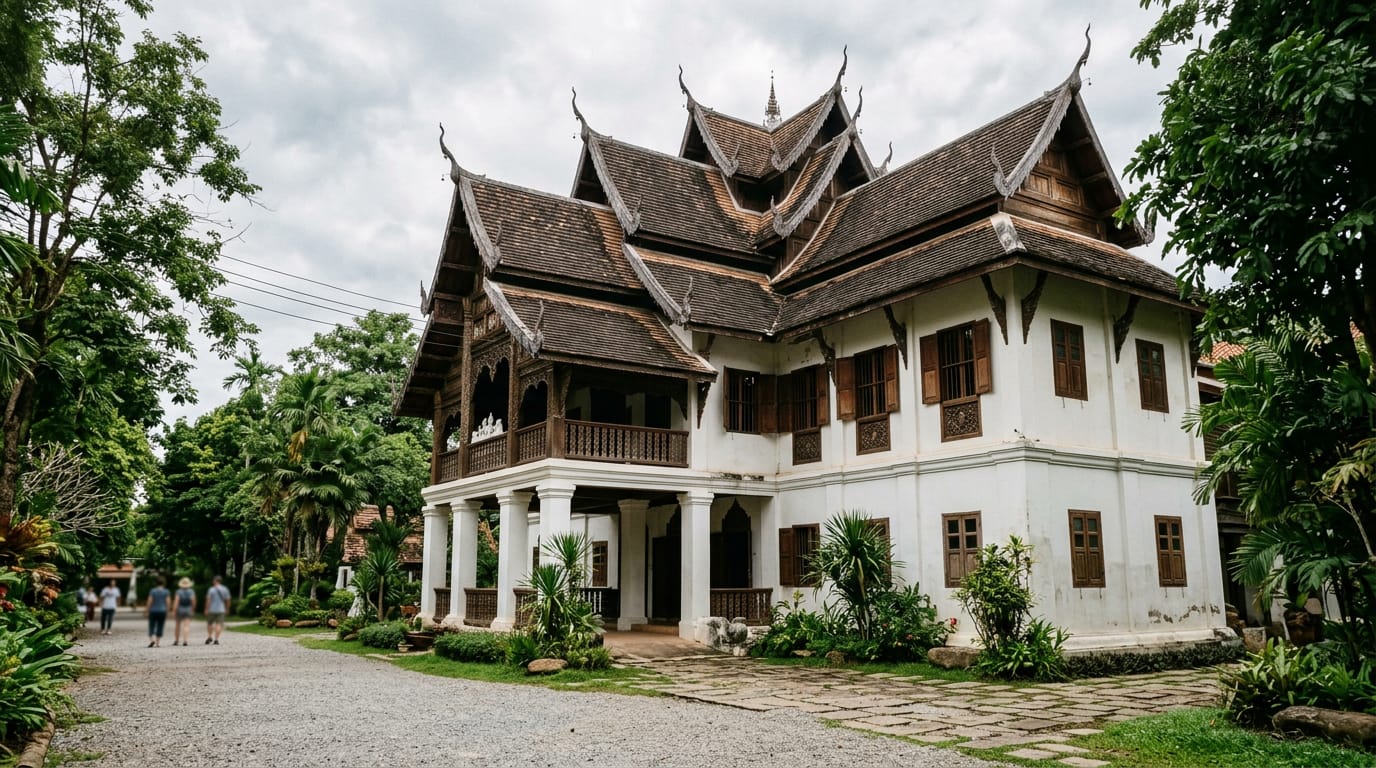
The Chiang Mai National Museum is the principal state collection for northern Thailand, housed in a purpose-built Lanna-influenced hall opened in 1973 under the Fine Arts Department. Its galleries run from Ban Chiang prehistoric pottery through Hariphunchai bronzes and the full sweep of the Mangrai dynasty to the modern royal regalia of the Chiang Mai ruling house. The building sits on the Superhighway north of the Old City, next door to Wat Jed Yod.
Temple
Wat Chedi Luang
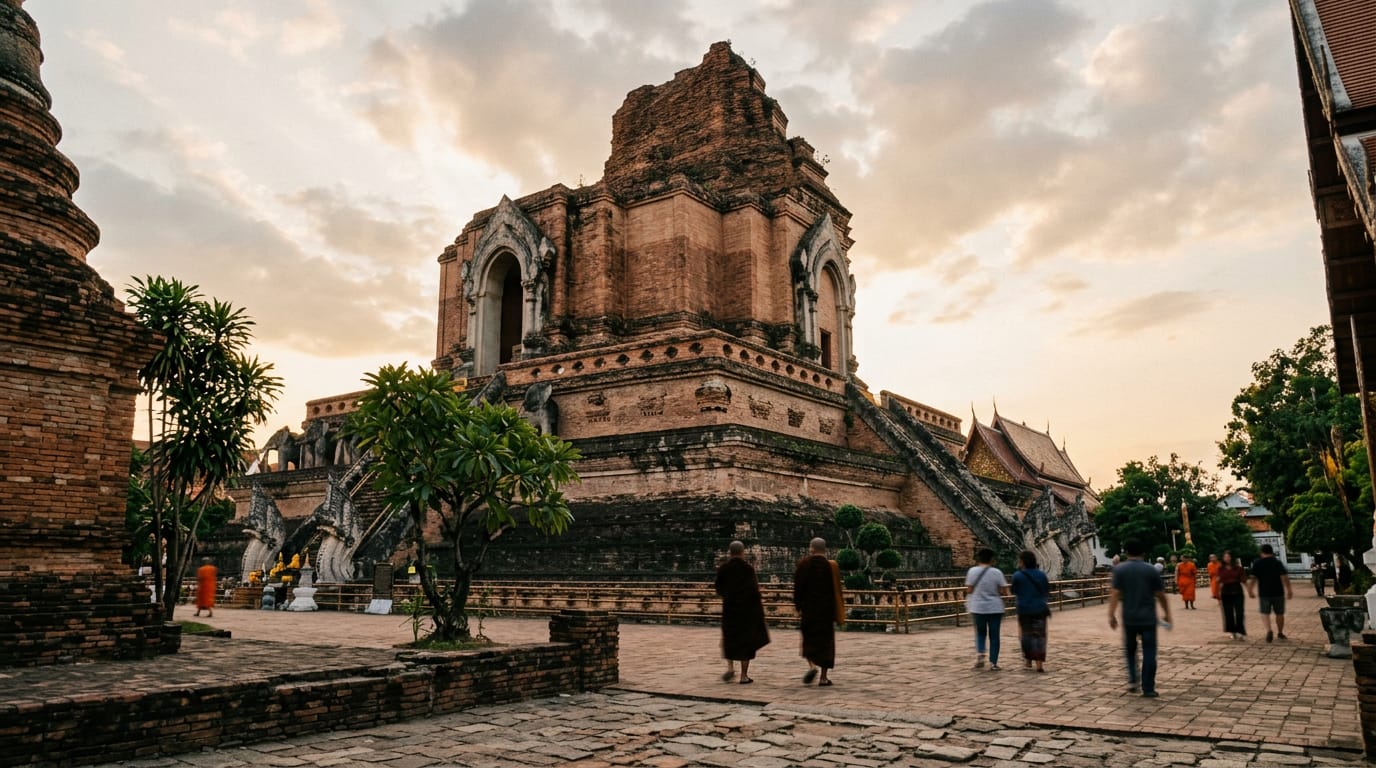
Wat Chedi Luang holds the ruined 60-metre chedi that was once the tallest building in Lanna and still dominates the centre of Chiang Mai's Old City. Founded in 1391 by King Saen Muang Ma and completed in 1481 under Tilokaraj, it was partly toppled by the 1545 earthquake. The compound also houses the city pillar and Chiang Mai's active monk-chat programme.