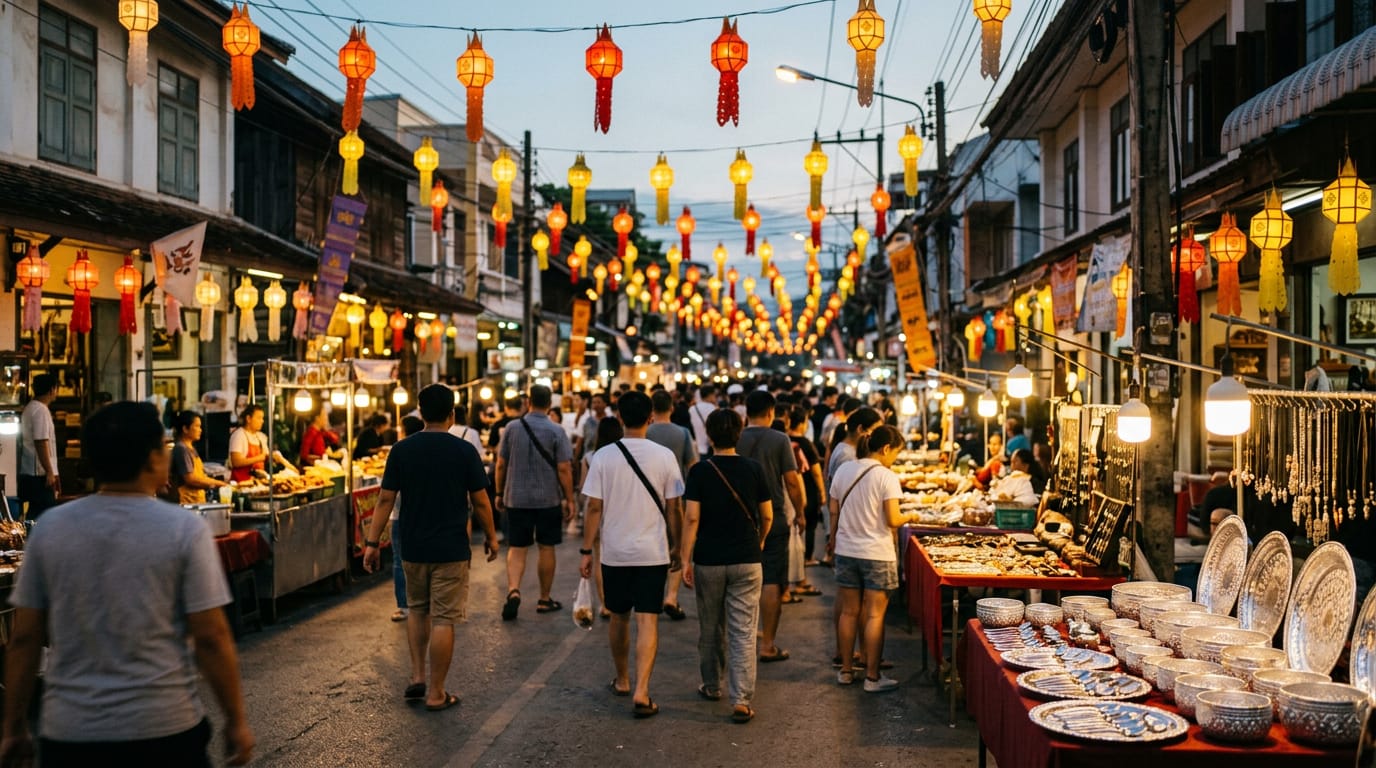
Chiang Mai's Saturday Walking Street runs the length of Wua Lai Road, the silversmith quarter immediately south of the Chiang Mai Gate. Open every Saturday from 16:00 to 22:00, it is smaller, more local and more craft-led than its Sunday counterpart, with silverware, lacquerware and Lanna handicrafts beside food stalls and the Songkran procession route on day one of the New Year festival.
Updated
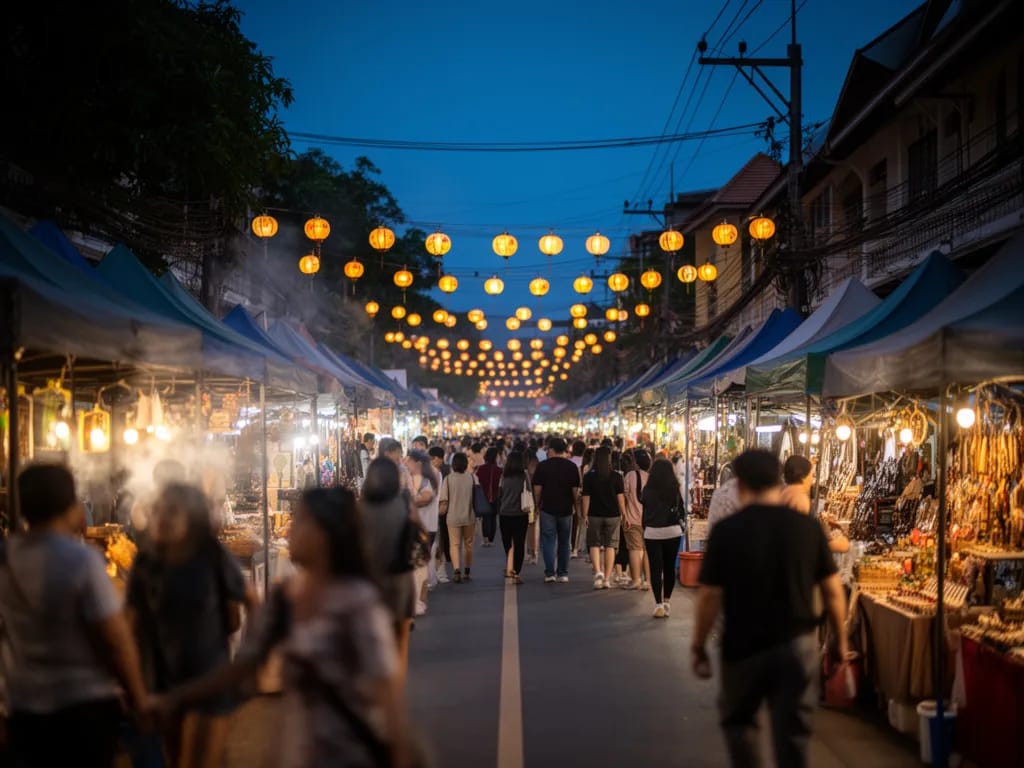
Walk south through the Chiang Mai Gate on any Saturday from late afternoon onward and the street ahead of you simply becomes a market. Wua Lai Road, the city’s old silversmith quarter, closes to traffic at 16:00 and stays closed until 22:00. What fills it is one of the more under-rated experiences in northern Thailand: a 700-metre stretch of craft, food and live music that locals reach by foot and tourists, in noticeably smaller numbers than on Sunday, find by chance. The lighter crowd is half the appeal. The other half is the silver.
What it is
The Saturday Walking Street, known in Thai as Thanon Khon Doen Wua Lai (the Wua Lai walking street), is the smaller and more local of Chiang Mai’s two weekly night markets. About four hundred vendors line both sides of Wua Lai Road, from the moat at Chiang Mai Gate (Pratu Chiang Mai) south to the intersection with the Old Chiang Mai–Lamphun Road. It runs every Saturday of the year and overlaps in concept, but not in feel, with the larger Sunday Walking Street on Ratchadamnoen Road in the Old City. Wua Lai is shorter, narrower, denser per metre and significantly more craft-led. About half the shoppers are Thai locals from the Hai Ya, Mae Hia and Saraphi neighbourhoods south of the Old City; the other half are visitors.
Wua Lai Road is the historic silversmith district of Chiang Mai. The trade is documented here from the early 19th century, when Burmese silversmiths brought their craft south after the reconquest of Lanna (the old northern Thai kingdom) under King Kawila. Several family workshops on the road today trace their line back four or five generations. The road’s other name, Ban Wua Lai, translates loosely as the village of the laden ox, in reference to the pack trains that used to bring silver bullion from the Shan States. The silversmith heritage gives the Saturday Walking Street its distinctive offer: more hammered bowls, ceremonial knives and engraved silver discs per hundred metres than any other market in northern Thailand.
What you’ll find
The market’s offer is broader than the silver name suggests. The vendors break loosely into seven categories along the central spine.
Silver and silverware
Two-thirds of the road’s permanent shopfronts are silversmiths and silverware retailers, and most of them set up additional stalls in front of their doors on Saturday evening. Expect hammered silver bowls (from 800 baht for a small offering bowl), engraved silver discs the size of a dinner plate (3,000 to 8,000 baht), ceremonial knives, jewellery, silver-thread paintings and the smaller silver charms and pendants that go for 200 to 500 baht. Ask for the silver content; the standard mark is 925 (sterling) and reputable shops stamp every piece. Bargaining is acceptable at 10 to 15 per cent below the asked price; pushing harder is considered rude given the labour involved.
Lacquerware
Wua Lai is the second-largest concentration of lacquerware vendors in Chiang Mai after Warorot. The classic northern Thai lacquerware comes in red, black and gold motifs, applied over a bamboo or teak core. Small bowls cost 200 to 400 baht; larger trays and serving dishes 500 to 1,500. The very fine pieces with multi-layered gold-leaf inlay are a Burmese-influenced craft that can run to several thousand baht for a single platter.
Lanna textiles
Cotton from the Mae Hong Son and Chiang Dao weaving villages fills another long stretch. Hand-woven shoulder bags cost 150 to 400 baht; longer lengths of indigo-dyed cotton for tailoring cost 500 to 1,500 a piece; embroidered hill-tribe pieces from Akha and Karen vendors cost more. The Karen woven scarves with the geometric red-and-black pattern are a good Wua Lai pick.
Hand-block prints, paper, cards
A small but consistent set of stalls sells wood-block printed cards, hand-made paper notebooks and saa (mulberry-bark) paper lanterns from the Mae Rim cottage industry. Notebook prices start at 80 baht; the larger paper lanterns from 300 baht. The same vendors return weekly and most accept small custom orders.
Hill-tribe and ethnic minority crafts
Akha women with their distinctive silver-buttoned head-dresses anchor the south end of the road. Karen, Hmong and Lisu vendors are scattered through the rest. The embroidery, beadwork and small woven pouches from these vendors are among the most distinctive crafts at the market. Prices are honest at 100 to 500 baht for most items, and bargaining is unusual.
Food
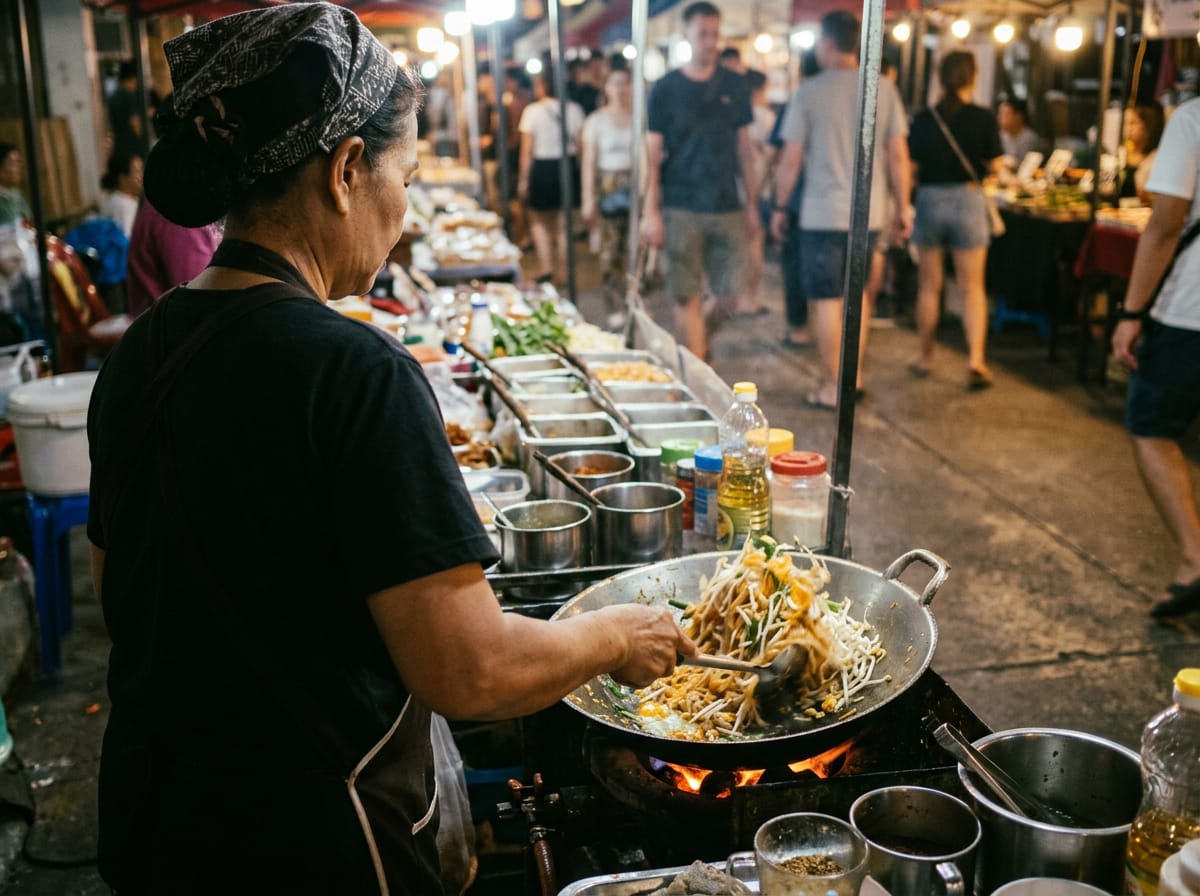
Food vendors are clustered most densely between the Chiang Mai Gate and the Silver Temple, with overflow into the temple courtyards on either side. Northern Thai specialities are strongly represented: sai oua herb sausage (40 baht a coil), kaeng hang lay pork-belly curry (60 baht), kao soi curry noodles (60 baht), kanom jeen nam ngiao (rice noodles in a spicy tomato-pork broth), larb (minced-meat salad) and the city’s best pad thai outside the dedicated pad thai stalls of Chinatown. Sweets run 30 to 50 baht: mango sticky rice, coconut pancakes and bua loy rice-flour dumplings in coconut cream. Two clusters of bench seating at the Silver Temple and at Wat Muen Sarn let you sit down to eat, which is rare on Sunday’s larger market.
Music and street performance
A small ensemble of buskers, usually a sueng (northern lute), a khlui (bamboo flute) and a hand drum, sits at the northern end. Charity stalls from the blind musicians’ association play along Wua Lai’s central stretch and welcome small donations. None of the performance is high-pressure or amplified to a level that interferes with conversation.
How to navigate and best time
The market is linear and easy. From the Chiang Mai Gate, walk south down the western side of Wua Lai Road to the Silver Temple at the southern end. Cross to the eastern side and walk back north. The full loop covers every stall and takes about 90 minutes at a steady pace; allow two hours with food and the temple visit.
The best window is 17:30 to 19:30. The road is fully open and stocked, the air has cooled from the late-afternoon heat, the light is still good for browsing silver detail and the crowd is denser than at 16:00 but still walkable. After 19:30 the food queues lengthen and the central section between the Chiang Mai Gate and the Silver Temple becomes shoulder-to-shoulder. By 21:00 the vendors begin to mark stock down and the western side empties first.
Weather matters more here than on Sunday’s covered Ratchadamnoen stretch. In the rainy season from June to October, a sudden late-afternoon downpour can briefly clear the road; vendors carry plastic sheets and the market typically resumes within 30 minutes once the rain stops. The covered temple courtyards at Wat Sri Suphan and Wat Muen Sarn become the main shelters during heavy rain. From November to February the air is dry, cool and pleasant; this is the peak season for the market. In the hot months from March to May the early window from 17:00 to 18:00 is the most comfortable; after 18:30 the residual heat from the closed road can be tiring.
A few practical notes. Public toilets cost 5 baht and are located at the Chiang Mai Gate end (in the small police box square) and inside the Silver Temple. ATMs are at Bangkok Bank on the corner of Wua Lai Road and Bumrung Buri, at the northern end. The market does not have a dedicated parking area; visitors arriving by motorbike use the kerb on the cross-streets to the east and west.
Getting there
From inside the Old City, the simplest route is on foot. Walk south to the Chiang Mai Gate. The pedestrian footbridge over the south moat brings you to the northern end of Wua Lai Road, which is the main market entrance. Walking from the Three Kings Monument takes 12 minutes; from Tha Phae Gate, 15 to 18 minutes; from Wat Phra Singh, 10 minutes.
A red songthaew shared taxi costs 30 baht per person from anywhere in the Old City. Ask for Pratu Chiang Mai (the Chiang Mai Gate); the driver will drop you in the open square at the northern end of Wua Lai Road. Grab and Bolt cars charge 50 to 80 baht and cannot enter the closed road; you will be dropped at the same gate. Tuk-tuks negotiate from 80 baht. From Nimman, a songthaew costs 60 baht; a Grab car around 120 baht. By bicycle the ride from the Old City is six minutes and flat.
Avoid driving a private car. The surrounding lanes between Wua Lai Road and Suriwong Road close to vehicles from 15:30 onward and the nearest open parking is at the Wat Phantao car park inside the Old City, 800 metres north.
Where to eat and nearby
Beyond the food stalls on the road itself, Wua Lai’s permanent restaurants are worth knowing. SP Chicken, two blocks east on Soi Wat Chai Mongkol, serves the city’s best northern Thai grilled chicken with sticky rice (180 baht for half a bird, 320 for a whole). Khao Soi Khun Yai, three blocks east on Singharat Soi 5, opens at 17:00 for after-market dinner. The riverside coffee shop Akha Ama, behind the Silver Temple, serves the city’s best filter coffee from 08:00 to 18:00, useful before the market opens. For a late dinner after the market closes, the row of kao soi and sticky-rice restaurants at the southern end of Wua Lai, near the Hai Ya intersection, stays open until midnight.
Tips and etiquette
Bargain modestly on silver, lacquerware and textiles; do not bargain on food. Carry small notes; many older silversmiths do not take card or PromptPay. Ask before photographing close-up portraits — the Thai phrase tai roop dai mai (may I take a photo?) is sufficient. Remove your shoes before stepping into the porch of Wat Sri Suphan and dress modestly: shoulders covered, knees covered. Women are not permitted inside the ordination hall but the porch and the surrounding pavilions are open to everyone. Do not walk in the centre of the road if you hear a procession bell; the temples on Wua Lai occasionally hold candle processions during the market and these have right of way.
Related and combine with
The single best pairing is Wat Sri Suphan, the Silver Temple, which sits on the same road and is open during the walking street hours. Pair the market with the Sunday Walking Street for a two-night comparison, or with Warorot Market for a day-and-evening sequence: Warorot in the morning, Wua Lai in the evening. During the Songkran festival in mid-April, Wua Lai Road is the route of the day-one procession of revered Buddha images; the Songkran page covers the full timings. For carved wood and teak as a follow-on craft trip, Ban Tawai is 15 kilometres south.
Photos
Frequently asked questions
Where is the Saturday Walking Street in Chiang Mai?
The Saturday Walking Street runs along Wua Lai Road, which begins directly outside the south moat at the Chiang Mai Gate (Pratu Chiang Mai). Wua Lai is the old silversmith quarter; the road heads roughly south-west for about 700 metres through the Hai Ya sub-district. The full length closes to traffic from 16:00 every Saturday. The northern end at Chiang Mai Gate is the principal entrance for most visitors; the southern end finishes at the intersection with the Old Chiang Mai–Lamphun Road, near the Silver Temple of [Wat Sri Suphan](/wat-sri-suphan/).
What time does the Saturday Walking Street open and close?
Vendors begin setting up from 15:00 and the road is fully closed to traffic by 16:00. Trade is moderate until 17:30, full from 18:00 to 21:00, and winds down between 21:30 and 22:00. The last stalls pack down by 22:30. The market runs every Saturday of the year, including national holidays, with two known exceptions: the Saturday closest to His Majesty the King's birthday in late July, when some sections move to allow for the candle procession, and the Saturday following any heavy late-afternoon rain in the August to September wet-season peak.
Is the Saturday Walking Street free to enter?
Yes. The Saturday Walking Street is a public street market with no gate, ticket or barrier. The whole 700-metre length of Wua Lai Road is closed to vehicles and free to walk. Public toilets at the Chiang Mai Gate and inside Wat Sri Suphan cost 5 *baht*. There is no entry fee for the parallel temple courtyards used by additional food stalls. The market is wheelchair-accessible along the central stretch, though the side lanes off Wua Lai Road have uneven paving in places.
What is the difference between the Saturday and Sunday walking streets?
The Sunday Walking Street on Ratchadamnoen Road is the larger of the two, with roughly 700 vendors and a heavier weight toward souvenirs, mass-produced craft and tourist food. The Saturday Walking Street on Wua Lai Road is smaller (about 400 vendors), runs through the historic silversmith quarter, and skews more toward genuine handicraft — silverware, lacquerware, Lanna textiles and hand-block prints. Saturday's crowd is roughly half Thai locals and half tourists; Sunday's is closer to a quarter local. If you are choosing only one, Wua Lai is the more atmospheric night for craft buyers; Ratchadamnoen is the bigger general experience.
What can I buy at the Wua Lai Saturday Walking Street?
Silver and silverware lead the market, because Wua Lai has been Chiang Mai's silversmith quarter for at least two hundred years. Expect hammered bowls, trays, ceremonial knives, jewellery and the engraved silver discs used as wall pieces. Lacquerware in red, black and gold is a Wua Lai specialism; bowls cost from 200 *baht*, larger trays from 500. The market also carries Lanna cotton, hill-tribe embroidery (especially from Akha and Karen vendors), block-printed cards, hand-woven shoulder bags, silver-thread paintings, jasmine garlands for the temples and a full range of street food along the central spine.
Is the food at the Saturday Walking Street any good?
It is, and it tends to be a little better than Sunday's for two reasons. First, Wua Lai's food stalls are denser per metre and include a higher share of northern Thai specialities — *sai oua* sausage, kaeng hang lay pork curry, *kao soi*, kanom jeen nam ngiao, sticky rice with mango. Second, the temple courtyards at Wat Sri Suphan and Wat Muen Sarn host additional food-only clusters with bench seating, which is rare on Ratchadamnoen. Prices run 30 to 80 *baht* a portion. A north Thai sausage-and-sticky-rice dinner costs about 100 baht.
What is the connection between Wua Lai Road and Songkran?
Wua Lai Road is the principal route of the Songkran procession on day one of Chiang Mai's New Year festival, traditionally 13 April. The morning procession of revered Buddha images leaves Wat Phra Singh in the Old City, exits the south moat at Chiang Mai Gate, and travels the full length of Wua Lai Road past the Silver Temple before continuing to Hai Ya. The procession is the most formal water-bathing moment of Songkran in Chiang Mai. The walking street still runs that evening, but the road's daytime use is reserved for the festival; see the [Songkran](/festivals/songkran/) page for full timings.
Where is the Silver Temple in relation to the Saturday Walking Street?
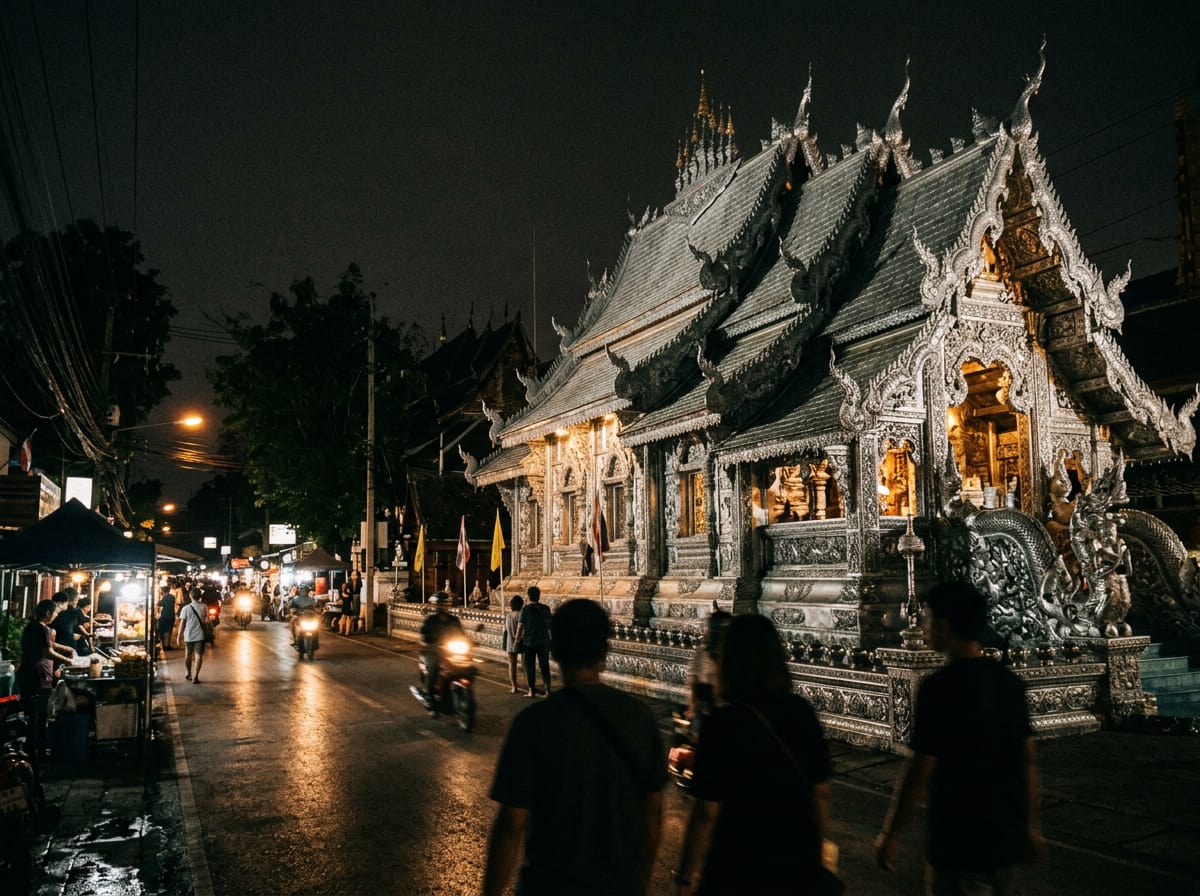
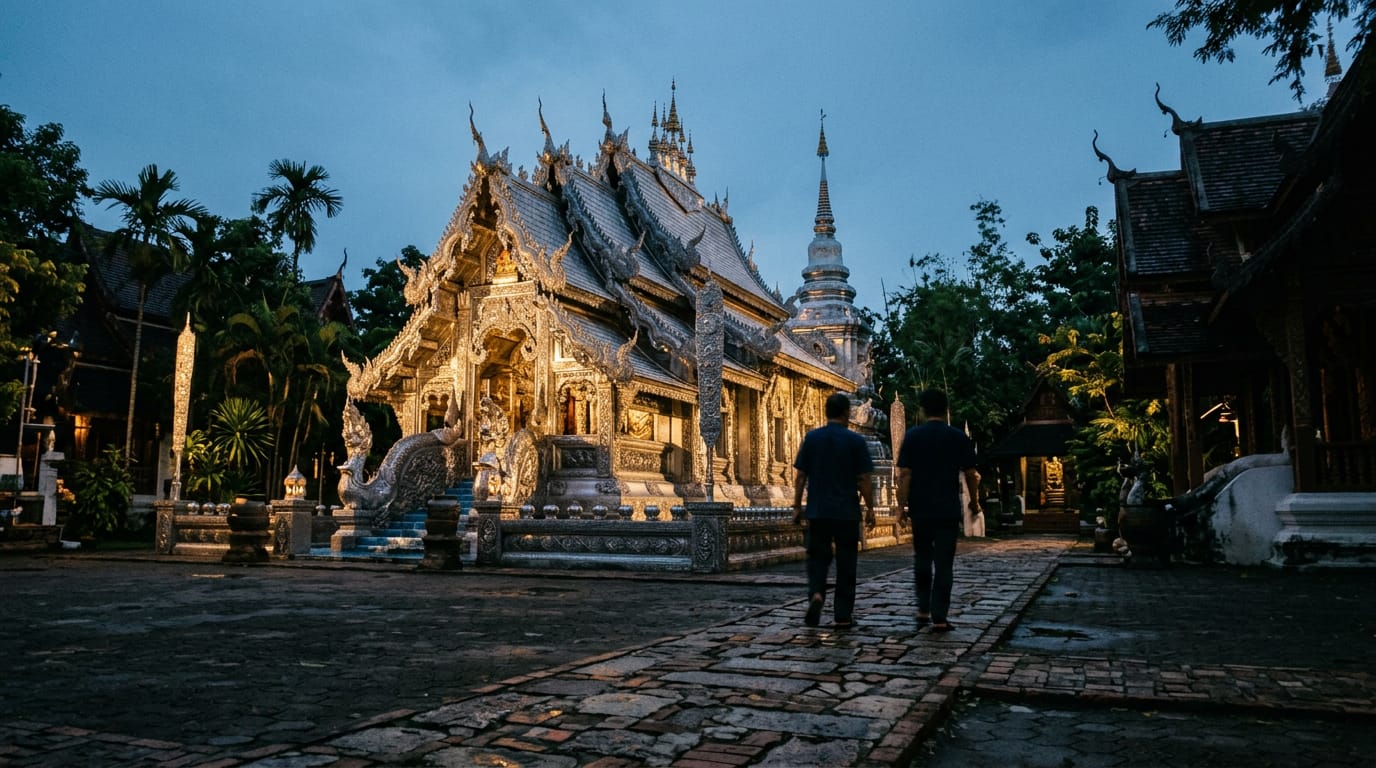
Wat Sri Suphan, the Silver Temple, sits directly on Wua Lai Road, roughly two-thirds of the way south from the Chiang Mai Gate. Its ordination hall is clad in hammered silver and aluminium by the same silversmith families that supply the walking street. The temple is open during the Saturday Walking Street hours and hosts a free monk chat in the courtyard from 17:30 to 19:30. Women are not allowed inside the ordination hall itself but may approach from the porch. The temple also runs a Saturday-only silver-engraving workshop in its rear pavilion.
How do I get to the Saturday Walking Street from the Old City?
From anywhere in the Old City, walk south to the Chiang Mai Gate (Pratu Chiang Mai) on the southern wall of the moat. Cross the moat using the pedestrian footbridge and you are at the northern end of Wua Lai Road, which is the main entrance to the walking street. Walking from the Three Kings Monument or Tha Phae Gate takes 15 to 20 minutes. A red *songthaew* costs 30 *baht* per person from anywhere inside the Old City. Grab and Bolt cars charge 50 to 80 baht but cannot enter the closed road; you will be dropped at the Chiang Mai Gate. Avoid driving; the surrounding streets close to traffic from 15:30.
Is the Saturday Walking Street open in the rainy season?
Yes. The market runs every Saturday throughout the year. In the wet months from June to October, sudden late-afternoon downpours can briefly clear the central spine; vendors carry plastic sheets and the market typically resumes within 30 minutes. The covered temple courtyards at Wat Sri Suphan and Wat Muen Sarn become the main shelters during heavy rain and the food stalls inside continue trading. A small folding umbrella in your bag from June to October is sensible. The hot months from March to May are the most pleasant for the early evening 17:00 to 18:00 window.
Related guides
Temple
Wat Sri Suphan
Wat Sri Suphan is the Silver Temple of Chiang Mai. The wat was founded in 1502, but its defining feature is the silver ubosot completed in 2016, an ordination hall clad entirely in embossed silver and aluminium panels worked by the Wua Lai silversmiths next door. Women may not enter the ubosot but view it from the doorway. The Saturday Walking Street begins at the gates.
Market
Sunday Walking Street (Ratchadamnoen Road)
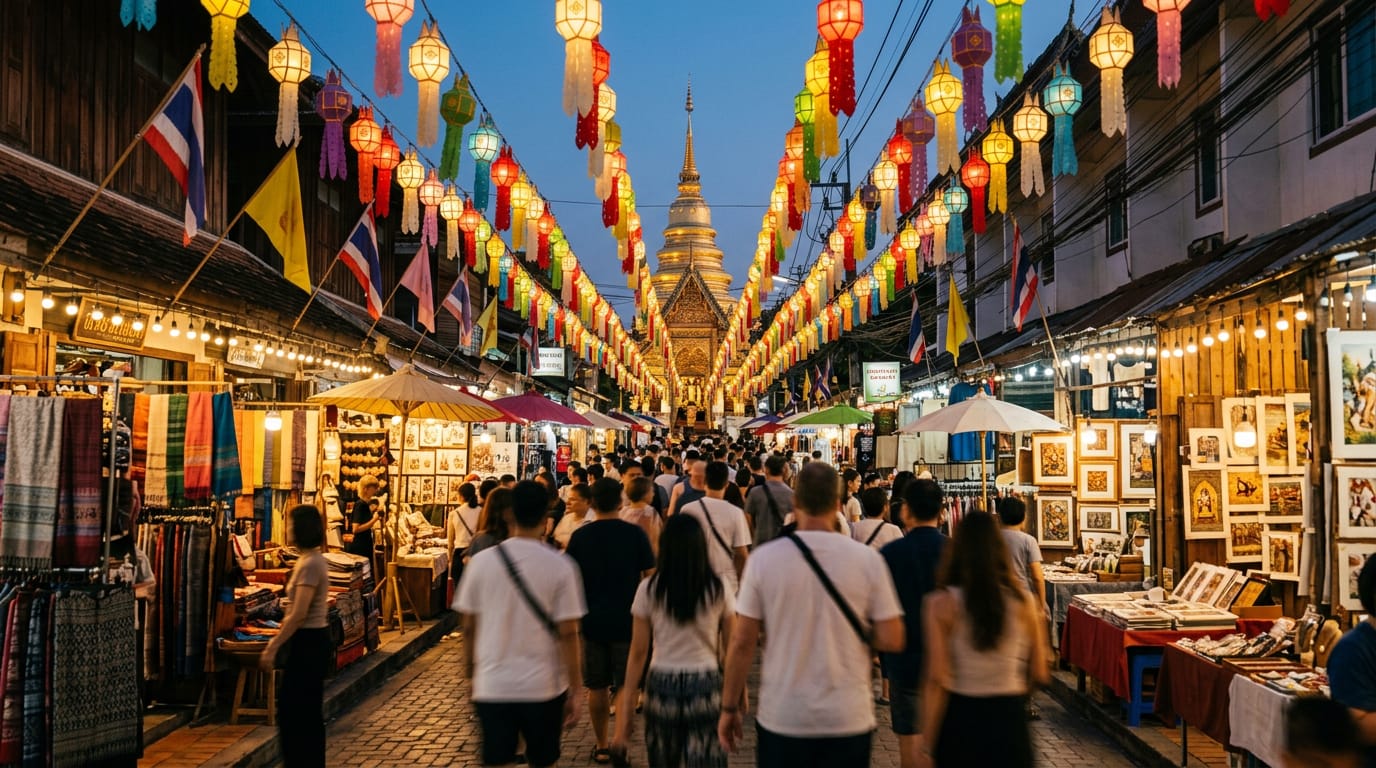
The Sunday Walking Street fills Ratchadamnoen Road through the heart of the Old City from Tha Phae Gate west to Wat Phra Singh. Around 700 vendors set up every Sunday from 16:00 to 22:00, with handicraft, paper umbrellas, silk, lanterns and three temple courtyards turned into food clusters along the route. It is the biggest weekly walking street in Chiang Mai.
Market
Warorot Market (Kad Luang)
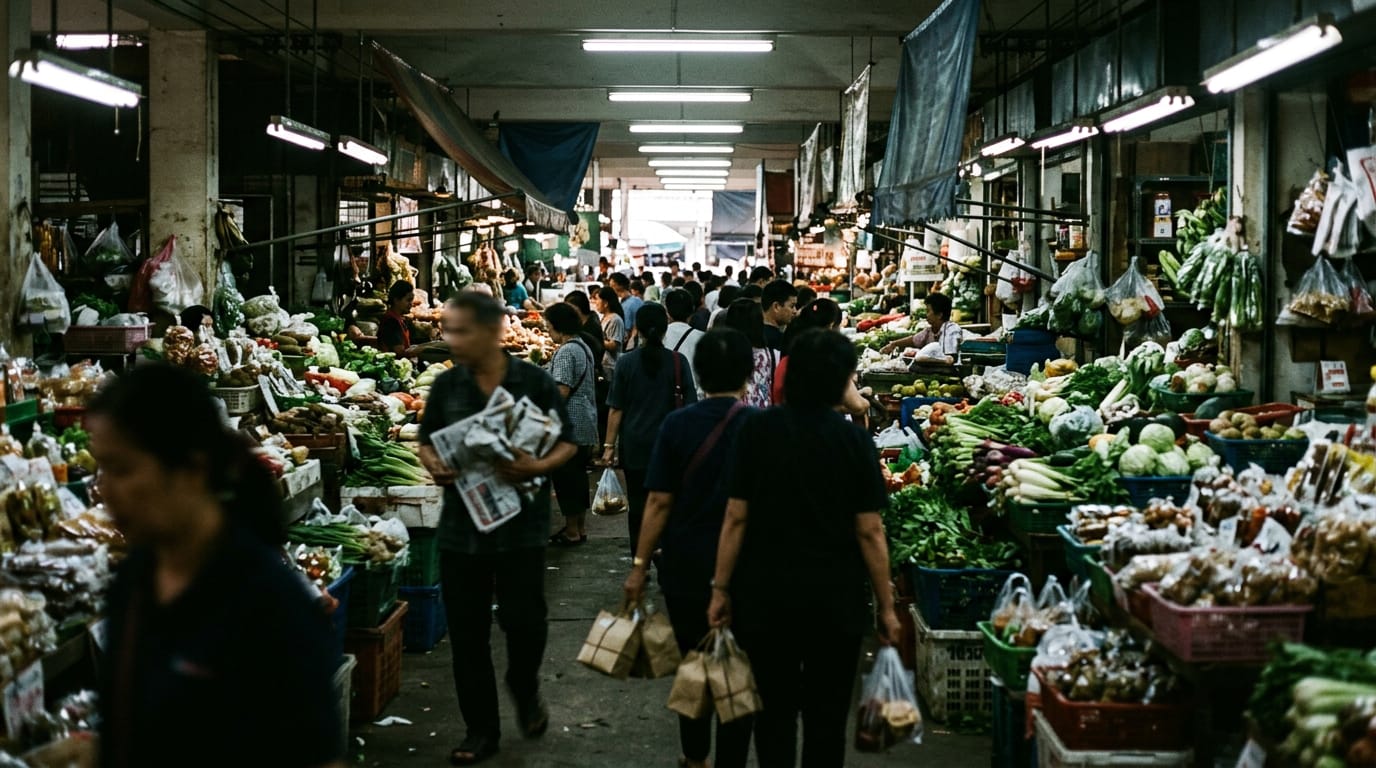
Warorot Market, known locally as Kad Luang, is Chiang Mai's largest and oldest fresh market, set just east of Tha Phae Gate against the Ping River. Three trading floors plus a dense weave of surrounding lanes carry produce, fabric, kitchenware, Chinese pastry, sai oua sausage and the city's most reliable kao soi, with the Flower Market and Talat Ton Lamyai pressed against its northern wall.
Festival
Songkran (Thai New Year)
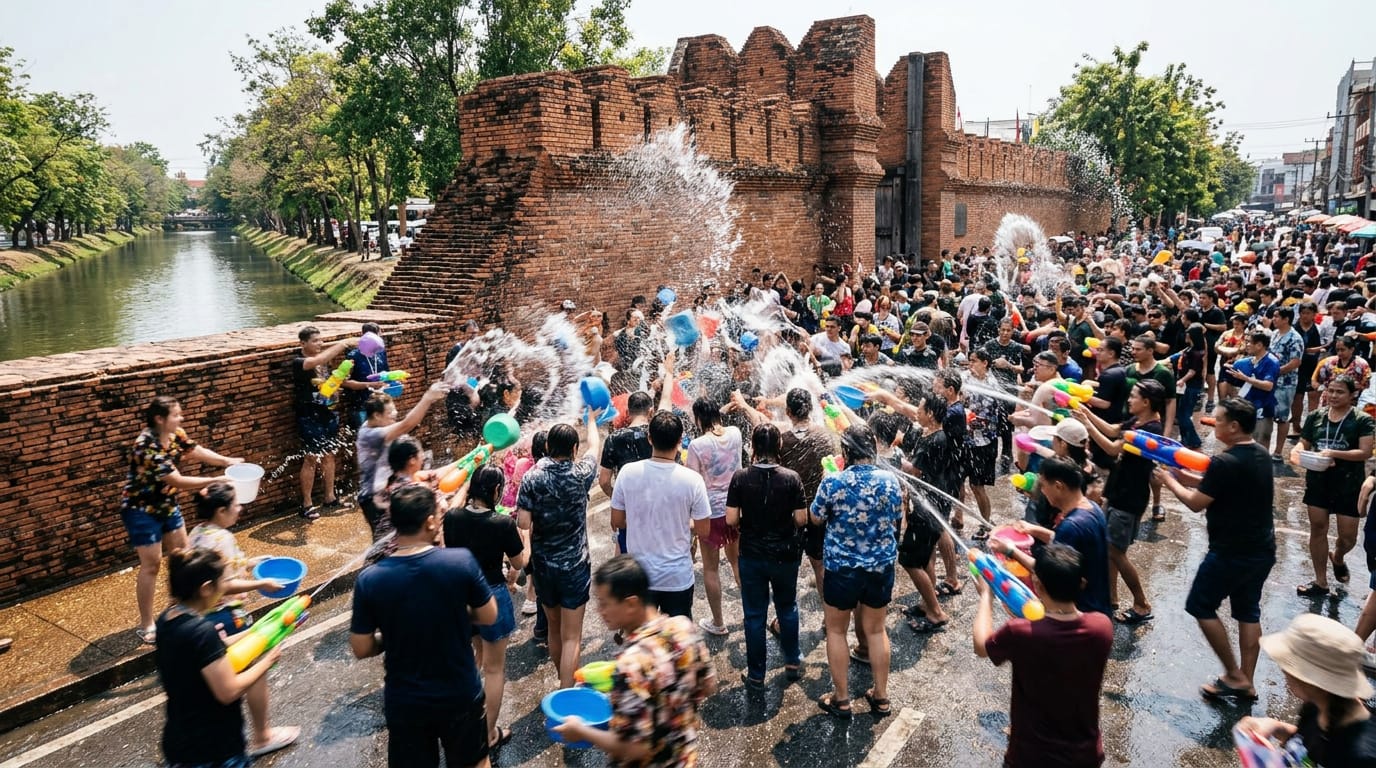
Songkran is Thailand's traditional New Year and Chiang Mai's biggest annual festival, held 13–15 April every year. It combines a centuries-old Buddha procession of the Phra Buddha Sihing image with a citywide water fight along the moat. Free public events run at Tha Phae Gate, Wat Phra Singh, Wat Chedi Luang, and the four moat sides, with the headline Buddha procession on day one and peak water fights on day three. Expect 35–40°C heat, dense crowds, and most of the Old City under cheerful soaking.