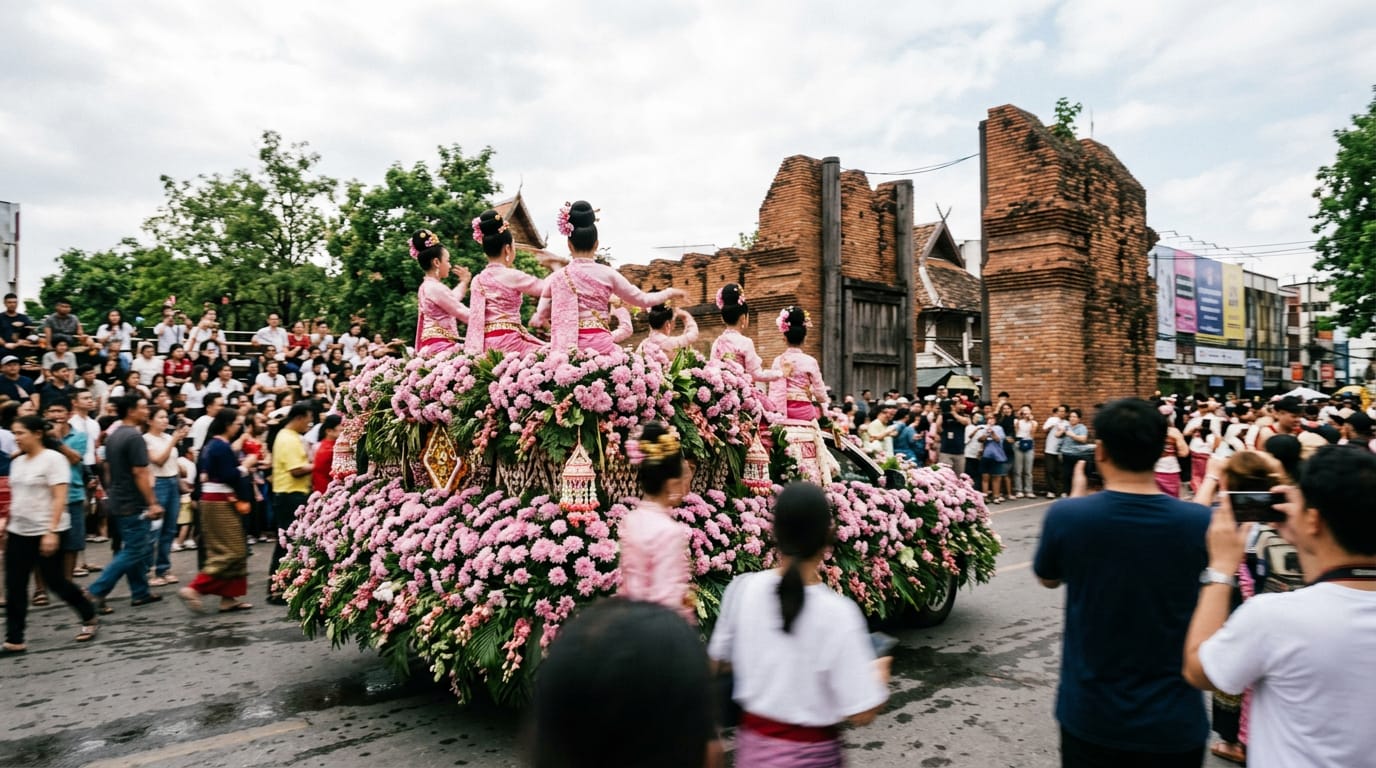
The Chiang Mai Flower Festival is the city's annual three-day celebration of cool-season blooms, held the first full weekend of February at Suan Buak Hat Park. The 49th edition runs 13–15 February 2026, with the headline parade of flower-covered floats setting off at 08:00 on Saturday 14 February from Nawarat Bridge along Tha Pae Road to Suan Buak Hat. Free entry, beauty pageant on Friday night, and northern Thailand's largest cool-flower trade fair across the weekend.
Updated
What it is
The Chiang Mai Flower Festival is the city’s annual three-day celebration of the cool-season flower trade, run by the municipality and the Tourism Authority of Thailand on the first full weekend of February. It is, in plain terms, the moment the northern Thai flower industry shows its best work to the public.
Unlike Yi Peng or Songkran, this is not a religious festival. It is a horticultural show wrapped in a parade. Northern Thailand sits at 300–1,000 metres above sea level with cool dry winters, which lets growers in Mae Sa Valley, Samoeng, and the Royal Project research stations produce flowers that cannot be grown in lowland Thailand: chrysanthemums, dahlias, carnations, calla lilies, salvia, and dozens of cymbidium and dendrobium orchid hybrids. February is the peak of that season; by March the heat damages the crop.
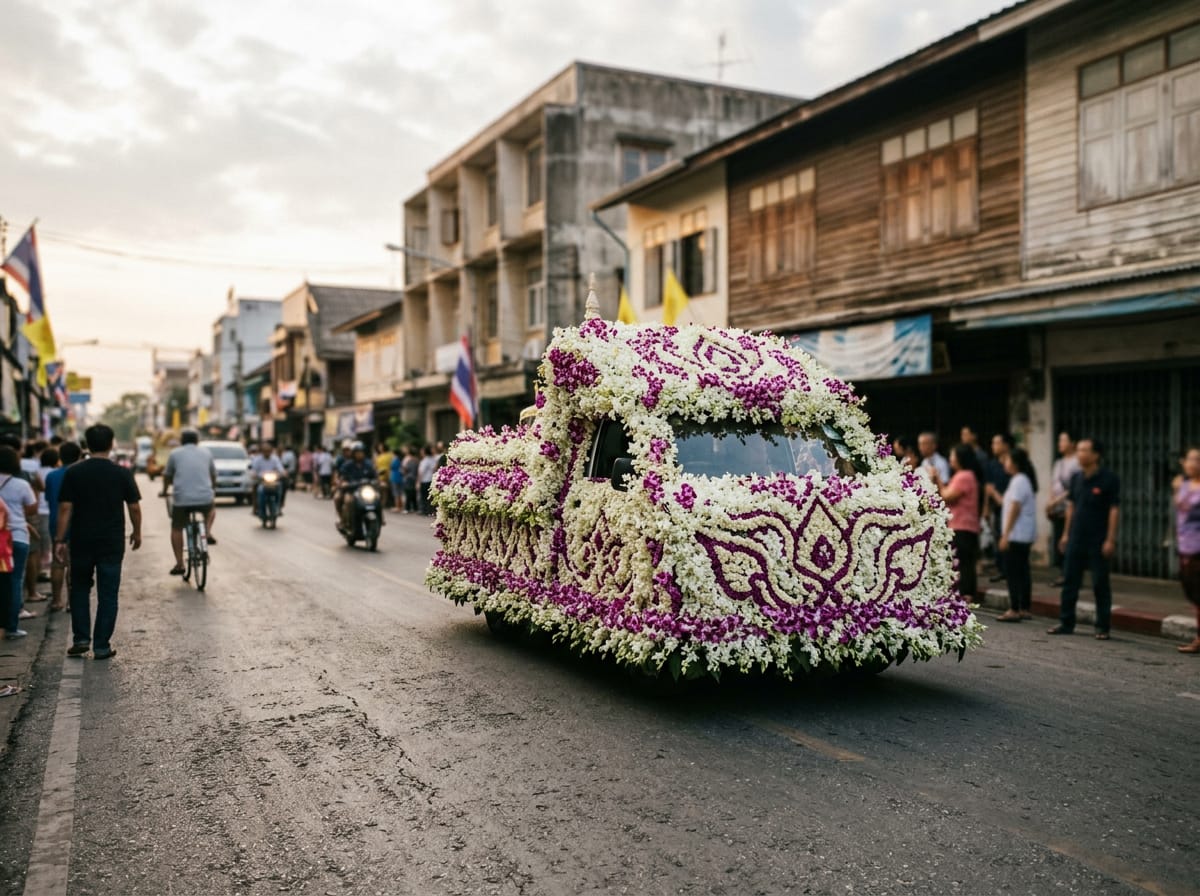
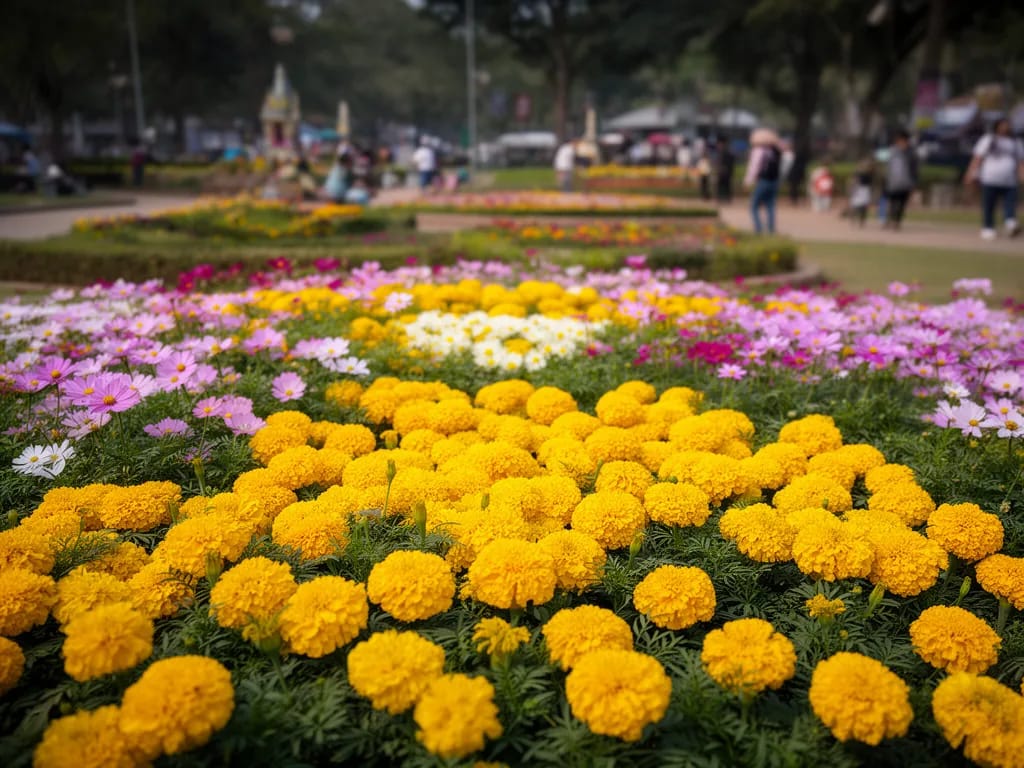
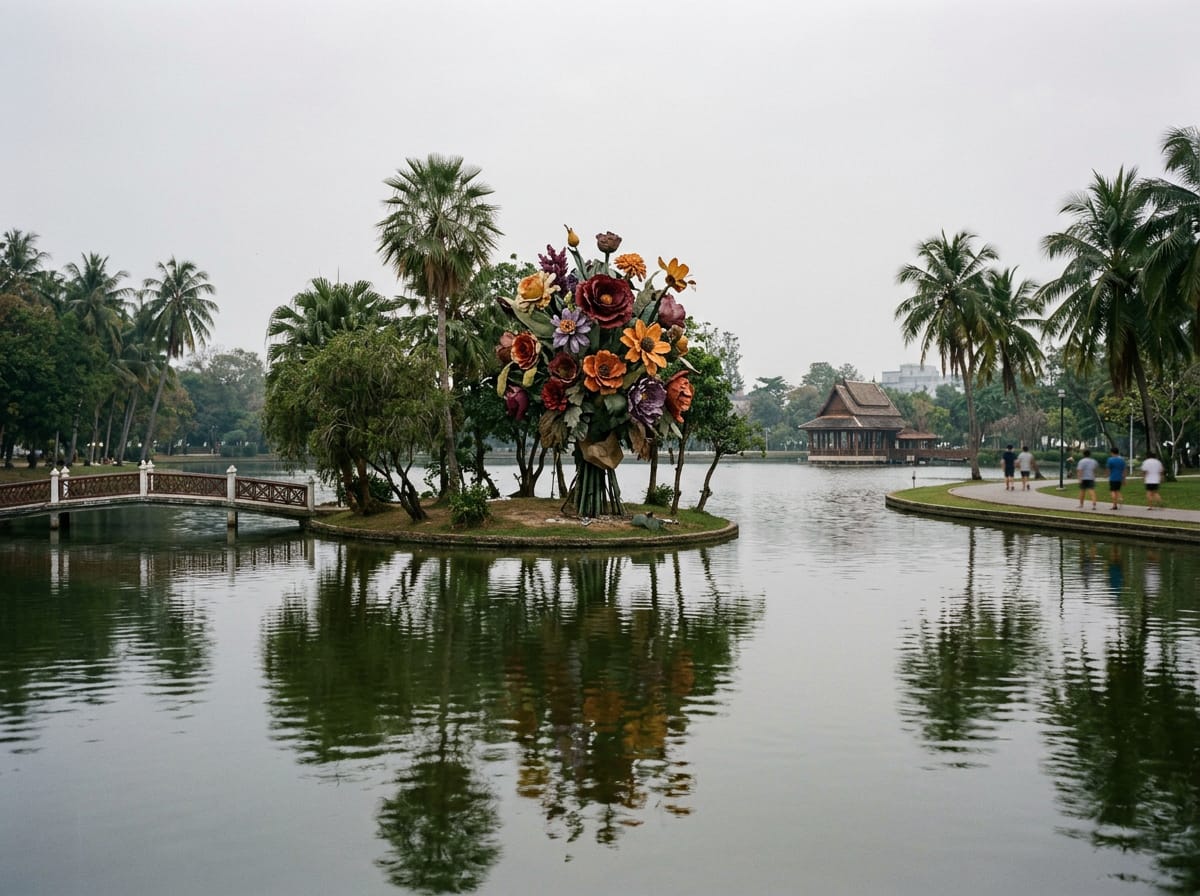
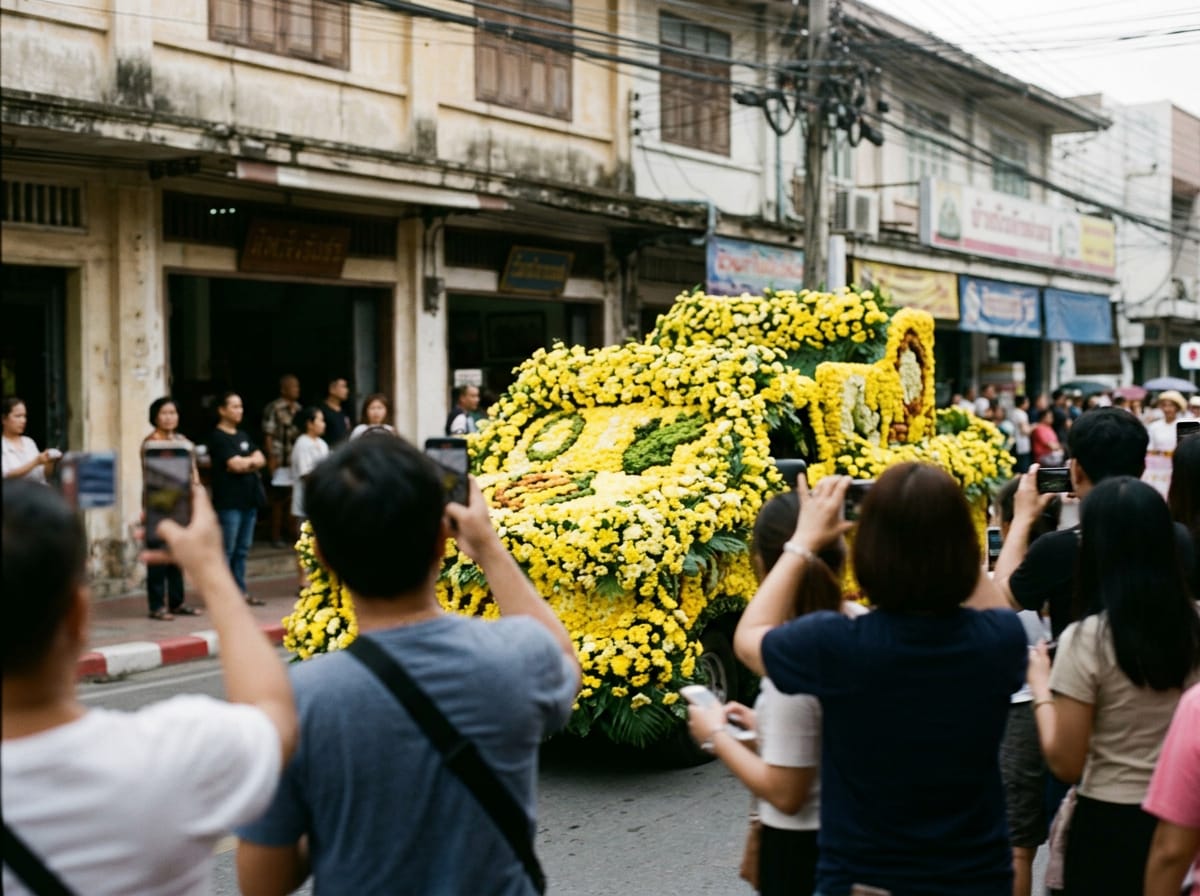
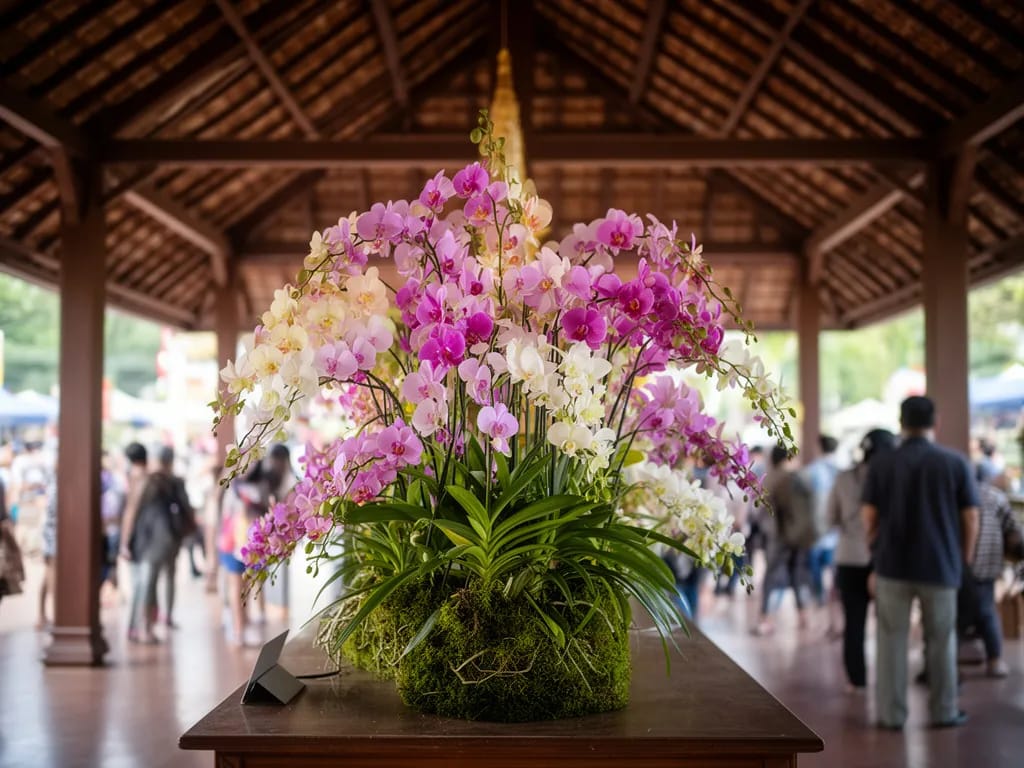
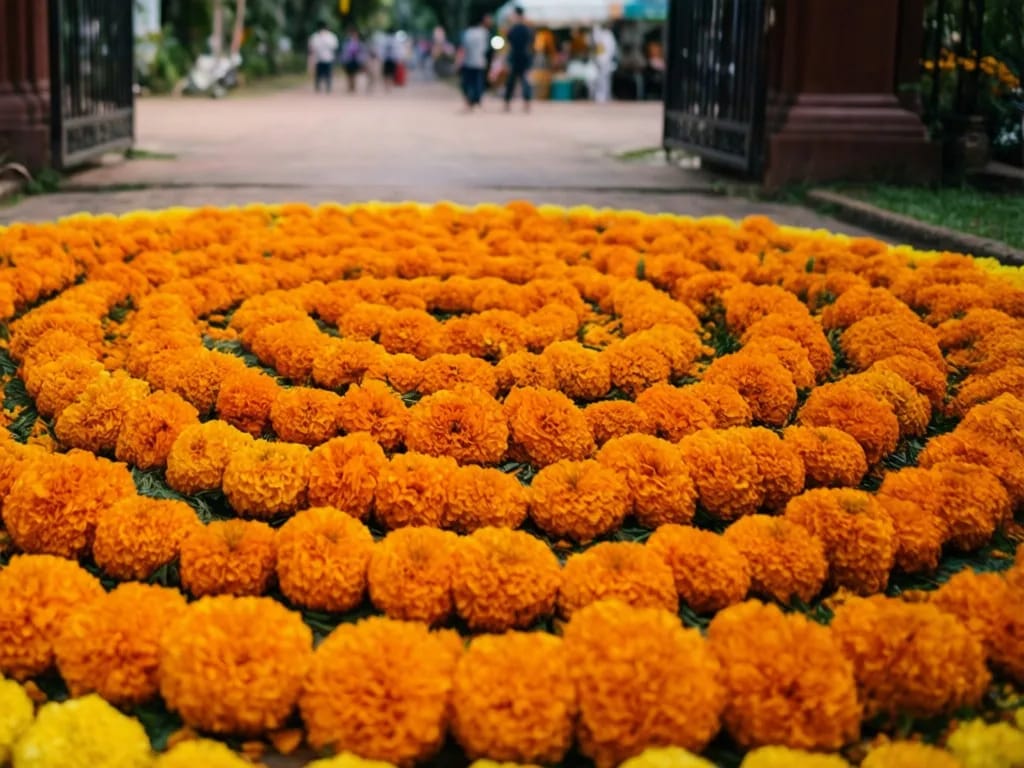
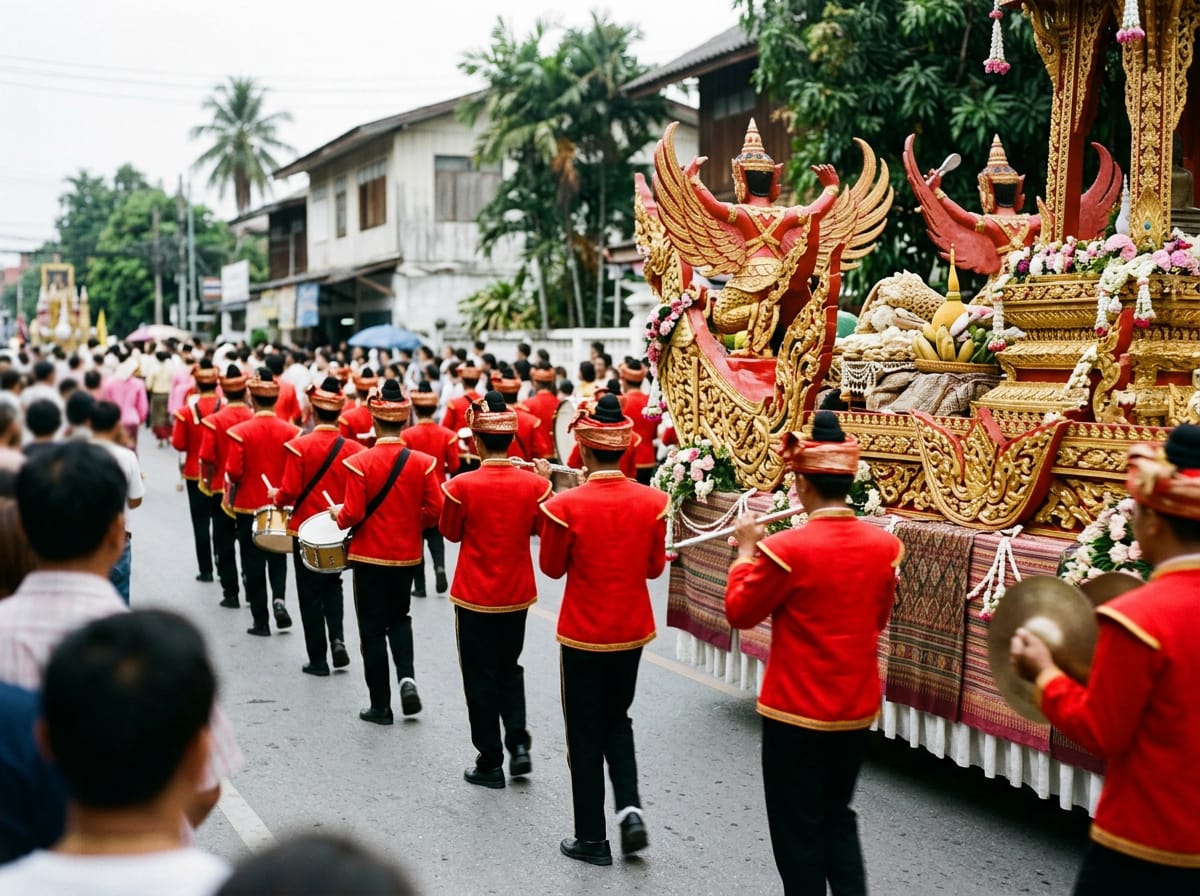
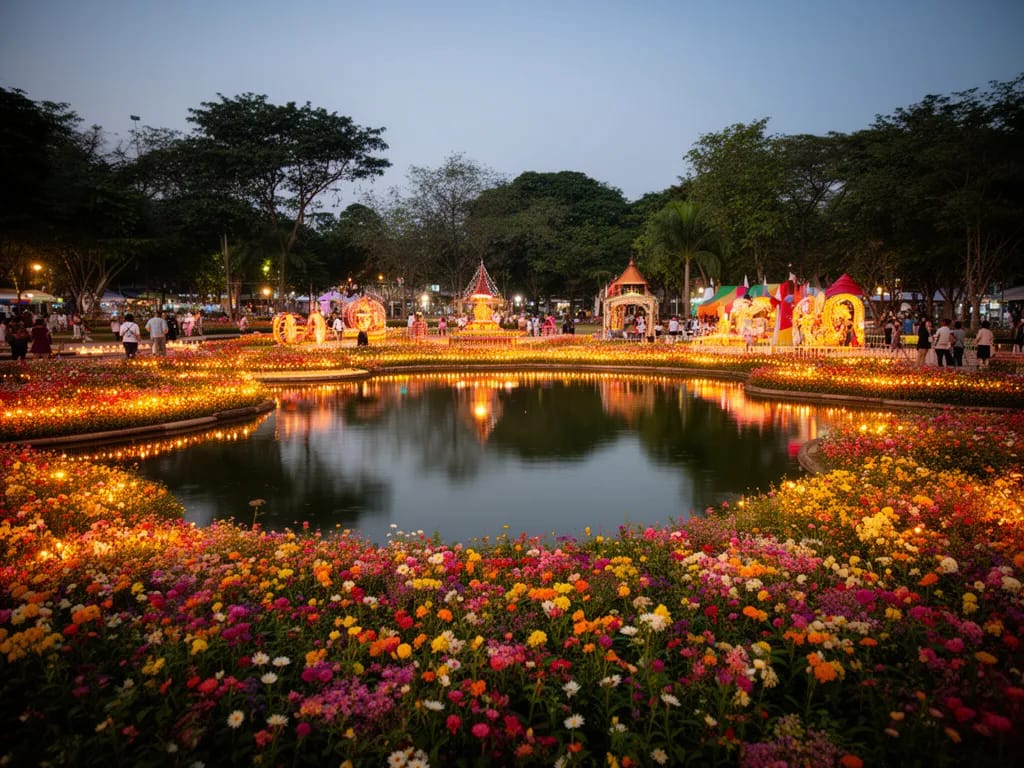
The two distinct elements to know are the parade and the park. The Saturday morning parade is the headline image: roughly 20 to 30 flower-covered floats, each three to seven metres long, built by city districts, the Royal Project Foundation, and major hotel groups. Each float is judged on craftsmanship, originality, and species used. The park is Suan Buak Hat, the small lake in the southwest corner of the Old City, which transforms into a trade fair of around 150 vendor stalls, judging pavilions for amateur and professional growers, food stalls, and a Lanna cultural stage.
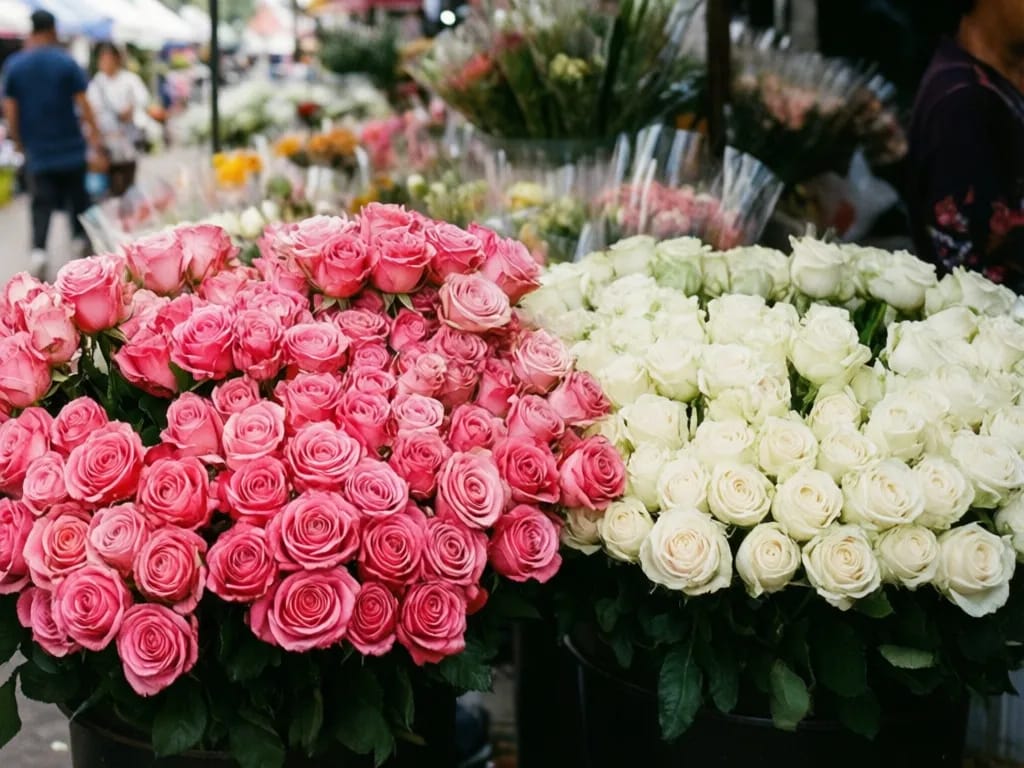
The festival is also the public-facing counterpart of the Chiang Mai Flower Market at Ton Lamyai, which runs the same trade in wholesale form 365 days a year, two minutes from Nawarat Bridge. The festival is the showroom; the market is the warehouse.
The 2026 edition is the 49th, with the first festival held in 1977 under the joint patronage of the Chiang Mai municipality and the Tourism Authority of Thailand. The Royal Project Foundation, set up by King Bhumibol Adulyadej in 1969 to replace highland opium cultivation with cool-climate cash crops, has co-hosted since 1984 and is responsible for the orchid judging pavilion that sits at the centre of Suan Buak Hat each year. By the early 2000s the festival had grown to the size it sits at today: roughly 150 vendor stalls, 25 to 30 parade floats, and an attendance of around 150,000 visitors across the three days.
Dates this year
The 49th Chiang Mai Flower Festival runs 13–15 February 2026, a Friday to Sunday. The Queen of the Chiang Mai Flower Festival pageant is staged Friday evening at Suan Buak Hat from 19:00. The parade rolls Saturday 14 February at 08:00 from Nawarat Bridge. The park fair stays open through Sunday 15 February at 22:00.
| Year | Dates |
|---|---|
| 2023 | 3–5 February |
| 2024 | 2–4 February |
| 2025 | 7–9 February |
| 2026 | 13–15 February |
| 2027 | 5–7 February (projected) |
The dates always fall on the first full weekend of February, occasionally pushed a week later when the lunar calendar shifts the Chinese New Year crowds.
What to expect, day by day
Friday 13 February: opening and pageant
Suan Buak Hat opens its main displays at 08:00. The flower-bed installations around the lake and the Royal Project Foundation pavilion are usually finished overnight, so Friday morning is the cleanest viewing of the orchid judging tables before the weekend crowds arrive. Stallholders set up across the Old City; vendors begin selling cut flowers and seedlings from around midday. The Three Kings Monument plaza opens its Lanna cultural fair from 17:00 with khan toke food sets, traditional music, and an evening lantern-craft workshop suitable for children.
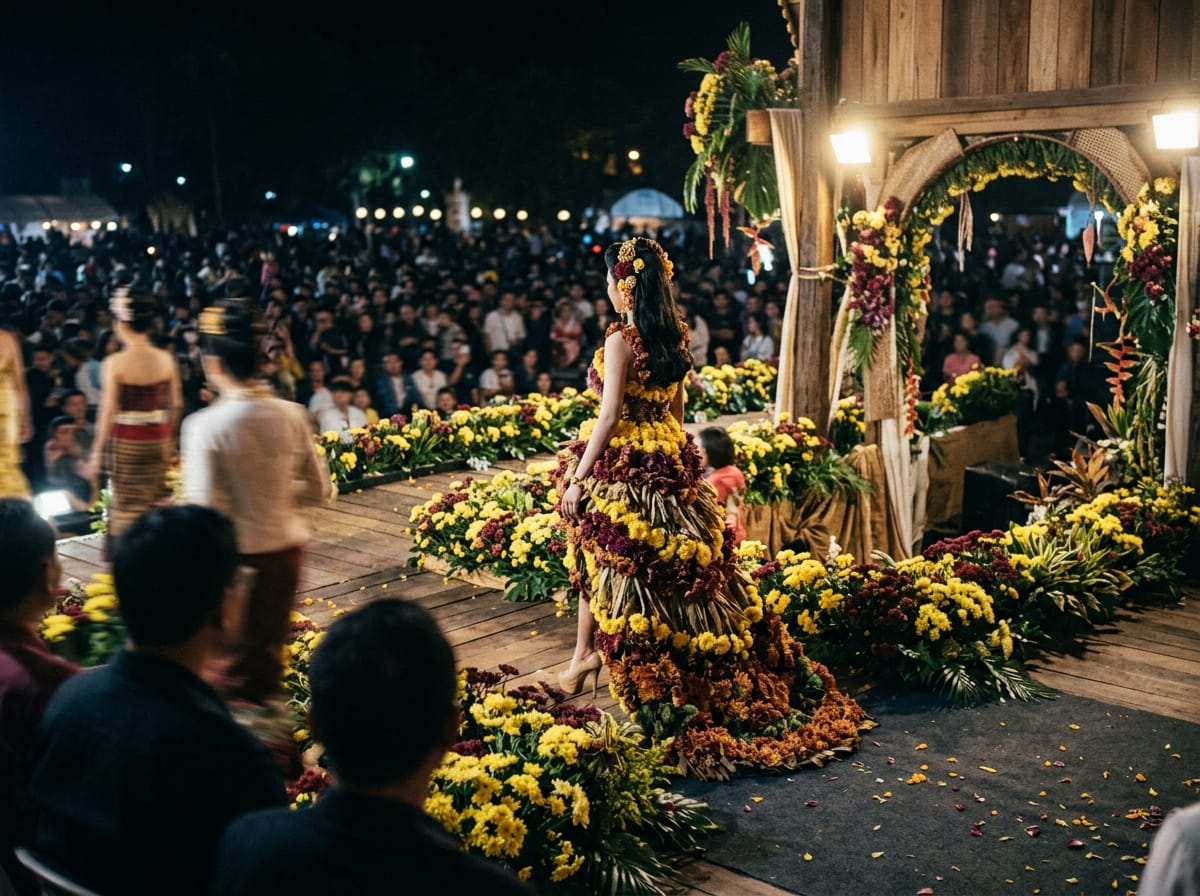
The Queen of the Chiang Mai Flower Festival contest begins at 19:00 on the Suan Buak Hat main stage. This is the famous flower-gown evening: contestants in chrysanthemum bodices and orchid trains, with arrangements often using six to twelve thousand individual blooms per gown. The pageant runs about three hours and ends with a fireworks short show over the park lake.
Saturday 14 February: the parade
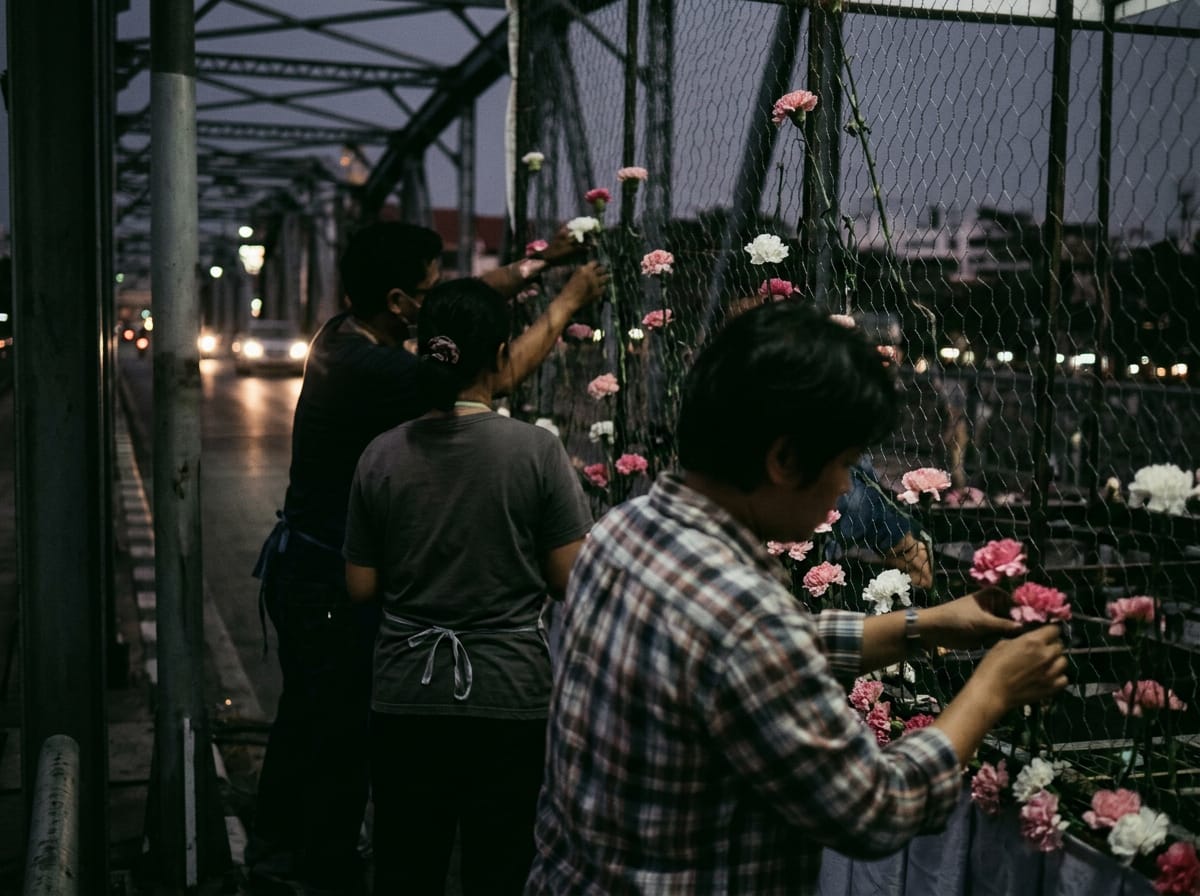
Float teams stage from 04:30 at Nawarat Bridge under floodlights, pinning the final blooms while flowers are still cool. Roads inside the moat close to traffic from 06:00. The official start is 08:00.
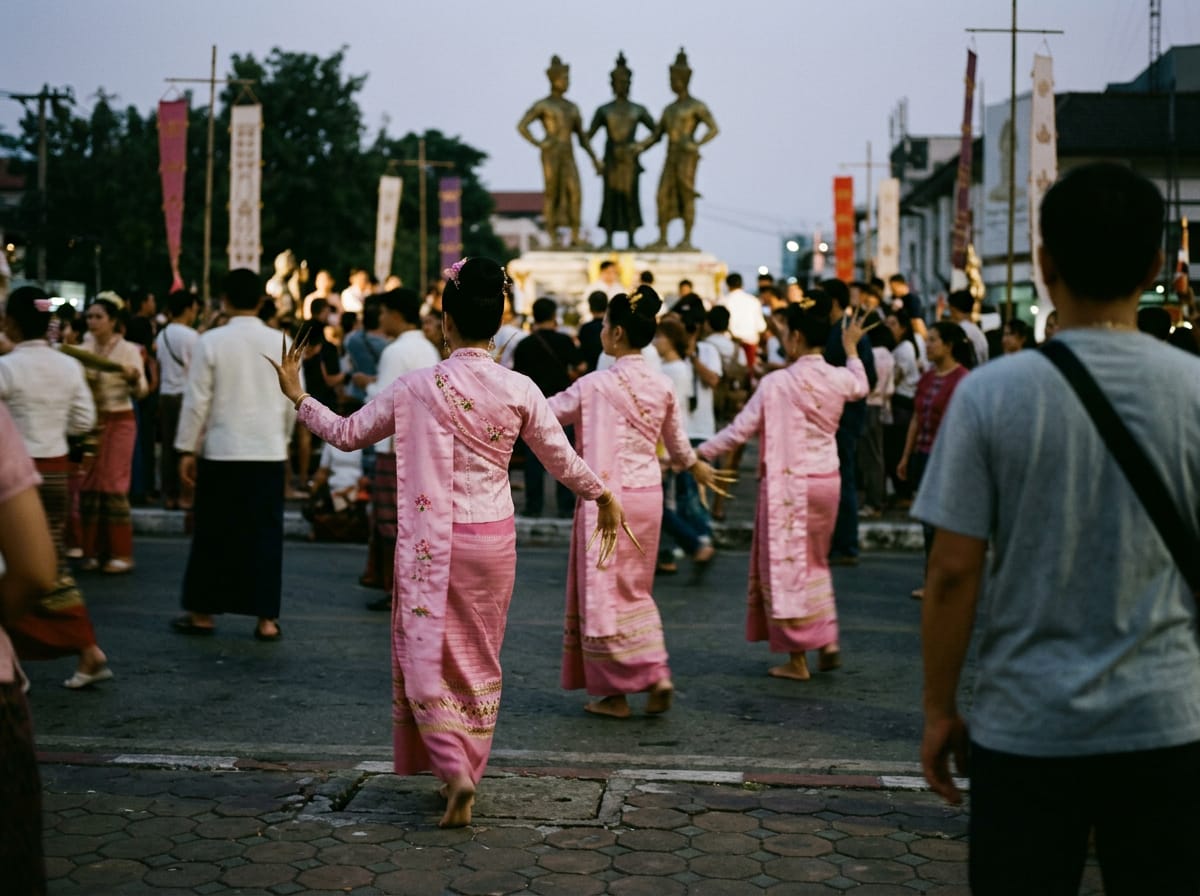
Floats roll west along Tha Pae Road, with the public viewing lining both kerbs from around 06:30. The procession passes Tha Phae Gate at roughly 09:00, where the official judging stand sits with the mayor and TAT representatives. Floats then turn south on Ratchadamnoen, west through the small Old City sois, and arrive at Suan Buak Hat from 10:30 onward. Lanna dance troupes in pink-and-gold fingernail dance costumes walk alongside; school marching bands fill the gaps. Total parade duration on the road is about three hours.
By midday, the floats park inside Suan Buak Hat for closer inspection. Award announcements are made on the main stage at 14:00. The afternoon at the park is the most photogenic window: the floats are static, the light is sharp, and the crowd has thinned.
Sunday 15 February: trade fair and gardens
Sunday is the quietest day and the best one for serious flower shoppers. The Suan Buak Hat vendor stalls run at full strength from 08:00 to 22:00, prices drop in the afternoon as growers prefer to sell rather than transport stock home, and the Royal Project judging pavilions stay open for last viewing. Workshops on Lanna puang malai garland-making, ikebana, and orchid potting run hourly across the lawn.
The park closes after a small Lanna cultural concert from 19:30 to 21:30.
Sunday afternoon also hosts the smaller orchid auction, a wholesale-to-retail event where the Royal Project pavilion and three independent breeders sell their judging entries to the public. Bidding starts at around 300 THB for entry-level Dendrobium hybrids and runs to 8,000 THB for award-winning Cymbidium sprays. The auction closes at 17:00 and is the final commercial event of the weekend.
How to participate
Free public locations
- Suan Buak Hat Park. The central venue. Free entry, open 08:00–22:00 all three days, though a few private orchid breeders charge 50 THB for their judging pavilion. Best for the trade fair, the flower-bed displays, and the parked floats on Saturday afternoon.
- Tha Phae Gate / Tha Pae Road. The parade viewing strip. Arrive 07:00 Saturday for a kerb position. The plaza in front of the Gate is the best photographers’ spot, but it fills from 06:30.
- Three Kings Monument plaza. A quieter parade viewing point with shade and food carts. The crowd thins here and the floats slow for the judging stand.
- Nawarat Bridge. Pre-parade staging area. Open from 04:30 Saturday; this is where you photograph float construction.
- Ratchadamnoen Road. Parade route, lined with cafés and food stalls that hand out free water from 07:00.
Ticketed and reserved options
- Hotel parade-viewing terraces. Riverside hotels such as Anantara, Le Méridien Chiang Mai, and the Tamarind Village operate ticketed breakfast terraces along Tha Pae Road for 1,500–3,500 THB per head. These include a buffet breakfast, reserved seating, and a dedicated guide.
- Royal Project Foundation tour. A 2,000 THB ticket gives access to the breeders’ pavilion, a guided tour of the orchid judging, and a free flower bundle. Book at the Foundation office on Friday morning.
- Photography press pass. Free but requires application through the Chiang Mai TAT office two weeks ahead. Gives kerb access at the judging stand and Suan Buak Hat backstage.
Volunteer float build
If you arrive a week early, the Sansai and Mueang district teams accept walk-up volunteers to help pin flowers from Tuesday onwards at the Royal Project warehouse on Tha Pae Road. No skill required, lunch provided, and you join the float crew on Saturday. The build runs from 09:00 to roughly 22:00 each day, with the most intensive pinning done overnight Friday into Saturday morning. Most teams will give first-time volunteers a small floral pin on the Saturday parade as a thank-you.
Parade route
Float departure: 08:00 from Nawarat Bridge → west along Tha Pae Road → through Tha Phae Gate → south on Ratchadamnoen Road → west via Phra Pokklao and Samlan → arriving at Suan Buak Hat Park by 10:30–11:30. Total route distance is roughly 2.5 km.
Origins and cultural significance
The Tourism Authority of Thailand and the Chiang Mai municipality launched the festival in 1977 as a marketing event for the regional cool-flower industry. Mae Sa Valley north of the city, Samoeng to the west, and the Royal Project research stations at Doi Ang Khang and Mon Cham had begun replacing opium poppy cultivation with temperate-zone cut flowers in the early 1970s under the Royal Project initiative of King Bhumibol Adulyadej. The festival was the shop window that connected those highland growers to wholesalers and tourists.
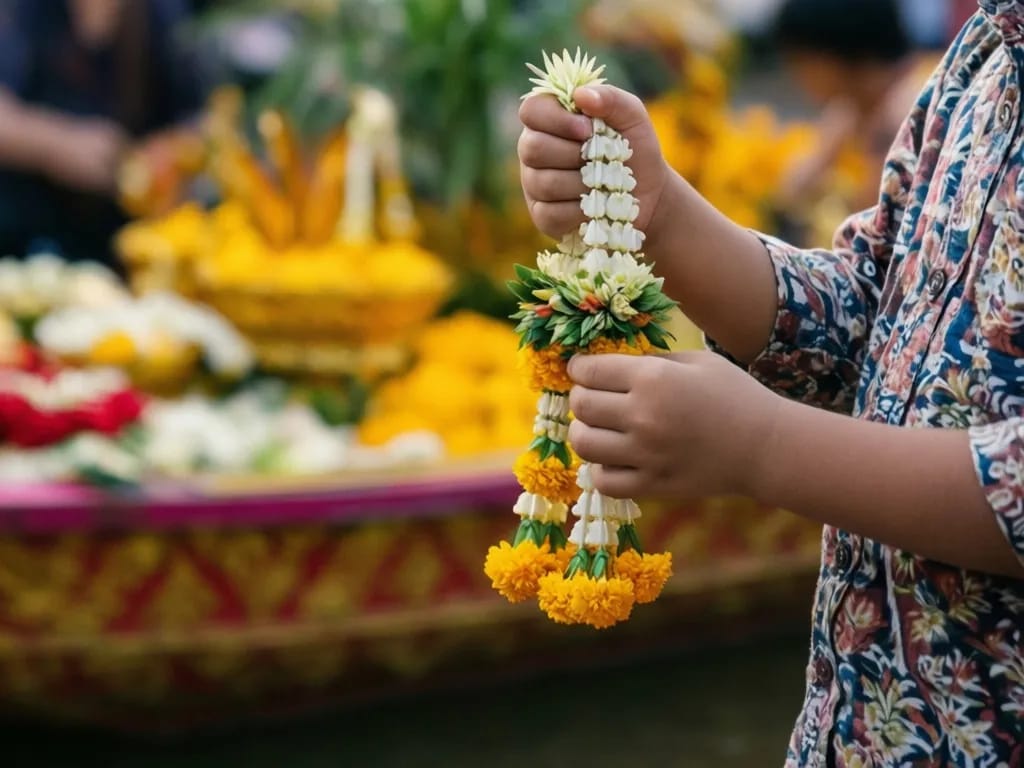
The cultural layer is northern Thai. The parade dance troupes use the fon lep fingernail dance and fon nguio Lanna spirit dance, both indigenous to old Lanna court ceremonies. The puang malai jasmine garland, the round wreaths handed to dignitaries on the judging stand, is the Thai gesture of welcome and respect. Mali, the Thai word for jasmine, lends its name to the small lavender-and-jasmine wrist garlands sold across Suan Buak Hat through the weekend.
The Lanna courtly tradition of offering flowers extends well beyond the festival. Wat Phra Singh receives a fresh baisi, a layered banana-leaf and flower offering, every full moon. Lanna kings historically presented orchid offerings to monks at the start of each lunar month. The flower festival, though modern, sits in a much longer regional habit of treating flowers as the highest non-monetary gift.
The festival also has commercial weight. Northern Thailand exports cut flowers to Singapore, Hong Kong, and Japan worth roughly 800 million THB per year; the festival is when buyers from those markets walk the orchid pavilions and place contracts for the next season.
The Tourism Authority of Thailand documents the festival as part of its annual “Festivals of the North” calendar. Roughly 70% of attendance is domestic Thai visitors, with the remainder international, mostly Chinese, Japanese, and European travellers who time their February trip around the parade. The festival also draws horticultural delegations from the Royal Botanic Gardens in Edinburgh, the New York Botanical Garden, and the Singapore Botanic Gardens, which usually run small academic sessions inside the orchid pavilion across the weekend.
Parade route and procession map
The Saturday parade route is fixed each year and is the simplest way to plan a viewing position:
- Nawarat Bridge. Float staging from 04:30, departure 08:00. Best photographs of float construction.
- Tha Pae Road. Main parade strip. Kerbside viewing from 07:00. Cafés along this strip open early and serve coffee from 06:30.
- Tha Phae Gate. Judging stand, dignitary viewing, peak crowd density. Best parade photographs of floats against the brick gate.
- Ratchadamnoen Road. Wide road, more space, slower-moving floats, easier for families.
- Suan Buak Hat Park. Parade arrival, float parking, award stage.
Roads close to traffic from 06:00 to roughly 13:00 inside the moat. Songthaew red trucks drop at the moat corners only; plan a 10-minute walk into the route. The municipality provides large parade-route maps at four information booths on Friday morning along the moat road, with both Thai and English versions. The booths also hand out free parade-day water bottles and small Lanna-pattern folding fans, which are welcome by mid-morning when the temperature climbs.
What to wear and etiquette
February mornings in Chiang Mai sit at around 16–19°C, with the day climbing to 28–30°C by noon. A light jacket or sabai shoulder cloth at sunrise; sunscreen and a hat by 09:00. Walking shoes for the 2.5 km parade route. Shoulders and knees covered if you plan to visit Wat Phra Singh between events.
Standard Thai parade etiquette: do not cross the parade path, do not stretch into the route for a photograph, and stand for the royal anthem if it is played from the judging stand. A polite wai to dignitaries handing out puang malai garlands.
Where to stay and book early
Inside the Old City is best for walking distance to every event but rates climb 50–100% over base price for the festival weekend. Tamarind Village, Rachamankha, U Chiang Mai, and De Lanna are the typical Old City picks; book by mid-November. Riverside hotels along the Ping such as Anantara and 137 Pillars House are five minutes by tuk-tuk and run breakfast-with-parade-view packages.
Nimman is the practical alternative: cheaper, calmer at night, and a quick 15-minute songthaew ride to the parade route. Most stays at Akyra Manor, Yaang Come Village, or boutique condos in soi 7 work well for festival weekend without the room-rate surcharge.
Book 3 months ahead minimum. Properties facing Tha Pae Road sell their festival weekend by October.
Photography tips
For the parade, get to Tha Phae Gate by 06:30 with a 24–105mm zoom for wide float shots and a 70–200mm to compress the dancers against the floats. Morning light from 07:30 to 09:30 hits the parade route from the east and is the cleanest window of the weekend; floats become flat under harsh midday sun by 11:00.
For close-up flower work at Suan Buak Hat, a 100mm macro lens is the standard tool, with diffused flash for orchid detail in the shaded judging pavilions. Carry a small spray bottle: misting orchids before a shot brings out the colour without damaging the blooms. Drones are prohibited along the parade route under municipal order. For a different angle on the parade, the upper floor of the Lamyai Market building on Wichayanon Road overlooks the Nawarat Bridge staging zone; arrive by 05:00 to claim a window.
Nearby and related
After the parade ends, walk five minutes from Suan Buak Hat to Wat Phra Singh, the spiritual centre of the Old City, which usually has its own quieter flower offerings during festival weekend. The Chiang Mai Flower Market at Ton Lamyai is the year-round version of the same trade. Every festival vendor sells there the other 362 days of the year, and prices fall sharply from Monday morning. For an evening, the Sunday Walking Street closes Ratchadamnoen Road from 16:00, so the parade route becomes the night market the next day. Visitors extending into November should look at Yi Peng and Loy Krathong, which uses the same Tha Pae Road parade corridor with sky lanterns instead of carnations. April travellers should consult the Songkran page for the city’s spring water festival, which uses the same Old City moat as its venue.
Half-day trips from the festival weekend include the Mae Sa Valley flower farms 30 km north of the city, where many of the parade growers are based; the Royal Project Foundation orchid research station at Doi Tung; and the Queen Sirikit Botanic Garden at Mae Rim, which sets up special winter-flower displays to coincide with the festival weekend. Songthaew transport runs from Chang Phueak Gate to all three; budget 40 minutes one-way.
Photos
Frequently asked questions
When is the Chiang Mai Flower Festival 2026?
The 49th Chiang Mai Flower Festival runs Friday 13 February to Sunday 15 February 2026. The headline parade leaves Nawarat Bridge at 08:00 on Saturday 14 February, with the flower fair at Suan Buak Hat Park open all three days.
When is the Chiang Mai Flower Festival 2027?
The festival is always scheduled for the first full weekend of February. The 2027 edition is expected on 5–7 February, with the parade on Saturday 6 February.
Where does the Chiang Mai Flower Festival happen?
The main venue is Suan Buak Hat Park in the southwest corner of the Old City. The parade route runs from Nawarat Bridge west along Tha Pae Road, through Tha Phae Gate, along Ratchadamnoen Road, and finishes at Suan Buak Hat Park.
Is there an entry fee?
No. Suan Buak Hat Park, the parade, and the beauty pageant are all free to attend. Some private orchid breeders charge 50 THB for entry to their judging pavilion.
What time does the parade start?
The parade lines up from 06:30 at Nawarat Bridge and starts rolling at 08:00 on Saturday morning. Most floats reach Tha Phae Gate by 09:00 and arrive at Suan Buak Hat around 10:30.
Why is it held in February?
February is the peak of the northern Thai cool-flower season. Chrysanthemums, dahlias, carnations, cymbidium orchids, and salvia all bloom together at the end of the cool, dry months. The festival timing showcases growers' best stock before March heat damages the crop.
What is the beauty pageant?
The Queen of the Chiang Mai Flower Festival contest is held on Friday evening at Suan Buak Hat. Contestants wear gowns made almost entirely from fresh flowers — the unusual flower arrangements are one of the festival's most photographed moments.
Can I buy flowers at the festival?
Yes. The Suan Buak Hat fair has roughly 150 vendor stalls selling cut flowers, seedlings, orchids, garden tools, and seeds. For wholesale prices and the broader cool-flower trade, visit the Ton Lamyai flower market two minutes from Nawarat Bridge.
Is photography allowed?
Yes, anywhere. The Friday-night pageant allows flash photography. Drone use over the parade route is prohibited under municipal order.
Is the festival family-friendly?
Yes. Suan Buak Hat is a flat lakeside park with shade, food stalls, and accessible toilets. Parade viewing is best for children near Three Kings Monument, where the crowd thins and the floats slow for the judging stand.
How early should I arrive for the parade?
07:00 for a kerbside spot along Tha Pae Road; 06:30 if you want the photographers' positions near Tha Phae Gate. The road closes to traffic from 06:00.
Are there food stalls?
Yes. Suan Buak Hat hosts a Lanna food market from 10:00–22:00 across all three days, including khao soi, sai oua (northern sausage), and seasonal fruit. Average plate cost 50–100 THB.
Where should I stay for the festival?
Inside the Old City puts you within walking distance of every event. Phra Pokklao and Ratchadamnoen Road properties book out by November. Nimman is a 15-minute songthaew ride and is a quieter base.
Is the festival cancelled in burning season?
No. Burning season usually starts in late February or March. The festival weekend traditionally falls before the worst air-quality days, although light haze can affect distance photography.
How long has the Chiang Mai Flower Festival been running?
Since 1977. The 2026 edition is the 49th. The Tourism Authority of Thailand co-hosts the festival with the Chiang Mai municipality and the Royal Project Foundation.
Related guides
Temple
Wat Phra Singh
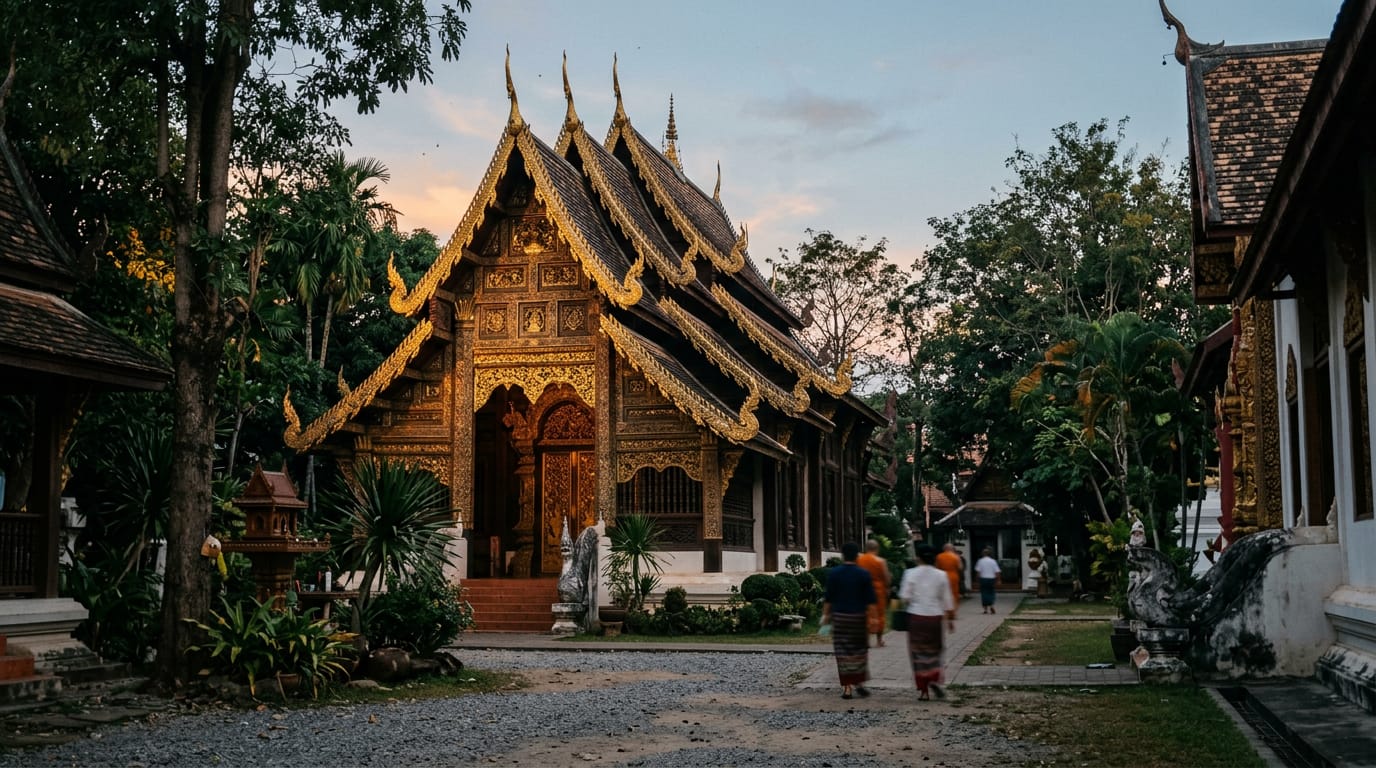
Wat Phra Singh is the most revered temple inside Chiang Mai's Old City, founded in 1345 by King Phayu of the Mangrai dynasty. Its Lai Kham viharn shelters the Phra Buddha Sihing — the Lion Buddha — which is paraded through the streets each Songkran. Together with its gilded chedi, carved teak gables and gold-leafed scripture library, the compound is the finest single example of Late Lanna architecture in northern Thailand.
Market
Sunday Walking Street (Ratchadamnoen Road)
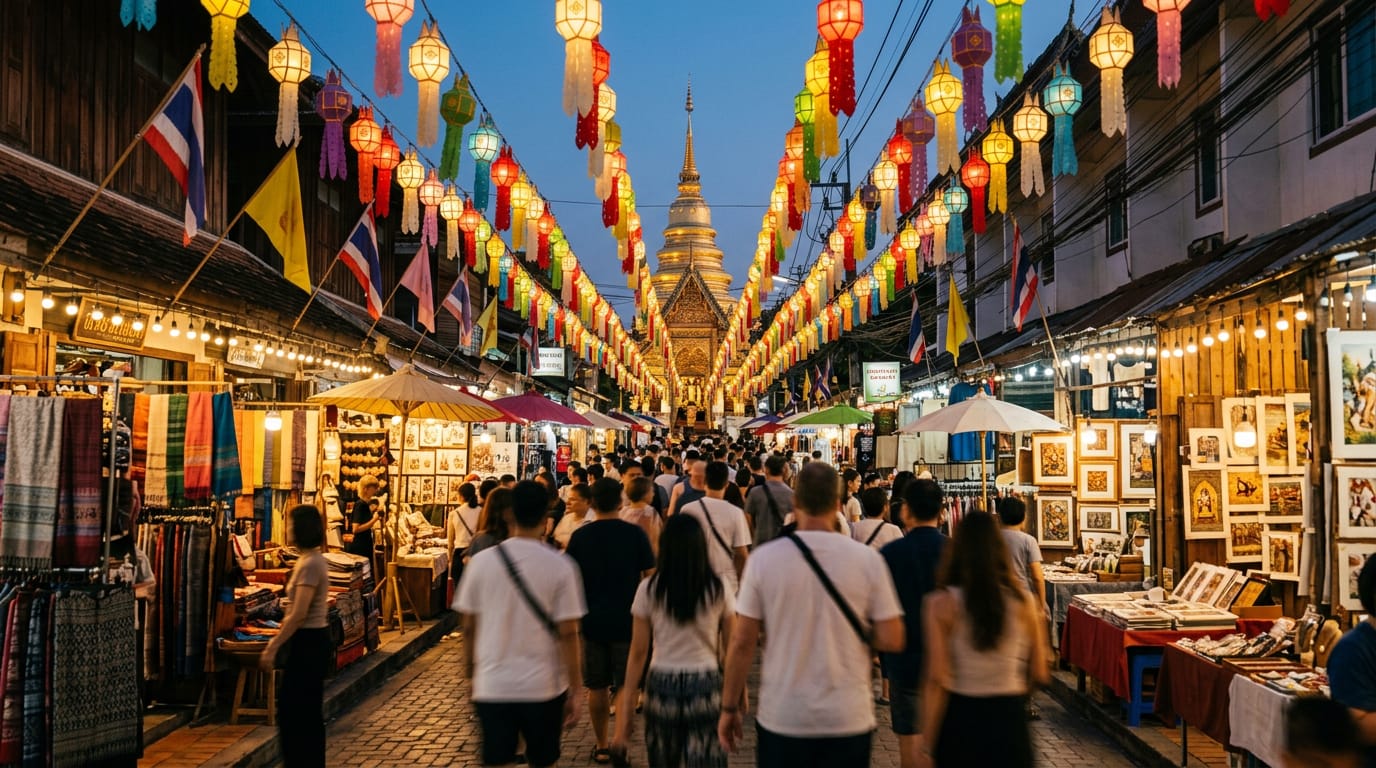
The Sunday Walking Street fills Ratchadamnoen Road through the heart of the Old City from Tha Phae Gate west to Wat Phra Singh. Around 700 vendors set up every Sunday from 16:00 to 22:00, with handicraft, paper umbrellas, silk, lanterns and three temple courtyards turned into food clusters along the route. It is the biggest weekly walking street in Chiang Mai.
Festival
Yi Peng and Loy Krathong
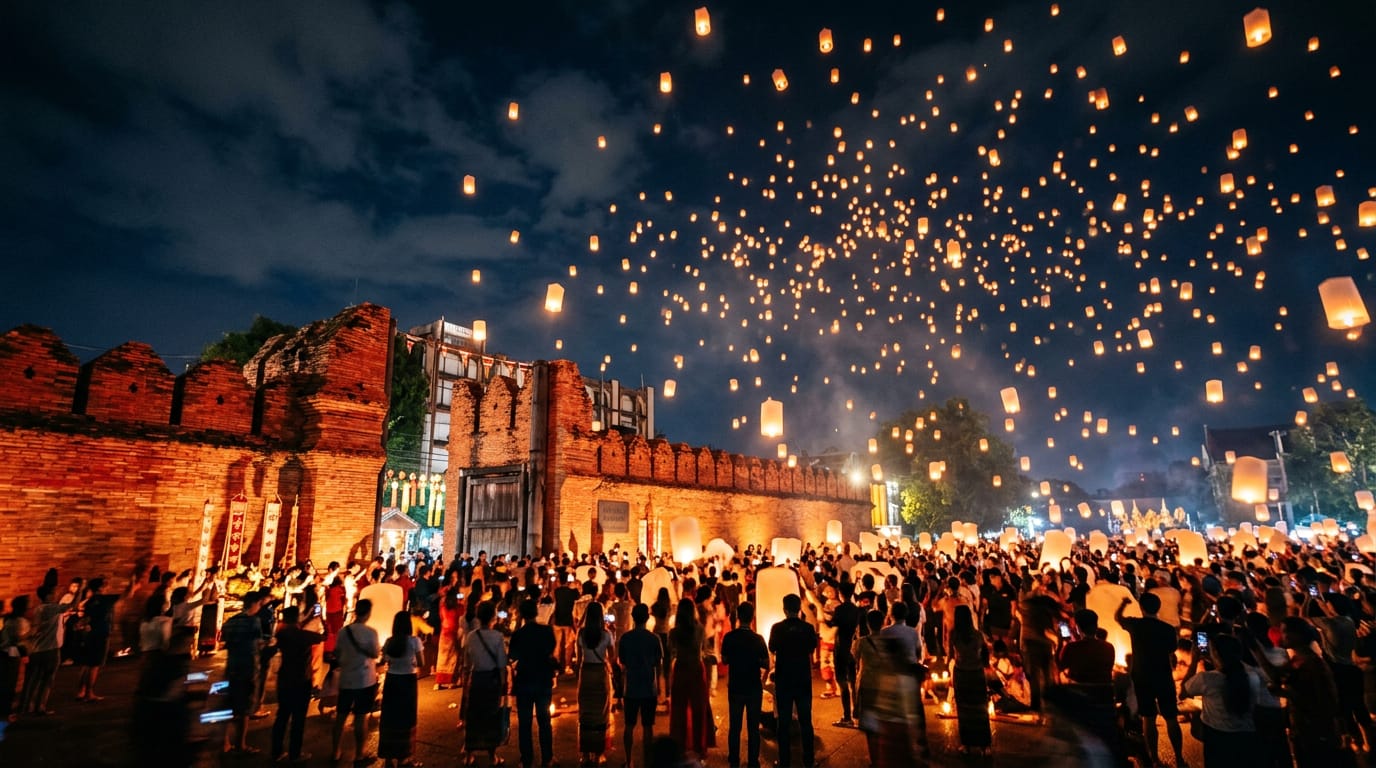
Yi Peng and Loy Krathong are Chiang Mai's twin festivals of light, held together over three nights on the full moon of the twelfth lunar month. Yi Peng is the Lanna sky-lantern release; Loy Krathong is the all-Thai floating of candle-rafts on rivers and ponds. In 2026 the festival runs 23–25 November, with free public lantern releases at Tha Phae Gate, krathong floating along the Ping River and Wat Phra Singh, and large ticketed mass releases at Doi Saket and Mae Jo.
Festival
Songkran (Thai New Year)
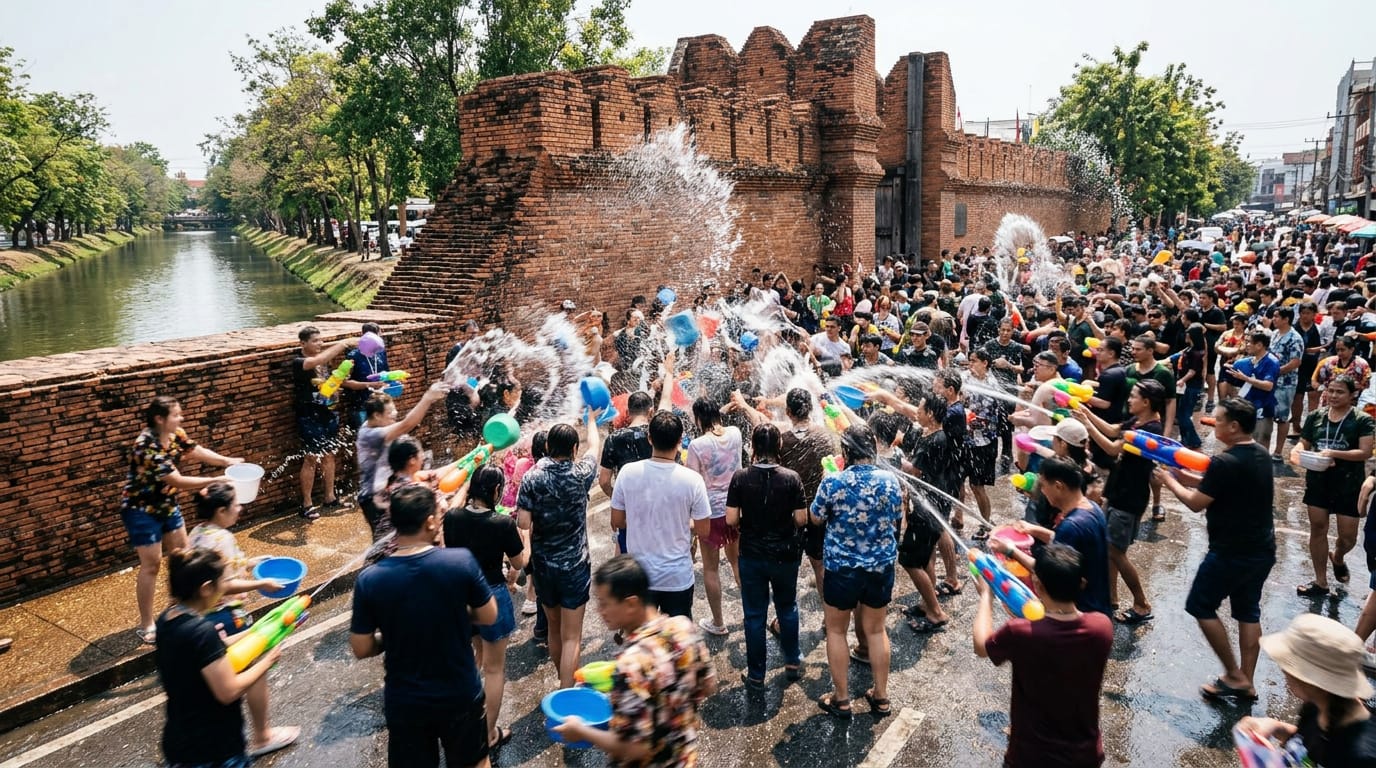
Songkran is Thailand's traditional New Year and Chiang Mai's biggest annual festival, held 13–15 April every year. It combines a centuries-old Buddha procession of the Phra Buddha Sihing image with a citywide water fight along the moat. Free public events run at Tha Phae Gate, Wat Phra Singh, Wat Chedi Luang, and the four moat sides, with the headline Buddha procession on day one and peak water fights on day three. Expect 35–40°C heat, dense crowds, and most of the Old City under cheerful soaking.
Market
Chiang Mai Flower Market
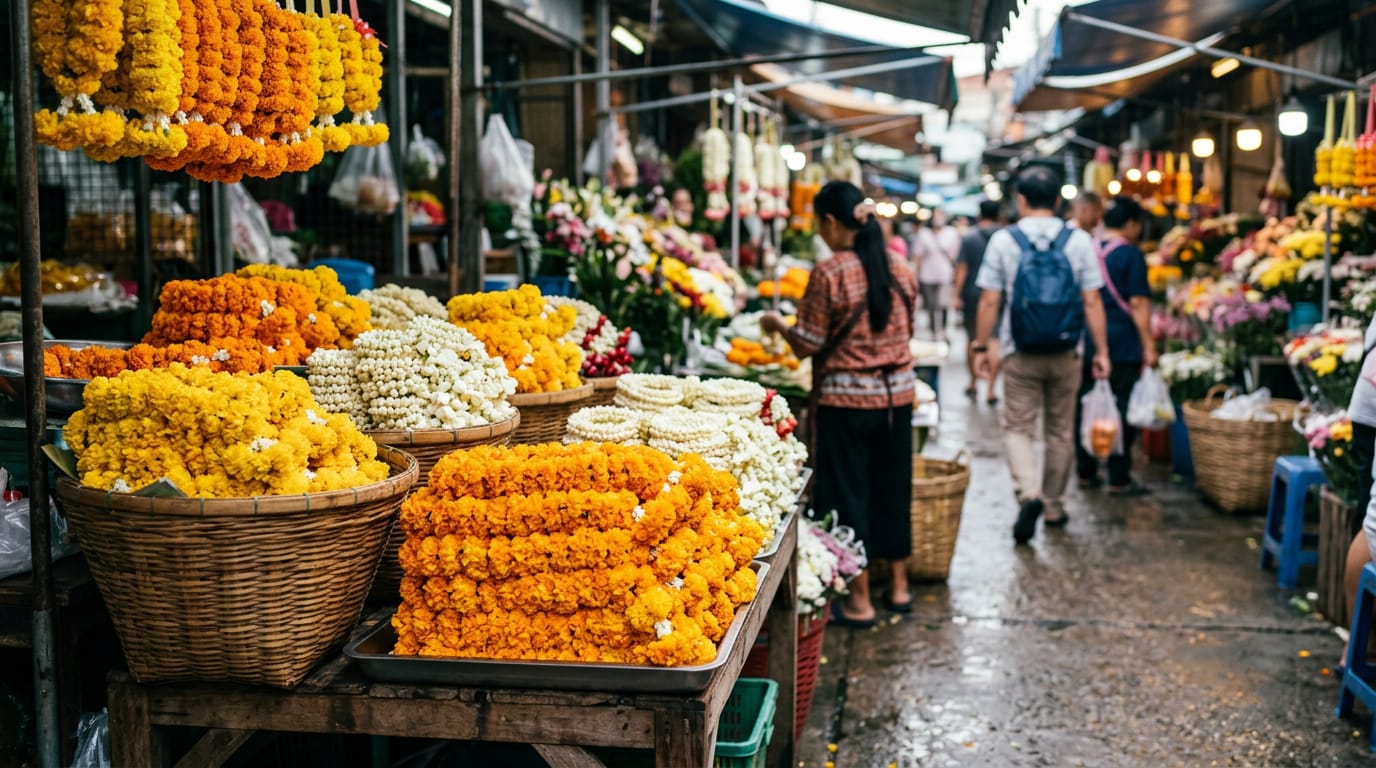
The Chiang Mai Flower Market (Talat Dok Mai) is the city's main wholesale and retail bazaar for cut flowers and ceremonial garlands, on a 400-metre stretch of Praisani Road beside the Ping River, behind Warorot Market in Chang Moi. Trading is continuous, with wholesale lorries arriving 03:00–06:00; in February 2026 it supplies the 49th Chiang Mai Flower Festival floats.