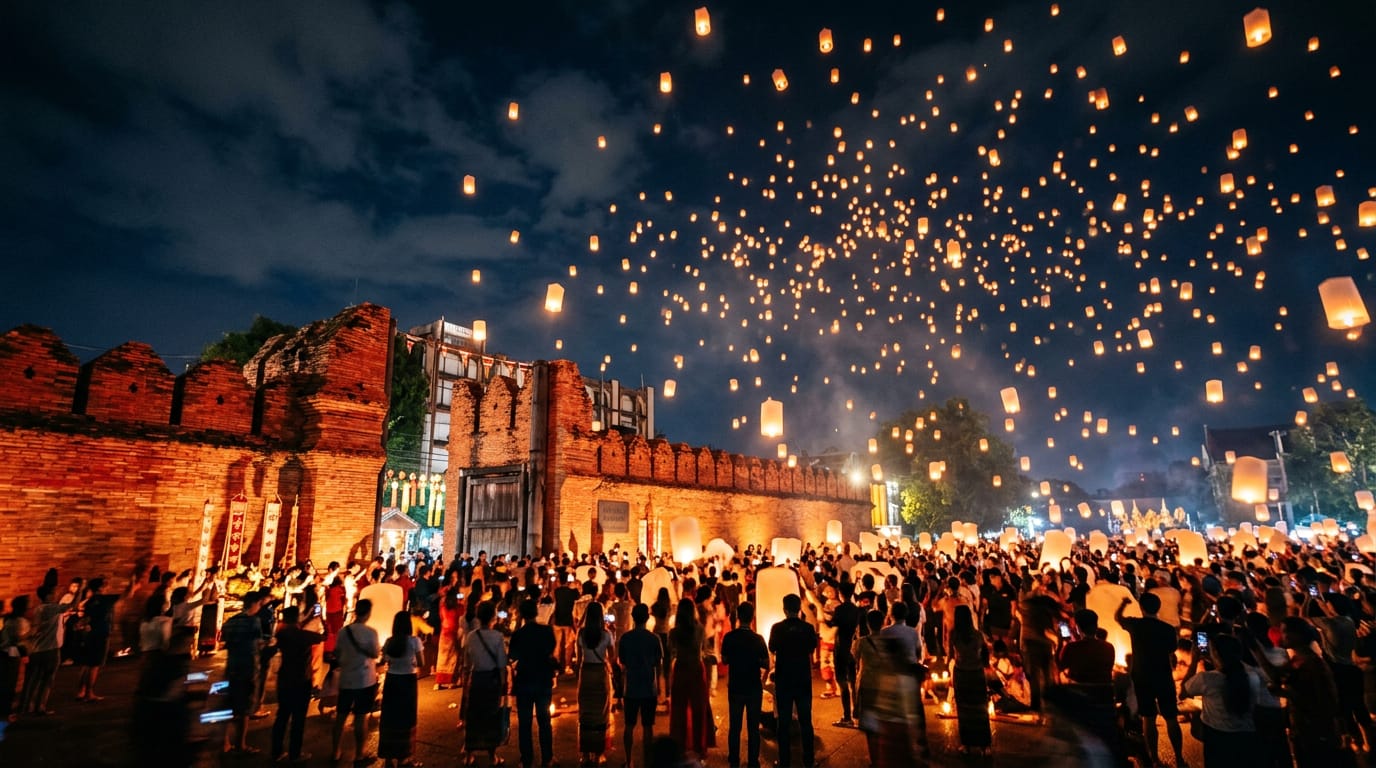
Yi Peng and Loy Krathong are Chiang Mai's twin festivals of light, held together over three nights on the full moon of the twelfth lunar month. Yi Peng is the Lanna sky-lantern release; Loy Krathong is the all-Thai floating of candle-rafts on rivers and ponds. In 2026 the festival runs 23–25 November, with free public lantern releases at Tha Phae Gate, krathong floating along the Ping River and Wat Phra Singh, and large ticketed mass releases at Doi Saket and Mae Jo.
Updated
What it is
Yi Peng (sometimes written Yee Peng) and Loy Krathong are two festivals that fall on the same three nights and are almost always experienced as one event in Chiang Mai. They mark the full moon of the twelfth lunar month, the close of the rainy season, and the start of the cool dry months that pull most travellers north.
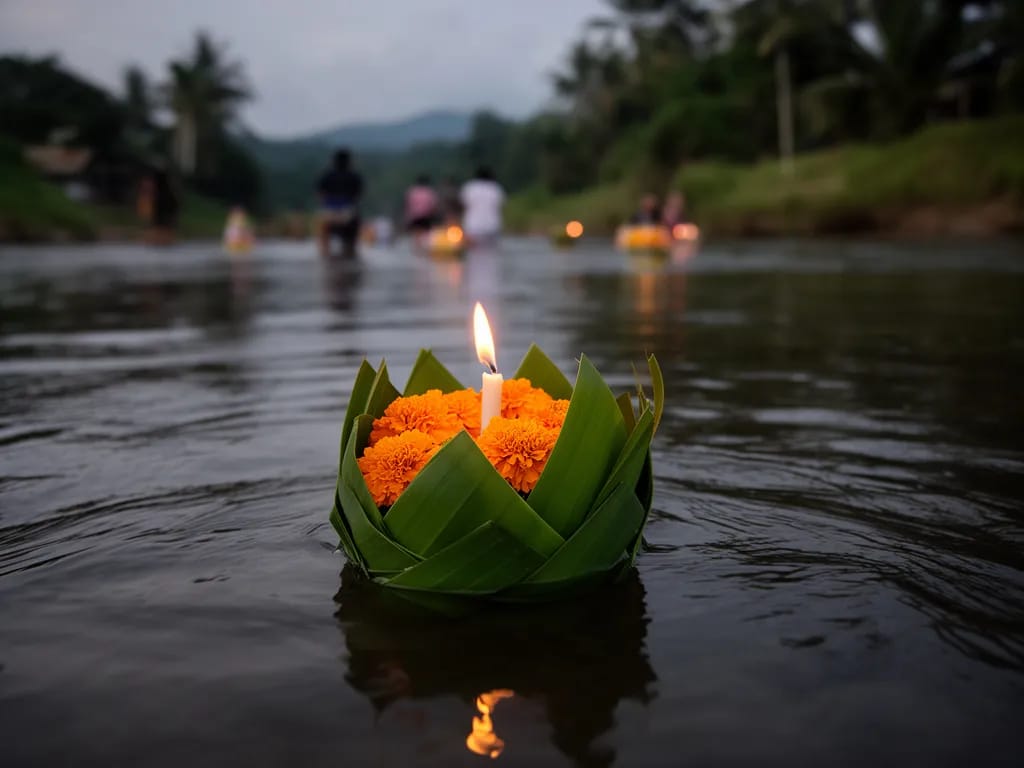
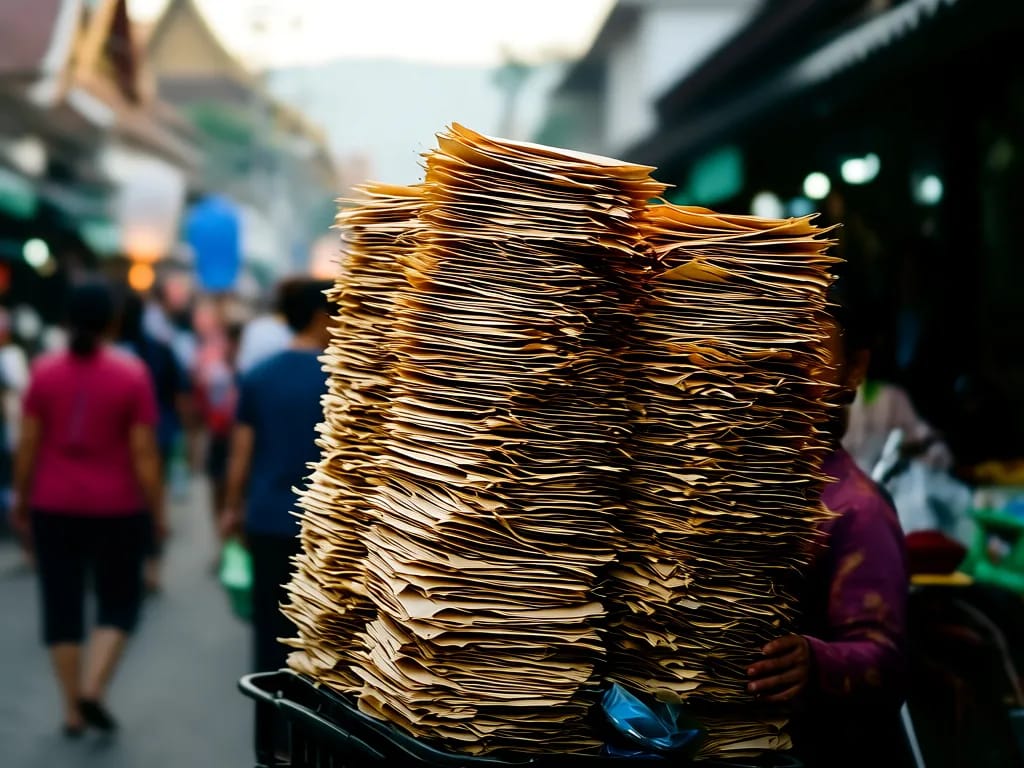
The names matter because they describe two different things. Yi Peng is a Lanna northern Thai festival. The word Yi means “two” in the old Lanna calendar and Peng means “full moon”: literally, the full moon of the second month of the Lanna year. Its signature is the release of the khom loi, the rice-paper sky lantern lifted by a small kerosene-soaked ring of fuel. Loy Krathong is the all-Thailand festival of floating a small candle-lit raft, the krathong, on water. The two happen on the same nights here because Chiang Mai was the seat of the old Lanna kingdom and kept its own festival while Siamese tradition layered over it.
The shared religious meaning is one of letting go. People float a krathong to release the previous year’s bad luck, debt, and grievance onto moving water, and to ask forgiveness from Phra Mae Khongkha, the river goddess. Lanna Buddhists release a khom loi for a parallel reason: the rising lantern carries away worries and is a votive offering to the Buddha’s hair relic in the Tavatimsa heaven.
The Lanna versus central-Thai distinction is the single most asked question on the ground. If you only have one night and want the sky-lantern image you have seen online, that is Yi Peng. If you want the floating-candle ritual on the Ping River, that is Loy Krathong. They sit at the same time and the same places.
The name Yi Peng itself is an older Lanna term. The Lanna calendar runs two months ahead of the central Thai lunar calendar, so what southerners call the twelfth month is the second month, yi, in the north. Peng is the full-moon night. The festival is also written as Yee Peng or Yi Peng San Sai depending on the Lanna source; the spellings refer to the same event. Older Lanna manuscripts at the Wat Phra Singh archive describe an annual rite of lifting paper lanterns to symbolically honour the Phra That Doi Suthep relic on the mountain west of the city.
Dates this year
Yi Peng and Loy Krathong 2026 run 23–25 November, a Monday to Wednesday. The official mass release at Mae Jo and the CAD Khom Loi event near Doi Saket fall on Tuesday 24 November, the full-moon night. The municipal parade down Ratchadamnoen Road runs Tuesday and Wednesday evenings from around 19:00.
| Year | Dates |
|---|---|
| 2023 | 27–29 November |
| 2024 | 15–17 November |
| 2025 | 5–7 November |
| 2026 | 23–25 November |
| 2027 | 13–15 November (projected) |
The festival shifts each year because it follows the lunar calendar. Use the full moon of November as a rough guide.
What to expect, day by day
Night one: Monday 23 November
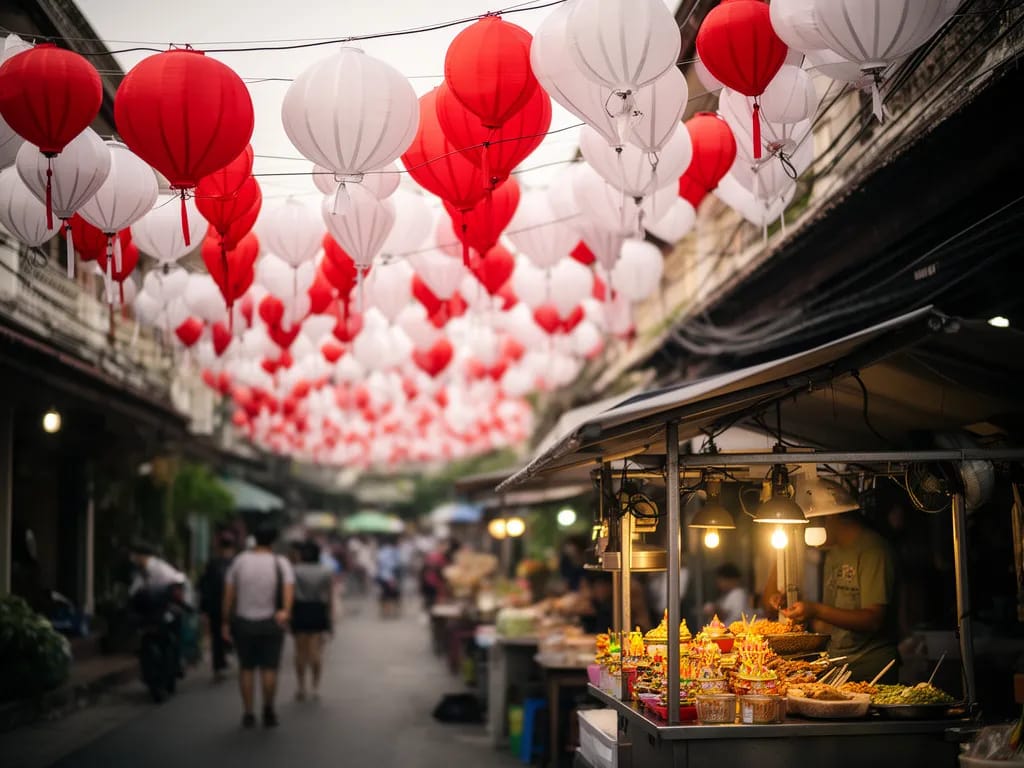
The first night is the calm opening. Old City sois along Ratchadamnoen and Phra Pokklao Road are strung with red, gold, and white paper lanterns by midday. The Three Kings Monument plaza hosts a Lanna cultural fair from around 17:00 with khan toke food sets, fingernail dance performances, and lantern-making workshops. By sunset, families begin floating krathong from the Ping River steps near Nawarat Bridge and Iron Bridge.
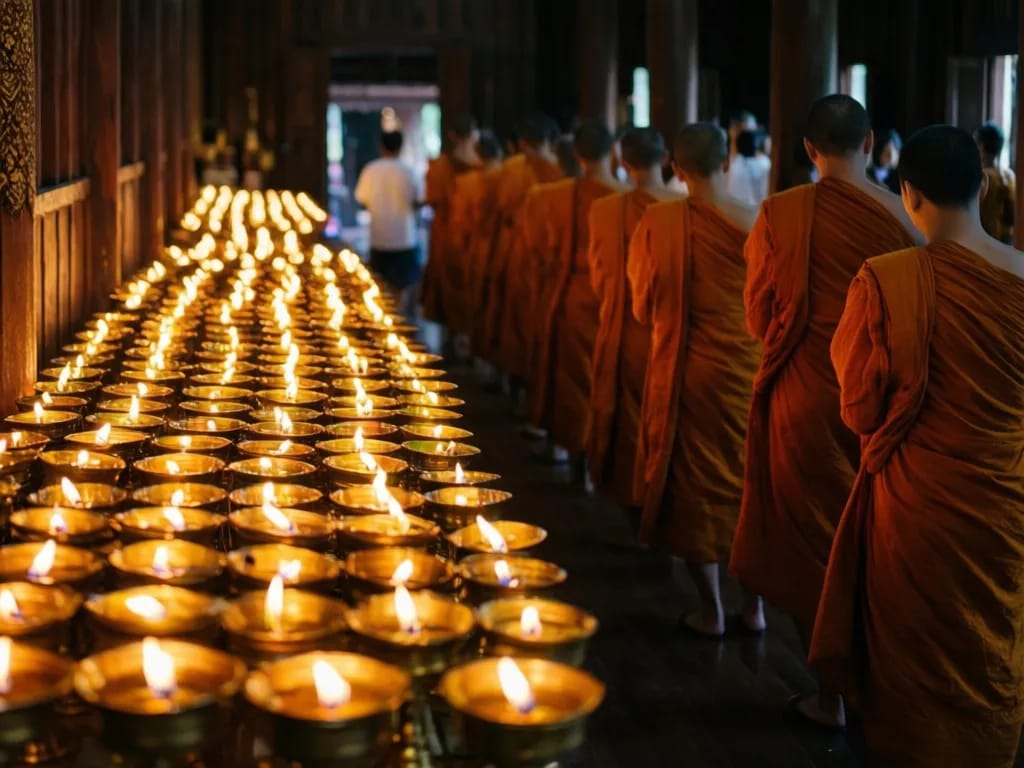
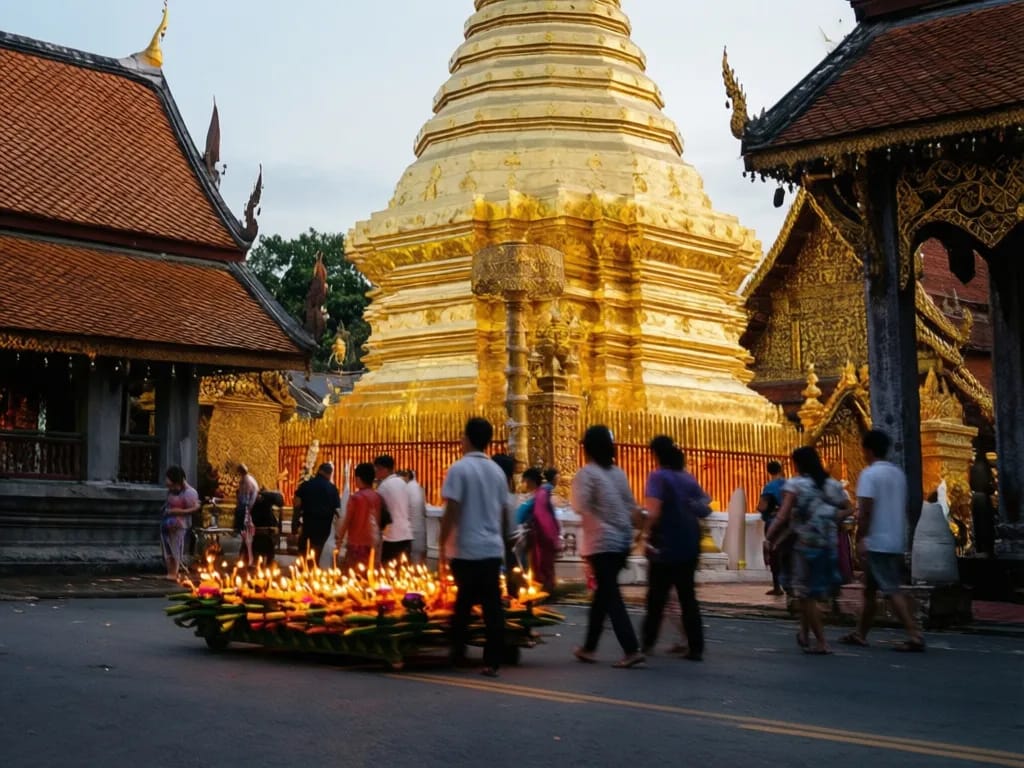
Wat Phan Tao, the teak monastery between Wat Chedi Luang and Phra Singh, lights several hundred earthen butter lamps in its garden pond from about 19:00. Monks chant the Anumodana blessing while visitors light candles around the bodhi tree. It is the quietest and most photographed scene of the festival.
Night two: Tuesday 24 November — the full moon
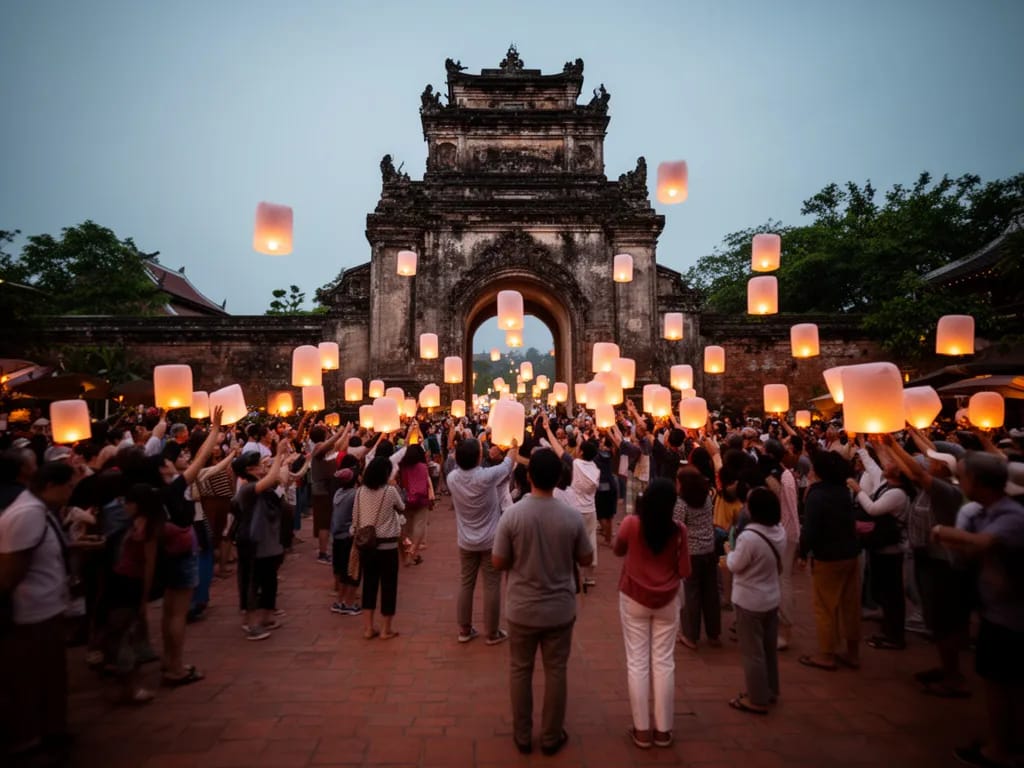
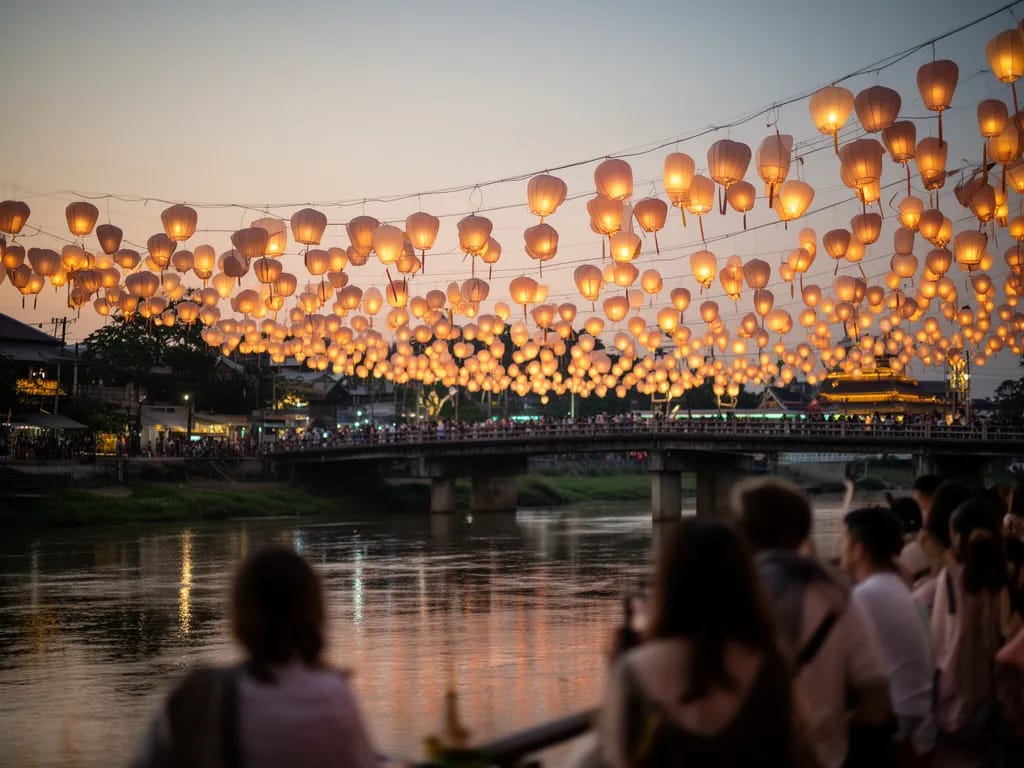
This is the headline night. The free Tha Phae Gate release runs from 18:30 to roughly 22:30, with peaks at 19:30 and 21:00. Vendors sell khom loi for 50–100 THB and bread-and-banana-leaf krathong for 40–150 THB. The crowd density at Tha Phae plaza routinely tops 30,000 people; arrive by 18:00 or watch from one of the rooftop bars on Ratchadamnoen.
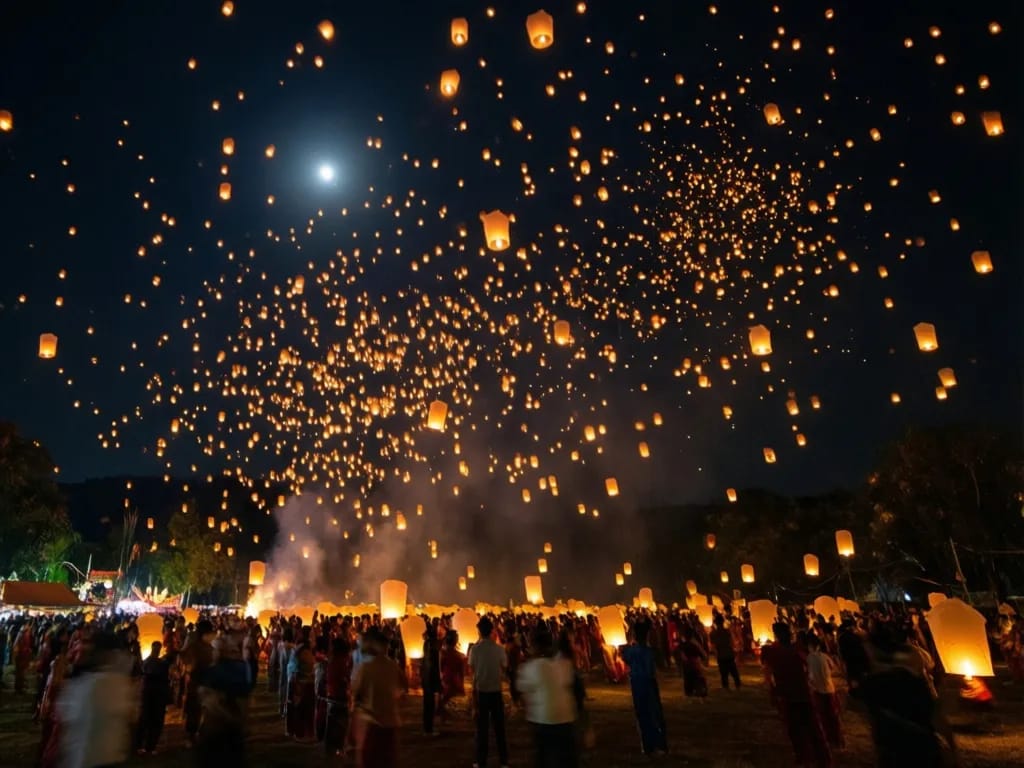
The ticketed mass releases sit outside the city. The CAD Khom Loi event in Doi Saket, about 30 minutes east, holds two release waves at 20:00 and 21:00 with monk-led chanting and a vegetarian buffet. The Mae Jo international release, run by the Dhutanka Sansai foundation, has historically been the largest synchronised release in the world; tickets need to be booked through approved tour operators six months ahead.
Night three: Wednesday 25 November
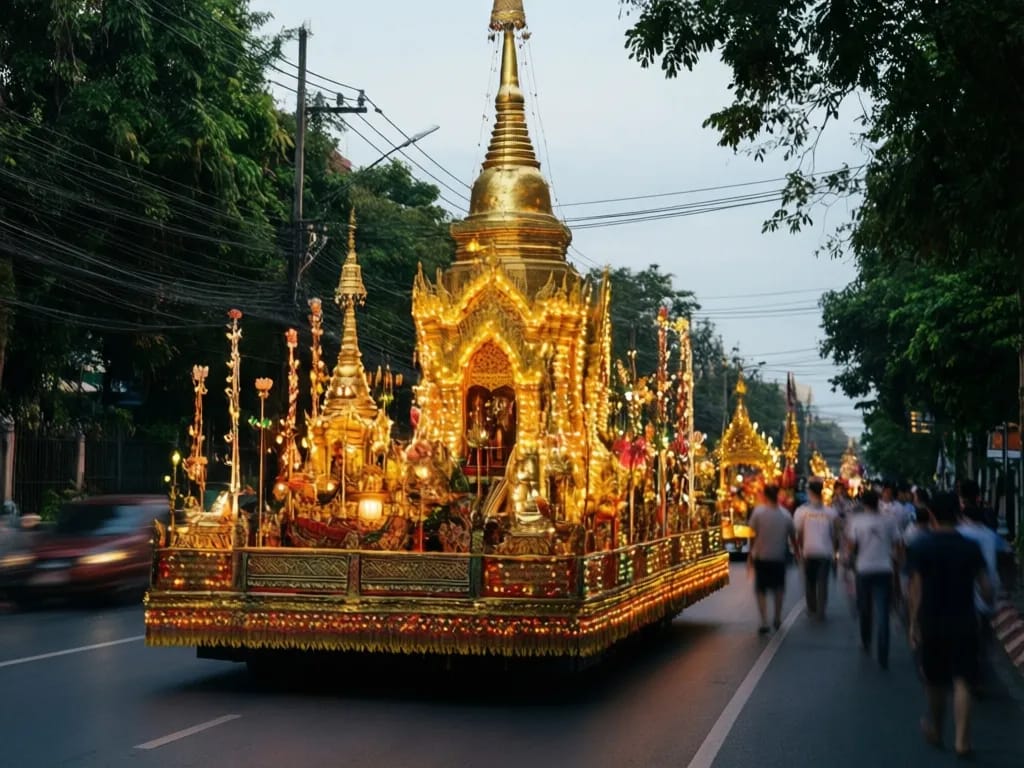
Closing night is the parade night. From 19:00, illuminated Krathong Yai floats (house-sized krathong on flatbed trailers) process slowly from Tha Phae Gate west along Ratchadamnoen Road to Three Kings Monument. Each city district enters its own float, with student dance troupes in Lanna gold-thread costumes walking alongside. The municipal winner is announced around 22:00.
Smaller temple ceremonies continue around the Old City through the night, and the riverside stays busy with late krathong floats until around 23:30. Wat Lok Molee in the northwest corner of the moat runs a final candle blessing at 22:00; Wat Sri Suphan, the silver temple south of the Old City, holds its annual suad mon chanting service in front of the silver-clad ordination hall from 20:00.
Bars and rooftop venues along Loi Kroh Road and the Riverside stay open later than usual. Many serve a free banana-leaf krathong with a dinner reservation, which guests then walk five minutes to the Ping to float. Expect heavy songthaew demand from 22:30 onwards; the moat road closes to most traffic from 19:00 to 23:00 inside the Old City.
How to participate
Free public locations
- Tha Phae Gate plaza. The default visitor experience. Free entry, lanterns sold on site, public release window 18:30–22:30 nightly. Expect heavy crowds and a 200-metre walk to the nearest public toilet.
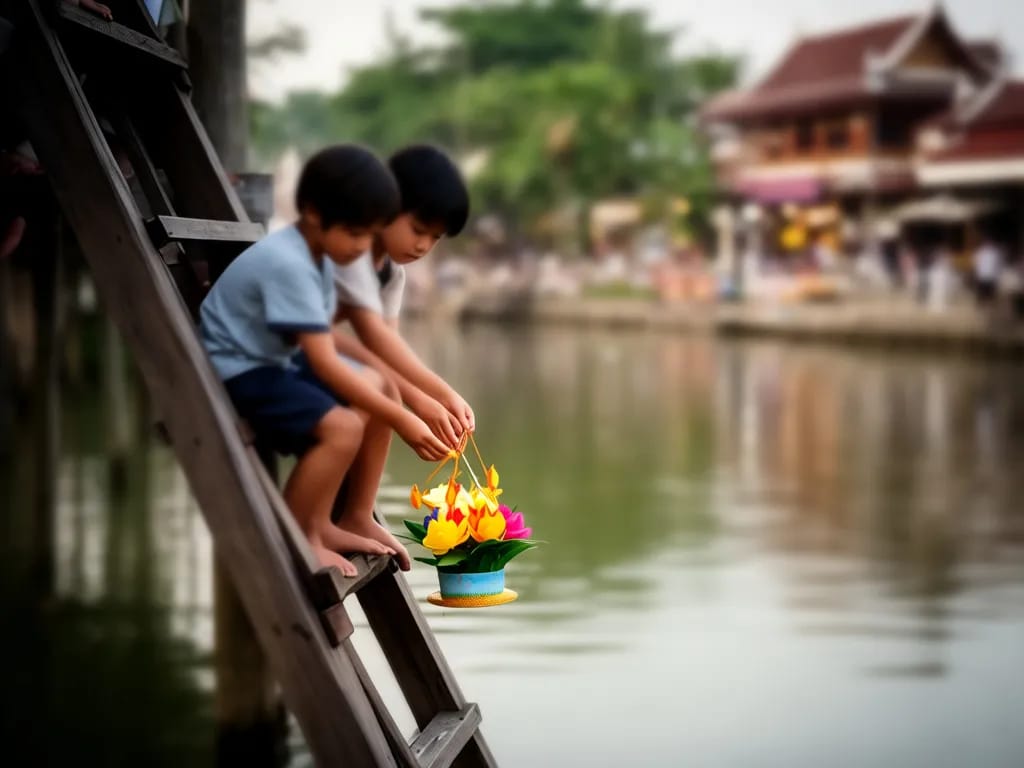
- Ping River bank between Nawarat Bridge and Iron Bridge. Best for krathong floating. Wooden steps lead down to the water; bring a long lighter for the candle, as river breezes are stiff in November.
- Wat Phan Tao. Free candle-lit chanting service from 19:00 each night. Sit on the wooden floor; remove shoes; do not photograph during the chant itself.
- Wat Phra Singh. Inside the wihan, monks bless krathong before they are floated. The temple lights its main chedi with paper lanterns. Free, open to all.
- Three Kings Monument plaza. Cultural fair, food stalls, parade staging area.
Ticketed events
- CAD Khom Loi (Doi Saket). 4,500–8,500 THB. Two release waves, monk ceremony, dinner, transport from the Old City usually included. Books out by September.
- Mae Jo international mass release. 6,500–15,000 THB. Single synchronised release; this is the event behind the photograph most travellers arrive with. It runs only in specific designated years, so confirm the 2026 event is going ahead before booking.
- Hotel rooftop releases. Several Riverside hotels run private lantern dinners at 2,500–4,500 THB per head, with a controlled release from their riverside terrace.
Sky lantern restrictions you must know
Chiang Mai International Airport sits 4 km south of Tha Phae Gate, and lanterns drift unpredictably. Releasing a khom loi anywhere is regulated by the Thai Civil Aviation Authority and the Provincial Office:
- Permitted release window: 18:00 to 01:00, nightly, only on the three official festival nights.
- No-fly zone: A polygon around the airport published each October. Releases inside this zone are prohibited and the area is policed.
- Penalties: Up to 60,000 THB fine and/or up to five years’ imprisonment under Section 65 of the Thai Air Navigation Act for releases outside the announced windows or zones.
- Airline impact: AOT historically diverts or cancels Chiang Mai flights on the peak night. Confirm your inbound flight does not land between 18:00 and 22:00.
These rules are checked at Tha Phae Gate by uniformed officers. Buying a lantern from an official vendor inside the permitted plaza is the safe path.
Origins and cultural significance
The Tourism Authority of Thailand (TAT) traces Loy Krathong to a Sukhothai-era custom of floating offerings to Phra Mae Khongkha, the river goddess, as thanks for the rains and apology for polluting the water. The widely cited story of Nang Nopphamat, a court lady who shaped the first krathong from banana leaves, sits closer to literary legend than verifiable record, but it is recited in every Thai school text.
Yi Peng is older in the Lanna kingdom and was originally an offering ceremony tied to the Phra That Doi Suthep relic. The Lanna text Tamnan Khom Loi describes monks releasing lanterns at the close of the rains retreat to symbolically lift their accumulated gilesa (defilements) into the heavens. The release of troubles into the rising lantern is the spiritual core of the night.
Both festivals fall during the Loi Pradip full moon, which closes the three-month Buddhist Vassa rains retreat. In a traditional household, the family head will trim a strand of hair and a fingernail clipping onto the krathong before it is floated. The clippings stand for the body’s accumulated impurities of the year and leave with the raft. The candle and three incense sticks represent the Buddha, the Dhamma, and the Sangha.
Lanna identity is on display through the festival in a way it rarely is the rest of the year. Northern Thai is spoken in temple announcements, sabai shoulder cloths and fingernail dance costumes appear in the parades, and Lanna script reappears on temple notices. For Chiang Mai, the three nights are the strongest public assertion of regional identity in the calendar.
The official patron is the Tourism Authority of Thailand’s Chiang Mai office, which co-runs the festival with the municipality, the Department of Cultural Promotion, and the major Old City temples. The TAT publishes the year’s schedule and route map each September. Senior monks from Wat Phra Singh, Wat Chedi Luang, and Wat Phan Tao lead the public chanting services; the abbots’ procession on the second night is the most senior religious gathering of the festival.
Parade route and procession
The Krathong Yai parade of giant illuminated floats runs on Tuesday 24 and Wednesday 25 November at 19:00. Each float is a flatbed trailer carrying a five- to seven-metre handmade krathong constructed from banana leaves, marigolds, jasmine, and rice paper, with internal lighting that makes the entire structure glow from sunset. City districts, Lanna cultural associations, and tourism schools each enter a float. Parade marshals hold the procession to walking pace.
The route is fixed:
- Tha Phae Gate. Float staging from 17:00, departure 19:00. The plaza at Tha Phae fills with photographers from 18:00.
- Ratchadamnoen Road. West through the Old City. Floats slow at each soi crossing for crowd photographs.
- Three Kings Monument plaza. Judging stand and dignitary viewing position. Floats stop here for the announcer to introduce each district team.
- Phra Pokklao Road return. South back to Tha Phae Gate via Bumrungburi.
Total route distance is approximately 2 km. Each parade lasts around three hours; floats are usually returned to their staging warehouses by 23:00. The municipal Krathong Yai prize is awarded on the closing night at Three Kings Monument around 22:30.
A second smaller parade, the Lanna lantern parade, runs on Monday 23 November from Wat Phan Tao at 19:30, with hundreds of paper lanterns carried by Wat Phan Tao students and Lanna cultural school dancers through the Old City sois.
What to wear and etiquette
Dress modestly: shoulders and knees covered, especially at Wat Phra Singh and Wat Phan Tao. Light cotton or linen, closed walking shoes for the gravel temple paths, and a thin jacket for the 18–22°C night air. Avoid loose, flowing sleeves or polyester near open lantern flames.
A polite wai (palms together at the chest with a small bow) is appropriate when greeting monks or accepting a blessed sai sin string. Do not touch monks, particularly women. Step over, never on, temple thresholds. Phones on silent inside ordination halls during chanting. If you accept a krathong from a Lanna grandmother on the riverside, you are expected to float it personally, not pass it on.
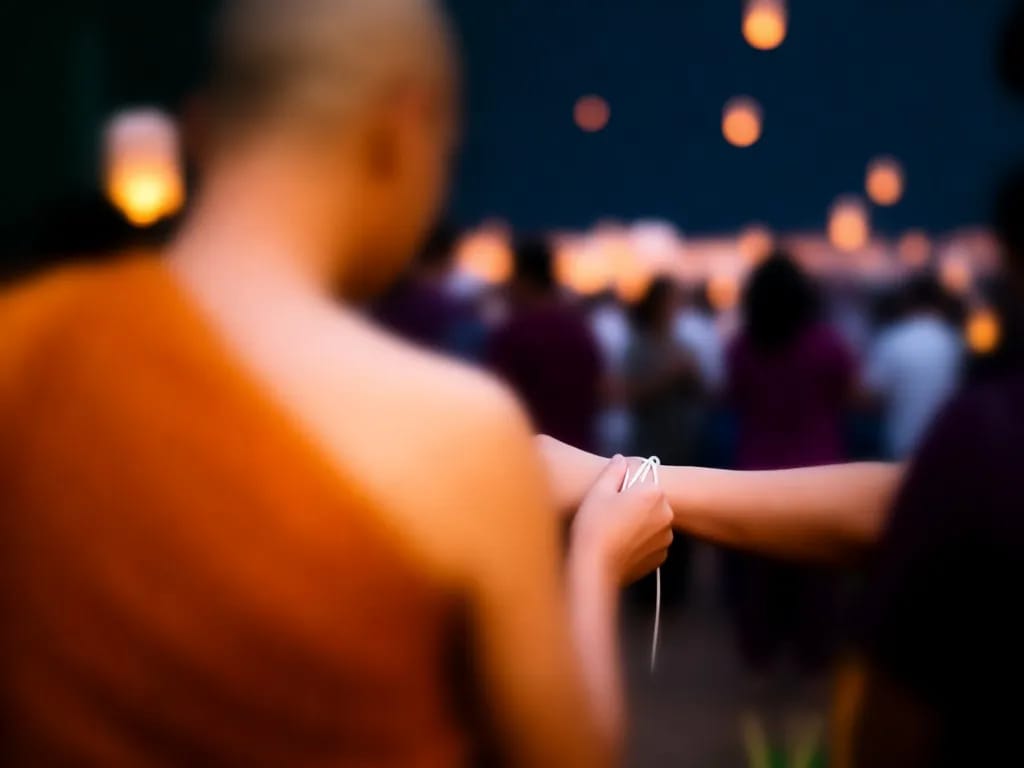
Tipping the krathong vendors is not expected, but a polite “khop khun ka” (or “khop khun krap” for men) after a purchase is the standard courtesy. If a monk offers a blessing string at the riverside, accept it with both hands and a small bow; the string is worn until it falls off naturally, never cut.
Where to stay and book early
Old City accommodation inside the moat puts you within a 10-minute walk of every free event but charges 2–3× off-peak rates and books out by August. Boutique stays at U Chiang Mai, Tamarind Village, and Rachamankha are typical headline rooms. For a quieter base with easier songthaew access to Mae Jo and Doi Saket, the Nimman district is 15 minutes by tuk-tuk and has stronger restaurant options when the Old City is packed.
Riverside hotels such as Anantara, 137 Pillars House, and Na Nirand offer the most photogenic krathong-floating terraces and tend to run private dinner-with-release packages. Confirm whether your room rate includes the lantern event; many hotels charge separately at 2,500–4,500 THB per head.
Book 4–6 months ahead for any room within 1 km of Tha Phae Gate. By mid-October, only the high-end suites remain inside the Old City.
Photography tips
For sky lanterns, set ISO 800–1600, aperture f/4–5.6, shutter 1/4 to 1 second on a tripod. Lock focus manually on the nearest lantern, not autofocus, which hunts in the dark. A 24–70mm lens covers most situations; a 70–200mm pulls the moon and lanterns into one compressed frame from the riverside.
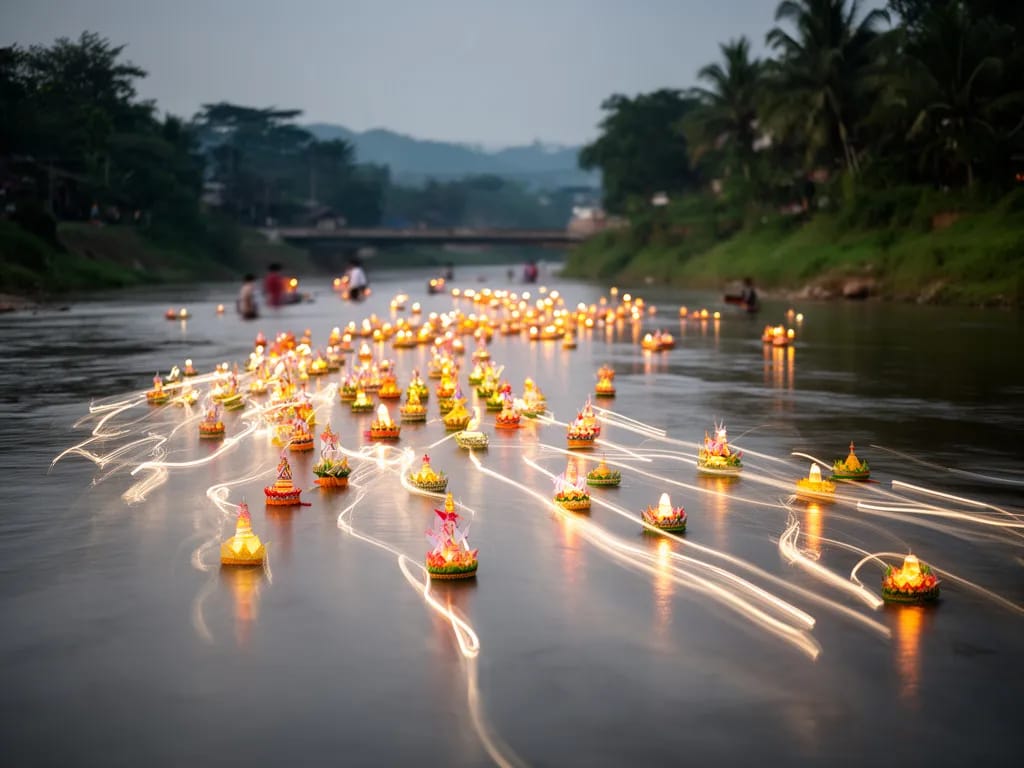
For krathong on water, lay long exposures (10–30 seconds) on a tripod from Nawarat Bridge; the drifting candles paint orange light trails down the Ping River. Phone shooters should use Night Mode and brace against the bridge railing. Bring a microfibre cloth: river humidity fogs lenses fast. A lens hood helps with stray light from the Iron Bridge floodlights. For the Tha Phae Gate release, climb onto the kerb planters for elevation; the eye-level shot is blocked by the wall of phones in front of you.
Nearby and related
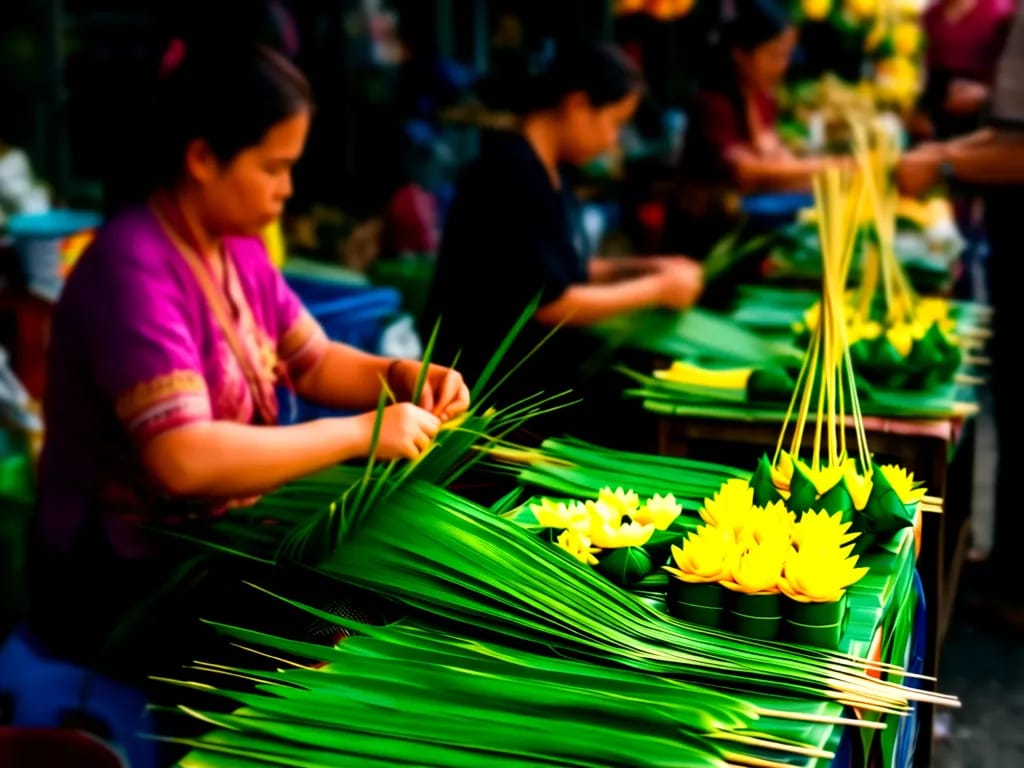
After the festival ends, walk the Old City Walking Street on the Sunday night to see the city return to its weekly rhythm. The flower market at Ton Lamyai is where every krathong begins — most stalls weave them on commission through November and sell components from late afternoon. For the religious anchor of Yi Peng, walk to Wat Phra Singh, the spiritual home of the festival in the Old City. If you are extending the trip to April, the Songkran water festival is Chiang Mai’s other peak night-and-day event. February travellers should pair this page with the Chiang Mai Flower Festival, which uses the same parade route and the same flower trade.
Photos
Frequently asked questions
When is Yi Peng 2026?
Yi Peng and Loy Krathong run together over three nights in 2026: Monday 23 November through Wednesday 25 November. The peak mass release falls on the full-moon night, with most ticketed events scheduled for Tuesday 24 November.
When is Yi Peng 2027?
Yi Peng 2027 is expected to fall on 13–15 November, tracking the full moon of the twelfth lunar month. Ticketed releases at Doi Saket and Mae Jo typically open booking by July.
What is the difference between Yi Peng and Loy Krathong?
Yi Peng is the Lanna northern tradition of releasing khom loi sky lanterns into the night air. Loy Krathong is the nationwide Thai tradition of floating banana-leaf krathong rafts with a candle and incense on rivers and ponds. Both happen on the same full-moon nights in Chiang Mai, which is why most visitors experience them together.
Can tourists release sky lanterns in Chiang Mai?
Yes. Free public releases happen nightly along the moat at Tha Phae Gate and on the Ping River bank, with lanterns sold by street vendors for 50–100 THB each. You can also buy a ticket to the larger mass releases at Doi Saket or Mae Jo. Releases are restricted to officially permitted windows and zones; releasing near the airport is prohibited.
How much do the lantern festival tickets cost?
The CAD Khom Loi event near Doi Saket costs roughly 4,500–8,500 THB depending on seat tier, and includes dinner, the monk-led ceremony, and one lantern. The Mae Jo international release runs around 6,500–15,000 THB. Free releases at Tha Phae Gate cost only the price of a lantern.
Where is the best free place to see Yi Peng in Chiang Mai?
The Tha Phae Gate plaza is the headline free spot: thousands release lanterns here from sunset onward. For a quieter view, walk south along the Ping River from Nawarat Bridge or sit on the steps of Wat Phan Tao, where a candle-lit chanting service runs each evening.
Are sky lanterns banned because of the airport?
They are restricted, not banned. Chiang Mai International Airport publishes annual no-fly zones and time windows; flights are diverted or cancelled during peak release hours. Releasing lanterns inside the official no-fly polygon, or outside the announced 18:00–01:00 windows, can carry fines up to 60,000 THB or imprisonment under Thai aviation law.
Do I need to book accommodation early?
Yes. Old City and Riverside hotels typically sell out by August for late-November dates, with rates two to three times their off-peak price. Book 4–6 months ahead for any property within walking distance of Tha Phae Gate.
What is a krathong made of?
A traditional krathong is a small floating raft cut from a banana trunk, decorated with folded banana leaves, marigolds, jasmine, and a candle and three incense sticks. Eco-friendly krathong made from bread or compressed ice are sold across Chiang Mai for 40–150 THB.
Is there a parade during Yi Peng?
Yes. The Krathong Yai parade of giant illuminated floats runs down Ratchadamnoen Road on the second and third evenings, starting roughly 19:00 from Tha Phae Gate. Lanna dance troupes, beauty contestants, and temple floats process to Three Kings Monument.
Is photography allowed?
Yes, including tripods at the riverside. Inside temple grounds, keep flash off during chanting services and respect any do-not-photograph signs near ordination halls.
Can children join the lantern release?
Children can release krathong on the river safely. Sky-lantern releases involve open flame and hot rising air; adults should hold the lantern frame while children only steady it from below.
What should I wear to Yi Peng?
Modest, comfortable clothing — shoulders and knees covered for temple visits. November nights in Chiang Mai sit around 18–22°C, so bring a light jacket. Avoid synthetic fabrics near open lantern flames.
Is Yi Peng family-friendly?
Yes. The riverside krathong floating and Wat Phan Tao candle service are calm, child-friendly experiences. The Tha Phae release gets dense by 20:00; families with young children usually arrive before sunset.
Are eco-friendly krathong required?
Not legally required, but strongly encouraged. Chiang Mai municipality removes around 100,000 krathong from the Ping River each year. Choose bread, ice, or natural banana-leaf krathong over polystyrene.
Related guides
Temple
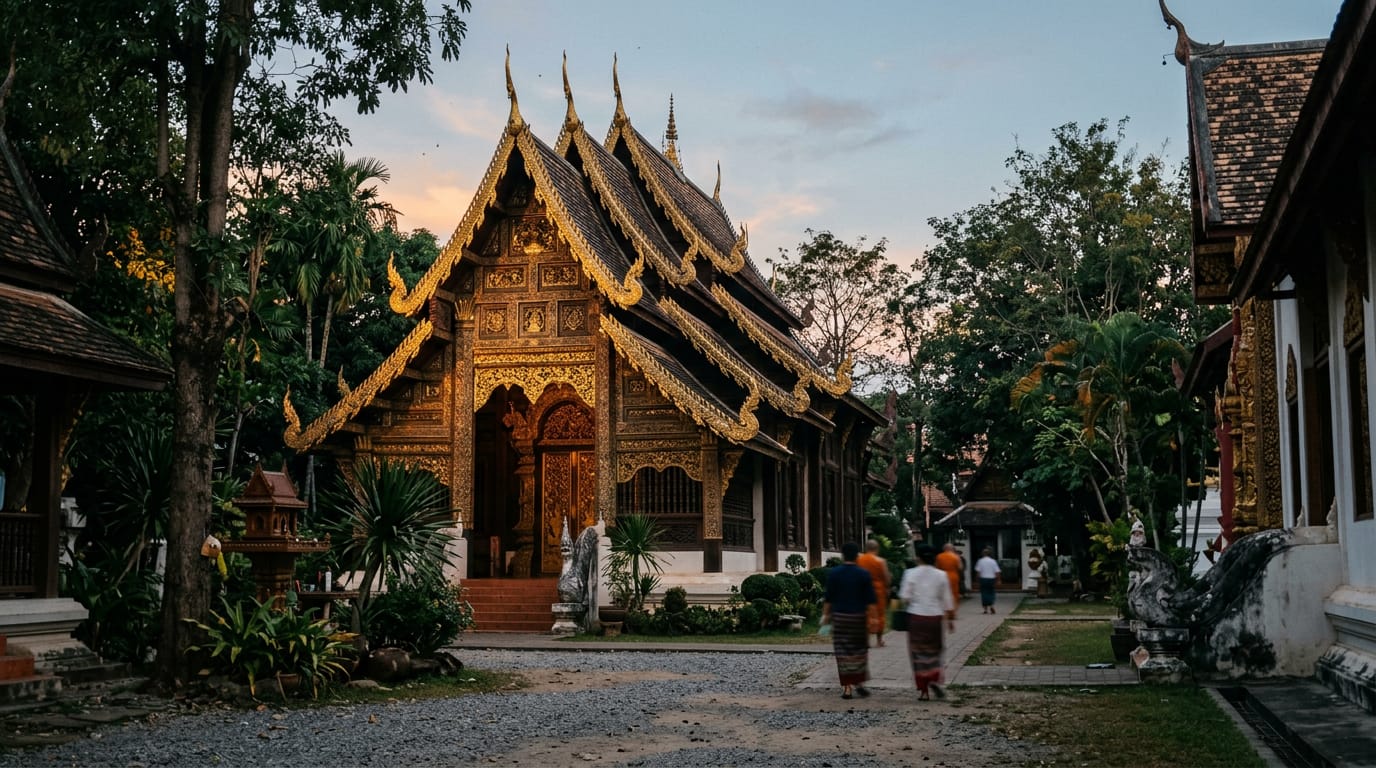
Wat Phra Singh
Wat Phra Singh is the most revered temple inside Chiang Mai's Old City, founded in 1345 by King Phayu of the Mangrai dynasty. Its Lai Kham viharn shelters the Phra Buddha Sihing — the Lion Buddha — which is paraded through the streets each Songkran. Together with its gilded chedi, carved teak gables and gold-leafed scripture library, the compound is the finest single example of Late Lanna architecture in northern Thailand.
Market
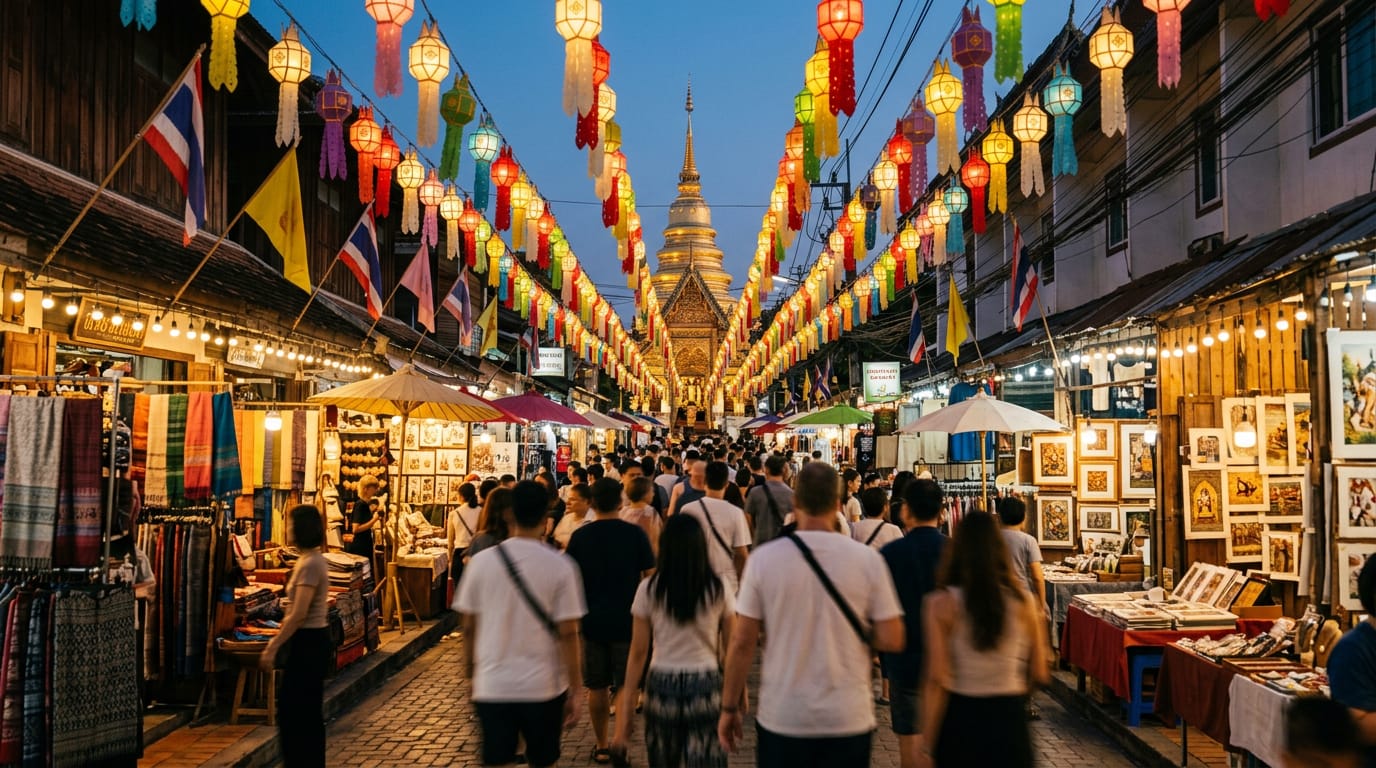
Sunday Walking Street (Ratchadamnoen Road)
The Sunday Walking Street fills Ratchadamnoen Road through the heart of the Old City from Tha Phae Gate west to Wat Phra Singh. Around 700 vendors set up every Sunday from 16:00 to 22:00, with handicraft, paper umbrellas, silk, lanterns and three temple courtyards turned into food clusters along the route. It is the biggest weekly walking street in Chiang Mai.
Festival
Chiang Mai Flower Festival
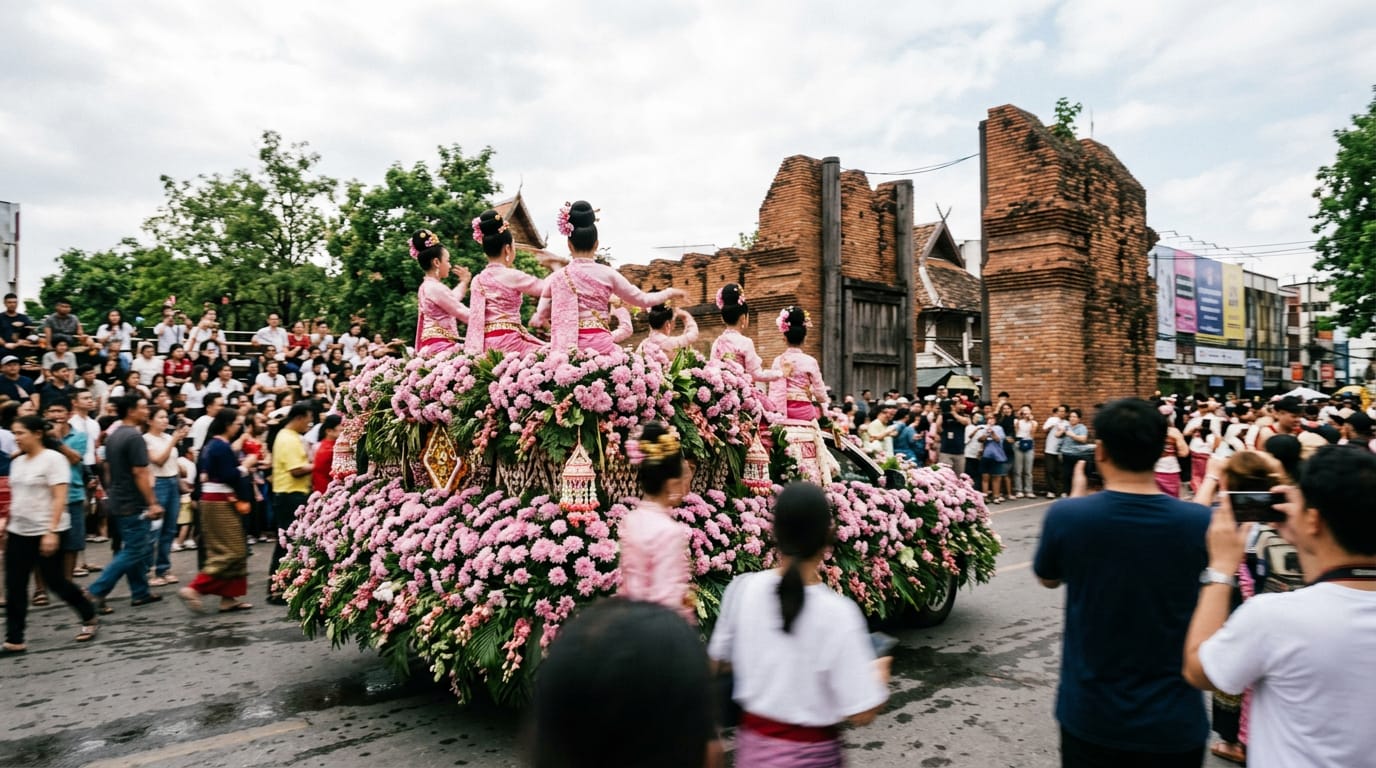
The Chiang Mai Flower Festival is the city's annual three-day celebration of cool-season blooms, held the first full weekend of February at Suan Buak Hat Park. The 49th edition runs 13–15 February 2026, with the headline parade of flower-covered floats setting off at 08:00 on Saturday 14 February from Nawarat Bridge along Tha Pae Road to Suan Buak Hat. Free entry, beauty pageant on Friday night, and northern Thailand's largest cool-flower trade fair across the weekend.
Festival
Songkran (Thai New Year)
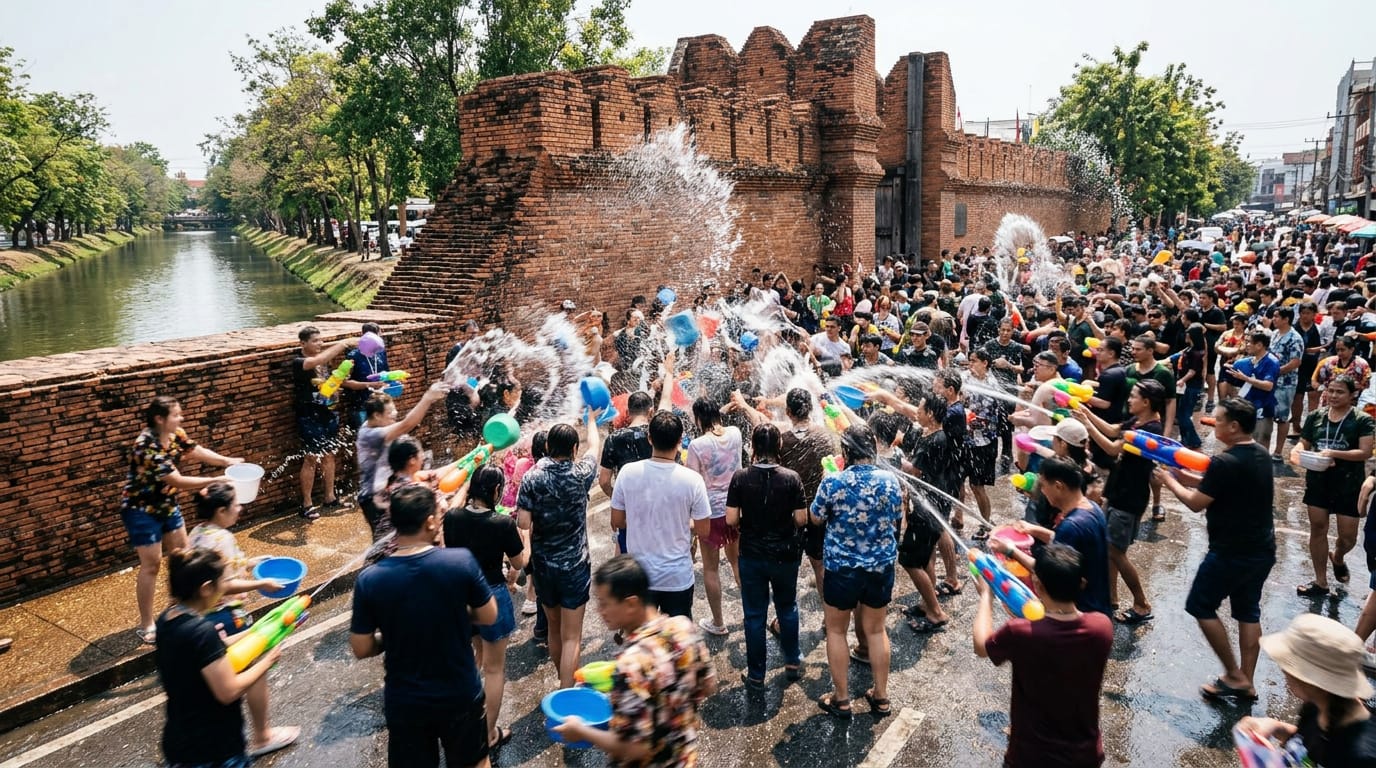
Songkran is Thailand's traditional New Year and Chiang Mai's biggest annual festival, held 13–15 April every year. It combines a centuries-old Buddha procession of the Phra Buddha Sihing image with a citywide water fight along the moat. Free public events run at Tha Phae Gate, Wat Phra Singh, Wat Chedi Luang, and the four moat sides, with the headline Buddha procession on day one and peak water fights on day three. Expect 35–40°C heat, dense crowds, and most of the Old City under cheerful soaking.
Market
Chiang Mai Flower Market
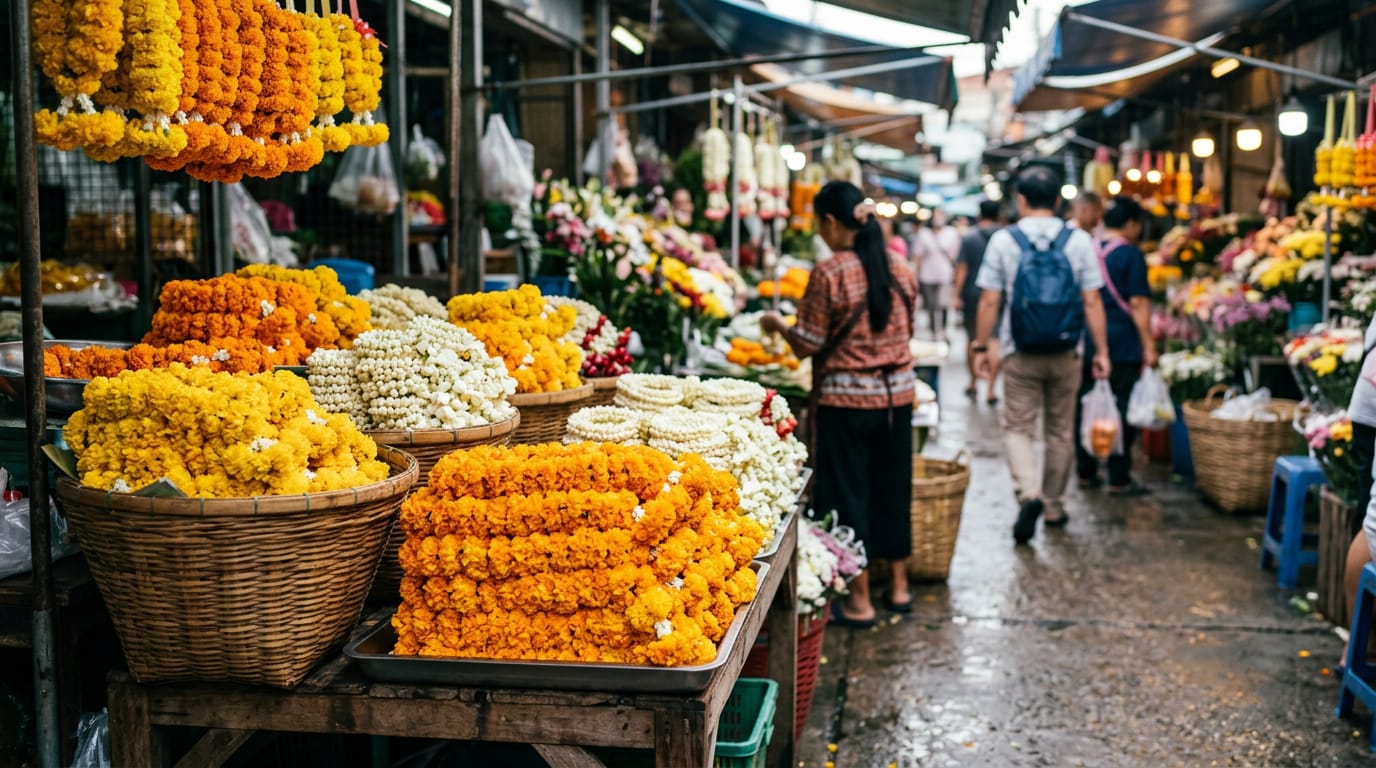
The Chiang Mai Flower Market (Talat Dok Mai) is the city's main wholesale and retail bazaar for cut flowers and ceremonial garlands, on a 400-metre stretch of Praisani Road beside the Ping River, behind Warorot Market in Chang Moi. Trading is continuous, with wholesale lorries arriving 03:00–06:00; in February 2026 it supplies the 49th Chiang Mai Flower Festival floats.